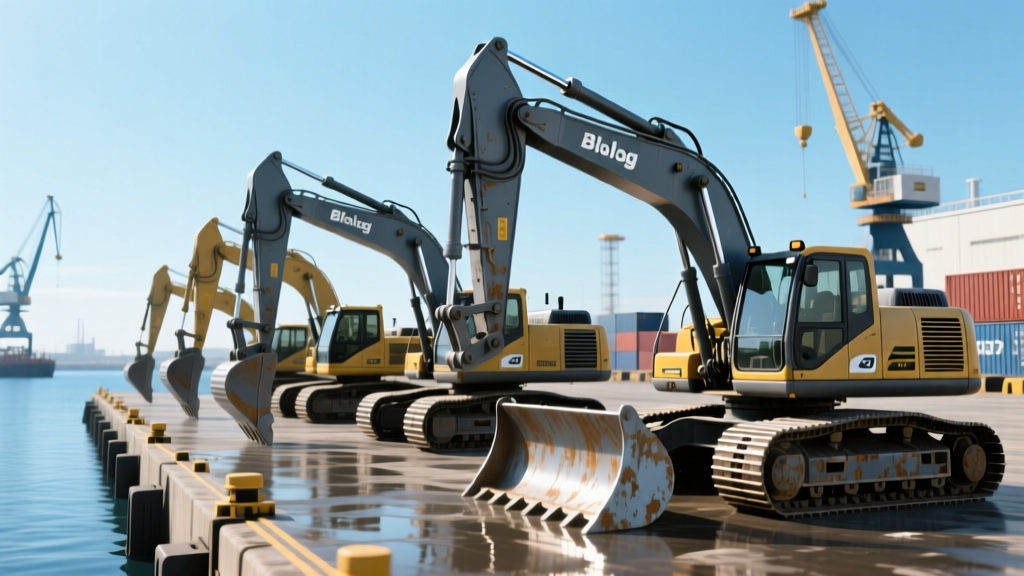
Heavy Equipment Rental Software for Marine Port Cost Analysis
Optimize marine port budgets with heavy equipment rental software. Compare costs for ship-to-shore cranes, straddle carriers, and terminal tractors.
The CAPEX to OPEX Pivot in Marine Terminal Fleets
Port terminals operate on razor-thin margins where equipment utilization directly dictates profitability. As global supply chains face volatility, terminal operators are shifting from pure CAPEX acquisitions to flexible OPEX models. According to UNCTAD's Review of Maritime Transport, modern ports must maintain agile fleets to absorb sudden TEU (Twenty-foot Equivalent Unit) volume spikes without bearing the depreciation costs of idle machinery. Managing this financial tightrope requires specialized heavy equipment rental software capable of tracking maritime-specific metrics and variable billing structures.
Insight: Generic construction fleet tools fail in marine environments because they track calendar days. Port rental software must track engine hours, TEU moves, and TOS (Terminal Operating System) integration to accurately calculate ROI and prevent margin leakage.Real-World Rental Cost Matrix: Port Equipment Breakdown
When budgeting for short-term capacity expansions or replacing assets undergoing major overhauls, understanding the baseline rental rates and associated OPEX factors is critical. Below is a 2026 market snapshot for common marine terminal equipment.
| Equipment Type | Reference Model | Avg. Monthly Rental Rate | Software Tracking Metric |
|---|---|---|---|
| Reach Stacker | Kalmar DRG 450-60S5 | $19,000 - $24,000 | Spreader cycles / Engine hours |
| Empty Container Handler | Konecranes SMV 10/12 | $14,000 - $17,500 | Lift height / Payload weight |
| Electric Terminal Tractor | Terberg YT203-EV | $8,500 - $11,000 | Battery charge cycles / Yard miles |
| Mobile Harbor Crane | Liebherr LHM 550 | $140,000+ (Mobilization + Lease) | Crane moves per hour (CMPH) |
These rates fluctuate based on port geography, environmental tier requirements (such as CARB compliance in California), and lease duration. Relying on manual spreadsheets to reconcile these variable rates against actual utilization leads to severe margin leakage. Implementing dedicated heavy equipment rental software automates the reconciliation between the lessor's invoice and the terminal's actual telematics data, ensuring you never overpay for idle yard hours.
Why Generic Fleet Tools Fail: The Need for Specialized Heavy Equipment Rental Software
Marine ports present unique operational hazards and billing structures. Standard construction rental platforms lack the architecture to handle maritime compliance, union labor tracking, and saltwater corrosion maintenance schedules. A robust heavy equipment rental software designed for port authorities must include:
- Demurrage and Detention Tracking: Automated alerts when rented yard equipment exceeds the contractual free-time allowance, preventing punitive hourly penalties from shipping lines.
- Wet vs. Dry Lease Management: Distinct financial modules for "wet" leases (including operator labor, union benefits, and fuel) versus "dry" leases (bare equipment). The software must dynamically adjust OPEX forecasts based on shift differentials and maritime union labor rules.
- Corrosion & Saltwater Maintenance Triggers: Predictive maintenance algorithms that automatically shorten service intervals for rented assets operating in high-salinity splash zones, tracking the depreciation of wire ropes and spreader twist-locks.
- Multi-Terminal Asset Reallocation: Cost-center splitting for equipment moved between adjacent berths or sister terminals, ensuring accurate cross-charging.
The TOS Integration Imperative
The most significant information gain for terminal financial officers is the integration between rental software and the Terminal Operating System (TOS). Platforms like Navis N4 or TiDeworks dictate the movement of every container. By linking heavy equipment rental software via API to the TOS, operators can calculate the exact cost-per-TEU-move for rented assets. If a rented Kalmar reach stacker costs $22,000 a month and performs 4,500 moves via the TOS data feed, the software instantly flags the true operational cost at $4.88 per move, allowing for immediate budget reallocation if the metric exceeds the terminal's $5.50 threshold.
4-Step Budget Forecasting Framework for Seasonal TEU Peaks
Port authorities can leverage historical data within their rental platforms to forecast Q3 and Q4 peak season requirements. Use this framework to build your OPEX budget:
- Ingest Historical TOS Data: Pull the previous three years of peak-season TEU volumes and map them against historical equipment utilization rates.
- Model the Shortfall: Identify the gap between owned fleet capacity (factoring in scheduled maintenance downtime) and projected peak demand.
- Generate RFQs via Software: Use the platform's vendor portal to broadcast equipment requests to approved maritime lessors, locking in 90-day forward pricing.
- Simulate Downtime Scenarios: Run Monte Carlo simulations within the software to estimate budget overruns if rented cranes experience mechanical failure during peak vessel berthing.
Calculating the True Cost of Downtime and Demurrage
According to the World Bank's Port Performance Scorecard, vessel waiting times and port congestion cost the global economy billions annually. When a rented Ship-to-Shore (STS) crane or yard tractor breaks down, the terminal faces compounding losses: the daily rental rate, the cost of the replacement asset, and vessel demurrage penalties that can exceed $30,000 per day.
"In marine terminal operations, the rental invoice is the smallest line item. The true cost of a rented asset is measured by its reliability. If heavy equipment rental software does not track Mean Time Between Failures (MTBF) against the vendor's SLA, the terminal is flying blind on vendor accountability." — Terminal Operations Director, West Coast Maritime Authority.
Advanced rental platforms include SLA penalty enforcement modules. If a lessor guarantees 95% uptime for a rented fleet of terminal tractors and telematics show 88% uptime, the software automatically generates credit memos against the monthly invoice, directly protecting the terminal's bottom line.
Software Vendor Evaluation Matrix
When procuring a system, evaluate vendors against this maritime-specific matrix to ensure the platform aligns with your terminal's automation level:
| Capability | Enterprise TOS-Integrated Systems | Standalone Fleet SaaS |
|---|---|---|
| Navis N4 / TiDeworks API | Native / Certified | Rare / Custom Build Required |
| Maritime SLA Penalty Automation | Included | Manual Workaround |
| Pricing Structure | $12,000+ Base + Per-Asset Fee | $3 - $5 Per Asset / Month |
| Best Use Case | High-Volume Automated Terminals | Small Breakbulk / Inland Barge Ports |
Selecting the right heavy equipment rental software is not merely an IT decision; it is a fundamental pillar of marine terminal cost control. By prioritizing TOS integration, automated SLA enforcement, and maritime-specific lease tracking, port authorities can transform equipment rental from a reactive expense into a strategically optimized budget lever.