When Heavy Equipment Moves Earth: Types and Alternatives Compared
Compare earthmoving equipment types and alternatives. Learn when specific heavy equipment moves dirt best, featuring cycle times, costs, and soil matrices.
Earthmoving economics are dictated by three physical constraints: material density, moisture content, and haul distance. Selecting the correct machine is not merely about matching a tool to a task; it is about optimizing the cost per cubic yard moved. When heavy equipment moves earth inefficiently, fuel burn, undercarriage wear, and cycle times erode project margins. This analysis compares primary earthmoving categories against their alternatives, providing specific operational thresholds and 2026 pricing data to inform fleet acquisition and deployment strategies.
The Soil-Machine Matrix: Matching Ground Conditions to Equipment
Before evaluating machine alternatives, operators must classify the in-situ material. The shear strength and abrasiveness of the soil dictate whether standard buckets suffice or if specialized ground-engaging tools (GET) and alternative machine types are required.
| Soil Classification | Primary Machine | Alternative / Modification | Operational Rationale |
|---|---|---|---|
| Loose Sand / Loam | Wheel Loader (e.g., Cat 966) | Excavator with wide bucket | Loaders offer 20-30% faster cycle times in above-grade, non-cohesive materials. |
| High-Plasticity Clay | Track Excavator (e.g., Cat 336) | Scraper with push-dozer | Excavators provide superior breakout force (>45,000 lbf) to fracture cohesive clay bonds. |
| Cemented Gravel / Caliche | Dozer with Single-Shank Ripper | Excavator with Hydraulic Hammer | Rippers fracture deep strata continuously; hammers are slower but offer precise localized breaking. |
| Blasted Bedrock | Large Excavator (e.g., Komatsu PC490) | Wheel Loader with rock bucket | Excavators handle uneven, jagged muck piles safely without risking loader axle damage. |
Primary Earthmovers vs. Alternatives: A Cost and Cycle Analysis
The decision between machine types often hinges on the geometry of the cut and the distance to the fill or stockpile.
Excavators vs. Wheel Loaders in Mass Excavation
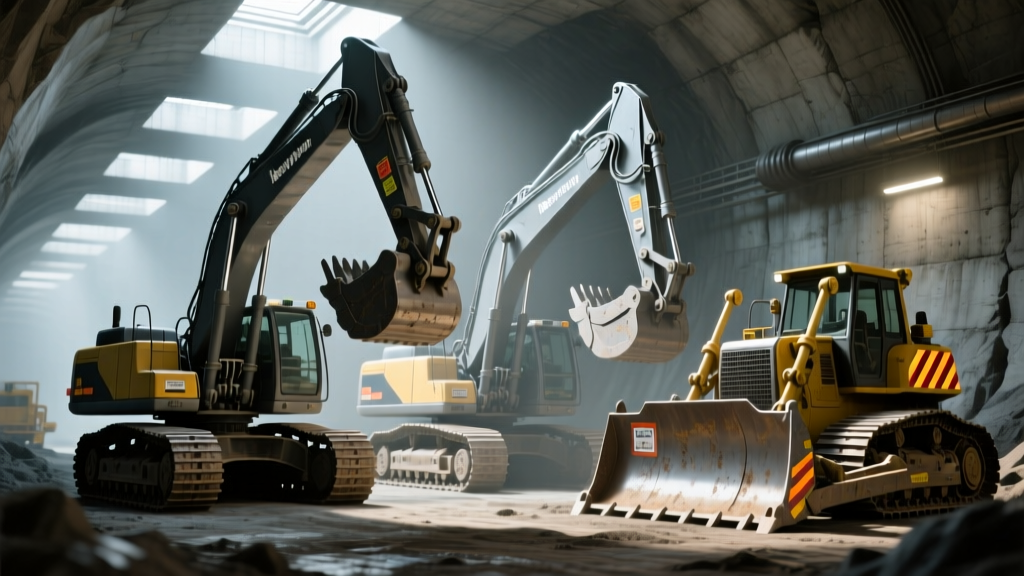
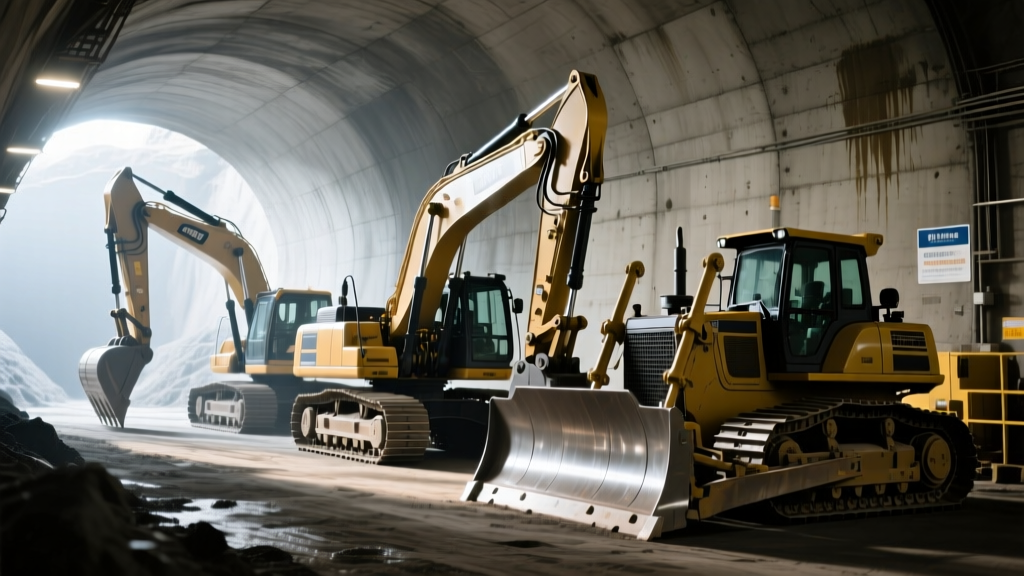
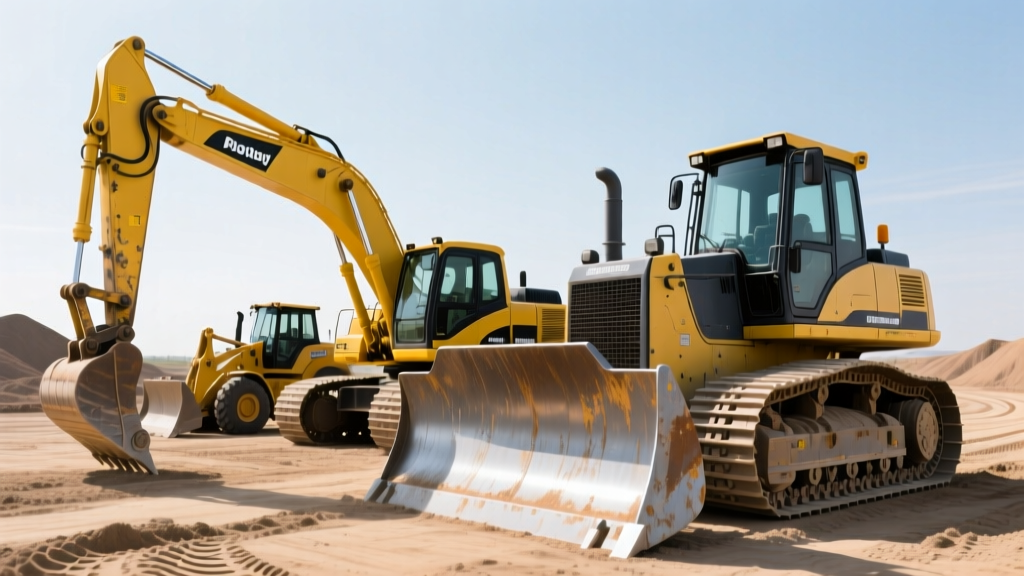
Track excavators and wheel loaders are frequently viewed as interchangeable for loading articulated dump trucks (ADTs), but their efficiencies diverge sharply based on dig depth. A 36-ton class excavator like the Caterpillar 336 (priced around $460,000 in 2026) excels in below-grade trenching and high-face digging. Its hydraulic swing cycle averages 12 to 15 seconds, allowing it to load a 30-ton ADT in roughly four passes.
Conversely, a 6-ton payload wheel loader like the Cat 966 (approx. $390,000) is the superior alternative for above-grade stockpile rehandling and load-out. The loader's travel speed of up to 24 mph allows it to cycle between a stockpile and a truck hopper without relying on a fixed pivot point. However, wheel loaders lack the breakout force to dig into undisturbed, compacted clay efficiently. Attempting to use a loader for primary mass excavation in hard soil increases tire wear and reduces bucket fill factors by up to 35%.
OSHA Trenching Compliance Warning: When heavy equipment moves earth to create trenches deeper than 5 feet, OSHA standard 1926.650 mandates protective systems. Excavators can bench or slope the trench walls dynamically during the dig cycle, whereas wheel loaders cannot. Using a loader for deep utility trenching requires a secondary machine for sloping, negating any cycle-time advantage.Dozers vs. Scrapers for Overland Hauling
The economic crossover point between dozers and scrapers is strictly a function of haul distance. A heavy dozer like the Cat D8T (operating weight ~82,000 lbs, base price ~$650,000) is highly efficient for pushing material up to 300 feet. Its continuous ground-engagement allows it to move 15 to 20 cubic yards per pass in loose material.
Once the haul distance exceeds 300 feet, dozer efficiency plummets due to track wear and the time lost traveling in reverse. Here, motor scrapers become the mandatory alternative. A twin-engine scraper like the Cat 637K (44 cubic yard heaped capacity) can self-load in cohesive soils and transport material economically up to 3,000 feet at speeds exceeding 30 mph. For distances beyond 3,000 feet, the industry standard shifts again to excavator/loaders paired with ADTs or rigid frame haul trucks.
Financial Breakdown: Ownership vs. Rental Alternatives
Fleet managers must weigh capital expenditure against utilization rates. The Association of Equipment Manufacturers (AEM) notes that machine utilization must exceed 60% annually to justify outright purchase over long-term leasing or renting, factoring in depreciation and telematics subscriptions.
| Equipment Type (Mid-Size Class) | 2026 Est. Base Price | Avg. Hourly Fuel Burn | 2026 Monthly Rental Rate | Best Utilization Scenario |
|---|---|---|---|---|
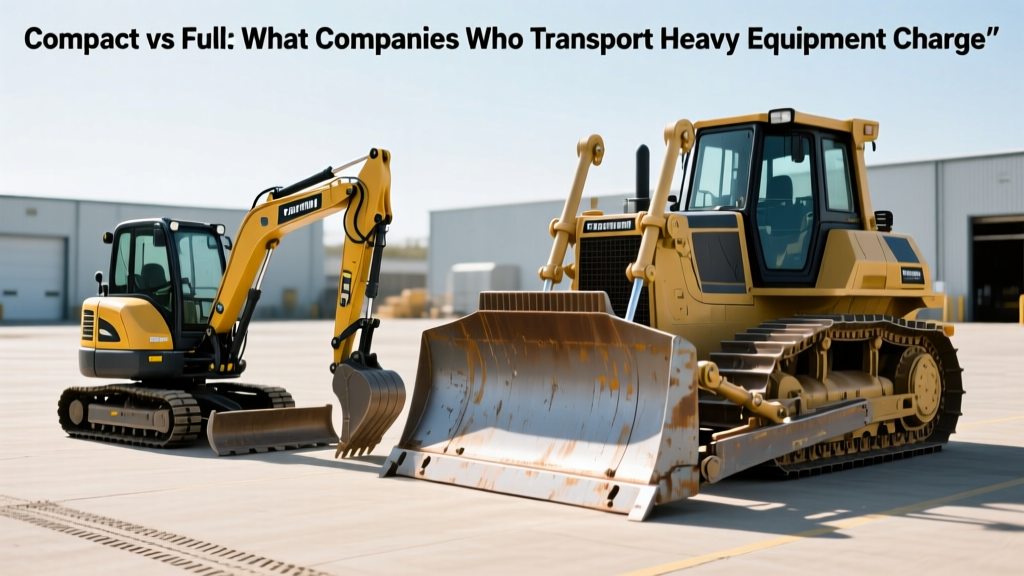
| Track Excavator (35-40 ton) | $450,000 - $520,000 | 6.5 - 8.5 gal/hr | $14,000 - $17,500 | Year-round utility, trenching, below-grade mass excavation. |
| Wheel Loader (6-ton payload) | $380,000 - $430,000 | 5.0 - 7.0 gal/hr | $11,000 - $14,000 | Aggregate handling, truck load-out, above-grade rehandling. |
| Track Dozer (80,000 lbs) | $600,000 - $720,000 | 8.0 - 11.0 gal/hr | $18,000 - $22,000 | Site clearing, short-haul push-loading, spreading fill. |
Edge Cases: When Standard Earthmovers Fail
Standard buckets and tracks fail when ground conditions deviate from baseline engineering assumptions. Identifying these edge cases early allows for the deployment of alternative configurations.
High Water Tables and Marsh Conditions
In saturated soils, standard ground pressure (often 10 to 14 psi) causes machines to bog down, leading to severe undercarriage packing and track derailment. The alternative is deploying a Low Ground Pressure (LGP) variant. An LGP excavator utilizes wider track shoes (e.g., 36-inch to 42-inch pads) to reduce ground pressure to roughly 5 to 6 psi. For deep water retention ponds, a long-reach excavator (such as a Cat 340 with a 60-foot boom) allows the machine to sit on stable, dry ground while dredging the saturated material from a distance.
Highly Abrasive Materials
Excavating quartz-heavy sands or fractured granite accelerates GET wear exponentially. Standard forged steel bucket teeth may require replacement every 40 to 60 hours. The alternative is equipping the machine with tungsten carbide-impregnated wear packages or utilizing a smooth-edged bucket with a replaceable cutting edge (BOCE) to minimize localized abrasion points.
'The integration of 3D GPS grade control has fundamentally altered dozer economics. By eliminating the need for secondary fine-grading passes and reducing surveyor stake-outs, a D8T equipped with Trimble Earthworks can increase daily production volume by up to 25%, effectively changing the machine's classification from a rough earthmover to a precision finishing tool.' — Equipment World Telematics and Automation Report (ConstructionEquipment.com)
Final Selection Framework
Use this decision sequence before finalizing equipment rentals or purchases for earthmoving bids:
- Define the Cut Geometry: Below-grade or trenching mandates an excavator. Above-grade stockpiles favor wheel loaders.
- Measure the Haul Distance: Under 300 feet requires a dozer. 300 to 3,000 feet requires a scraper. Over 3,000 feet requires loaders/excavators paired with haul trucks.
- Test Soil Cohesion and Moisture: High plasticity or rock requires high-breakout-force excavators or rippers. High moisture requires LGP undercarriages.
- Calculate the Hourly Cost per Yard: Factor in 2026 fuel costs (averaging $4.10/gal for off-road diesel), GET wear rates, and operator labor. Choose the machine that minimizes this specific metric, not just the one with the lowest daily rental rate.