Geofencing for Heavy Equipment Sales: Ag vs Construction Guide
Master geofencing for heavy equipment sales. Compare strategies, fence radii, and telematics triggers for agricultural vs. construction machinery buyers.
The Core Divide: Agricultural vs. Construction Buyer Profiles
When deploying geofencing for heavy equipment sales, dealers and OEMs frequently make the mistake of applying a uniform location-based strategy across all machinery categories. However, the purchasing behavior, operational environments, and capital expenditure cycles of agricultural buyers differ vastly from those of commercial construction contractors. A 500-meter geofence around a suburban job site is highly effective for moving mid-size excavators, but it will fail entirely when attempting to capture the attention of a custom harvester evaluating high-horsepower track tractors.
Strategic Summary Card
Agricultural Sales: Driven by seasonal windows, commodity prices, and large-scale rural operations. Geofences must cover wide rural radii targeting supply hubs.
Construction Sales: Driven by project timelines, bid awards, and urban/suburban density. Geofences require tight perimeters around active earthwork sites and material yards.
Geofencing Parameters Matrix: Ag vs. Construction
To optimize ad spend and capture high-intent leads in 2026, sales teams must calibrate their virtual perimeters based on the specific operational rhythms of each sector. The following matrix outlines the baseline configurations required for each equipment category.
| Geofencing Variable | Agricultural Heavy Equipment | Construction Heavy Equipment |
|---|---|---|
| Primary Target Locations | Grain elevators, Ag co-ops, seed/fertilizer distributors, competitor dealerships | Active mega-projects, aggregate quarries, DOT staging yards, Ritchie Bros auction sites |
| Optimal Fence Radius | 2 to 5 miles (accommodates rural sprawl and driving routes) | 300 to 800 meters (dense urban/suburban site perimeters) |
| Dwell Time Trigger | 45–60 minutes (loading grain, co-op meetings) | 15–20 minutes (shift changes, material drops, equipment loading) |
| Seasonal Peaks | Feb–April (Spring Prep), Aug–Oct (Harvest) | March–November (Weather-dependent earthwork seasons) |
| Average Target Unit Cost | $450,000 - $950,000+ (e.g., John Deere 9RX 830) | $250,000 - $600,000 (e.g., Cat 336 Excavator) |
Targeting Agricultural Buyers: Seasonal and Regional Fencing
The agricultural sector is defined by extreme seasonality and massive capital outlays concentrated into narrow operational windows. A farmer purchasing a Case IH Quadtrac 620 (priced upwards of $820,000) is not making an impulse buy; the decision is tied to yield projections and commodity futures. According to the Association of Equipment Manufacturers (AEM), ag equipment purchasing cycles are heavily front-loaded before planting and immediately post-harvest when tax liabilities are assessed.
When setting up geofencing for heavy equipment sales in the ag sector, dealers should draw 3-mile polygon fences around regional fertilizer cooperatives and grain elevators during peak delivery weeks. The dwell time must be set to a minimum of 45 minutes. A farmer idling in a truck for an hour to unload corn at a local elevator is highly receptive to mobile programmatic ads featuring trade-in appraisals for their current combine or tractor.
Pro Tip: Overlay JDLink or Case IH AFS Connect telematics data with your geofencing software. If a machine's GPS shows it has operated over 1,200 hours in the current season and is currently idling at a co-op, trigger a hyper-specific ad offering a 'Priority Winter Service Package' or a 'High-Hour Trade-In Guarantee'.Targeting Construction Buyers: Project-Site and Bid-Driven Fencing
Construction equipment sales are dictated by project awards, infrastructure bills, and immediate fleet shortfalls. Unlike the solitary nature of large-scale farming, construction involves dense networks of general contractors, subcontractors, and material suppliers. Data from the Associated General Contractors of America (AGC) highlights that fleet expansion in construction is largely reactive to newly secured municipal and commercial contracts.
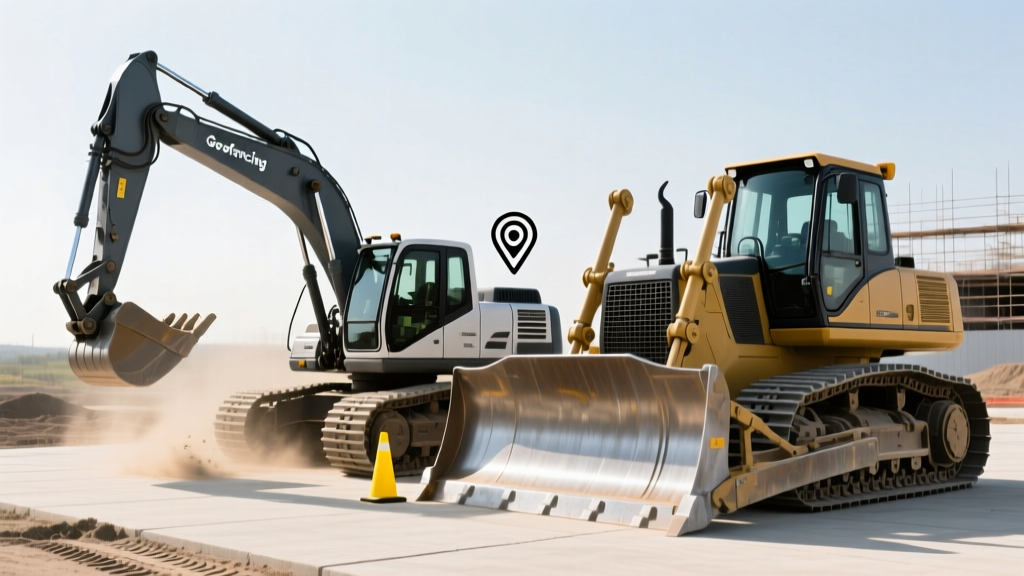
For construction sales, geofences must be tight and precise. Drawing a 500-meter radius around an active highway expansion staging area or a large-scale commercial foundation dig captures the exact moment a fleet manager realizes they are short a 30-ton excavator like the Volvo EC300E. Dwell times here should be aggressive—15 to 20 minutes. If a lowboy trailer is parked at an aggregate yard for 20 minutes, the dispatcher or owner-operator is likely waiting on a load and scrolling through their phone. This is the optimal window to serve an ad for immediate rental-to-purchase conversions or low-hour used inventory.
Warning: Do not geofence active union job sites during shift changes with generic 'brand awareness' video ads. Construction buyers demand immediate utility. Serve them inventory-specific search ads (e.g., 'Used Cat 330 Excavators in Stock - Ready to Haul') or financing calculators. Generic branding wastes CPL budgets in the construction sector.Hardware and Telematics Integration in 2026
The evolution of geofencing for heavy equipment sales has moved beyond simple mobile ID tracking. In 2026, top-tier dealerships are integrating OEM telematics APIs directly into their CRM and geofencing platforms.
- Komatsu CARE and Cat Connect: By monitoring machine fault codes and location data, dealers can set up 'virtual tripwires'. If a competitor's customer brings a Komatsu PC210LC-11 onto a geofenced competitor dealership lot for service, your system can automatically trigger a targeted conquest ad offering a discounted diagnostic fee or a superior trade-in valuation.
- Auction Yard Conquesting: During major Ritchie Bros or IronPlanet auctions, dealers set up 1-mile geofences around the physical auction site. Buyers who get outbid on a specific wheel loader model are immediately served programmatic ads showcasing identical models available on the dealer's lot with immediate delivery and pre-approved financing.
ROI and Cost Metrics for Geofenced Campaigns
Understanding the financial benchmarks of location-based marketing is critical for heavy equipment dealerships allocating their 2026 digital budgets. Based on recent industry tracking via Equipment World and digital agency aggregates, here are the current performance metrics:
- Agricultural CPL (Cost Per Lead): $185 – $260. Higher costs are justified by the massive margin on high-horsepower tractors and combines. Conversion rates are lower, but deal sizes frequently exceed $600,000.
- Construction CPL (Cost Per Lead): $110 – $150. Lower costs reflect a higher volume of mid-tier contractors and a more frequent turnover of mid-size earthmoving equipment (e.g., skid steers, compact track loaders, and 20-ton excavators).
- Click-Through Rate (CTR) Benchmarks: Geofenced display ads in the heavy equipment sector average a 0.45% CTR. However, when paired with telematics-triggered inventory specifics (e.g., mentioning the exact model the user operates), CTRs spike to 1.2% - 1.8%.
Common Geofencing Pitfalls by Equipment Category
"The fastest way to burn a $10,000 monthly programmatic budget is applying an urban construction geofencing strategy to a rural agricultural market. You cannot use a 300-meter radius to target a farmer who lives 15 miles from the nearest grain elevator and only visits town once a week for supplies."
— Regional Digital Director, Midwest Ag Equipment Dealership Group
To maximize the efficacy of your location-based sales strategies, avoid these category-specific errors:
- Ignoring Topography in Ag Fencing: Drawing a perfect 3-mile circle around a rural co-op might include miles of unusable, non-farmable terrain or state parks. Use polygon mapping tools to draw fences strictly along arable land routes and county highways used by heavy haulers.
- Fencing Residential Zones for Construction: Urban infill projects often border residential zones. If your 800-meter fence bleeds into a suburban neighborhood, you will waste ad spend serving excavator ads to homeowners. Use geofencing exclusion zones to carve out residential parcels.
- Static Fences for Dynamic Projects: Highway and pipeline construction projects move linearly over time. A geofence placed around 'Mile Marker 12' is useless three weeks later when the earthwork crew has moved to 'Mile Marker 18'. Sales teams must update construction geofences bi-weekly to track the physical progression of major infrastructure jobs.