Fibreglass Inside Heavy Equipment Mufflers vs Basalt Alternatives
Compare fibreglass inside heavy equipment mufflers against basalt and steel alternatives for Tier 4 earthmoving machinery. Includes costs and failure modes.
Fibreglass inside heavy equipment mufflers serves as the primary acoustic dampening material, absorbing high-frequency sound waves generated by diesel combustion. While traditional E-glass fibreglass is cost-effective for standard applications, it degrades rapidly under the extreme thermal loads of modern earthmoving machinery. For fleet managers and heavy-duty diesel mechanics maintaining Tier 4 Final engines, understanding the transition from standard fibreglass to high-temperature basalt fibre packing is critical for preventing exhaust blowouts and maintaining regulatory noise compliance.
Key Takeaways
- E-glass fibreglass is limited to 650 °C continuous operation, risking melt-out in high-load earthmoving cycles.
- Basalt fibre packing withstands 850 °C, extending repack intervals from 1,200 to 2,500 operating hours.
- Upgrading to basalt reduces long-term maintenance costs despite an 18% higher initial material premium.
The Function of Acoustic Packing in Earthmoving Mufflers
Acoustic packing refers to the porous, heat-resistant fibrous material stuffed inside the outer shell of a muffler. It absorbs high-frequency sound waves escaping through the perforated inner core, converting acoustic energy into trace amounts of thermal energy to reduce overall exhaust noise. Without this material, heavy machinery would easily exceed the 90 decibels (dB) time-weighted average limit enforced by the Occupational Safety and Health Administration (OSHA) for construction environments.
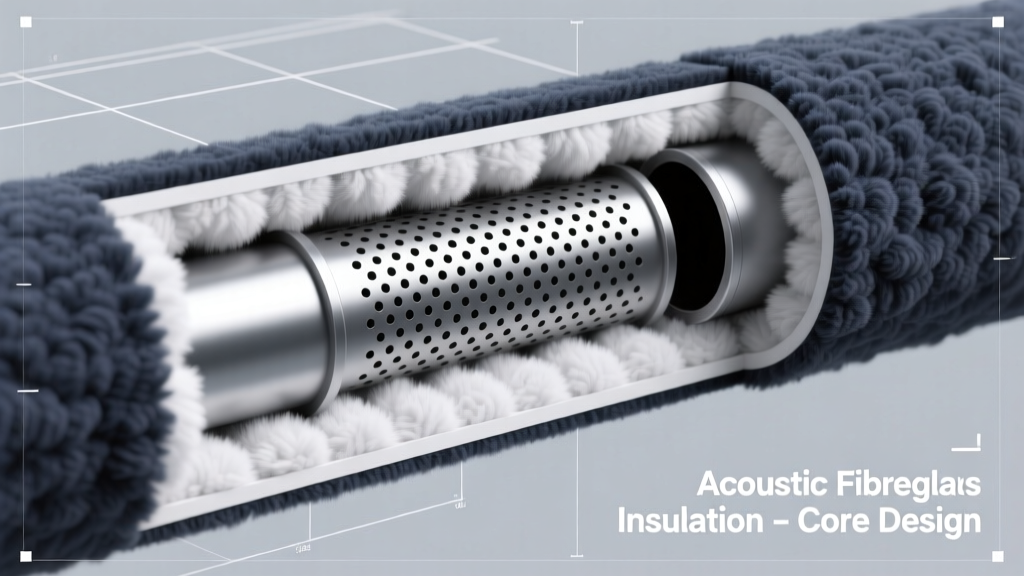
Earthmoving equipment like Caterpillar excavators and Komatsu wheel loaders generate intense exhaust pulses. The packing material must endure these pressure spikes while maintaining its structural integrity to prevent the muffler shell from rattling or developing exhaust leaks.
Fibreglass Packing: Performance and Limitations
Temperature Thresholds and Degradation
Standard E-glass fibreglass is the historical baseline for exhaust silencing. It performs reliably up to a continuous operating temperature of 650 °C. However, modern Tier 4 Final diesel engines frequently produce exhaust gas temperatures exceeding 700 °C during active diesel particulate filter (DPF) regeneration cycles.
When exposed to these regeneration spikes, the binder resins in standard fibreglass vaporize. The fibres then become brittle, pulverize under exhaust vibration, and blow out of the tailpipe. This degradation typically forces a repack interval of just 1,200 operating hours.
Acoustic Absorption Rates
Intact fibreglass provides excellent high-frequency attenuation, typically achieving a 45 decibels (dB) noise reduction across the 1,000 to 4,000 Hertz range. The standard 3.2 millimetres fibre diameter creates an optimal surface area for trapping sound waves, provided the material remains densely packed inside the chamber.
Basalt Fibre Packing: The Modern Alternative
Thermal Stability in High-Load Cycles
Basalt fibre is a continuous filament material extruded from melted basalt rock. It offers superior thermal stability and chemical resistance compared to traditional glass fibres, making it highly effective for high-temperature exhaust applications in heavy earthmoving machinery without degrading. It maintains structural integrity at continuous temperatures up to 850 °C.
Because it lacks the organic binder resins found in E-glass, basalt does not vaporize during DPF regenerations. The Environmental Protection Agency (EPA) notes that maintaining consistent noise control is vital for urban construction projects, and basalt ensures the muffler performs identically on day one and day five hundred.
Longevity and Maintenance Intervals
Fleet operators utilizing basalt packing report extending their muffler repack intervals to 2,500 operating hours. This aligns perfectly with standard 250-hour or 500-hour preventive maintenance schedules, allowing mechanics to inspect and repack the exhaust during major service milestones rather than performing emergency mid-cycle repairs.
Fibreglass vs Basalt: Direct Comparison Matrix
Use this decision framework to select the appropriate packing material based on your fleet's specific operational demands and engine generation.
| Metric | E-Glass Fibreglass | Basalt Fibre |
|---|---|---|
| Continuous Temp Limit | 650 °C | 850 °C |
| DPF Regen Survival | Poor (Binder vaporizes) | Excellent (Inorganic) |
| Repack Interval | 1,200 hours | 2,500 hours |
| Material Cost Premium | Baseline | +18% |
| Best Application | Older Tier 3 engines, light load | Tier 4 Final, high-load earthmoving |
Frequently Asked Questions
How often should you repack heavy equipment mufflers?
Repack intervals depend entirely on the packing material and engine load. Standard fibreglass requires replacement every 1,200 operating hours, while high-temperature basalt fibre extends this interval to 2,500 operating hours. Always inspect packing density during 500-hour major service intervals.
Is basalt fibre safe for Tier 4 Final diesel engines?
Yes. Basalt fibre is specifically recommended for Tier 4 Final engines because it withstands the extreme 700 °C+ exhaust temperatures generated during active DPF regeneration cycles without melting, vaporizing, or losing acoustic density.
What causes fibreglass blowout in excavator exhausts?
Blowout occurs when exhaust temperatures exceed the 650 °C threshold of E-glass fibreglass. The organic binders burn away, leaving the fibres brittle. Engine vibration then pulverizes the fibres into dust, which is forced out of the tailpipe by exhaust pressure pulses.
Conclusion and Next Steps
Selecting the correct acoustic material dictates both the noise compliance and maintenance overhead of your earthmoving fleet. While fibreglass inside heavy equipment mufflers remains viable for older, lower-temperature engines, modern high-load machinery demands the thermal resilience of basalt fibre to prevent premature blowouts. Audit your current fleet exhaust maintenance logs today, identify machines experiencing frequent DPF regenerations, and order basalt repack kits for their next scheduled preventive maintenance cycle.