Operator Guide: Applying Paint for Heavy Equipment on Railways
Master surface prep and application techniques for paint for heavy equipment used in railroad maintenance, from tampers to rail grinders.
The Degradation Matrix: Why Rail Environments Destroy Standard Coatings
Railroad maintenance machinery operates in one of the most chemically and mechanically aggressive environments in the heavy machinery sector. When selecting and applying paint for heavy equipment on the railway right-of-way (ROW), standard alkyd enamels and direct-to-metal (DTM) acrylics fail prematurely. The primary culprits are not just UV exposure and mechanical abrasion, but specific chemical interactions unique to rail corridors.
Wooden railroad ties are heavily treated with creosote or copper naphthenate. When maintenance vehicles like ballast regulators and tie cranes brush against these ties, the chemical transfer rapidly saponifies and degrades standard oil-based and alkyd coatings. Furthermore, winter switch-heating operations and de-icing protocols leave high concentrations of soluble chlorides on the rail web and ballast, accelerating under-film corrosion on equipment undercarriages.
⚠️ FRA Visibility & Compliance Warning: The Federal Railroad Administration (FRA) mandates strict visibility standards for maintenance-of-way (MOW) equipment. Operators must ensure that high-visibility yellow or orange topcoats meet specific chromaticity coordinates (per AREMA Chapter 15), and that retroreflective tape placements are not obscured by overspray during touch-up painting operations.Equipment-Specific Coating Profiles
Different railroad maintenance vehicles require distinct coating systems based on their operational mechanics and localized microclimates.
Plasser & Theurer 09-3X Tamping Machines
Tamping machines operate under extreme hydraulic stress. The Plasser & Theurer 09-3X utilizes high-pressure hydraulic systems that are prone to micro-leaks at the tamping head cylinders. Standard polyurethanes will blister and peel when exposed to hot mineral-based hydraulic fluids. Best Practice: Apply a high-build, chemical-resistant polysiloxane topcoat over an epoxy primer on all lower chassis components and tamping banks. Polysiloxanes offer superior resistance to hydraulic fluid degradation and eliminate the need for a separate clear coat.
Loram C44 Rail Grinders
Rail grinders generate immense localized heat and metallic spark showers. The grinding head area of a Loram C44 series grinder experiences thermal shock that causes rigid epoxies to micro-crack and delaminate. Best Practice: Restrict standard epoxy-polyurethane systems to the upper cab and carbody. For the lower grinding bogies and spark skirts, operators must apply a high-temperature silicone alkyd or an intumescent base layer capable of withstanding continuous surface temperatures up to 400°F (204°C) without losing adhesion.
Brandt Hi-Rail Excavators
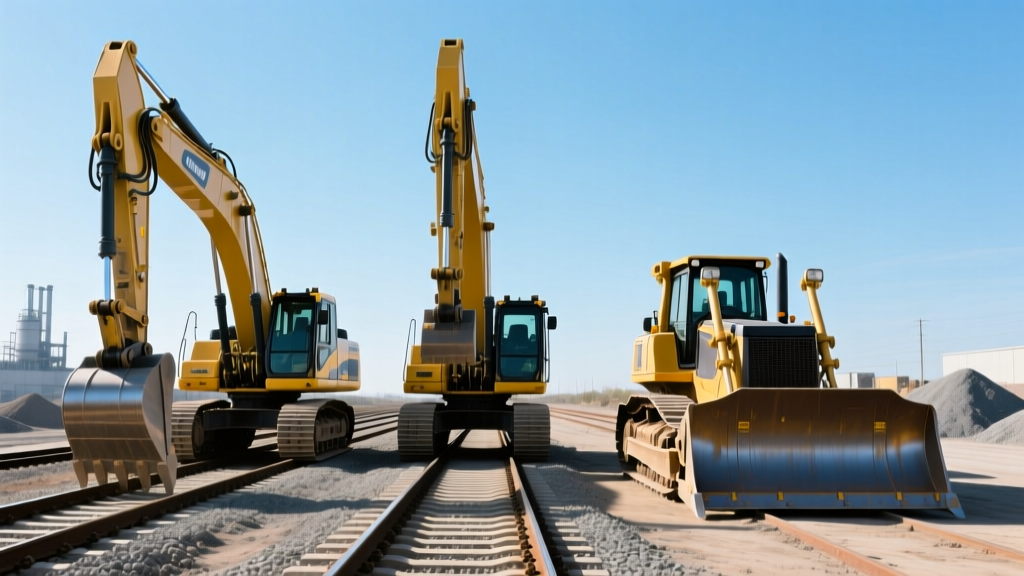
Hi-rail equipment transitions between asphalt roadways and steel rails, subjecting the undercarriage to severe impact abrasion from road debris and crushed rock ballast. Best Practice: Utilize an elastomeric polyurethane or a Kevlar-reinforced abrasive-resistant coating on the lower third of the boom, stick, and track guides. These coatings flex upon impact rather than shattering, preserving the substrate integrity.
2026 Coating System Matrix for MOW Equipment
| Coating Type | Chemistry | Dry Film Thickness (DFT) | Est. Cost (2026) | Primary Application Zone |
|---|---|---|---|---|
| Macropoxy Primer | Polyamide Epoxy | 4.0 - 6.0 mils | $75 - $90 / gal | Undercarriage, structural steel |
| Polysiloxane Topcoat | Epoxy Polysiloxane | 3.0 - 5.0 mils | $140 - $175 / gal | Hydraulic zones, lower chassis |
| Aliphatic Polyurethane | Acrylic Polyurethane | 2.0 - 3.0 mils | $95 - $120 / gal | Cab exterior, upper carbody |
| High-Temp Silicone | Silicone Alkyd | 1.5 - 2.0 mils | $110 - $130 / gal | Rail grinder skirts, exhausts |
Operator Training: Surface Prep in the Right-of-Way
The most expensive topcoat will fail in weeks if surface preparation is compromised by rail-specific contaminants. Maintenance crews working in the field rarely have access to enclosed blast booths, making power-tool cleaning the standard. Adherence to SSPC (Society for Protective Coatings) standards is non-negotiable.
- Soluble Salt Removal (Critical First Step): Before any mechanical abrasion, wash the equipment with a high-pressure (3,000+ PSI) freshwater rinse mixed with a soluble salt neutralizer (e.g., Chlor*Hold). Rail corridors are heavily salted in winter; painting over invisible chloride deposits guarantees osmotic blistering.
- Mechanical Abrasion (SSPC-SP 11): Use rotary wire brushes or flap discs to achieve SSPC-SP 11 (Power Tool Cleaning to Bare Metal). Operators must create a minimum 1.5-mil anchor profile. Never use standard steel wire wheels on aluminum hi-rail guide wheels; use non-metallic abrasive pads to prevent galvanic corrosion initiation.
- Creosote Decontamination: If the substrate has been in contact with treated ties, wipe the area with an industrial xylene or MEK solvent. If the solvent rag turns brown/black, repeat the process until the rag is clean. Epoxy primers will not bond to creosote residue.
- Dust Extraction: Ballast dust is highly alkaline. After grinding, blow off the surface with oil-filtered compressed air, followed by a tack cloth wipe. Trapped limestone dust will alter the pH of the curing epoxy, resulting in a chalky, under-cured film.
Application Protocols & Curing in Microclimates
Railroad maintenance often occurs in narrow weather windows or during nighttime track outages. Operators must understand how ambient conditions affect the cross-linking of modern industrial coatings.
Field Insight: "Applying polyurethane topcoats during early morning track outages often leads to amine blush or moisture entrapment. The dew point on heavy steel machinery drops slower than the ambient air temperature. Always verify that the steel surface temperature is at least 5°F (3°C) above the dew point using a digital magnetic surface thermometer, not just an ambient weather app." — Senior MOW Coating Inspector
Managing Humidity and Temperature Swings
When applying epoxy primers in high-humidity environments (above 85% RH), switch to a moisture-cured urethane (MCU) primer. MCU primers utilize atmospheric moisture to catalyze the curing process, turning a high-humidity liability into an asset. For polysiloxane topcoats, maintain a strict wet-film thickness (WFT) using a mil gauge. Applying too thick in an attempt to save time will trap solvents, leading to solvent popping and pinholes when the equipment is exposed to direct midday sun on the tracks.
FAQ: Touch-Ups and Regulatory Compliance
Can operators use aerosol DTM paints for quick trackside touch-ups?
Only for temporary cosmetic fixes on non-critical upper carbody areas. Aerosol DTMs lack the dry film thickness and chemical resistance to survive ballast impact or hydraulic fluid exposure. For trackside repairs on structural or hydraulic components, carry two-part epoxy putty sticks and a high-solids brush-grade polyurethane touch-up kit.
How does copper naphthenate affect newly painted hi-rail gear?
Copper naphthenate (the green/brown preservative used on modern ties) acts as a severe plasticizer to drying oils. If a hi-rail excavator tracks fresh copper naphthenate onto a newly painted boom, it will prevent alkyd and standard polyurethane paints from fully cross-linking, leaving a permanently tacky surface that attracts abrasive track dust. Always use a polysiloxane or fluoropolymer topcoat on components likely to contact new ties.
What is the required cure time before returning equipment to the rails?
While coatings may be "dry to touch" in 2 hours, full chemical resistance (necessary to withstand ballast abrasion and tie-plate impacts) typically requires 7 to 14 days at 70°F. If the machine must be deployed immediately, utilize a fast-cure polyaspartic topcoat, which achieves full chemical and abrasion resistance in under 4 hours, even at temperatures down to 35°F.