Operator Guide to Steel for Heavy Equipment in Forestry Logging
Master operator training for forestry logging machinery. Learn to inspect and preserve advanced steel for heavy equipment in harsh timber environments.
The Brutal Reality of Timber Harvesting on Machine Metallurgy
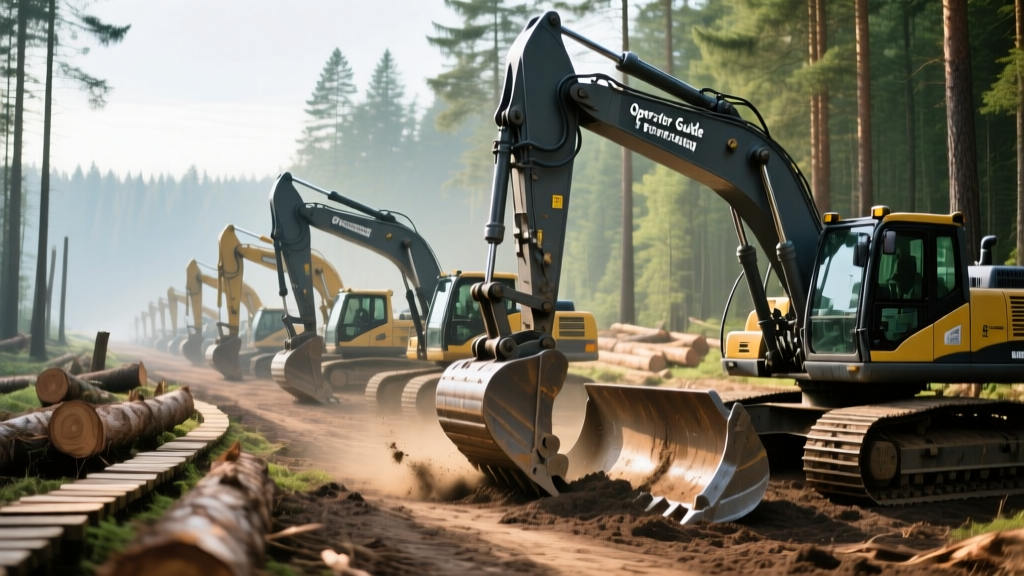
Forestry and logging represent the most punishing operating environments in the heavy machinery sector. Unlike controlled grading or trenching, timber harvesting involves unpredictable kinetic shocks, extreme abrasive wear from granite and quartz-laden soil, and immense torsional stress. When an operator swings a Tigercat H855D harvester head into a frozen, uneven stump, or drags a John Deere 9010G forwarder grapple across exposed bedrock, the machine's structural integrity is pushed to its absolute limits. Understanding the specific steel for heavy equipment used in these applications is not just a concern for the maintenance shop—it is a critical component of daily operator training and best practices.
Standard mild carbon steel (such as ASTM A36, yielding at 36,000 PSI) will dent, deform, and fatigue rapidly under logging conditions. To survive, modern forestry machinery relies on Advanced High-Strength Steel (AHSS) and Abrasion-Resistant (AR) alloys. However, these advanced metallurgies behave differently under stress and temperature variations, requiring operators to adapt their techniques to prevent catastrophic brittle fractures and premature wear.
WARNING: Cold Weather Brittle FractureHigh-carbon and high-hardness AR steels undergo a ductile-to-brittle transition at low temperatures. If you are operating a feller buncher in sub-zero conditions (below 14°F / -10°C), the steel loses its ability to absorb shock through micro-deformation. Striking a solid rock ledge with the saw head mount in these conditions can cause instantaneous, catastrophic cracking rather than bending.
Decoding the Metallurgy: What is Protecting Your Cab?
Operators must understand the difference between structural strength and surface abrasion resistance. The boom arms of a Ponsse ElephantKing forwarder require high yield strength to resist bending under multi-ton timber loads, while the belly pans and skid plates of a Caterpillar 545C skidder require extreme surface hardness to resist being ground away by rocks.
Abrasion-Resistant (AR) steels are measured by their Brinell Hardness Number (BHN). While it might seem logical to always use the hardest steel available, higher hardness correlates with increased brittleness and decreased weldability. This is why equipment manufacturers use a strategic mix of steel grades across different machine zones.
Steel Grade Matrix for Forestry Machinery
| Steel Grade | Hardness / Yield | Primary Forestry Application | Est. Cost (per sq ft) |
|---|---|---|---|
| Hardox 450 | 450 HBW / 1,200 MPa | Harvester frames, grapple tines | $8.00 - $12.00 |
| Hardox 500 | 500 HBW / 1,400 MPa | Feller buncher saw mounts, bucket edges | $12.00 - $16.00 |
| Strenx 700 | Structural / 700 MPa Yield | Forwarder booms, crane pedestals | $10.00 - $14.00 |
| AR400 | 400 HBW / 1,034 MPa | Skidder belly pans, winch fairleads | $6.00 - $9.00 |
For a deeper understanding of how these materials are engineered specifically for timber harvesting, refer to SSAB's forestry industry guidelines, which detail the impact resistance requirements for modern logging attachments.
Operator Best Practices: Preserving High-Strength Steel
The most expensive steel in the world will fail prematurely if operated incorrectly. Heavy equipment operator training must extend beyond joystick control to include an understanding of kinetic energy transfer and material limits.
1. Grapple and Saw Head Shock Mitigation
When operating a feller buncher or harvester, the saw head is a multi-thousand-dollar assembly protected by high-hardness steel mounts. Operators frequently make the mistake of using the saw head housing to push aside brush or lever the machine over stumps. Because Hardox 500 is highly resistant to bending but vulnerable to sudden point-impact shocks, using the housing as a pry bar can initiate micro-fissures at the weld toes.
- Best Practice: Always use the designated push-plates or bulldozer blades for clearing debris. The saw head should only contact the target tree.
- Approach Angle: When felling on steep inclines, approach the stump perpendicular to the fall line whenever possible to distribute the torsional load evenly across the tilt cylinder mounts, rather than twisting the primary steel housing.
2. Undercarriage and Skid Plate Deflection Tactics
Skidders and forwarders constantly drag their underbellies over uneven, rocky terrain. While AR400 belly pans are designed for abrasion, they are not designed to absorb the full weight of the machine dropping onto a boulder.
- Best Practice: Maintain momentum when crossing known rock shelves, but avoid 'riding' the skid plate over high-center obstacles. Use the boom or blade to lift the front frame slightly, allowing the tracks or tires to bridge the gap.
- Mud Packing: In wet clay conditions, packed mud inside the track links or around the grapple arch acts as a secondary abrasive compound, grinding away at the steel from the inside out. Operators must schedule high-pressure wash-downs during lunch breaks to prevent this accelerated wear.
Daily Inspection Protocols for Abrasive Wear and Fatigue
Visual inspections from the cab are insufficient for high-stress forestry equipment. Operators must perform targeted, ground-level inspections focusing on the specific failure modes of high-strength steel.
"Operators think that if the steel isn't bent, it's fine. But high-strength structural steel doesn't warn you by bending; it warns you by cracking at the weld seams. A two-minute dye penetrant check on the boom base saves a $45,000 crane replacement."
— Master Mechanic, Pacific Northwest Logging Operations
The Magnaflux and Dye Penetrant Routine
For critical load-bearing components like the forwarder crane pedestal and the skidder grapple arch, operators should be trained to use aerosol dye penetrant kits (such as Magnaflux Spotcheck).
- Clean the Weld Toe: Use a wire brush and solvent to clean the intersection where the boom meets the pedestal.
- Apply Penetrant: Spray the red dye and allow it to sit for 10 minutes. The dye will wick into any micro-cracks invisible to the naked eye.
- Wipe and Develop: Wipe the surface clean and spray the white developer. If red lines bleed through the white background, the steel has suffered fatigue cracking and must be taken out of service immediately.
Adhering to strict maintenance and inspection protocols is not just best practice; it is a regulatory necessity. OSHA's logging operations standard (1910.266) mandates that all machines and their structural components be inspected and maintained in safe working order to prevent catastrophic failures in the harvesting zone.
When to Replace vs. Rebuild: Field Welding Dangers
A common and dangerous practice in remote logging camps is field-welding damaged high-strength steel components using standard E7018 electrodes. This is a critical error. High-hardness steels like AR500 are highly susceptible to Hydrogen-Induced Cracking (HIC) when exposed to the moisture in standard welding rods and the rapid cooling of ambient air.
Actionable Decision Framework: Repair or Replace?
- Abrasive Wear (Surface): If an AR400 skid plate or bucket edge is worn down by friction but has no structural cracks, rebuild it. Use a hardfacing wire (e.g., Stoody 1186) to lay down a chromium-carbide wear pad. Cost: ~$800 in materials and labor.
- Structural Yielding (Bending): If a Strenx 700 boom arm has visibly yielded (bent), do not attempt to heat and straighten it. Heating destroys the thermomechanical rolling properties of the steel. Replace the component. Cost: $12,000+.
- Cracking at Weld Zones: If dye penetrant reveals cracking at a factory weld, the machine must be moved to a climate-controlled shop for pre-heated, low-hydrogen welding using specialized undermatching fillers (like ESAB OK 48.00). Field repairs are strictly prohibited.
Ultimately, the longevity of forestry machinery relies on the operator's respect for the materials protecting them. By understanding the specific characteristics of the steel for heavy equipment used in logging, adapting driving techniques to mitigate shock loads, and executing rigorous daily inspections, operators can drastically reduce unscheduled downtime and extend the service life of their multi-million-dollar fleets.