Demolition Attachments for Mining Heavy Equipment: A Comparison
Compare dedicated demolition rigs vs. retrofitting mining heavy equipment. Analyze costs, hydraulic specs, and attachment types for mine site teardowns.
The Intersection of Mine Decommissioning and Equipment Utilization
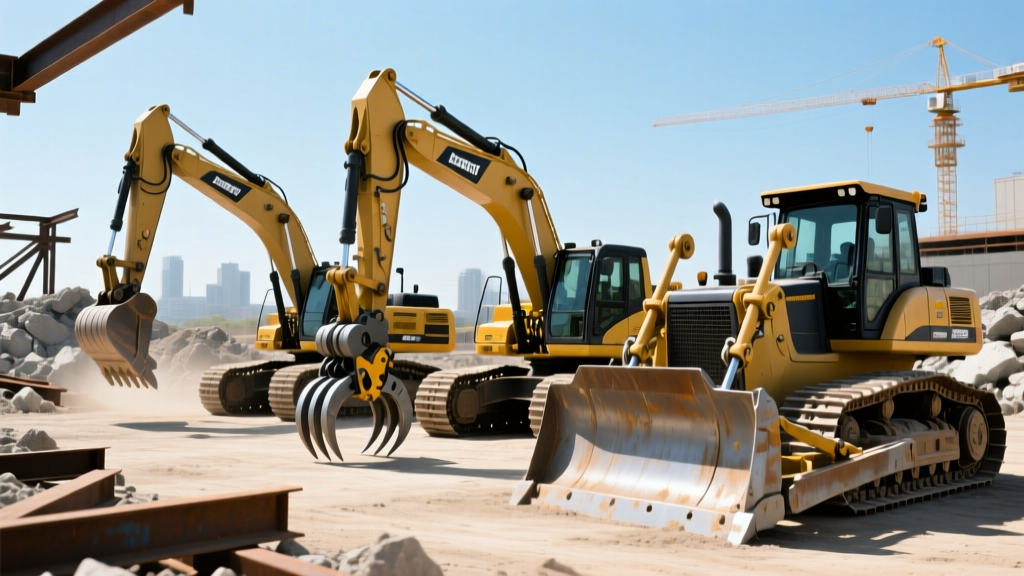
Mining operations inevitably face massive structural teardowns during site decommissioning, mineral processing mill upgrades, or shaft dismantling. Fleet managers are frequently forced into a capital-intensive decision: acquire dedicated demolition excavators (such as the Cat 352F Ultra High Demolition) or retrofit existing mining heavy equipment with specialized demolition attachments. While dedicated demolition rigs offer superior reach and factory-integrated safety features, retrofitting standard 50-ton to 90-ton mining excavators presents a highly viable, cost-effective alternative for mid-scale mine site restructuring.
This analysis compares the financial, operational, and mechanical trade-offs of utilizing demolition attachments on standard mining carriers versus deploying purpose-built demolition fleets, providing a concrete framework for equipment allocation.
The Financial Case: Retrofitting vs. Dedicated Demolition Carriers
The capital expenditure (CAPEX) gap between a standard mining excavator and a dedicated demolition rig is substantial. Purpose-built demolition machines feature specialized high-and-wide undercarriages, reinforced cabs with FOPS (Falling Object Protective Structures), and multi-piece booms that command a heavy premium.
| Equipment Configuration | Estimated Base Cost (USD) | Attachment / Retrofit Cost | Total Fleet Investment |
|---|---|---|---|
| Dedicated Demolition Rig (e.g., Cat 352F UHD) | $650,000 - $720,000 | $110,000 (Factory Shear) | $760,000 - $830,000 |
| Standard Mining Excavator (e.g., Cat 395 or Komatsu PC800) | $550,000 - $610,000 | $15,000 (Aux Valve Block) + $85,000 (Attachment) | $650,000 - $710,000 |
| Retrofit Savings | $90,000 - $140,000 per unit | ||
For mining operations that only require demolition capabilities for 3 to 6 months during a plant upgrade, the ROI on retrofitting existing mining heavy equipment is immediate. However, this approach requires careful management of auxiliary hydraulic systems and structural wear.
Core Demolition Attachments for Mining Excavators
When converting a standard mining excavator for demolition, the choice of attachment dictates the machine's cycle time and structural processing capability. Below is a breakdown of the three primary attachment categories used in mine site teardowns.
1. Hydraulic Hammers and Breakers
Used for fracturing reinforced concrete foundations, ballast rock, and mill footings. For a 50-ton class mining excavator, the Epiroc MB 1700 or Caterpillar H180GC are industry standards. These breakers weigh approximately 11,000 lbs and require a hydraulic flow rate of 95 to 130 gallons per minute (gpm) at 2,300 to 2,600 psi. Pricing typically ranges from $65,000 to $85,000. The primary advantage is simplicity; most mining excavators already possess a standard two-way hammer circuit.
2. Rotating Hydraulic Shears
Essential for dismantling structural steel, conveyor gantries, and processing plant superstructures. Models like the Genesis GXP 500 or LaBounty MSD 7500 feature continuous 360-degree rotation and cutting forces exceeding 1,200 tons. These units cost between $120,000 and $160,000. Unlike breakers, shears require a continuous rotation (CR) hydraulic circuit. Retrofitting a standard mining excavator with a third-function valve block and rotary swivel to support a shear adds $12,000 to $18,000 to the project budget.
3. Concrete Pulverizers and Crushers
Used for secondary processing—crushing demolished mill foundations to separate rebar from concrete for on-site recycling. The NPK U31J or Trevi Benne PF30 exert crushing forces up to 450 tons. Priced around $55,000 to $75,000, pulverizers are highly forgiving on the carrier's hydraulic system but generate immense shock loads on the excavator's stick and boom linkage.
CRITICAL WARNING: Auxiliary Hydraulic Flow MismatchesMining heavy equipment is typically spec'd for high-flow, low-pressure applications (like hydraulic thumbs or tilting buckets). Demolition shears and breakers demand high-pressure, variable-flow circuits. Running a 130 gpm breaker on a carrier limited to 90 gpm will cause severe hydraulic cavitation, overheating the hydraulic oil past 180°F (82°C) and destroying the main hydraulic pump within 50 hours of operation. Always verify the carrier's auxiliary pump output before pairing.
Application Matrix: Matching Attachments to Mine Site Materials
Selecting the correct attachment requires analyzing the specific material composition of the mine site structures. The following decision matrix outlines the optimal tool for common mining demolition scenarios.
| Target Material / Structure | Primary Attachment | Secondary Tool | Expected Cycle Time (per ton) |
|---|---|---|---|
| Heavy Rebar / Steel Conveyor Frames | Rotating Shear (e.g., Genesis GXP) | Grapple | 0.8 - 1.2 minutes |
| Reinforced Concrete Mill Foundations | Hydraulic Breaker (e.g., Epiroc MB) | Pulverizer | 2.5 - 4.0 minutes |
| Brick / Block Control Rooms | Standard Bucket with Rake | Breaker | 0.5 - 0.8 minutes |
| Overburden / Bedrock Trenching | Ripper Tooth / Fracturing Hammer | Standard Bucket | 1.5 - 2.0 minutes |
Operational Trade-Offs: Cycle Times and Undercarriage Wear
While retrofitting mining heavy equipment saves upfront capital, it introduces operational compromises compared to dedicated demolition rigs.
- Reach and Stability: Dedicated demolition excavators feature elongated, multi-piece booms that can reach 60 to 90 feet vertically, allowing operators to dismantle structures from a safe distance. Standard mining excavators are limited to their standard dig depth and reach (typically 25 to 35 feet), forcing the machine to work closer to the collapse zone.
- Undercarriage Degradation: Demolition generates severe overhead debris. Standard mining undercarriages are designed for abrasive ground friction, not high-impact falling objects. Without aftermarket track guards and heavy-duty FOPS cab reinforcement, the risk of cracked track links and shattered cab glass increases by an estimated 40% during structural teardowns.
- Linkage Stress: The lateral twisting forces applied when using a pulverizer or shear to pull down structural steel can warp the H-linkage on a standard mining boom. Operators must strictly adhere to the manufacturer's lateral load limits, which are significantly lower on standard digging booms than on demolition-specific straight-booms.
According to OSHA Demolition Standards, mechanical demolition requires strict sequencing to prevent premature structural collapse. When utilizing standard reach mining equipment, operators must maintain a clearance distance of at least 1.5 times the height of the structure being dismantled, a metric that often necessitates moving the heavy equipment more frequently than a high-reach dedicated rig would require.
Step-by-Step Framework: Decommissioning a Mineral Processing Plant
When executing a mill teardown using retrofitted mining equipment, follow this sequenced framework to maximize attachment lifespan and ensure compliance with Mine Safety and Health Administration (MSHA) structural guidelines.
- Pre-Teardown Engineering Survey: Identify load-bearing columns versus non-load-bearing cladding. Never use a standard-reach mining excavator to undercut primary load-bearing pillars without engineered shoring.
- Soft Strip (Manual/Light Equipment): Remove hazardous materials, electrical conduits, and lightweight aluminum cladding before deploying heavy attachments.
- Top-Down Steel Dismantling: Equip the mining excavator with a rotating shear. Begin cutting conveyor gantries and roof trusses from the highest accessible point, working downward. Use the shear's rotation to lay cut steel flat, minimizing drop-shock on the machine's undercarriage.
- Concrete Foundation Fracturing: Swap the shear for a hydraulic breaker. Fracture the mill floor and equipment footings. Keep the breaker tool perpendicular to the concrete surface; angled strikes will snap the moil point and damage the excavator's stick cylinder.
- Material Segregation: Switch to a concrete pulverizer to crush the fractured foundations, separating the rebar matrix from the concrete aggregate for separate hauling.
Frequently Asked Questions
Can I use a quick coupler to switch between mining buckets and demolition shears?
Yes, but standard pin-grabber quick couplers are not recommended for heavy demolition shears due to the extreme torsional loads. Use a dedicated, heavy-duty hydraulic quick coupler rated specifically for the shear's weight and operating pressure, such as the Miller SP Series, and inspect the locking pins for micro-fractures every 50 hours.
How does retrofitting affect the mining equipment's resale value?
Installing auxiliary hydraulic valve blocks and FOPS cab guards generally increases the resale value of mining heavy equipment by 5% to 8%, as it expands the machine's utility for future buyers in the scrap and quarry sectors. However, excessive wear on the boom linkage from lateral pulling can decrease value if not refurbished prior to sale.
What is the maintenance interval for demolition attachments compared to standard buckets?
Standard mining buckets require greasing every 10 hours and edge replacement every 1,500 to 2,000 hours. Demolition shears require daily greasing of the pivot points, weekly checking of the rotary swivel gear oil, and blade flipping or replacement every 400 to 600 hours depending on the abrasiveness and tensile strength of the steel being processed.