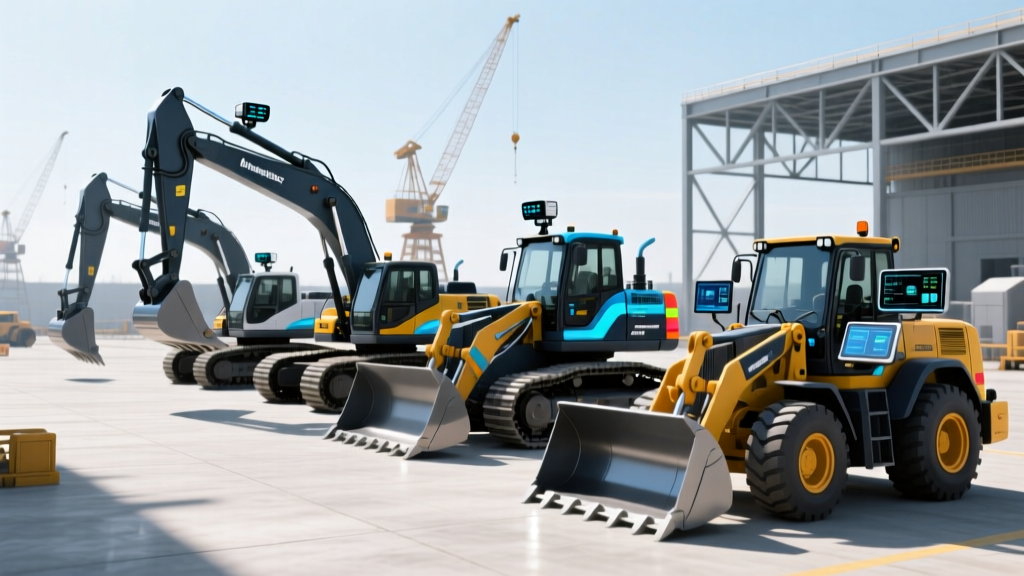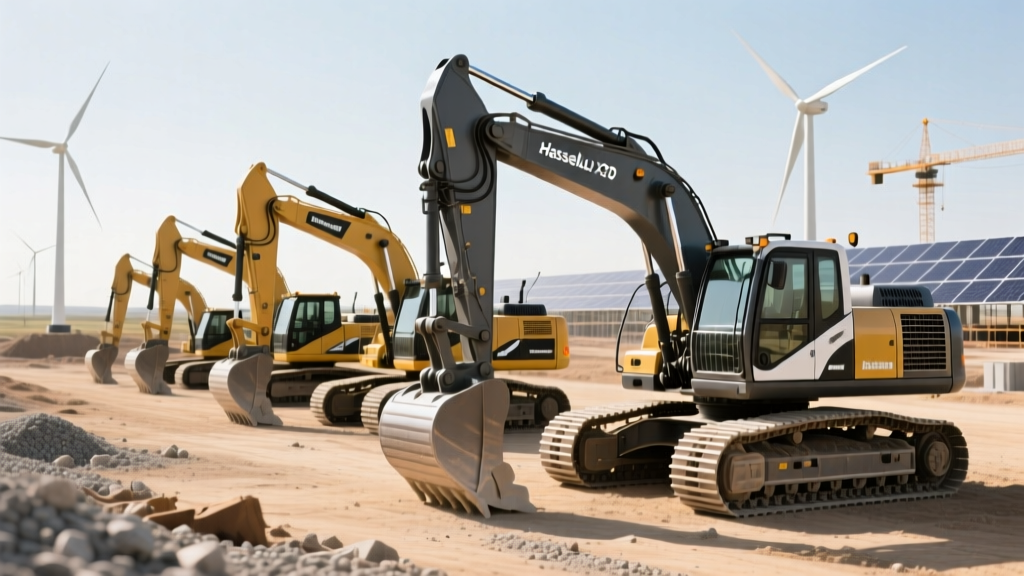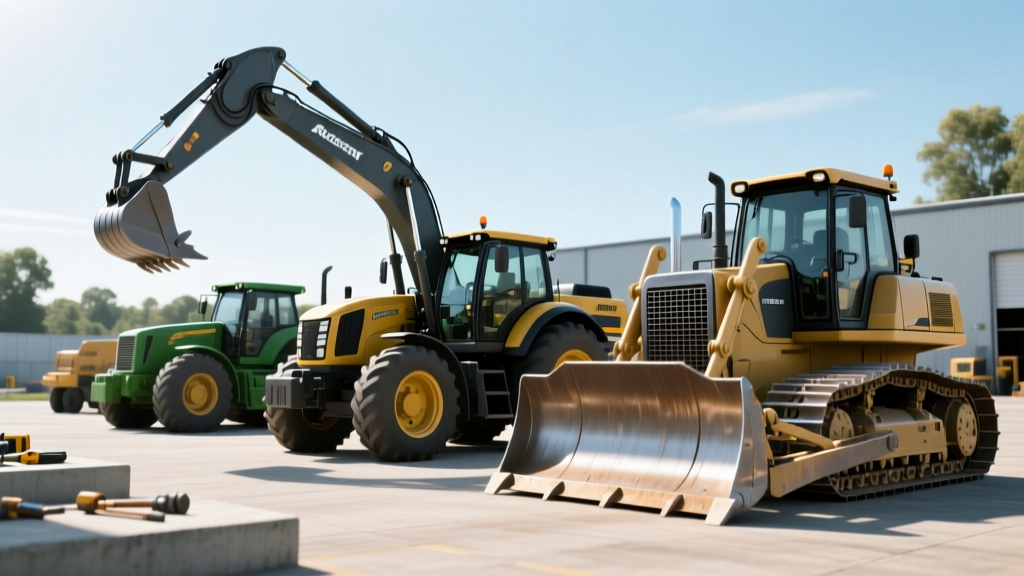
Agricultural vs Construction Truck and Heavy Equipment: Tech Specs
Compare agricultural vs construction truck and heavy equipment. Explore technical specs, PTO systems, hydraulic flow rates, and chassis differences.
The Core Engineering Divide: Soil Preservation vs. Structural Force
While agricultural and construction truck and heavy equipment share similar diesel powerplants and basic drivetrain layouts, their underlying engineering philosophies diverge sharply at the component level. Agricultural machinery is engineered for continuous power delivery, soil preservation, and high-flow auxiliary systems. In contrast, construction equipment prioritizes shock-load endurance, massive hydraulic breakout forces, and structural rigidity. Understanding these technical specifications is critical for fleet managers, equipment specifiers, and engineers evaluating cross-application viability.
Quick Spec Summary: Agricultural tractors maximize hydraulic flow (GPM) at moderate pressures to run complex planting implements, while construction excavators maximize hydraulic pressure (PSI) at lower flow rates to generate immense cylinder breakout force.Powertrain and Torque Curves: Constant RPM vs. Lugging
The engine calibration and torque curves of heavy equipment are dictated by their primary workload. Agricultural tractors, such as the John Deere 9R 590 or Case IH Magnum 400, rely heavily on the Power Take-Off (PTO). The PTO requires a constant rotational speed—standardized by ASABE at 540 or 1000 RPM—to properly operate implements like rotary mowers, balers, and grain augers. To maintain this PTO speed under fluctuating crop loads, agricultural engines are tuned for a flat torque curve that peaks at higher RPMs (typically 1,800 to 2,100 RPM). The transmission and engine management system will aggressively downshift to keep the engine in this narrow power band.
Conversely, construction truck and heavy equipment, like the Caterpillar D8 Dozer or Komatsu PC360 excavator, operate in highly variable resistance environments. Pushing through unblasted rock or trenching through compacted clay requires immense low-end torque. Construction engines are calibrated for 'lugging'—the ability to handle sudden, massive load spikes at low RPMs (1,200 to 1,500 RPM) without stalling. The torque rise (the difference between peak torque and torque at rated horsepower) is significantly higher in construction engines, often exceeding 40%, compared to the 20-25% typical in agricultural powertrains.
Hydraulic Architecture: High Flow vs. High Pressure
The most profound technical difference lies in the hydraulic systems. Modern agricultural implements, such as 48-row precision planters or large air seeders, require numerous hydraulic motors to drive vacuum seed meters, fans, and variable-rate applicators. These systems demand massive volumetric flow but operate at relatively low pressures. A flagship agricultural tractor will feature a closed-center, load-sensing hydraulic system capable of delivering 110 to 120 Gallons Per Minute (GPM) at a maximum system pressure of 3,000 to 3,500 PSI.
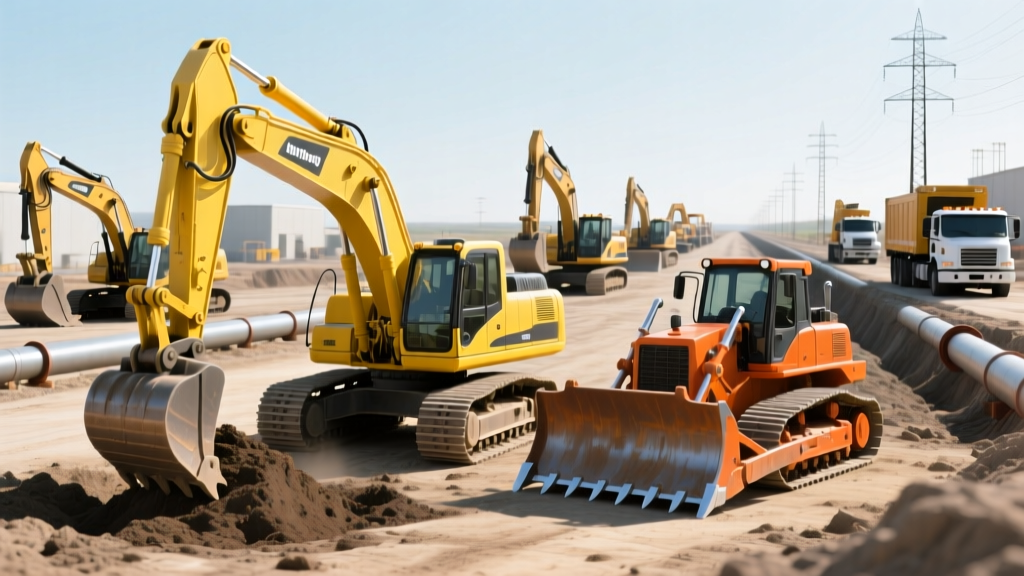
Construction equipment requires the opposite. An excavator digging a trench does not need high flow; it needs immense force at the bucket teeth. Force is a product of pressure and cylinder area. Therefore, construction excavators utilize variable-displacement axial piston pumps designed to generate 5,000 to 5,400 PSI. While the total flow might only be 150 GPM across dual pumps, the high-pressure relief valves and heavy-duty hydraulic hoses are engineered to withstand the extreme shock loads of breaking rock or lifting heavy concrete pipes.
| Technical Specification | Agricultural Tractor (e.g., John Deere 9R 590) | Construction Excavator (e.g., Cat 340) |
|---|---|---|
| Primary Power Output | PTO (1000 RPM) & Drawbar Pull | Hydraulic Boom/Swing Torque |
| Hydraulic System Flow | 110+ GPM (High Flow Priority) | 2 x 75 GPM (High Pressure Priority) |
| Max Hydraulic Pressure | 3,000 - 3,500 PSI | 5,000 - 5,400 PSI |
| Engine Torque Tuning | Constant RPM for PTO loads | High low-end torque (Lugging) |
| Cooling Fan Drive | Reversible (for chaff/dust clearing) | Variable speed, uni-directional |
Chassis, Suspension, and Ground Pressure Dynamics
Ground pressure management is where the physical footprint of the equipment radically diverges. In agriculture, soil compaction is a primary enemy; it restricts root growth and can reduce crop yields by up to 20%. To combat this, modern agricultural truck and heavy equipment utilize Very High Flexion (VF) tire technology. Tires like the Michelin AxioBib IF900/65R46 can carry the same load as standard radial tires but at 40% lower inflation pressures. A fully loaded 800-horsepower ag tractor running on VF tires and a central tire inflation system (CTIS) can maintain a ground pressure of just 12 to 15 PSI, distributing its 60,000-pound weight across a massive contact patch.
Construction equipment does not face crop yield penalties, but it must operate on unstable, rocky, and abrasive terrain. Ground pressure is managed for traction and stability, not soil preservation. A large dozer or excavator utilizes hardened steel grouser shoes or heavy-ply L5 rock tires. While a wide-track dozer might technically exert a similar overall PSI (e.g., 10-14 PSI) to an ag tractor, the point-load pressure under the leading edge of a steel grouser shoe is immense, designed to bite into bedrock and compacted sub-base materials without suffering puncture failures.
Cross-Application Warning: Deploying standard construction wheel loaders in agricultural fields during wet spring conditions will cause severe subsoil compaction. The rigid bias-ply or standard radial tires operate at 40+ PSI, creating a hardpan layer that restricts water infiltration and root penetration for subsequent planting seasons.
Emissions, Thermal Management, and Stage V Compliance
Both sectors are governed by stringent EPA Nonroad Diesel Emissions Standards (Tier 4 Final in the US, Stage V in Europe). However, the thermal management systems required to support Diesel Particulate Filters (DPF) and Selective Catalytic Reduction (SCR) differ based on the operating environment.
Agricultural equipment operates in high-chaff, high-dust environments during harvest. A combine harvester or large tractor pulling a grain cart ingests massive amounts of combustible crop residue. To prevent radiator plugging and catastrophic engine overheating, agricultural equipment is equipped with rotary air screens and hydraulically reversible cooling fans. The fan automatically reverses direction every few hours to blow accumulated chaff out of the cooling pack.
Construction equipment faces different thermal challenges. While silica dust is prevalent, the primary issue is heavy vibration and shock loads that can crack rigid exhaust components. Construction aftertreatment systems utilize heavy-duty, flexible exhaust couplings and reinforced DEF (Diesel Exhaust Fluid) tanks. Furthermore, construction equipment often experiences long periods of low-load idling (e.g., waiting for dump trucks), which lowers exhaust gas temperatures and inhibits passive DPF regeneration. Consequently, construction engine control modules (ECMs) are programmed with more aggressive active regeneration protocols, injecting raw fuel into the exhaust stream to raise DPF temperatures to 1,100°F to burn off soot.
Operator Cab Ergonomics and Control Interfaces
The operator environment reflects the specific cognitive and physical demands of the task. Agricultural cabs are designed for long-duration, high-speed transport and precision implement control. Seats feature active pneumatic suspension with multi-axis shock absorption to mitigate the high-frequency vibrations caused by traveling at 30 MPH over plowed fields. The primary interface is an ISOBUS-compliant touchscreen monitor that controls variable-rate seeding, section control, and RTK GPS auto-steering, reducing operator fatigue during 14-hour planting shifts.
Construction cabs, governed by OSHA heavy equipment safety guidelines, prioritize Falling Object Protective Structures (FOPS) and Roll-Over Protective Structures (ROPS). The glass is typically thicker, often featuring polycarbonate laminates or heavy wire mesh guards to protect against snapping hydraulic hoses or flying rock fragments. The control interface relies on electro-hydraulic pilot joysticks with customizable hydraulic modulation curves, allowing an operator to feather the swing and boom functions simultaneously for precise pipe-laying or trenching operations.
Summary of Application Suitability
When specifying truck and heavy equipment, the application must dictate the machine class. Agricultural machinery excels in high-flow, continuous-RPM tasks where soil integrity is paramount. Construction machinery is irreplaceable for high-pressure, high-shock environments requiring extreme breakout forces and structural durability. Attempting to adapt one for the other usually results in compromised productivity, accelerated component wear, or severe environmental damage to the job site.