Specifying Construction Mats for Heavy Equipment Rental in Renewables
Guide to selecting construction mats for heavy equipment rental on solar and wind sites. Compare CLT, HDPE, and composite mats with 2026 pricing.
Ground Pressure Realities in Renewable Energy Sites
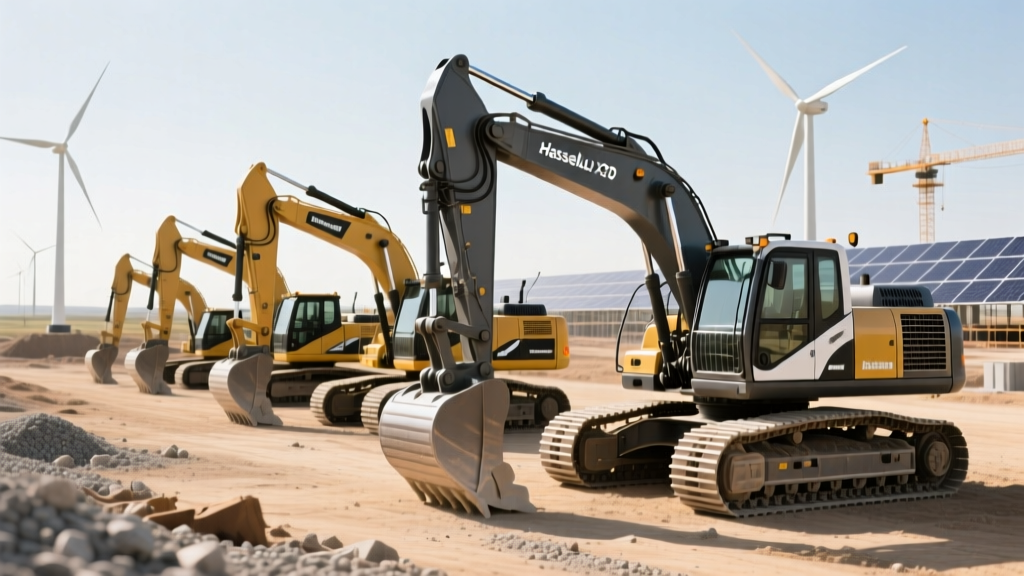
Utility-scale solar arrays, onshore wind farms, and Battery Energy Storage Systems (BESS) are frequently sited on marginal land with low California Bearing Ratio (CBR) soils, high water tables, or strict environmental protections. When deploying heavy machinery for these projects, ground failure is a primary risk. Specifying the correct ground protection and site prep materials is not optional; it is a critical path requirement for maintaining project schedules and preventing catastrophic equipment tipping.
2026 Industry Benchmark: The average utility-scale solar site requires 12,000 to 18,000 square feet of temporary ground protection mats per 50 MW phase to support pile drivers, telehandlers, and material logistics during wet-season construction.For contractors and procurement managers, navigating the market for construction mats for heavy equipment rental requires matching exact machine ground-bearing pressure (GBP) outputs with the structural deflection limits of rented matting. This guide provides the technical framework for selecting, pricing, and deploying rented mats across renewable energy sites.
Equipment-to-Mat Specification Matrix
Renewable energy construction utilizes a highly specialized fleet. The matting required for a solar pile driver differs vastly from the crane mats needed for wind turbine nacelle erection. Below is the 2026 specification matrix for common renewable energy heavy equipment.
| Equipment Class | Example Model | Operating Weight | Peak Ground Pressure | Required Mat Type (Rental) |
|---|---|---|---|---|
| Mobile Crane (Wind) | Liebherr LTM 1300-6.2 | 158,000 lbs | 185,000 lbs (Outrigger) | 12-inch Timber or Engineered Steel-Framed CLT |
| Solar Pile Driver | Vermeer PD10 | 28,500 lbs | 8.2 psi (Track) | 1-inch HDPE or 3-inch Composite |
| BESS Telehandler | Manitou MHT-X 10180 | 36,000 lbs (loaded) | 115 psi (Tire) | 6-inch Cross-Laminated Timber (CLT) |
| Articulated Hauler | Bell B25E | 50,000 lbs (loaded) | 45 psi (Tire) | 4-inch CLT or Heavy-Duty Fiberglass |
Material Science: CLT vs. HDPE vs. Fiberglass
When sourcing construction mats for heavy equipment rental, procurement teams must evaluate three dominant material categories. Each possesses distinct load-deflection characteristics, weight profiles, and 2026 rental rate structures.
Cross-Laminated Timber (CLT)
CLT mats have largely replaced traditional bolted timber crane mats in the renewable sector due to their uniform load distribution and lack of hardware that can snag on sensitive geotextile underlays. Constructed from alternating layers of dimensional lumber bonded with structural adhesives, CLT mats resist the point-loading forces generated by telehandler tires and crane outriggers.
- Standard Dimensions: 8 ft x 20 ft x 6 in (or 8 in for heavy crane work).
- Weight: ~4,200 lbs (6-inch profile).
- 2026 Rental Rate: $65 to $95 per mat/week, excluding transport.
- Best Application: BESS pad logistics, wind turbine laydown yards, and primary access roads over soft clay.
High-Density Polyethylene (HDPE)
HDPE mats are the standard for lighter, track-driven equipment. They are impermeable, easily washed, and prevent the tracking of invasive weed seeds across different solar array blocks—a major compliance requirement for environmental site monitors.
- Standard Dimensions: 4 ft x 8 ft x 1 in (interlocking).
- Weight: 90 to 110 lbs (man-portable).
- 2026 Rental Rate: $12 to $18 per mat/week.
- Best Application: Solar pile driver tracks, scissor lifts, and personnel walkways over wet topsoil.
Fiberglass Composite
Engineered fiberglass mats offer the highest strength-to-weight ratio. They do not absorb water, rot, or harbor pests, making them ideal for projects with strict environmental and agricultural land-use mandates. However, their stiffness can lead to cracking if deployed over highly uneven, uncompacted rock without a leveling bed of sand.
- Standard Dimensions: 8 ft x 20 ft x 4 in.
- Weight: ~2,800 lbs.
- 2026 Rental Rate: $110 to $150 per mat/week.
- Best Application: Wetland crossings, environmentally sensitive riparian zones, and high-speed haul roads.
The CBR Testing Framework for Mat Selection
Never specify rented mats based solely on equipment weight. The decision must be anchored to the site's California Bearing Ratio (CBR). OSHA regulations regarding ground conditions mandate that the supporting surface must withstand the imposed pressures without yielding. Follow this framework before signing a rental contract:
- Conduct Dynamic Cone Penetrometer (DCP) Testing: Test the soil at the exact depth the equipment will interact with (typically 12-18 inches below grade after topsoil stripping). Do not rely on surface visual inspections.
- Calculate Required Bearing Area: Divide the equipment's maximum point load (e.g., fully loaded telehandler front axle) by the soil's allowable bearing capacity (derived from CBR). This yields the minimum square footage of matting required.
- Apply the 3:1 Safety Factor: Multiply the calculated bearing area by 3 to account for dynamic load shifting, braking forces, and localized soil moisture fluctuations.
- Select Mat Thickness: For CBR < 3 (soft clay/wetlands), mandate 6-inch to 8-inch CLT. For CBR 4-8 (sandy loam), 4-inch composite or CLT is sufficient. For CBR > 8, 1-inch HDPE is adequate for track protection.
Navigating Rental Contracts and Logistics in 2026
The procurement of construction mats for heavy equipment rental involves hidden logistical costs that can derail a renewable project's budget if not addressed during the quoting phase.
- Transport Weight Limits: A standard 8-foot-wide CLT mat (8x20x6) weighs over 4,000 lbs. A standard tri-axle flatbed trailer is legally limited to roughly 60,000 lbs of payload in most jurisdictions, meaning you can only transport 14 to 16 CLT mats per load. Factor $3.50 to $5.00 per loaded mile into your site logistics budget.
- Cleaning and Remediation Fees: Rental yards enforce strict cleaning protocols. Returning mats caked in clay, concrete slurry, or drilling mud will trigger cleaning surcharges ranging from $45 to $85 per mat. Assign a laborer with a pressure washer to clean mats on-site before staging them for return pickup.
- Damage Waivers vs. Replacement Costs: Fiberglass composite mats can cost upwards of $6,500 each to replace if cracked by point-loading. Negotiate a damage waiver cap in your rental agreement, but ensure your operators are trained to use steel outrigger pads *on top of* the rented mats when deploying crane outriggers to prevent localized fiberglass crushing.
- Off-Rent Notification Windows: Renewable energy sites are remote. Many mat rental suppliers require 72-hour written notice for off-rent status to schedule flatbed retrieval. Failing to provide this notice results in 'standby billing,' which accrues at the full weekly rental rate.
Environmental Compliance and SPCC Integration
Renewable energy sites are heavily scrutinized by environmental regulators. When renting mats for use near BESS transformer pads or wind turbine gearbox staging areas, the mats become part of the site's Spill Prevention, Control, and Countermeasure (SPCC) plan. HDPE and Fiberglass mats are impermeable and can act as secondary containment berms if seams are sealed with polyurethane caulk. CLT mats, however, are absorbent. If a hydraulic line ruptures on a telehandler operating on rented CLT mats, the timber will absorb the fluid, classifying the entire mat as hazardous waste upon return. Always deploy impermeable drip pans beneath stationary equipment resting on rented timber mats to avoid catastrophic environmental disposal fees.