Best Heavy Equipment Transporters: 2026 Trailer Buying Guide
Compare the best heavy equipment transporters for 2026. This buying guide covers lowboy, modular, and Schnabel trailers, pricing, and axle weight math.
Executive Procurement Summary
Selecting the right heavy equipment transporters in 2026 requires moving beyond basic payload capacities. Buyers must align trailer camber, axle spacing, and deck materials with specific machinery footprints and state-by-state bridge laws. Standard 2-axle lowboys remain the baseline for mid-size excavators, but the surge in ultra-heavy mining and infrastructure equipment has pushed demand toward hydraulic modular systems and flip-neck configurations. This guide breaks down exact specifications, current market pricing, and engineering variables to inform your fleet acquisition.
Configuration Matrix: Matching Transporter to Machinery
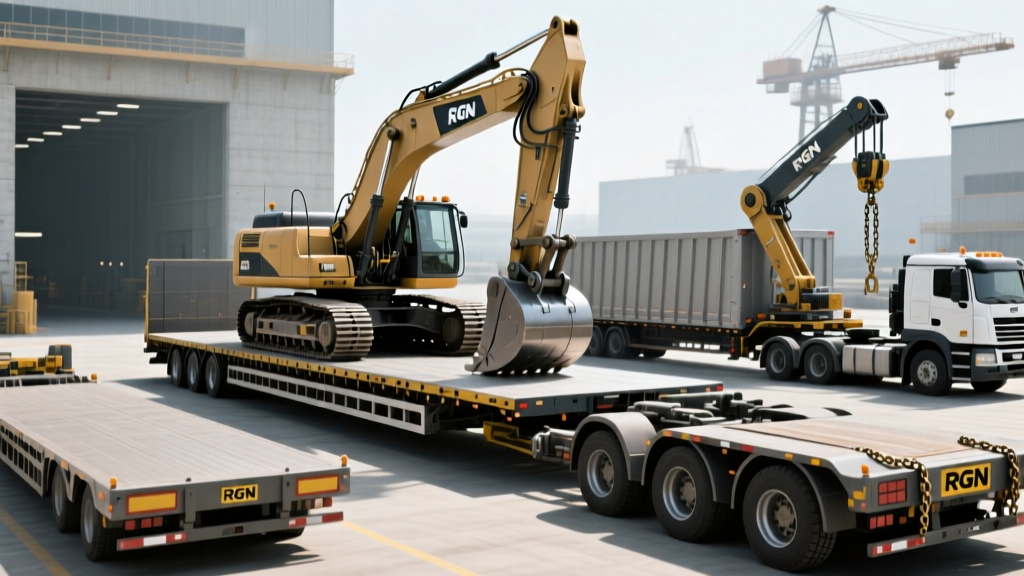
Not all heavy equipment transporters are built for the same load distribution. A concentrated load (like a rock drill) exerts entirely different stress on the main beams than a distributed load (like a paving machine). Use this matrix to align your primary cargo with the correct trailer architecture.
| Trailer Type | Best Application | Max Payload (Standard) | Loaded Deck Height | 2026 Base Price Range |
|---|---|---|---|---|
| Fixed-Neck Lowboy | Skid steers, small wheel loaders, agricultural tractors | 40 - 50 Tons | 24 - 28 inches | $45,000 - $65,000 |
| Hydraulic Detachable Gooseneck (HDG) | Large excavators, dozers, heavy crushing equipment | 55 - 80 Tons | 18 - 22 inches | $95,000 - $145,000 |
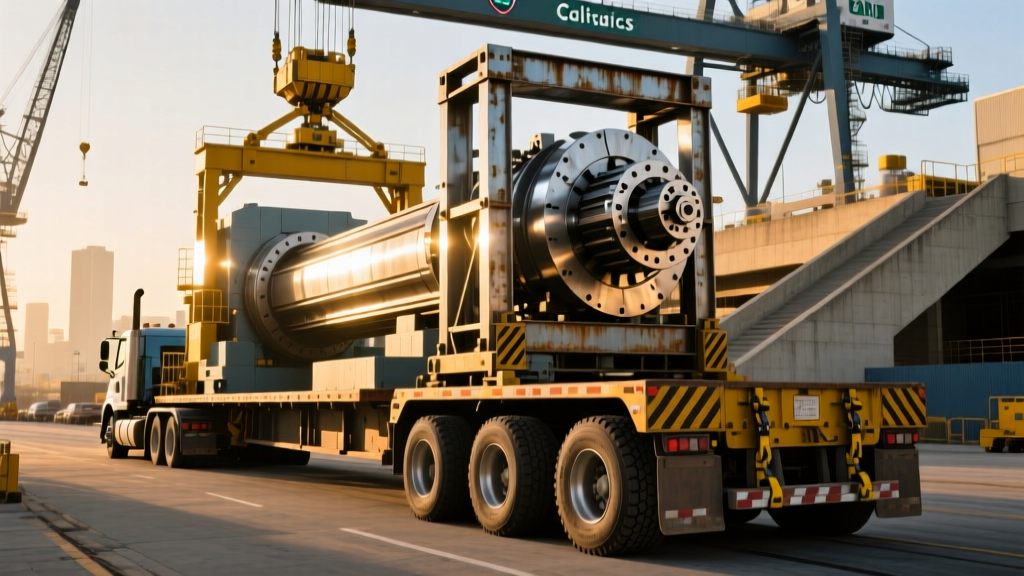
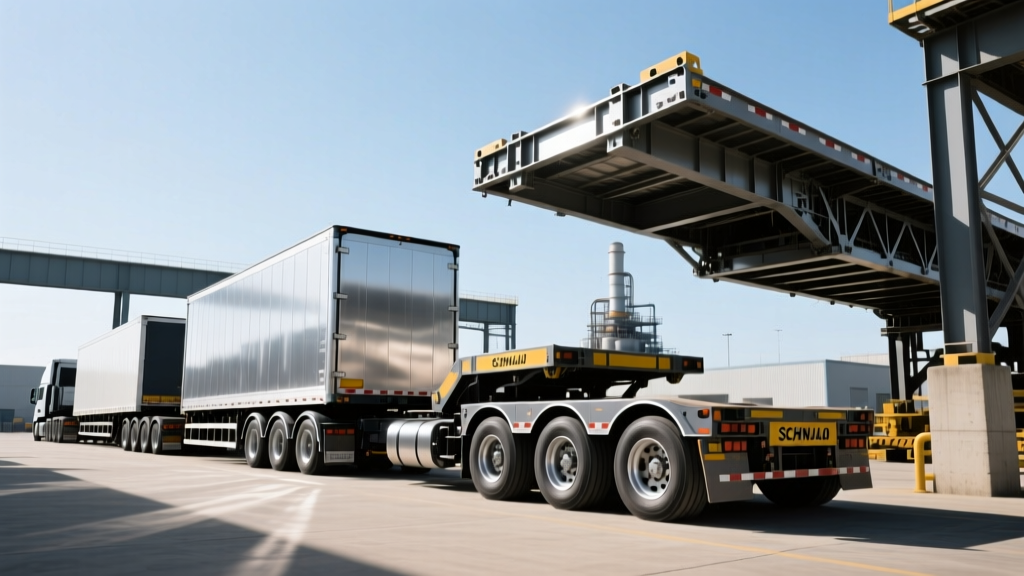
| Modular Hydraulic | Transformers, bridge beams, mining draglines | 100 - 300+ Tons | Adjustable (±24 in) | $250,000 - $600,000+ |
| Extendable Flatbed / Drop Deck | Long-track paving machines, wind turbine blades, pipe | 35 - 45 Tons | 36 - 42 inches | $70,000 - $110,000 |
Axle Configurations and Federal Bridge Law Compliance
The most common mistake buyers make when spec'ing heavy equipment transporters is focusing solely on the trailer's physical weight rating while ignoring the Federal Bridge Formula. A trailer rated for 60 tons is useless if your axle spacing restricts you to 40 tons on the interstate without costly overweight permits.
Spread Axles vs. Closed Axles
For operators running primarily in states that strictly enforce the Federal Bridge Formula, closed axle configurations (axles spaced 4 to 5 feet apart) combined with a jeep and booster are mandatory to maximize legal weight. Conversely, if your routes are heavily concentrated in states with grandfathered spread-axle laws (like Florida or Texas), a spread axle setup (axles spaced 8 to 10 feet apart) allows for 40,000 lbs on the trailer axles alone, saving the cost of auxiliary boosters.
⚠️ Warning: The 80,000 lb GVW TrapEven with a 5-axle setup (tractor + 3 trailer axles), hitting the maximum 80,000 lbs Gross Vehicle Weight requires precise load placement. If the machinery's center of gravity sits too far forward, the tractor's drive axles will overload before the trailer axles reach capacity. Always request a load distribution chart from the manufacturer before signing the build sheet.
2026 Market Leaders and Engineering Differentiators
The heavy haul manufacturing sector has consolidated, but distinct engineering philosophies remain among the top tier. When evaluating heavy equipment transporters, look beyond the spec sheet to the underlying metallurgy and hydraulic integration.
- Trail King Industries: Dominates the mid-to-heavy lowboy market. Their TK70HDG (70-ton hydraulic detachable gooseneck) features a proprietary T-1 steel main beam design that reduces tare weight by roughly 800 lbs compared to legacy models, directly translating to increased legal payload. Expect a 4 to 6 month lead time for standard builds.
- Rogers Brothers Corporation: Known for extreme customization and the 'No-Neck' design, which eliminates the traditional gooseneck drop, allowing for longer well lengths and lower deck heights (down to 17 inches loaded). Ideal for ultra-tall drilling rigs where bridge clearances are the primary constraint.
- Talbert Manufacturing: Their 55SA-LWE (Lightweight Engineering) series utilizes advanced high-strength steel alloys. Talbert's proprietary hydraulic cylinder placement in the gooseneck provides superior ground clearance during detachment, reducing the risk of cylinder damage on uneven job sites.
- Faymonville: The undisputed leader in multi-axle modular hydraulic transporters. Their ModulMAX system allows operators to add or remove axle lines mid-job. While the initial capital expenditure is massive, the ability to reconfigure the transporter for 100-ton and 400-ton loads makes it the standard for specialized rigging contractors registered with the Specialized Carriers & Rigging Association (SC&RA).
Critical Specs Often Overlooked in Procurement
When finalizing your purchase order, standard brochures will not highlight these critical engineering details. Ensure your build sheet explicitly includes the following:
1. Main Beam Camber
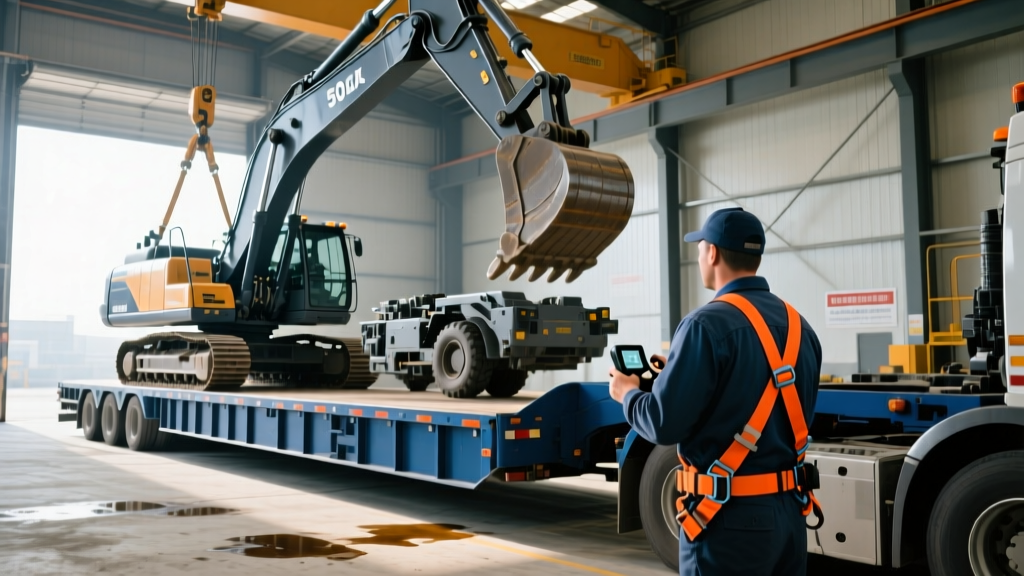
Camber is the intentional upward bow built into the trailer's main I-beams. When a 60-ton excavator is driven onto the deck, the weight forces the beams to flatten out, resulting in a perfectly level deck. If you purchase a transporter without adequate camber, the deck will sag in the center under load. This sag shifts weight off the trailer axles and onto the tractor, triggering DOT weigh station violations and causing severe tire wear.
2. Decking Material: Apitong vs. Steel Grating
For standard earthmoving equipment, Apitong hardwood remains the gold standard. It provides exceptional grip for steel tracks in wet conditions and is easily replaceable if damaged. However, if you are hauling equipment with rubber tires or operating in high-debris environments (like demolition), specify steel grating or diamond plate with traction punch-outs. Wood decking will rot if exposed to constant hydraulic fluid leaks or chemical runoff from demolition sites.
3. Tie-Down and Chain Slot Ratings
Standard D-rings welded to the deck floor are typically rated for 16,600 to 20,000 lbs. If you are securing an 80-ton dozer, standard D-rings will sheer under dynamic braking forces. Specify heavy-duty D-rings rated for 40,000+ lbs, and ensure they are integrated into the outer rub rail, not just the floor. Additionally, request open chain slots every 4 feet along the rub rail to allow for flexible tie-down angles without damaging the trailer's side skirts.
💡 Pro Tip: The Hydraulic PTO Requirement
If you are purchasing an HDG (Hydraulic Detachable Gooseneck) lowboy, the trailer relies on the tractor's hydraulic system to raise and lower the neck. Ensure your fleet's tractors are equipped with a wet kit (Power Take-Off unit) with a minimum flow rate of 15 GPM and 2,500 PSI. If your tractors are dry, you must either retrofit the tractors ($4,000 - $6,000 per truck) or spec the trailer with a self-contained pony motor power pack, which adds weight and maintenance overhead.
Procurement Timelines and Spec Locking Strategy
The supply chain for specialized heavy equipment transporters has stabilized in 2026, but custom configurations still require significant lead times. Standard 2-axle and 3-axle lowboys typically ship within 12 to 16 weeks of spec approval. However, 4-axle configurations, custom well lengths, and modular hydraulic systems currently carry lead times of 8 to 14 months.
Actionable Procurement Steps:
- Audit Your 3-Year Pipeline: Do not buy for the machinery you own today. Buy for the machinery you will be contracted to move in 36 months. If you anticipate bidding on wind farm or heavy infrastructure projects, prioritize modular compatibility over standard lowboy capacity.
- Lock the Axle Spacing Early: Axle spacing dictates your permitting strategy. Work with a specialized heavy haul permit service to identify the most restrictive states on your primary routes, and spec the axle spacing to maximize legal weight in those specific jurisdictions.
- Specify the Paint and Corrosion Package: Standard polyurethane paint will chip under track impact within a year. Upgrade to a zinc-rich epoxy primer with a polyurethane topcoat. For coastal or winter-salt routes, invest in fluid-filled or galvanized sub-frame components to prevent structural rust-jacking.
"The most expensive heavy equipment transporter is the one that sits in the yard because its deck height is two inches too tall to clear the overpasses on your primary route. Always spec the loaded deck height, not the empty deck height."
— Fleet Procurement Director, National Heavy Haul Logistics
By treating the trailer as a highly engineered structural component rather than a simple rolling platform, procurement teams can eliminate DOT fines, reduce load-shift accidents, and maximize the legal payload of every dispatch. Review the manufacturer's load distribution charts, verify the camber specifications, and ensure your tractor hydraulics match the trailer's PTO requirements before finalizing your 2026 fleet acquisitions.