Heavy Equipment Transport System Training: Operator Best Practices
Master your heavy equipment transport system with advanced operator training protocols, load securement metrics, and hydraulic trailer best practices.
Mastering the Modern Heavy Equipment Transport System
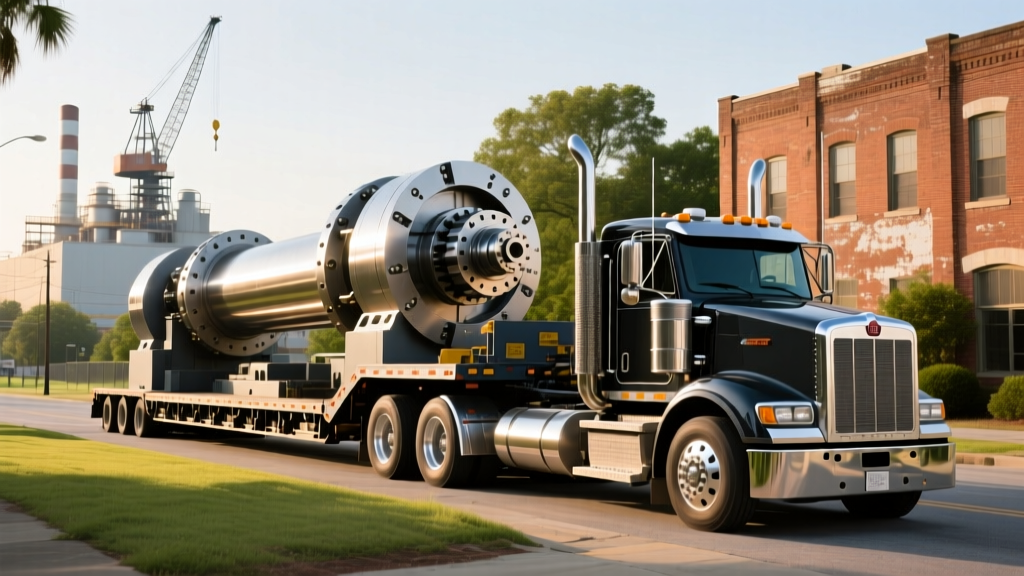
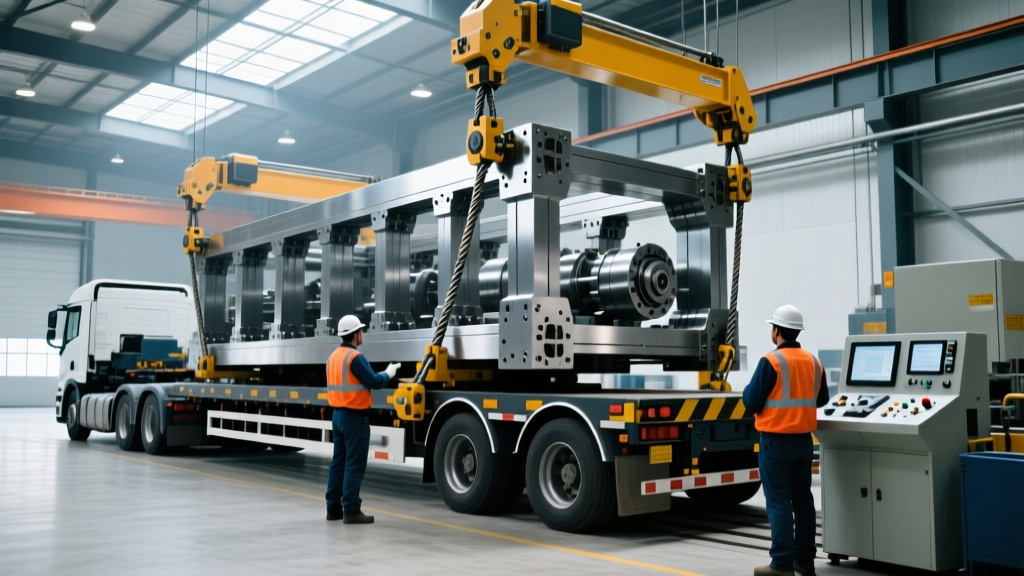
Operating a modern heavy equipment transport system requires far more than a standard Commercial Driver's License (CDL). It demands a mastery of hydraulic pendulum suspensions, dynamic load distribution, and extreme-duty securement protocols. A single miscalculation in axle weight distribution or chain tension can result in catastrophic load shifts, bridge formula violations, or equipment damage exceeding $150,000. This guide outlines the critical training protocols and operational best practices for heavy haul operators managing multi-axle lowboys and hydraulic modular trailers.
⚠️ Critical Safety Directive: Never rely solely on visual inspections for hydraulic transport systems. A 2024 industry analysis revealed that 34% of heavy haul load-shift incidents originated from undetected micro-leaks in hydraulic suspension circuits that only manifested under dynamic cornering loads.Phase 1: Pre-Trip System Diagnostics & Tractor Integration
The foundation of a reliable heavy equipment transport system begins at the fifth wheel and the Power Take-Off (PTO) interface. Standard pre-trip inspections are insufficient for heavy haul configurations.
Advanced Air & Hydraulic Checks
- Kingpin Engagement Verification: After locking the fifth wheel, pull the tractor forward 2 to 3 feet with the trailer brakes fully applied (spring brakes engaged). Follow this with a physical pry-bar test at the locking jaw mechanism to confirm zero lateral play.
- Air System Drop Test: Build system pressure to 120 PSI. Apply the trailer brakes and shut off the engine. The pressure drop must not exceed 3 PSI in the first minute and 2 PSI in the second minute. Any drop exceeding 5 PSI over two minutes indicates a compromised gladhand seal or a leaking relay emergency valve.
- PTO & Hydraulic Fluid Validation: For trailers requiring wet-line kits (e.g., Goldhofer THP/SL modular systems), engage the PTO and verify hydraulic fluid temperature. Operating heavy haul hydraulics with fluid below 40°F (4°C) without a warm-up cycle can cavitate the pump, causing irreversible scoring to the gear teeth.
Phase 2: Axle Weight Distribution & The Bridge Formula
Overloading a specific axle group is one of the most common violations cited during Commercial Vehicle Safety Alliance (CVSA) North American Standard Inspections. Operators must understand how to manipulate load placement and hydraulic suspension pressures to comply with the Federal Bridge Formula.
Calculating and Adjusting Axle Loads
When loading a 110,000 lb crawler dozer onto a 13-axle configuration (3 tractor axles + 10 trailer axles), the gross weight may be legal, but the tandem drive axles or specific trailer axle groups may exceed the 34,000 lb federal limit. Operators must use the FHWA Bridge Formula Weights calculator to determine the maximum allowable weight based on the distance between the outermost axles.
| Axle Group Configuration | Distance Between Outer Axles | Maximum Legal Weight | Operator Adjustment Protocol |
|---|---|---|---|
| Tractor Drive Tandems | Standard (4 ft - 6 ft) | 34,000 lbs | Slide fifth wheel forward; shift cargo rearward. |
| Trailer Quad Axle Group | 8 ft - 10 ft | 39,000 lbs - 42,000 lbs | Adjust hydraulic pendulum suspension pressure to transfer load to adjacent axle groups. |
| Trailer 5-Axle Module | 12 ft - 14 ft | 45,000 lbs - 48,000 lbs | Utilize spacer decks to widen axle footprint if weight limits are exceeded. |
Phase 3: Precision Load Securement Protocols
The FMCSA Cargo Securement Rules (49 CFR Part 393) mandate specific tie-down requirements for heavy equipment. However, baseline compliance is not the same as operational best practice. Heavy haul operators must calculate the aggregate Working Load Limit (WLL) with a margin of safety that accounts for dynamic forces like emergency braking and crosswinds.
The 50% Rule and Chain Grade Selection
Under FMCSA 393.128, the aggregate WLL of all tie-downs must equal at least 50% of the cargo's total weight. Let us examine a real-world scenario involving a 95,000 lb Komatsu PC490LC-11 excavator.
- Required Aggregate WLL: 47,500 lbs.
- Scenario A (1/2" Grade 70 Chain): WLL per chain is 9,200 lbs. Using four chains yields 36,800 lbs (FAIL). Using six chains yields 55,200 lbs (PASS).
- Scenario B (1/2" Grade 100 Alloy Chain): WLL per chain is 11,300 lbs. Using four chains yields 45,200 lbs (FAIL). Using six chains yields 67,800 lbs (PASS).
Expert Insight: While six 1/2" Grade 70 chains meet the legal minimum for the Komatsu PC490LC-11, best practice dictates using 5/8" Grade 100 chains (WLL 18,700 lbs each). Four 5/8" chains provide 74,800 lbs of aggregate WLL, offering a 57% safety margin over the legal requirement and significantly reducing the risk of snap-back failures during high-torque transport.
Direct vs. Indirect Tie-Downs
When securing equipment with tracks or low-clearance undercarriages, operators must prioritize direct tie-downs (where the chain passes through a designated tow point on the equipment and attaches directly to the trailer deck). Indirect tie-downs (where the chain simply presses down on the cargo) are highly susceptible to loosening as the equipment's suspension settles during transit. Always use edge protectors with a minimum 3/8-inch steel thickness to prevent track cleats from shearing synthetic straps or degrading chain links under tension.
Phase 4: En-Route Dynamics & Hydraulic Troubleshooting
A fully loaded heavy equipment transport system behaves entirely differently than a standard dry van. Stopping distances increase exponentially, and the center of gravity shifts dynamically with the hydraulic suspension.
Braking and Stopping Distance Realities
At 65 MPH, a standard 80,000 lb Gross Combination Weight (GCW) truck requires approximately 300 feet to stop. A 130,000 lb GCW heavy haul transport system requires upwards of 450 feet under optimal conditions. Operators must be trained to increase following distance to a minimum of 8 seconds and utilize engine braking (Jake brakes) on descending grades to prevent service brake fade. Never rely solely on service brakes when descending a 6% or greater grade with a GCW exceeding 105,000 lbs.
Hydraulic Trailer Troubleshooting Matrix
Operators must be capable of diagnosing and rectifying minor hydraulic faults en-route to prevent costly tow-outs or load abandonment.
| Symptom | Probable Cause | En-Route Corrective Action |
|---|---|---|
| Trailer axles fail to self-level on cross-slopes; deck tilts >3 degrees. | Nitrogen accumulator pressure drop in the pendulum suspension circuit. | Recharge accumulators to 140 bar (2,030 PSI) using a portable nitrogen cart; inspect leveling block hoses for micro-leaks. |
| PTO pump whines loudly and fluid overheats (>80°C) during low-speed steering. | Bypass valve stuck open or hydraulic fluid viscosity too low for ambient temperature. | Switch to ISO VG 32 hydraulic fluid for winter operations; inspect bypass relief valve spool for metal scoring or debris. |
| Trailer steering axles lag behind tractor during sharp turns. | Air in the hydraulic steering lines or faulty quick-disconnect coupling. | Cycle the steering lock-to-lock 10 times with the engine at 1,500 RPM to bleed trapped air; verify quick-disconnects are fully seated and locked. |
Continuous Training and Certification Standards
Operating a heavy equipment transport system is not a static skill. Equipment weights are increasing, and hydraulic trailer designs are becoming more complex. Fleet managers must implement bi-annual recertification programs that include practical, hands-on load securement tests and simulated hydraulic failure scenarios. By institutionalizing these advanced protocols, operators transition from merely driving trucks to actively engineering the safe transit of multi-million-dollar infrastructure assets.