How to Choose Heavy Equipment Hauling Companies Savannah GA
Vet heavy equipment hauling companies Savannah GA with our buyer's guide. Compare fleet specs, GDOT permits, and port logistics pricing.
Executive Briefing: Savannah Heavy Haul Logistics
Selecting from the various heavy equipment hauling companies Savannah GA serves requires a deep understanding of coastal Georgia's unique infrastructure. Between the Port of Savannah's Roll-on/Roll-off (RoRo) terminals, the historic district's tight turning radii, and strict Georgia Department of Transportation (GDOT) weight limits on the Talmadge Memorial Bridge approach ramps, standard over-the-road carriers often fail. This guide provides procurement managers and site foremen with a concrete framework to vet local haulers, decode 2026 pricing structures, and ensure compliance with Chatham County routing restrictions.
Savannah's Unique Heavy Haul Landscape
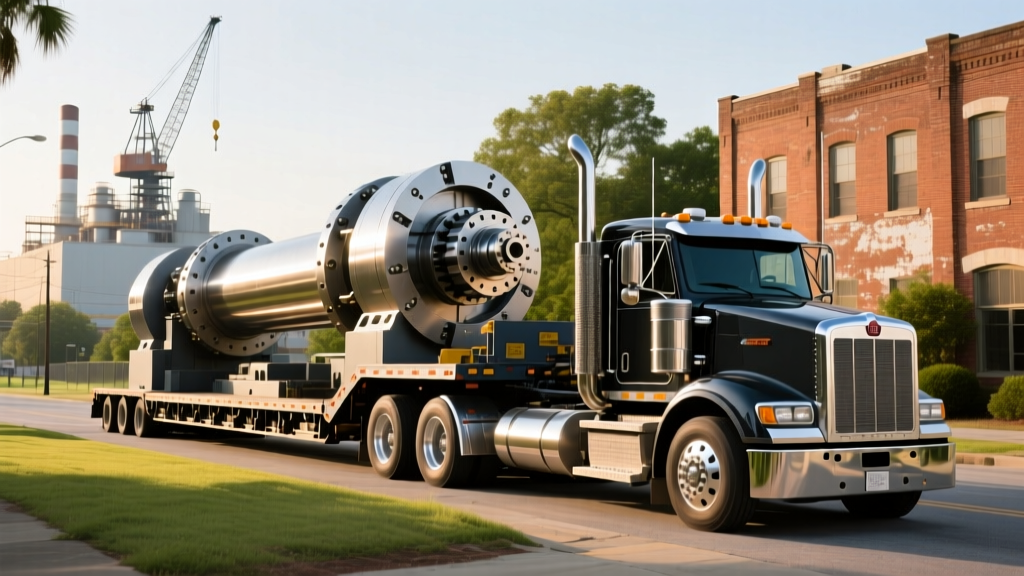
Savannah is the epicenter of Southeast industrial logistics, anchored by the Port of Savannah, the largest single-container terminal facility in North America. However, moving 80,000-pound excavators or modular refinery components through this corridor presents distinct challenges that separate elite specialized carriers from generic freight brokers.
Port Congestion and Staging Constraints
Unlike inland routes, Savannah haulers must navigate severe staging limitations near Garden City and Port Wentworth. Top-tier carriers maintain secured, off-port laydown yards equipped with 100-ton rough-terrain cranes. If a carrier does not own local staging property, your equipment will incur demurrage fees while waiting for port-clearance windows.
Logistics Insight: Equipment destined for the Mason Mega Rail Terminal or Hutchinson Island requires specialized hydraulic modular trailers (such as Goldhofer THP/ET systems) due to the strict axle-weight distribution required on the island's aging causeway bridges.
Vendor Selection Matrix: Evaluating Local Haulers
Do not rely on generic load boards. Use this matrix to evaluate a carrier's actual capability to handle coastal Georgia heavy hauls.
| Evaluation Criteria | Top-Tier Savannah Hauler | Mid-Tier / Regional Carrier | Red Flags (Reject) |
|---|---|---|---|
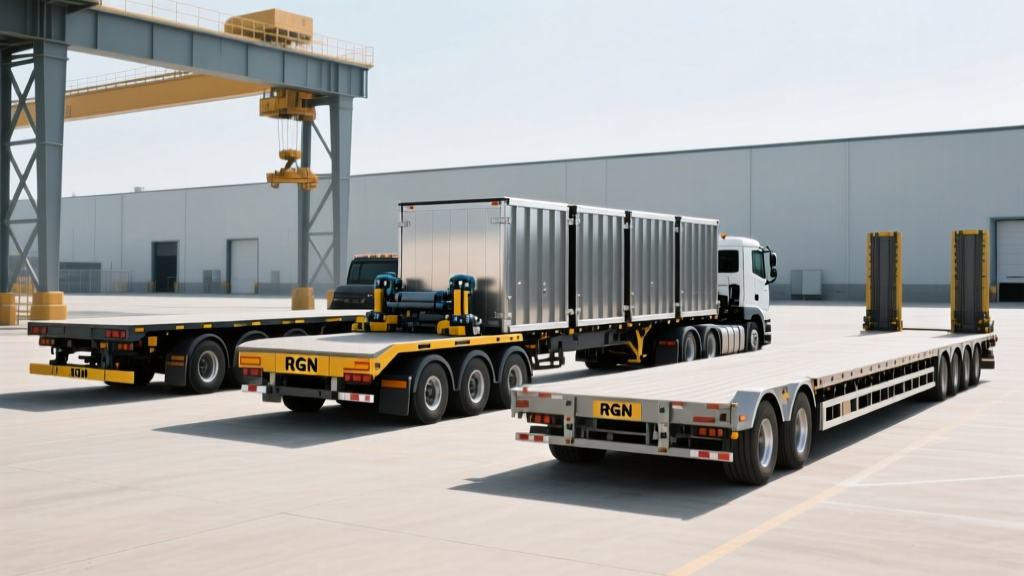
| Trailer Fleet | Owns Talbert 55SA lowboys, East Genesis step-decks, and Goldhofer modulars. | Standard 48ft flatbeds and basic 35-ton RGN (Removable Gooseneck) trailers. | Relies entirely on brokered trailers; no owned specialized assets. |
| Port Access | Active TWIC (Transportation Worker Identification Credential) cards for all drivers; dedicated port drayage permits. | TWIC cards available but requires 48-hour advance scheduling for port entry. | No TWIC credentials; uses third-party escorts for port gates. |
| Permitting Desk | In-house GDOT permitting specialists; automated route surveys for Chatham County. | Outsources permitting to third-party services (adds 24-48 hour delays). | Assumes "standard routes" are legal for oversize; high risk of DOT fines. |
| Insurance Limits | $250,000+ cargo insurance; $5M liability for port-adjacent operations. | $100,000 cargo (standard FMCSA minimum). | Refuses to provide certificate of insurance (COI) prior to signing. |
2026 Pricing Breakdown for Coastal Georgia Routes
Heavy haul pricing in Savannah fluctuates based on port traffic volume and seasonal hurricane-evacuation staging. When reviewing quotes, ensure the carrier breaks down the following line items. If a quote is a single "lump sum," demand itemization to avoid hidden accessorial fees.
- Base Linehaul Rate: $5.50 to $7.25 per mile for standard oversize (e.g., CAT 336 excavator on a 55-ton lowboy). Rates spike to $9.00+ for superloads requiring lane closures on I-95.
- Mobilization / Deadhead Fee: $250 to $450. Savannah carriers charge this to move the truck from their staging yard (usually in Pooler or Rincon) to your exact loading coordinate.
- GDOT Single-Trip Permits: $150 to $300 per permit. Carriers should pass this through at cost, plus a maximum $50 administrative fee.
- Pilot Car Escorts: $1.75 to $2.25 per mile. Required on US-80 (Victory Drive) and GA-21 if the load exceeds 12 feet in width or 13'6" in height.
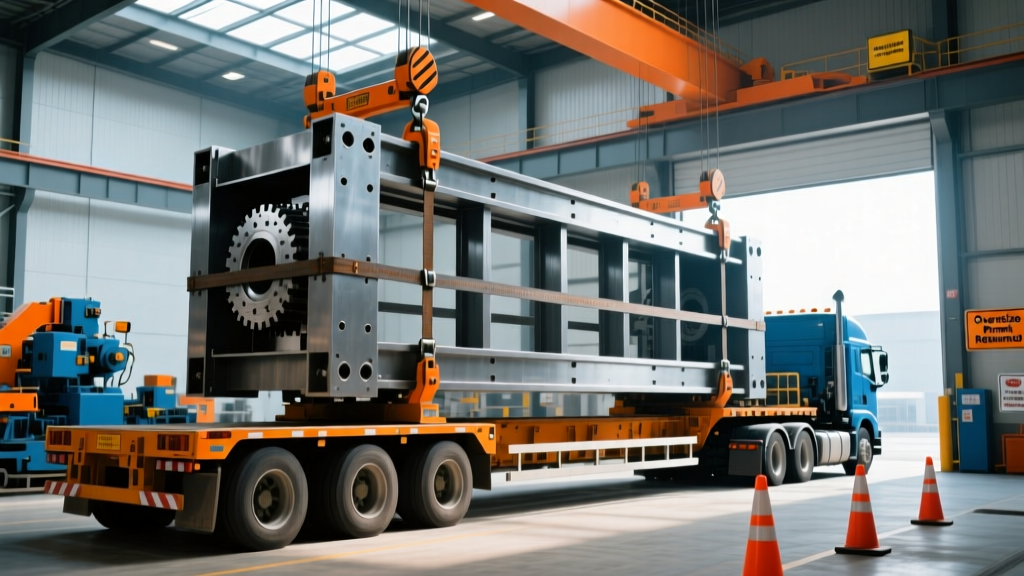
- Crane Assist (Load/Unload): $450 to $800 per hour (minimum 4-hour call-out). Required if your site lacks a loading dock or the ground soil (coastal marsh clay) cannot support the equipment's tracks during ramp-loading.
GDOT Permitting & Chatham County Routing Restrictions
Georgia's oversize regulations are strictly enforced, particularly around Savannah's historic squares and port infrastructure. According to the Federal Highway Administration's Bridge Formula, weight distribution is critical, but local routing adds another layer of complexity.
⚠️ Critical Routing Warning: The Talmadge Memorial Bridge
While the Talmadge Memorial Bridge offers 185 feet of vertical clearance, its approach ramps on the Savannah side have strict overweight restrictions. Haulers moving loads exceeding 120,000 lbs GVW cannot use the bridge. They must route via the I-516 bypass or utilize the port's specialized barge transfer services. Carriers who ignore this will be impounded by the Georgia State Patrol at the bridge weigh station.
Step-by-Step GDOT Permit Acquisition
A competent Savannah hauler will execute the following workflow before dispatching a truck:
- Dimensional Verification: Measure the exact loaded height, width, and wheelbase. (Even a 2-inch variance in height can invalidate a GDOT permit).
- Route Survey (Bucket Truck): For loads over 15'6" tall, the carrier must physically drive the Savannah route to check for low-hanging coastal live oak branches and recent fiber-optic line drops.
- Municipal Notification: Chatham County requires 72-hour notice for moves that will disrupt traffic on the I-16 / I-95 interchange.
- Permit Issuance: Secure the digital GDOT permit and ensure the physical copy is in the truck's cab alongside the Bill of Lading.
Vetting Carrier Safety Records
Before signing a contract, you must verify the carrier's safety profile. Use the FMCSA SAFER System to pull the carrier's DOT number. Look specifically at their "Out of Service" (OOS) rate. The national average for vehicle OOS is roughly 20%. If a Savannah carrier's vehicle OOS rate exceeds 25%, it indicates poor fleet maintenance—a massive liability risk when hauling $500,000 mining equipment through the humid, corrosive coastal air.
Frequently Asked Questions
Do Savannah haulers handle RoRo (Roll-on/Roll-off) ship loading?
Yes, but only specialized carriers. Standard heavy haulers cannot drive onto RoRo vessels. The carrier must possess specific port liability insurance and drivers with active TWIC credentials to navigate the gangway ramps at the Ocean Terminal or Colonel's Island terminal.
What is the maximum legal weight on I-95 through Savannah without a permit?
The standard federal limit is 80,000 lbs Gross Vehicle Weight (GVW). However, with a GDOT annual or single-trip overweight permit, carriers can run up to 120,000 lbs GVW on designated interstate segments, provided the axle spacing meets federal bridge formula requirements.
How does Savannah's soil affect equipment loading?
Chatham County is dominated by poorly drained coastal clay and marshland. If you are loading equipment from an unpaved site, the carrier must bring timber crane mats or steel road plates to prevent the lowboy trailer's landing gear from sinking into the mud during the loading process. Always specify "unimproved site loading" when requesting a quote.