Heavy Equipment Scholarships vs Paid CDL Training 2026
Compare top heavy equipment scholarships against corporate paid CDL programs, WIOA grants, and GI Bill benefits for 2026 heavy haul careers.
The Financial Reality of Heavy Haul Transport Careers
Entering the heavy equipment transport sector requires more than a standard Class A Commercial Driver's License (CDL). It demands mastery of multi-state permitting, specialized load securement, and the operation of complex trailer configurations like Removable Goosenecks (RGN), Schnable trailers, and multi-axle modular platforms. While standard CDL training costs between $5,000 and $8,000, the post-licensing mentorship required to safely haul 120,000+ lb oversize loads represents a massive opportunity cost for new drivers.
For aspiring heavy haulers, fleet coordinators, and logistics managers looking to upskill in 2026, funding this specialized education is the primary barrier. The market offers distinct funding pathways: merit-based heavy equipment scholarships, federal workforce grants, and corporate-sponsored tuition reimbursement. However, these options are not created equal, and choosing the wrong path can result in predatory contract clawbacks or a lack of specialized heavy-haul mentorship.
Funding Matrix: Scholarships vs. Corporate vs. Federal Grants
Before committing to a training provider or carrier, evaluate the structural differences between the primary funding alternatives available this year.
| Funding Source | Average Award / Value | Best For | Heavy Haul Mentorship Included? | Contractual Obligation |
|---|---|---|---|---|
| Industry Scholarships (e.g., WIT) | $2,000 - $5,000 | Women, minorities, high-school grads | No (Covers basic CDL only) | None |
| Corporate Paid CDL (Mega-Carriers) | $6,000 - $8,000 (Upfront) | Career changers needing immediate placement | Rarely (Mostly Dry Van/Reefer) | 12-18 month clawback contract |
| Specialized Heavy Haul Carriers | $8,000 + Paid Mentorship | Aspiring RGN/Oversize load operators | Yes (6-12 month mentorship) | 24+ month clawback contract |
| WIOA Federal Grants | Up to $10,000 (Tuition + Fees) | Dislocated workers, veterans, low-income | No (Covers registered CDL schools) | None |
| Post-9/11 GI Bill | Full Tuition + Monthly BAH | Qualifying Veterans & Dependents | Depends on chosen school | None |
Deep Dive: Private & Industry Heavy Equipment Scholarships
Private scholarships are the most desirable funding route because they carry zero contractual obligations. You own your CDL, and you are free to negotiate your starting wage with any heavy haul carrier. However, they are highly competitive and rarely cover the full cost of a premium heavy-haul training program.
Top Scholarship Programs to Target
- Women In Trucking (WIT) Foundation: Offering multiple scholarships ranging from $2,000 to $5,000. While not exclusively for heavy haul, WIT funds can be applied to any accredited CDL training program. The application cycle typically opens in early spring, requiring a 500-word essay on career goals in specialized transport.
- The Trucking Cares Foundation: Focuses on workforce development and often partners with local community colleges. Awards generally cover tuition but exclude living stipends, meaning you must secure alternative funding for the 4-to-6 weeks you cannot work while attending school.
- State-Specific Heavy Equipment Operator Grants: Many states (like Texas and Pennsylvania) offer localized grants for heavy equipment operation and transport, specifically targeting the construction and energy sectors. These are often administered through local trade unions or state workforce commissions.
The Corporate Alternative: Paid CDL and the 'Clawback' Trap
If you cannot secure a scholarship, corporate-sponsored training is the most common alternative. Carriers will pay your $6,000+ tuition upfront in exchange for a signed promissory note. It is vital to understand the legal mechanics of these agreements before signing.
Mega-Carriers vs. Specialized Heavy Haulers
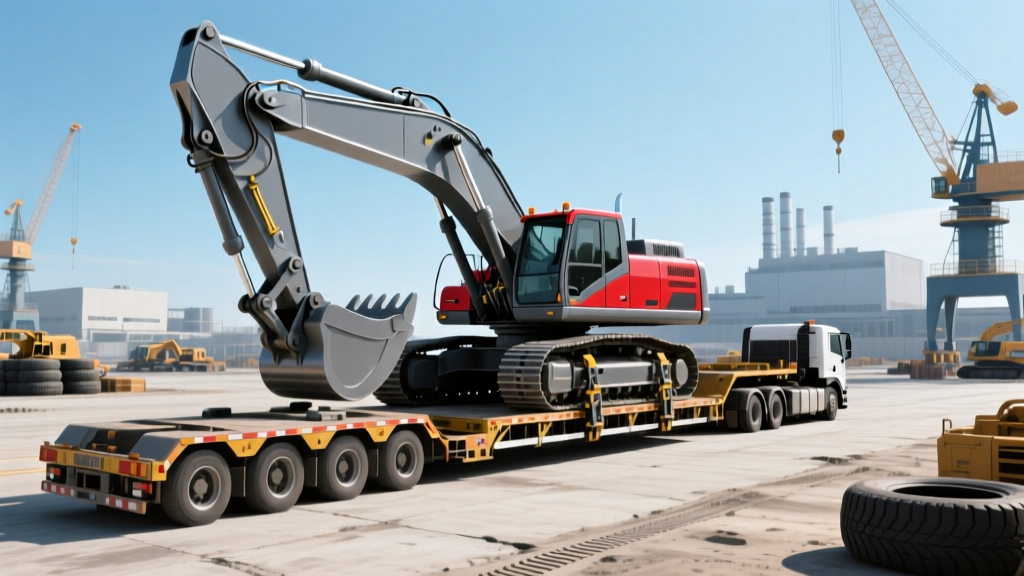
Mega-carriers (e.g., Swift, Werner, Knight-Swift) offer abundant paid CDL programs. The catch? They need dry van and refrigerated freight drivers. If your goal is to haul excavators, transformers, and wind turbine blades on lowboy trailers, a mega-carrier will not provide the necessary mentorship. You will spend your first 18 months hauling general freight to pay off your contract.
Conversely, specialized heavy haul carriers (such as Anderson Trucking Service, Daseke, or Hub City Terminals) offer heavy-haul specific mentorships. They will pay for your CDL and pay you a training wage while you ride along for 6 to 12 months to learn multi-axle weight distribution and FMCSA ELDT compliance. The trade-off is a much longer contractual lock-in.
Anatomy of a Tuition Reimbursement Contract
- The Principal: Usually $6,500 to $8,500, representing the exact cost the carrier paid the driving school.
- The Proration Schedule: If you quit or are terminated in month 3 of a 12-month contract, you owe 75% of the principal. This is often deducted directly from your final paycheck or sent to a collections agency.
- The 'Training Wage' Offset: Some carriers classify the first 30 days of heavy-haul mentorship as 'unpaid training' or pay a flat $150/day stipend, which is vastly below the standard $0.60/mile over-the-road rate. Ensure your contract explicitly states when the standard pay scale begins.
Federal Alternatives: WIOA and the GI Bill
For those who qualify, federal funding bridges the gap between competitive scholarships and restrictive corporate contracts.
Workforce Innovation and Opportunity Act (WIOA)
WIOA grants are designed for dislocated workers, transitioning veterans, and individuals in low-income brackets. Administered through local American Job Centers, WIOA can cover up to $10,000 for CDL training at state-approved facilities. Unlike corporate paid CDL, WIOA grants do not require you to work for a specific carrier post-graduation. Action Step: Visit your local workforce development board and ask specifically if their approved vendor list includes schools that offer heavy-haul or flatbed endorsements, as many default to basic dry-van curriculums.
The Post-9/11 GI Bill
Qualifying veterans can use the GI Bill to pay for CDL training, including the cost of endorsements and testing fees. More importantly, the GI Bill provides a Monthly Housing Allowance (BAH) based on the zip code of the driving school. This BAH stipend solves the primary failure point of private scholarships: living expenses while you are in full-time, unpaid training.
"The biggest mistake new heavy-haul drivers make is funding their basic CDL through a mega-carrier contract, only to realize they are legally barred from joining a specialized RGN fleet for two years. Always align your funding source with your ultimate trailer type."
Decision Framework: Which Path Should You Choose?
Use this matrix to determine your optimal funding strategy based on your current profile and career timeline.
- IF you are a Veteran: Bypass private scholarships and corporate contracts entirely. Use the GI Bill to attend an independent, specialized heavy-haul driving academy. You retain 100% of your employment leverage.
- IF you are a Dislocated Worker: Apply for WIOA grants immediately. Processing takes 4-8 weeks, but it provides debt-free, contract-free training.
- IF you are a Career Changer with no savings: Seek out a specialized heavy-haul carrier (not a mega-carrier) that offers a paid CDL program with a guaranteed flatbed/RGN mentorship track. Read the clawback clause carefully to ensure the principal amount does not exceed $7,500.
- IF you are a Woman or Minority entering the field: Apply for WIT and Trucking Cares scholarships to cover your base tuition, then self-fund or use a micro-loan for your heavy-haul endorsements (Doubles/Triples) to maintain total career independence.
Hidden Costs in Heavy Haul Education
When budgeting your training, standard CDL tuition is only the beginning. Heavy equipment transport requires additional capital for:
- Endorsements: Doubles/Triples (T) and Tanker (N) endorsements cost roughly $50-$100 each in testing fees but require additional theory training hours under the FMCSA ELDT mandate.
- TWIC Card: Transporting heavy equipment to ports and shipyards requires a Transportation Worker Identification Credential (TWIC), costing $125.25 in 2026.
- Specialized Gear: Heavy haulers require high-end PPE, steel-toe boots rated for extreme crush hazards, and specialized weather gear for securing loads in adverse conditions. Budget an additional $800 for professional-grade load securement apparel and tools (e.g., heavy-duty tarps, specialized binders).
Final Verdict: Mapping Your 2026 Funding Strategy
Securing funding for a heavy equipment transport career requires looking past the allure of 'free' corporate training. While heavy equipment scholarships provide the cleanest, debt-free entry into the industry, they rarely cover the specialized mentorship required to move 150,000 lb oversize loads. The most successful heavy-haul operators in 2026 use a hybrid approach: leveraging federal grants or private scholarships for the baseline Class A CDL, and then negotiating a separate, short-term mentorship contract directly with a specialized RGN fleet. By decoupling your CDL funding from your heavy-haul mentorship, you protect your earning potential and avoid the restrictive clawback traps that stall thousands of transport careers every year.