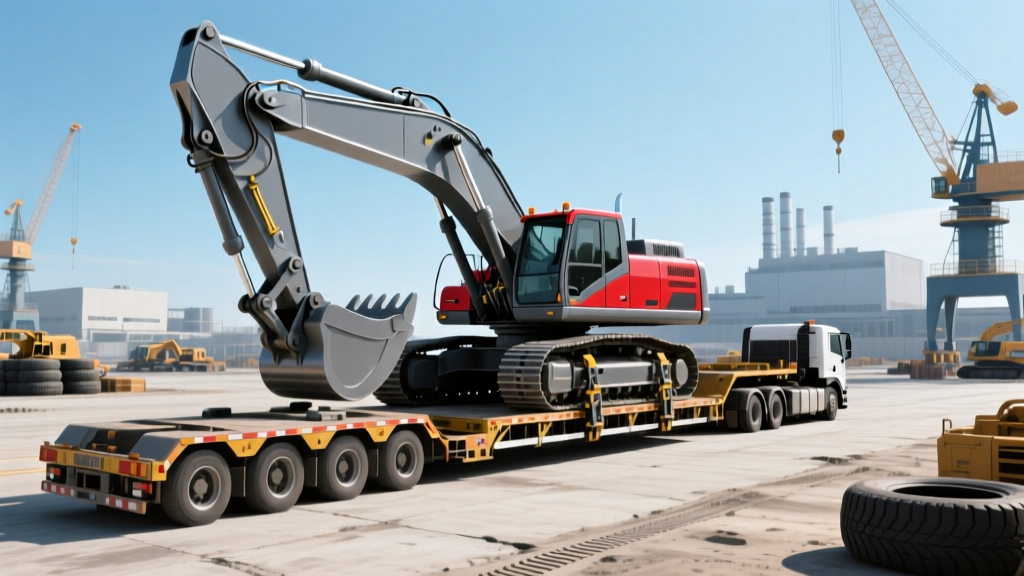
Operator Training for Heavy Equipment Shipping Overseas
Master heavy equipment shipping overseas with our operator training guide. Learn RoRo loading, ocean lashing WLLs, VCI rust prevention, and AES filing.
Shipping heavy machinery across international waters subjects equipment to extreme dynamic forces, corrosive saltwater environments, and complex customs regulations. While domestic transport relies on Federal Motor Carrier Safety Administration (FMCSA) standards, maritime transit is governed by the International Maritime Organization (IMO) Code of Practice for Cargo Transport Units (CTU). Operators and logistics managers must adapt their preparation, loading, and securing protocols to prevent catastrophic cargo shifting, structural damage, or port rejection.
⚠️ Critical Warning: Ocean vessels routinely experience roll angles exceeding 30 degrees and severe heave in heavy swells. Lashing configurations that meet DOT highway standards will fail under maritime dynamic loading. Always calculate Working Load Limits (WLL) using the IMO CTU ocean transit multipliers.Pre-Transit Equipment Preparation & Preservation
Before a machine ever reaches the port terminal, it must be prepped to survive 30 to 45 days in a high-humidity, high-salinity environment. Improper fluid management and inadequate corrosion protection are the leading causes of insurance claims in international equipment logistics.
Fluid Management and Winterization
- Diesel Exhaust Fluid (DEF): Drain the DEF tank completely. DEF freezes at 12°F (-11°C) and expands, which will crack the Selective Catalytic Reduction (SCR) tank and injector lines if the vessel encounters cold-water routes or unheated port storage.
- Fuel Levels: Reduce diesel fuel to exactly 1/4 tank capacity. This provides enough weight to keep the machine stable and enough fuel for RoRo (Roll-on/Roll-off) terminal maneuvers, while leaving adequate airspace to prevent condensation buildup and microbial growth (diesel bug) during the voyage.
- Hydraulic Lockouts: Engage all hydraulic lockout valves. Lower attachments (buckets, blades, booms) to the lowest possible center of gravity. Secure loose hydraulic hoses with heavy-duty zip ties to prevent them from whipping against glass or paint during crane lifts.
Marine-Grade Corrosion Protection
Standard 6-mil construction shrink wrap will tear under ocean wind shear and trap moisture, accelerating rust. For heavy equipment shipping overseas, operators must use 12-mil cross-laminated marine-grade shrink film. Place Volatile Corrosion Inhibitor (VCI) emitters—such as ZERUST capsules—inside the cab, engine bay, and any enclosed hydraulic reservoirs. These emitters release a microscopic rust-preventing vapor that settles on bare metal surfaces. Ventilation Rule: Never seal the shrink wrap completely to the undercarriage. Leave a continuous 12-inch gap at the bottom perimeter to allow moisture to escape. Completely sealing the machine will create a greenhouse effect, guaranteeing severe mold growth in the cab and electrical corrosion in the ECM (Engine Control Module).
RoRo vs. Breakbulk vs. Flat Rack: Decision Matrix
Selecting the correct ocean freight method dictates your loading strategy, lashing requirements, and overall budget. Below is a 2026 decision matrix to help operators match equipment profiles to the optimal shipping method.
| Shipping Method | Best Equipment Profile | 2026 Avg. Cost Estimate | Max Dimensions & Constraints |
|---|---|---|---|
| RoRo (Roll-on/Roll-off) | Self-propelled, operational excavators, dozers, loaders. | $90 - $145 per CBM (Cubic Meter) | Length < 15m, Width < 3.5m. Must have functioning brakes and steering. |
| Flat Rack (FR) Container | Dead/static equipment, dismantled cranes, oversized attachments. | $4,500 - $8,500 per 40ft unit | Can handle over-width/over-height, but subject to strict port crane lift limits (usually < 40 MT). |
| Breakbulk Deck | Mega mining gear, continuous miners, 100+ ton haul trucks. | $180 - $260 per Freight Ton | Virtually unlimited. Requires charter or specialized heavy-lift vessel booking. |
Crane Loading & Ocean Lashing Best Practices
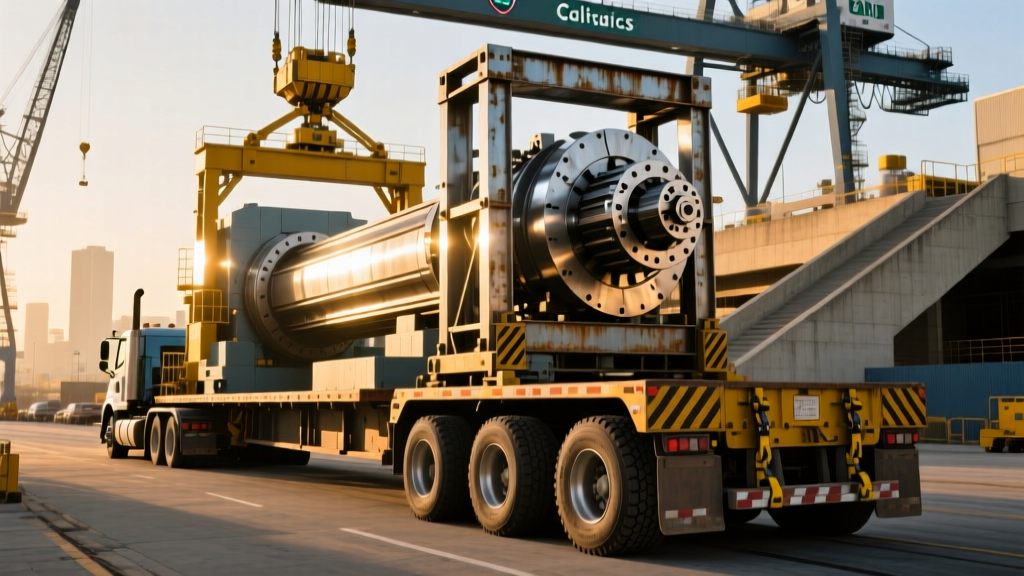
When equipment is dead (non-operational) or exceeds RoRo dimensional limits, it must be lifted onto a Flat Rack or Breakbulk deck. This introduces severe overhead hazards and requires precise rigging.
Safe Crane Rigging Protocols
Operators must verify the machine's exact lift point locations as specified in the OEM manual. Never wrap synthetic slings directly around sharp steel edges or hydraulic cylinders; use corner protectors or Kevlar-reinforced sleeves. For machines exceeding 25,000 lbs, utilize a spreader bar to prevent sling crush damage to the cab or ROPS (Roll-Over Protective Structure) canopy. Always use dual taglines managed by two separate ground personnel to control load rotation in port winds.
Calculating Working Load Limits (WLL) for Ocean Transit
The most common failure in heavy equipment shipping overseas is applying highway lashing standards to maritime transit. Under FMCSA rules, the aggregate WLL of your tie-downs must equal 50% of the cargo's weight. The IMO CTU Code requires securing against 60-degree roll and pitch forces, effectively demanding an aggregate WLL equal to 100% or more of the cargo's weight.
"A 40,000 lb wheel loader requires a minimum 20,000 lb aggregate WLL for interstate highway transport. That same loader, placed on a vessel crossing the North Atlantic, requires a minimum 45,000 lb aggregate WLL to withstand dynamic wave loading and vessel pitch. Using standard Grade 70 transport chain for ocean transit is a primary cause of cargo breakaway."
Lashing Material Selection:
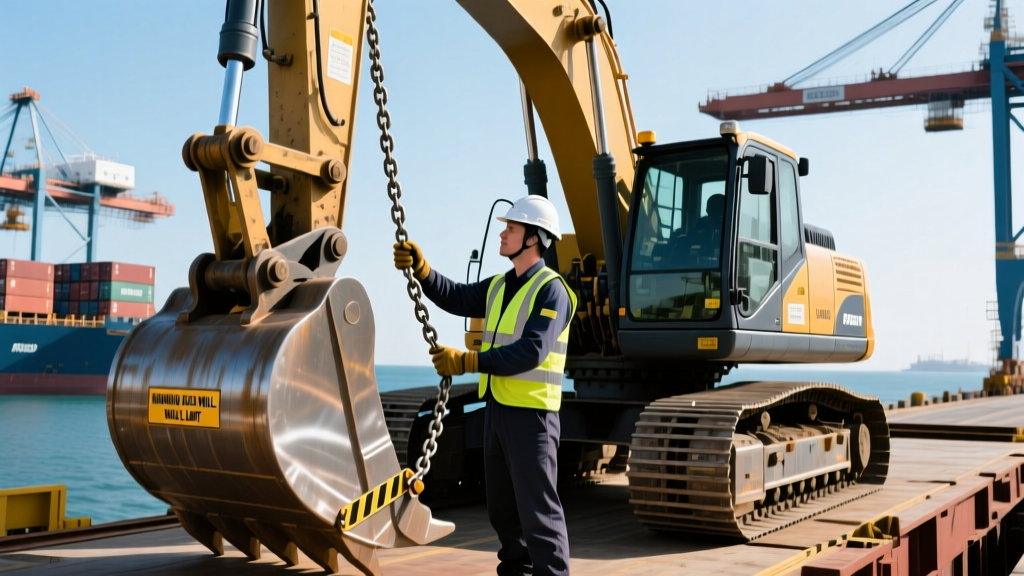
- Grade 100 Alloy Chain: Preferred for heavy, low-clearance equipment. Offers 25% higher WLL than Grade 70 at the same diameter.
- 6x19 IWRC Wire Rope: Best for tall equipment or machinery with sharp edges where chain could slip. Must be tensioned using heavy-duty turnbuckles and secured with Crosby clips.
- Angle of Lashing: Keep lashing angles as close to the deck as possible (under 25 degrees). High-angle lashings provide vertical restraint but fail to prevent lateral sliding during heavy vessel roll.
Export Documentation and Port Compliance
Physical preparation is useless if the equipment is blocked at the terminal gate. U.S. exporters must comply with strict federal data reporting. According to the U.S. Census Bureau Automated Export System (AES), any heavy equipment valued over $2,500 or requiring an export license must be filed electronically.
Operators and dispatchers must generate an Internal Transaction Number (ITN) via AESDirect at least 24 hours prior to the cargo arriving at the port. The ITN must be printed clearly on the Bill of Lading and the terminal gate receipt. Failing to produce an ITN results in immediate terminal rejection, triggering daily demurrage fees that frequently exceed $300 per day per unit.
Additionally, remove all aftermarket GPS tracking devices that are not explicitly declared on the manifest. Undeclared lithium-ion battery trackers frequently trigger port security radiation and electronic sweeps, delaying loading by several days.
Troubleshooting Common Transit Failures
Even with meticulous planning, things can go wrong. Use this troubleshooting matrix to diagnose and prevent the most frequent issues encountered in international equipment logistics.
| Failure Mode | Root Cause | Operator Corrective Action |
|---|---|---|
| Severe Cab Mold & Electrical Corrosion | Shrink wrap sealed 100% to the undercarriage, trapping ambient moisture. | Leave a 12-inch bottom vent gap. Place silica gel desiccant bags and VCI emitters inside the cab before sealing. |
| Snapped Lashings / Shifted Cargo | Used highway-grade (Grade 70) chain; applied FMCSA 50% WLL rule instead of IMO 100% rule. | Upgrade to Grade 100 chain or IWRC wire rope. Calculate aggregate WLL based on 100% of machine weight plus dynamic safety factor. |
| Terminal Gate Rejection | Missing AES ITN number on the gate receipt; DEF tank leaked onto port pavement. | File AES 24 hours in advance. Completely drain DEF and lock out all hydraulic valves prior to dispatch. |
| Cracked SCR System / Engine Block | DEF or coolant left in system during cold-water transit or unheated winter port storage. | Drain DEF. Ensure coolant is rated to -40°F. Disconnect batteries to prevent parasitic drain. |
Summary Checklist for Dispatch
Pre-Departure Verification:
- [ ] DEF drained, fuel at 1/4 tank, hydraulics locked out.
- [ ] VCI emitters placed in cab and engine bay.
- [ ] 12-mil marine shrink wrap applied with 12-inch bottom ventilation gap.
- [ ] Lashing WLL calculated using IMO CTU ocean transit multipliers (100%+ cargo weight).
- [ ] AES ITN generated and printed on Bill of Lading and gate receipt.
- [ ] All undeclared GPS/lithium-ion trackers removed from the machine.
Mastering the logistics of international machinery transport requires shifting from a highway-transport mindset to a maritime-survival mindset. By adhering to strict fluid management, utilizing marine-grade preservation materials, and applying rigorous ocean-specific lashing mathematics, operators can ensure equipment arrives at its global destination in turn-key condition.