Heavy Equipment Hauling Rates: 2026 Industry Case Studies
Analyze real-world heavy equipment hauling rates through 2026 case studies. Discover exact costs for moving excavators, super loads, and CNC machines.
The Economics of Moving Iron: Decoding Heavy Equipment Hauling Rates
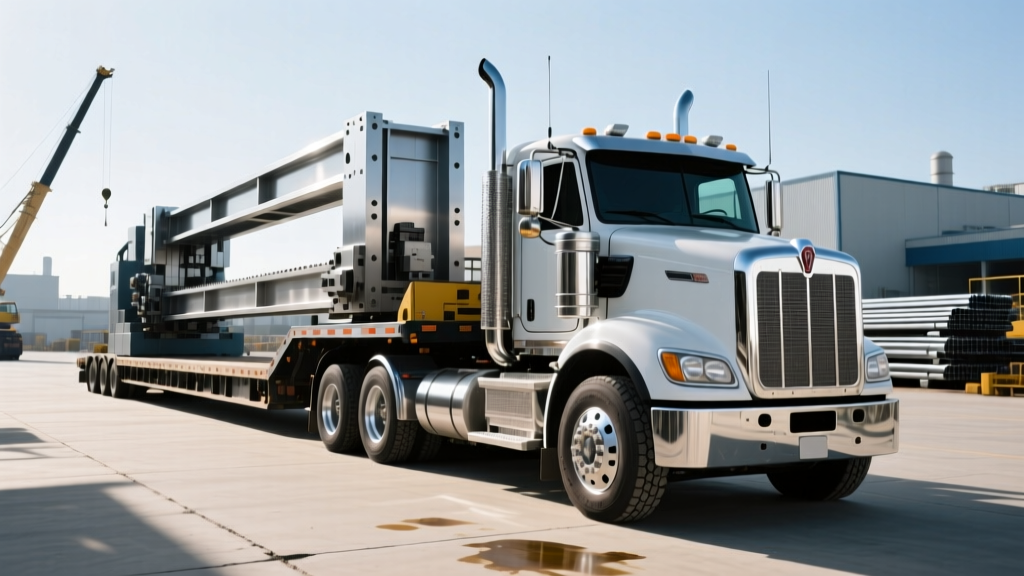
Transporting 80,000-pound excavators or precision 5-axis machining centers is an exercise in applied physics and regulatory navigation. Heavy equipment hauling rates are rarely arbitrary figures pulled from a dispatcher's head; they are meticulously calculated based on axle configurations, route engineering, permit acquisition, and trailer availability. In 2026, capacity constraints in the specialized lowboy and hydraulic modular trailer market have pushed baseline rates upward, making it critical for procurement managers and project engineers to understand the exact cost drivers.
Rather than relying on vague industry averages, this analysis breaks down three distinct, real-world heavy equipment hauling scenarios. By examining the specific machinery, trailer requirements, and logistical hurdles, we can establish a concrete framework for forecasting transport budgets.
2026 National Rate Baselines (Reference Matrix)
- Standard Over-Dimensional (RGN/Step Deck): $4.25 – $6.50 per mile
Heavy Haul (Multi-Axle Lowboy, 120k+ lbs): $8.00 – $12.00 per mile - Super Load (Hydraulic Modular, 200k+ lbs): $15.00 – $25.00+ per mile
- Escort Vehicles: $1.75 – $3.50 per mile (per vehicle)
Case Study 1: Relocating a CAT 336 Excavator (Standard Over-Dimensional)
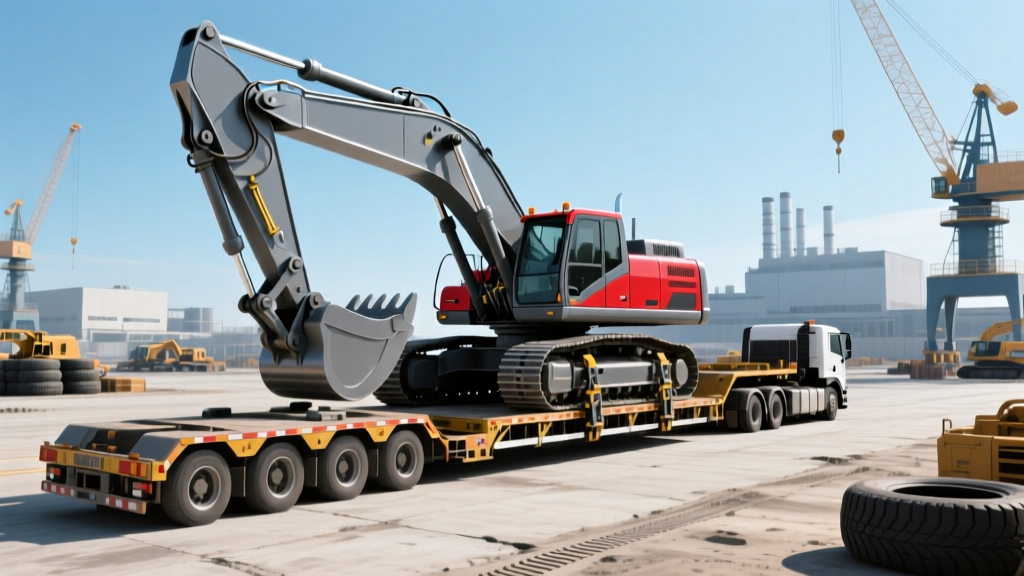
The Caterpillar 336 is a staple in earthmoving, but its transport requirements frequently trigger over-width regulations. With an operating weight of approximately 81,900 lbs and a transport width of 11 feet 6 inches (when equipped with 31-inch track pads), it exceeds the standard 8-foot 6-inch legal width limit in all 50 states.
The Logistics Profile
For a 450-mile relocation from a staging yard in Dallas, TX, to a job site in Little Rock, AR, the carrier must utilize a Removable Gooseneck (RGN) trailer. The RGN allows the excavator to be driven directly onto the deck, eliminating the need for expensive crane loading fees. However, the 11'6" width mandates over-width permits in both Texas and Arkansas, as well as specialized oversized load banners and amber strobes.
Rate Breakdown (450 Miles):• Base Linehaul (RGN @ $4.85/mi): $2,182.50
• State Permits (TX & AR Over-width): $135.00
• Fuel Surcharge (18%): $392.85
• Total Delivered Cost: $2,710.35 ($6.02 per all-in mile)
Because the load width is under 12 feet, pilot cars (escort vehicles) are generally not required on interstate highways in these specific jurisdictions, keeping the heavy equipment hauling rates contained to the linehaul and permit fees. According to the Texas Department of Motor Vehicles (TxDMV), over-width permits for loads under 14 feet can often be secured instantly via online portals, preventing dispatch delays that typically inflate spot-market rates.
Case Study 2: Transporting a Komatsu PC870LC-11 (Super Load Logistics)
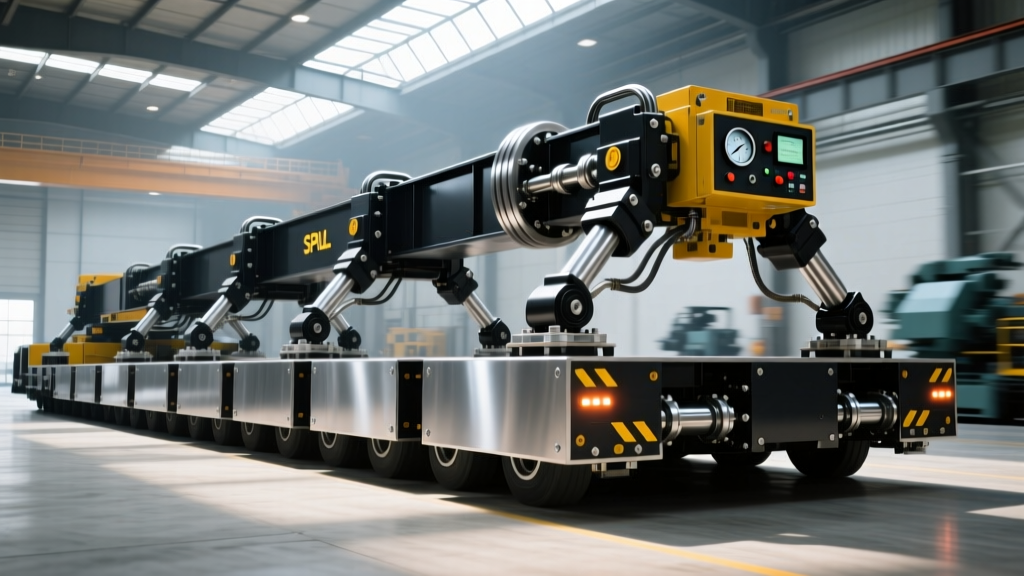
Moving a mining-class excavator like the Komatsu PC870LC-11 represents the upper echelon of heavy haul logistics. Weighing in at roughly 188,000 lbs, this machine cannot be transported intact on public highways. The boom, stick, and bucket must be dismantled and hauled on separate flatbeds, while the bare chassis requires a multi-axle hydraulic modular trailer (such as a Goldhofer or Scheuerle) to distribute the weight and comply with federal bridge formulas.
The Logistics Profile
Transporting the 140,000-lb bare chassis over a 200-mile route through the mountainous terrain of Colorado requires extensive route engineering. The Federal Highway Administration (FHWA) mandates strict adherence to bridge weight limits, meaning the carrier must calculate the exact axle spacing to ensure no single bridge span is overstressed. This often requires a pre-run route survey to identify tight radii, low-hanging utilities, and weak culverts.
| Cost Component | Specification / Requirement | Estimated Cost |
|---|---|---|
| Hydraulic Modular Trailer Linehaul | 13-Axle Configuration @ $18.50/mi | $3,700.00 |
| Police & Civilian Escorts | 2 Front, 1 Rear (Required > 12' width) | $1,450.00 |
| Route Survey & Engineering | Third-party clearance verification | $1,200.00 |
| Utility Pole Lifts | Telecom wire elevation (4 locations) | $850.00 |
| Super Load Permits | CDOT specific routing approvals | $650.00 |
| Total Chassis Transport | 200 Miles | $7,850.00 ($39.25/mi) |
When budgeting for super loads, the per-mile rate is a misleading metric. The ancillary costs—route surveys, utility lifts, and mandatory law enforcement escorts—frequently account for 40% to 50% of the total invoice. Procurement teams must explicitly define who bears the cost of utility lifts in the freight contract, as unexpected telecom wire elevations can add thousands of dollars to a single move.
Case Study 3: Moving a Haas UMC-1600-H Universal Machining Center
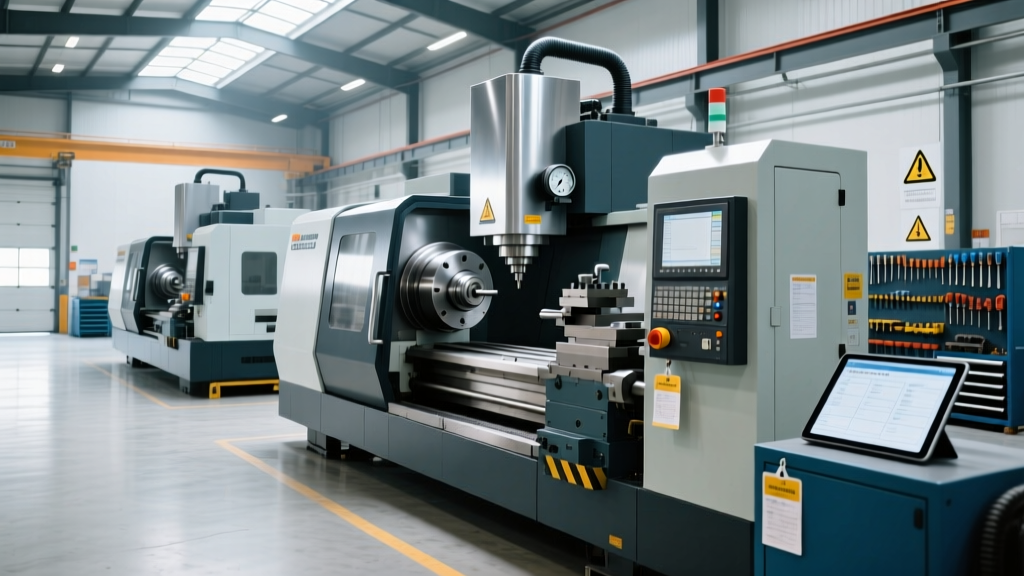
Not all heavy hauling involves dirt and diesel. The Haas UMC-1600-H is a 5-axis universal machining center weighing approximately 45,000 lbs. While it falls well within standard legal weight limits, its high center of gravity, extreme sensitivity to misalignment, and $1.2 million price tag demand a completely different approach to heavy equipment hauling rates.
The Logistics Profile
Standard chain-bindery and steel-deck flatbeds are unacceptable for precision CNC equipment. The machine must be secured using nylon straps or specialized rubber-backed chains to prevent cosmetic damage, and it must be loaded onto an air-ride suspension RGN to isolate the machine's linear scales and spindle bearings from road harmonics. Furthermore, loading a UMC-1600-H requires a certified rigger and a 100-ton hydraulic gantry or heavy-duty crane, as the machine's footprint and lifting points do not accommodate standard forklift loading.
"The highest risk in hauling precision machinery isn't the highway transit; it's the first and last 50 feet. Loading and unloading a 45,000-lb CNC mill with an improperly calibrated crane accounts for over 70% of transit-related insurance claims in the industrial machinery sector."
For a 600-mile move from a manufacturer in Oxnard, CA, to an aerospace facility in Phoenix, AZ, the heavy equipment hauling rates reflect the specialized equipment and labor required:
- Air-Ride RGN Linehaul: $6.20 per mile ($3,720.00)
- Origin Crane & Rigger (4-hour min): $1,450.00
- Destination Crane & Rigger: $1,450.00
- Specialized Cargo Insurance Rider: $380.00
- Total Project Cost: $7,000.00
Hidden Cost Variables That Inflate Hauling Quotes
When soliciting bids for heavy equipment transport, the base rate per mile is only the starting point. Several structural variables can drastically alter the final invoice:
1. Seasonal Frost Laws and Spring Thaw Restrictions
In northern U.S. states and Canadian provinces, spring thaw periods trigger strict weight restrictions on secondary and county roads to prevent pavement destruction. A load that is legal in August may require a 30% reduction in gross vehicle weight in March, forcing carriers to use additional axles or split the load, effectively doubling the heavy equipment hauling rates for the chassis transport.
2. The "Deadhead" Penalty
Specialized trailers like 13-axle hydraulic modulars are incredibly rare. If a carrier must deadhead (drive empty) 400 miles to pick up your super load, they will embed the cost of that empty return trip into your linehaul rate. Scheduling moves during periods when carriers are actively repositioning equipment can yield significant discounts.
3. Detention and Demurrage at Loading Facilities
Heavy haul drivers are governed by strict Hours of Service (HOS) regulations. If a job site is unprepared and the excavator is not staged, cleaned, and ready to load upon the truck's arrival, detention fees typically trigger after two hours. In 2026, specialized heavy haul detention rates average $125 to $175 per hour, billed in 30-minute increments.
Strategic Framework for Procuring Heavy Haul Freight
To optimize heavy equipment hauling rates and mitigate logistical failures, procurement teams should adopt a rigid bidding framework:
- Provide Exact OEM Specs: Never submit a bid request with "approximate" weights or dimensions. Provide the exact OEM model number, serial number, and current configuration (e.g., track pad width, counterweight status). A 2-inch miscalculation in width can be the difference between a $150 permit and a $1,500 super-load engineering requirement.
- Mandate All-In Pricing: Require carriers to submit all-in rates that include permits, escorts, and fuel surcharges. This prevents post-dispatch invoice padding.
- Verify Trailer Inventory: Ensure the carrier actually owns or has a guaranteed lease on the specific trailer type required (e.g., Schnable, Goldhofer, Air-Ride RGN). Brokers who broker out specialized freight to the spot market introduce massive delays and rate volatility.
- Define Site Responsibility: Explicitly state in the Bill of Lading (BOL) whether the shipper or consignee is responsible for providing loading/unloading ramps, cranes, and ground bearing capacity verification.
Understanding the granular details of heavy equipment hauling rates transforms transport from a chaotic, budget-busting liability into a predictable, engineered supply chain function. By aligning equipment specifications with the correct trailer technology and anticipating regulatory friction, project managers can secure accurate pricing and ensure the safe, compliant delivery of critical industrial assets.