International Heavy Equipment Shipping: 2026 Case Studies
Analyze real-world international heavy equipment shipping case studies, comparing RoRo, breakbulk, and flat rack costs, transit times, and compliance.
Moving a 90-ton excavator or a disassembled crawler crane across an ocean requires far more than simply booking freight space. International heavy equipment shipping in 2026 is defined by strict dimensional tolerances, complex stowage physics, and unforgiving customs frameworks. A single miscalculation in Verified Gross Mass (VGM) or a missing phytosanitary certificate for wood dunnage can result in weeks of demurrage charges and five-figure penalties.
This guide bypasses generic logistics advice and examines two real-world routing scenarios, breaking down the exact methodologies, cost structures, and regulatory hurdles involved in cross-border heavy machinery transport.
Method Selection Matrix: RoRo vs. Flat Rack vs. Breakbulk
Choosing the wrong shipping method is the most common cause of budget overruns in heavy haul logistics. The decision hinges on the equipment's operational status, dimensions, and the origin/destination port infrastructure.
| Shipping Method | Ideal Equipment Profile | Dimensional Limits & Constraints | Primary Cost Driver | Risk & Handling Profile |
|---|---|---|---|---|
| RoRo (Roll-on/Roll-off) | Self-propelled, operable machinery (excavators, dozers, wheel loaders). | Max width typically 16ft, height 13ft. Must have 20% gradeability and functioning brakes. | Cubic Meter (CBM) volume. Static/towed units incur a 30-40% premium. | Lowest physical handling risk. Driven on/off. Lashing secured by port stevedores. |
| Flat Rack (FR) | Static equipment, attachments, or machinery exceeding RoRo width/height but under 40ft length. | Max payload ~40,000 kg. Width up to 20ft (requires Out of Gauge surcharges). | OOG (Out of Gauge) slot displacement fees. Carrier charges for lost adjacent container slots. | High exposure to salt spray and weather. Requires heavy-duty shrink wrapping and VCI film. |
| Breakbulk / LoLo | Massive mining trucks, disassembled cranes, or equipment exceeding 50 MT per lift. | Virtually limitless. Dictated only by ship's crane SWL (Safe Working Load) or shore crane capacity. | W/M (Weight or Measure) billing. Heavy Lift surcharges for pieces >30 MT. | Complex lashing and sea-fastening engineering required. Highest risk of cosmetic/structural damage. |
Case Study 1: Houston to Rotterdam (Cat 390F Excavator via RoRo)
Asset: Caterpillar 390F Hydraulic Excavator (Operating Weight: ~90,400 lbs / 41,000 kg)
Dimensions: 39.2ft L x 11.1ft W x 10.8ft H (approx. 130 CBM with boom/stick lowered)
Route: Port of Houston (Barbours Cut) to Port of Rotterdam
Method: Self-Propelled RoRo
The Logistics Execution
The Cat 390F is a prime candidate for RoRo transport due to its self-propelled nature. However, a critical operational detail dictates the cost: track composition. Steel tracks severely damage the steel decks of RoRo vessels. To mitigate this, the equipment must be driven over specialized rubber mats or wood dunnage. In 2026, port authorities strictly enforce ISPM-15 regulations for any wood used in transit.
For this shipment, the freight rate was negotiated at $92 per CBM. With a calculated volume of 130 CBM, the base ocean freight totaled $11,960. However, the final invoice included several mandatory ancillary fees:
- Terminal Handling Charge (THC): $485 (Origin) / €310 (Destination)
- ISPS (Security Surcharge): $18.50
- Documentation & ISF Filing: $145
Edge Case: Travel Motor Failure
During pre-inspection at the Houston staging yard, the port-side travel motor showed hydraulic seepage, rendering the excavator unable to track in a straight line at the required 2 mph minimum. The carrier (a major European RoRo operator) immediately reclassified the unit from 'Self-Propelled' to 'Static/Towed'. This required booking a Mafi trailer (a low-bed heavy-duty port trailer) and increased the freight rate by 38%, pushing the ocean freight cost to $16,504. This highlights the necessity of comprehensive pre-delivery inspections (PDI) before the machine reaches the port gates.
Case Study 2: Vancouver to Pilbara (Liebherr LR 1300/2 Crawler Crane via Breakbulk)
When equipment exceeds the dimensional and weight tolerances of standard containerized or RoRo networks, breakbulk shipping on Multipurpose Vessels (MPVs) becomes mandatory. The breakbulk sector handles complex project cargo that requires specialized sea-fastening and heavy-lift crane operations.
Asset: Liebherr LR 1300/2 Crawler Crane (Disassembled into 7 major components)
Heaviest Piece: Carbody (68 Metric Tons)
Longest Piece: Main Boom Section (48ft / 14.6 meters)
Route: Port of Vancouver to Port Hedland (Western Australia)
Method: Breakbulk (Lift-on/Lift-off)
W/M Billing and Heavy Lift Surcharges
Breakbulk ocean freight is calculated on a W/M (Weight or Measure) basis. The carrier bills based on whichever metric yields the higher revenue: 1 Metric Ton (MT) or 1 Cubic Meter (CBM). The total shipment volume was 410 CBM, and the total weight was 285 MT. Because the volume exceeded the weight, the shipment was rated on the 410 CBM figure at a contracted rate of $115 per W/M, resulting in a base freight cost of $47,150.
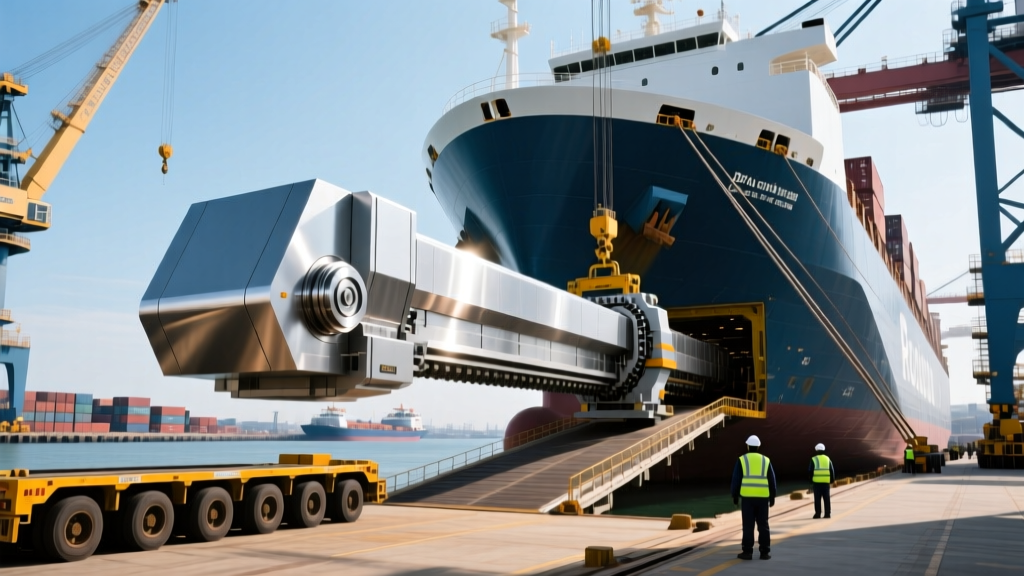
Furthermore, the 68 MT carbody triggered a Heavy Lift Surcharge. Most MPV vessel cranes have a standard Safe Working Load (SWL) of 50 MT. Lifting a 68 MT piece requires tandem lifting (using both ship cranes simultaneously) or specialized shore-based heavy lift gantries. The carrier applied a $4,500 heavy lift premium for the tandem crane operation and the additional stevedore time required to engineer the sea-fastening welds.
Sea-Fastening and Dunnage Engineering
Unlike RoRo, where lashings are standardized, breakbulk requires custom sea-fastening. Marine surveyors must approve the welding of D-rings and stopper plates directly to the vessel's deck. For the 48ft boom section, twist-locks and heavy-duty turnbuckles were insufficient due to the bending moment expected in the North Pacific swell. Fabricators welded custom steel cradles to the deck, adding $3,200 in stevedore welding and material costs, but ensuring the boom arrived in Pilbara without structural torsion.
Regulatory Bottlenecks & Compliance Framework
Cross-border heavy equipment shipping is heavily gated by international maritime and customs regulations. Failure to comply does not just result in fines; it results in cargo being rolled (left behind) at the transshipment hub.
SOLAS Verified Gross Mass (VGM)
Under the International Maritime Organization's SOLAS regulations, every piece of cargo loaded onto a vessel must have a Verified Gross Mass (VGM) declaration. For heavy equipment, you cannot rely on the manufacturer's brochure weight. The VGM must be obtained via Method 1 (weighing the packed cargo using calibrated equipment) or Method 2 (calculating the weight of all components and adding them to the tare weight of the transport frame). If a 40-ton dozer arrives at the port gate and the weighbridge reads 42.5 tons due to trapped mud, fuel loads, and attached counterweights, the terminal will reject the VGM, halting the shipment until a revised, certified declaration is filed.
ISPM-15 Phytosanitary Compliance
Any raw wood used for dunnage, chocking, or crating in international transit must comply with ISPM-15 standards. This requires the wood to be heat-treated or methyl bromide fumigated and stamped with the official IPPC mark. In 2026, Australian Biosecurity and European customs authorities utilize automated scanning and rigorous physical inspections. If an inspector finds a single piece of unmarked wood wedged under a track pad to level the machine, the entire shipment can be quarantined, requiring a licensed fumigation team to treat the cargo on the dock at an emergency rate exceeding $4,000.
U.S. CBP Importer Security Filing (ISF 10+2)
For equipment shipping into or transiting the United States, the ISF 10+2 must be filed with Customs and Border Protection (CBP) at least 24 hours before the cargo is laden on the vessel at the origin port. Heavy equipment shipments frequently trigger ISF amendments because the exact serial numbers or Harmonized Tariff Schedule (HTS) codes are confirmed late. Late or inaccurate ISF filings carry a strict liability penalty of $5,000 per violation, making precise data collection from the equipment seller a non-negotiable first step.
2026 Cost Variables and Surcharges
Base ocean freight is only the starting point. Heavy equipment shippers must account for volatile surcharges that fluctuate based on global energy markets and port congestion.
- Bunker Adjustment Factor (BAF): Tied to the global price of low-sulfur marine fuel. In early 2026, BAF for Transatlantic RoRo routes averaged $38 per CBM. This is recalculated monthly by carriers.
- Out of Gauge (OOG) Surcharges: If shipping via Flat Rack, any equipment that extends beyond the standard 8ft width or 8.5ft height will incur OOG fees. Carriers charge for the 'dead space' above and beside the equipment where standard containers cannot be stacked. A 12ft wide excavator on a 40ft FR will typically displace 6 to 8 TEUs (Twenty-foot Equivalent Units), resulting in an OOG surcharge ranging from $1,200 to $2,500 depending on the trade lane.
- Low Water / Drought Surcharges: Inland waterways feeding major ports (such as the Mississippi River system feeding the Port of Houston) frequently impose draft restrictions during drought conditions. Barge operators apply low-water surcharges (often 15-20% of the barge rate) to compensate for the reduced tonnage they can legally push per tow.
Successful international heavy equipment shipping requires treating the logistics chain as an engineering project. By matching the exact physical profile of the machinery to the correct stowage method, enforcing strict ISPM-15 and VGM compliance at the staging yard, and accurately modeling W/M billing structures, fleet managers can eliminate the hidden costs that routinely derail cross-border equipment deployments.