How AI and Telematics Reduce Heavy Equipment Transport Cost in 2026
Discover how AI routing, IoT telematics, and digital freight matching reduce heavy equipment transport cost in 2026 with real-world lowboy hauling data.
The New Economics of Oversize Hauling
The baseline heavy equipment transport cost has undergone a radical structural shift. In 2026, fleet operators and heavy-haul logistics brokers are no longer relying on static per-mile rates and manual permit applications to price their loads. Instead, the integration of artificial intelligence (AI) route optimization, Internet of Things (IoT) trailer telematics, and specialized digital freight matching has transformed cost management from a reactive accounting exercise into a predictive science.
Moving a 90,000-pound excavator or a 120,000-pound bulldozer across state lines involves a complex matrix of variables: bridge weight restrictions, seasonal road bans, pilot car requirements, and fuel surcharges. Historically, a single miscalculation in route planning could result in thousands of dollars in wasted fuel, missed delivery windows, and emergency escort fees. Today, technology compresses these variables into actionable data, allowing operators to shave 12% to 18% off their total heavy equipment transport cost per quarter.
2026 Cost Benchmark Data
Standard Lowboy Rate (Under 80k lbs): $4.50 - $6.50 per mile
Oversize/Overweight Rate (80k - 120k lbs): $9.00 - $14.00 per mile
Superload Rate (120k+ lbs): $18.00 - $25.00+ per mile
Average Pilot Car Cost: $165 - $225 per hour (varies by state)
Algorithmic Route Optimization: Eliminating the $5,000 Detour
The most significant variable in the heavy equipment transport cost equation is route viability. Oversize loads cannot simply follow standard GPS directions. A bridge with a 14-foot clearance or a county road with a 40,000-pound axle weight limit can force a multi-axle lowboy trailer into a massive detour, burning hundreds of gallons of diesel and requiring the driver to pull over and reset their Hours of Service (HOS) clock.
Modern AI-driven routing platforms, such as PC*Miler Heavy Duty and ProMiles, utilize continuously updated municipal databases and predictive machine learning models to map routes specifically for high-clearance, multi-axle configurations. These systems do not just look at static bridge heights; they analyze real-time construction data, seasonal frost laws, and even historical traffic patterns that might trap a wide load in an intersection.
| Cost Factor | Manual / Legacy Routing | AI Predictive Routing (2026) |
|---|---|---|
| Permit Acquisition Time | 4-6 hours (Manual state portal entry) | 15-30 minutes (Automated API pulls) |
| Detour Risk (Low Clearance) | 12% chance per 1,000 miles | < 1% chance per 1,000 miles |
| Escort Car Optimization | Booked for full trip duration | Geo-fenced staging (saves $400+) |
| Fuel Consumption Variance | +8% due to idling and stops | Baseline optimized |
By automating the permit application process through API integrations with state Department of Transportation (DOT) portals, AI software reduces administrative labor costs. According to infrastructure data tracked by the Federal Highway Administration (FHWA), the complexity of the national freight network requires constant adaptation; AI routing platforms ingest these municipal updates in real-time, ensuring that a newly imposed weight restriction on a rural highway is instantly reflected in the heavy-haul route matrix.
Lowboy Telematics: Preventing Catastrophic Axle and Tire Failures
A blown steer tire or a seized axle bearing on a loaded 8-axle configuration is not just a maintenance issue; it is a logistical nightmare. Emergency roadside service for a loaded lowboy trailer averages $1,200 to $1,800, not including the cost of the replacement parts, the towing fees for the tractor, and the late-delivery penalties that can exceed $5,000 for critical infrastructure projects.
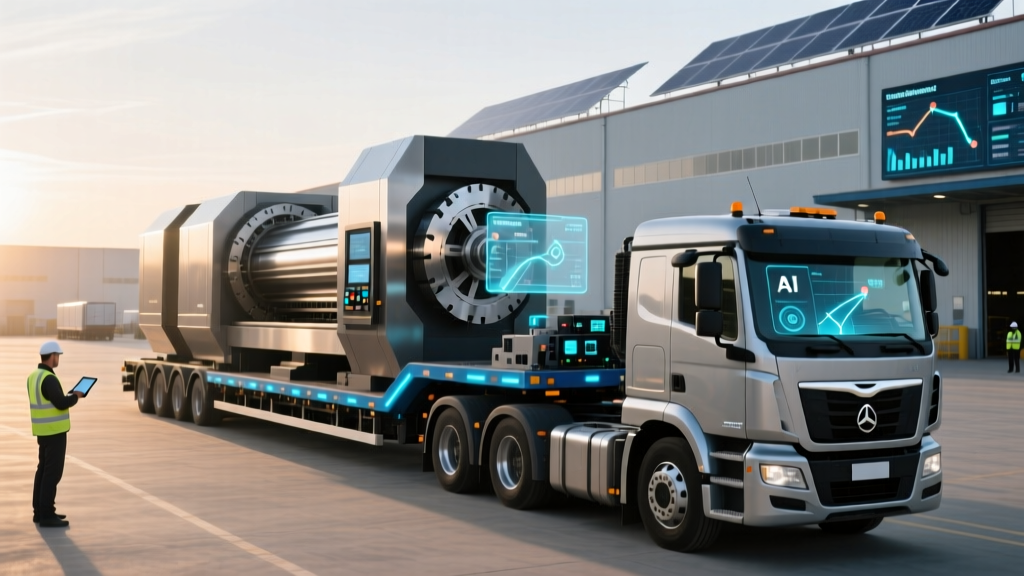
In 2026, IoT telematics have moved beyond simple GPS tracking. Modern heavy-haul trailers are equipped with advanced Tire Pressure Monitoring Systems (TPMS) and axle temperature sensors. Hardware like the Samsara VG55 gateway, paired with trailer-specific sensor arrays, monitors the internal temperature of wheel ends and the air pressure of inside dual tires—areas that are impossible for a driver to inspect visually during a standard pre-trip walkaround.
"A 5% drop in tire pressure on a trailer's inside dual increases the tire's operating temperature by up to 15 degrees. At highway speeds with a 90,000-pound load, that thermal buildup guarantees a blowout within 40 miles. Telematics alerts the dispatcher at a 2% drop, allowing for a planned $80 repair at the next truck stop instead of a $2,000 highway emergency."
— Fleet Maintenance Director, Midwest Heavy Haul Logistics
Furthermore, telematics systems now monitor hydraulic systems on extendable double-drop trailers. If a hydraulic line develops a micro-leak, pressure sensors detect the variance and alert the maintenance team before the deck collapses under the weight of a paver or crane, preventing catastrophic cargo damage and six-figure liability claims.
Digital Freight Matching: Eradicating Heavy-Haul Deadhead Miles
Deadhead miles—driving an empty trailer to pick up the next load—represent pure financial loss. For standard dry van freight, deadhead rates hover around 20%. For specialized heavy-haul equipment, the historical deadhead rate often exceeded 35% due to the niche nature of the cargo and the specific trailer requirements (e.g., needing a 130,000-pound capacity 19-axle Goldhofer trailer versus a standard 3-axle RGN).
Specialized digital freight matching platforms have solved this by utilizing predictive load forecasting. Instead of waiting for a broker to post a load, these platforms analyze regional construction starts, mining equipment deployment schedules, and agricultural harvest timelines to match heavy-haul carriers with backhaul loads before they even drop off their primary freight. By reducing heavy-haul deadhead miles from 35% to 18%, carriers effectively increase their revenue-per-truck by 17%, drastically lowering the overall heavy equipment transport cost passed on to the end shipper.
Case Study: Moving a Cat 390F Excavator from Dallas to Houston
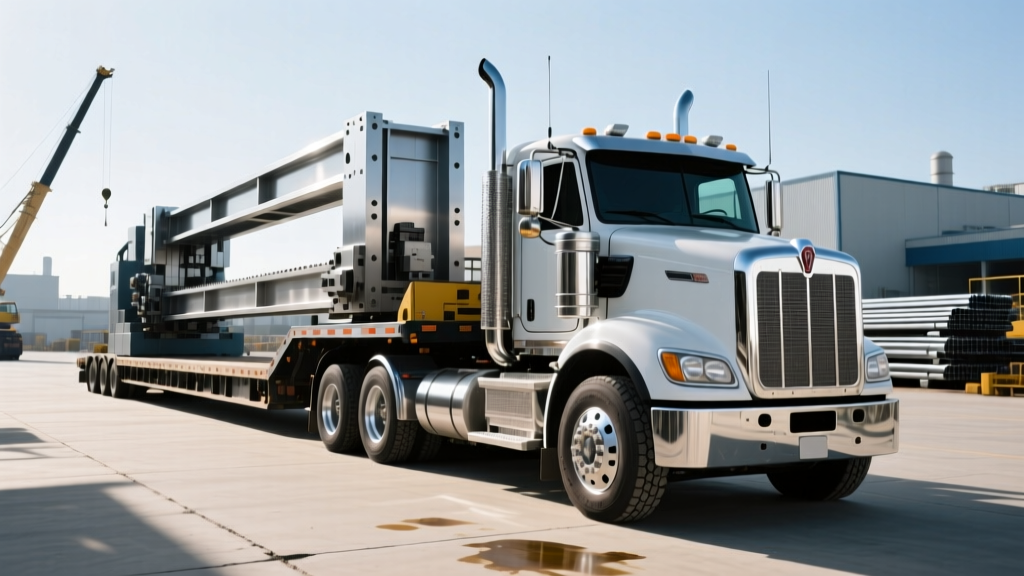
To understand the tangible impact of these technologies, consider the transport of a Caterpillar 390F Hydraulic Excavator. The machine has an operating weight of approximately 83,800 lbs and a transport width of 11 feet 4 inches. This requires a heavy-duty multi-axle lowboy trailer and triggers oversize width permit requirements in Texas, necessitating at least one pilot car.
The Legacy Cost Model (Pre-Tech Optimization)
- Base Haul Rate (240 miles @ $9.50/mile): $2,280
- Texas Oversize Permits: $150
- Pilot Car (5 hours @ $185/hr): $925
- Fuel Surcharge & Tolls: $340
- Contingency (10% for routing delays): $369
- Total Legacy Cost: $4,064
The 2026 Tech-Optimized Cost Model
- Base Haul Rate (Dynamic pricing via digital match): $2,100
- Automated Permit Pull: $110 (reduced admin fees)
- Geo-Fenced Pilot Car Staging: $640 (Pilot car meets the load outside city limits, avoiding urban hourly rates)
- Fuel Surcharge & Tolls (AI toll-avoidance routing): $285
- Contingency (Reduced to 2% via predictive routing): $42
- Total Optimized Cost: $3,177
Total Savings: $887 per load (a 21.8% reduction in total heavy equipment transport cost).
Actionable Framework: Calculating Your Tech ROI
Fleet managers and logistics coordinators looking to reduce their heavy equipment transport cost should implement the following evaluation framework before investing in new routing or telematics software:
- Audit Your Deadhead and Detour Data: Pull the last 90 days of dispatch logs. Calculate the exact dollar amount lost to deadhead miles and the fuel burned during unintended detours caused by low bridges or weight-restricted roads.
- Quantify Roadside Emergencies: Tally the total cost of emergency trailer repairs (tires, wheel seals, hydraulics) over the past year. Compare this against the annual subscription cost of a comprehensive trailer TPMS and IoT sensor suite (typically $15–$25 per trailer/month).
- Map Permit Labor Hours: Track how many hours your dispatch team spends manually applying for state and local oversize permits. Multiply this by their hourly burden rate. If the annual labor cost exceeds $12,000, an automated API permit platform will yield an immediate ROI.
- Factor in Cargo Liability: Heavy machinery often exceeds $500,000 in value. Evaluate whether your current telematics system provides real-time shock and tilt monitoring to prove fault in the event of cargo shifting or damage during transit.
By shifting from reactive dispatching to predictive, data-driven logistics, heavy-haul operators can permanently alter their cost structures, ensuring profitability even as fuel prices and infrastructure regulations continue to evolve.