Swiss CNC Machines: 2026 Safety & Compliance Guide
Navigate 2026 OSHA and ANSI safety standards for Swiss CNC machines. Expert guide on fire suppression, HPC guarding, and ISO 13849 PLC compliance.
The Unique Hazard Profile of Sliding Headstock Lathes
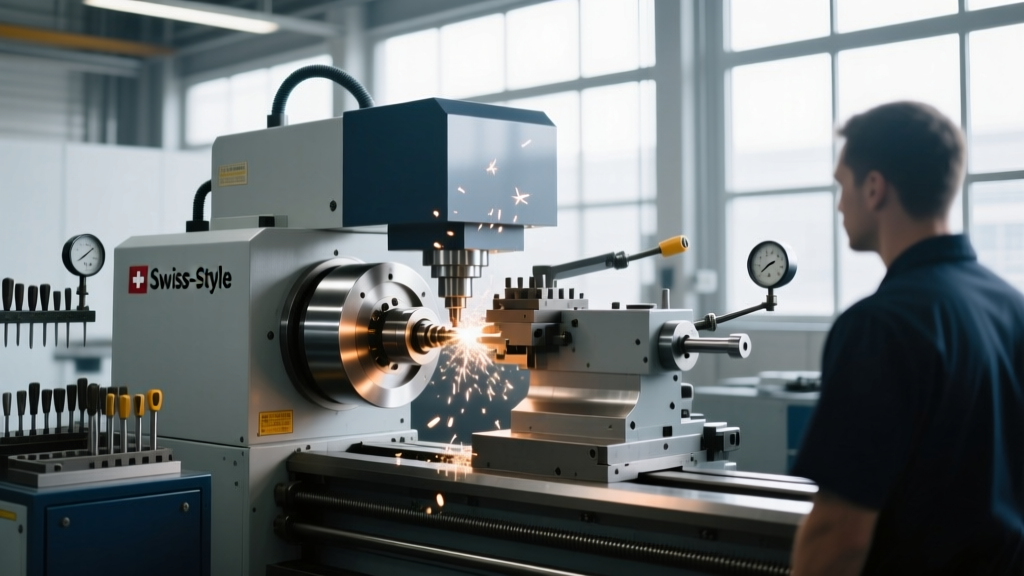
Swiss CNC machines (sliding headstock lathes) operate on fundamentally different mechanical principles than standard chucker lathes. The material moves through a guide bushing while the tool remains stationary, enabling extreme precision on long, slender parts. However, this architecture introduces distinct safety hazards that standard machine guarding protocols often fail to address. In 2026, regulatory scrutiny on these specific hazard vectors has intensified, driven by updated enforcement guidelines from the Occupational Safety and Health Administration (OSHA) and the Association for Manufacturing Technology (AMT).
Unlike standard CNC turning centers where the primary risks involve chuck ejections and rotating workpieces, Swiss-type machines present a triad of unique compliance challenges: guide bushing friction fires, high-pressure coolant (HPC) containment, and unguarded bar feeder integration. Understanding the intersection of OSHA Standard 1910.212 (General Requirements for All Machines) and the specific mechanics of machines like the Tsugami B0125-III or Tornos SwissDec 26 is critical for shop floor managers and safety engineers.
ANSI B11.23 and OSHA Enforcement Realities
ANSI B11.23 provides the specific safeguarding requirements for lathes, but Swiss machines frequently blur the lines between turning and milling due to extensive live-tooling and B-axis capabilities. OSHA inspectors in 2026 are increasingly citing facilities under the General Duty Clause when standard lathe guarding fails to account for the multi-axis enclosure breaches common in Swiss machining.
⚠️ Compliance Warning: The 2026 Penalty MatrixAs of 2026, OSHA maximum penalties for serious machine guarding violations have surpassed $16,131 per instance. Willful or repeat violations regarding uninterlocked access panels on Swiss machines can result in fines exceeding $161,323. Inspectors specifically target the rear access doors used for guide bushing maintenance, which are frequently left unbolted or bypassed with zip-ties to reduce setup times.
Comparison: Standard CNC Lathe vs. Swiss-Type Safeguarding
| Safeguarding Element | Standard CNC Lathe (e.g., Doosan Puma) | Swiss CNC Machine (e.g., Citizen M32-V) |
|---|---|---|
| Primary Ejection Hazard | Chuck jaw failure, long part whip | Live tooling breakage, guide bushing collar failure |
| Enclosure Integrity | Polycarbonate viewing windows (10mm+) | Full sealed enclosure required for oil mist/HPC |
| Fire Risk Origin | Electrical cabinet, chip conveyor | Guide bushing friction, titanium chip ignition |
| Rear Machine Access | Minimal (usually solid sheet metal) | High traffic (bar feeder, guide bushing cleaning) |
Mitigating Guide Bushing Fires and Oil Mist Ignition
The guide bushing is the heart of a Swiss machine, providing support within 1mm to 2mm of the cutting tool. When machining reactive materials like titanium (Ti-6Al-4V) or high-temperature alloys like Inconel 718, the friction at the bushing generates intense localized heat. If the machine utilizes straight oil or high-concentration soluble coolants, this heat can easily ignite the oil mist suspended inside the enclosure.
According to NIOSH guidelines on metalworking fluids, controlling oil mist is both an air quality and a combustion imperative. Relying solely on the machine's standard flood coolant is insufficient for fire prevention in Swiss turning.
Fire Suppression Specifications for Swiss Enclosures
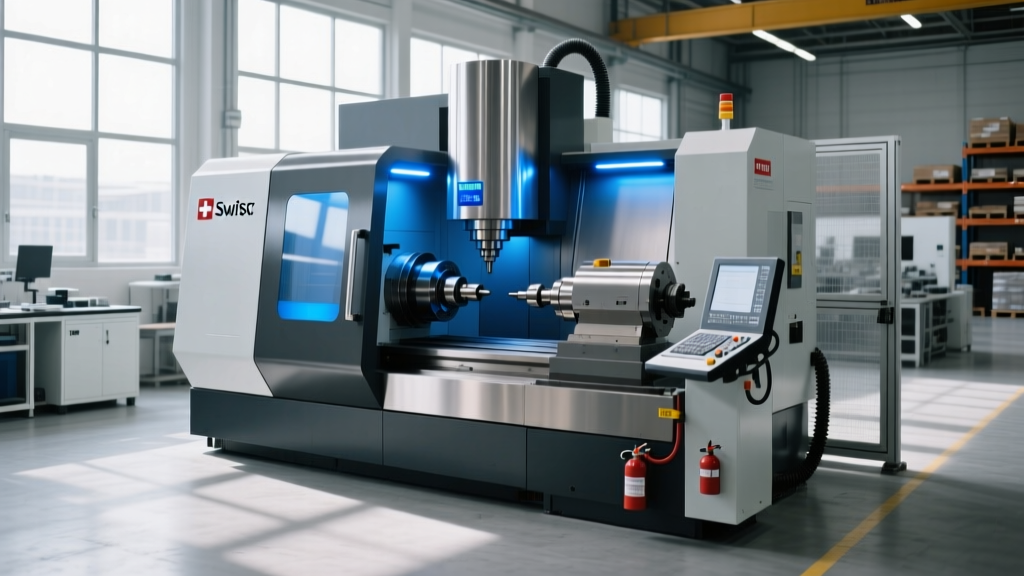
Standard water-sprinkler systems are ineffective inside the sealed, high-velocity environment of a Swiss CNC enclosure. Facilities must install machine-tended automatic fire suppression systems. The industry standard in 2026 involves In-Line Pressure (ILP) systems utilizing clean agents like FK-5-1-12 (Novec 1230).
- Detection: Optical flame detectors paired with rate-of-rise thermal sensors (triggering at 175°F / 79°C) mounted directly above the guide bushing and main spindle zones.
- Delivery: Flexible polymer tubing routed through the machine's existing cable trays, melting at 250°F to release the suppressant directly at the fire's origin.
- Cost Benchmark: Retrofitting a Firetrace ILP system on a single Tornos SwissDec 26 typically costs between $5,200 and $7,800, excluding installation labor. This is a fraction of the $150,000+ replacement cost of a destroyed machine and facility downtime.
High-Pressure Coolant (HPC) Containment Strategies
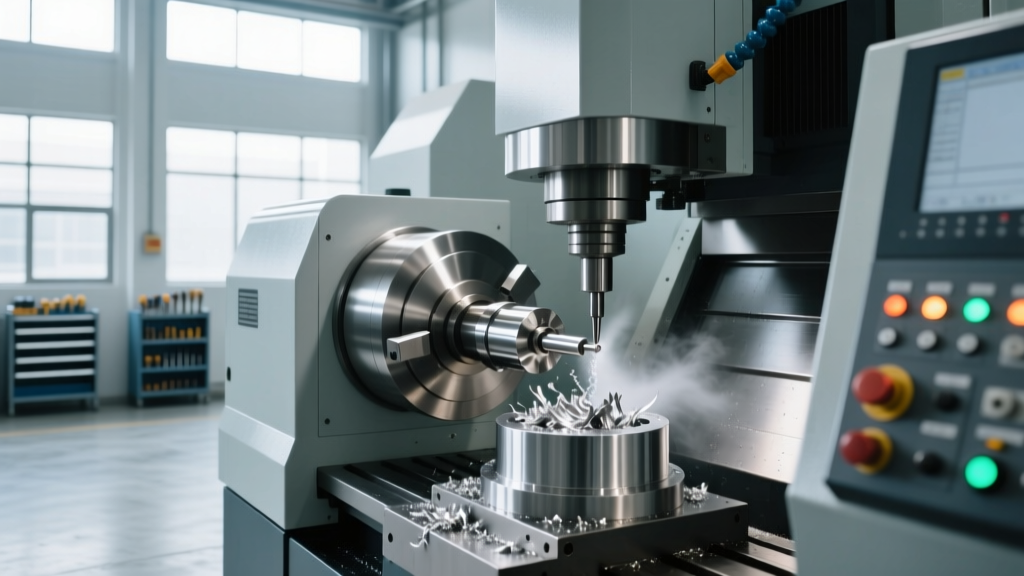
To break stringy chips in deep-hole drilling and micro-milling operations, Swiss machines routinely employ High-Pressure Coolant (HPC) systems operating between 1,500 PSI and 2,500 PSI (103 to 172 bar). At these pressures, a coolant leak or a burst hydraulic line acts like a cutting laser, capable of slicing through skin and standard polycarbonate viewing windows.
💡 Engineering Insight: Polycarbonate DegradationStandard 10mm polycarbonate (Lexan) windows degrade rapidly when exposed to synthetic cutting fluids and UV light, losing up to 40% of their impact resistance within 18 months. For HPC Swiss machines, safety engineers must specify 15mm thick, co-extruded polycarbonate with a chemical-resistant hard coat (e.g., Margard II), or upgrade to laminated safety glass rated for 3,000 PSI impact. Inspect windows for micro-crazing (spiderweb cracks) every 90 days.
Safety PLC Architecture and ISO 13849-1 Compliance
Modern Swiss machines feature complex kinematic chains, often with 8 to 12 simultaneous axes. The safety control architecture must comply with ISO 13849-1, specifically achieving Performance Level (PL) d or e and Category 3 or 4. This requires dual-channel monitoring of all safety-critical functions.
When integrating third-party bar feeders (such as Iemca or LNS models) or automated part catchers, the safety loop cannot rely on standard M-code relays. The integration must utilize safety-rated fieldbus protocols like CIP Safety over EtherNet/IP or PROFIsafe.
Required Dual-Channel Interlock Upgrades
- Main Access Doors: Replace standard magnetic switches with RFID-coded, guard-locking safety switches (e.g., Euchner MGB2 Profinet or Schmersal AZM40). These prevent the door from being opened until the spindle has completely stopped (monitored via a safe speed module, not just a zero-speed timer).
- Guide Bushing Access Panel: This panel is opened frequently for cleaning. It must be equipped with a solenoid-guarded interlock that requires a deliberate manual reset on the HMI before the machine can restart, preventing accidental cycling while the operator's hands are near the bushing.
- Bar Feeder E-Stop Integration: The bar feeder's safety circuit must be hardwired in series with the lathe's safety PLC. If the bar feeder's safety door is opened, the lathe's spindle and feed axes must immediately enter a Safe Torque Off (STO) state.
Rear-End Guarding and Bar Stock Whip
The rear of a Swiss machine, where the bar feeder interfaces with the spindle, is a notoriously high-risk zone. Bar stock (often 12-foot lengths of 1-inch to 1.25-inch diameter material) rotates at up to 4,000 RPM. If the material is not perfectly straight, or if the bar feeder's reduction tube is worn, the bar stock can 'whip' violently, shattering plastic guards and causing catastrophic injury.
Actionable Mitigation: Ensure the bar feeder's hydrodynamic guide tubes are matched exactly to the bar stock diameter (within 0.020 inches of clearance). Implement a strict preventative maintenance schedule to replace polyurethane reduction tubes every 600 operating hours. Furthermore, the physical barrier separating the operator from the rear of the machine must be constructed of 10-gauge steel mesh or solid polycarbonate, anchored to the floor, completely isolating the rotating bar stock from the pedestrian aisle.
The 2026 Shop Floor Compliance Audit Checklist
Facility managers and safety officers should execute this targeted audit quarterly to ensure Swiss CNC fleets remain compliant and safe:
- [ ] Window Integrity: Inspect all polycarbonate viewing windows for chemical crazing, yellowing, or impact pitting. Verify thickness meets HPC pressure ratings.
- [ ] Interlock Functionality: Test all access doors and rear panels. Verify that opening a door triggers an immediate Category 0 or Category 1 stop, and that the spindle cannot restart until the door is closed and a manual reset is performed.
- [ ] Fire Suppression Pressure: Check the pressure gauges on machine-tended fire suppression cylinders. Ensure optical flame sensors are free of oil film and coolant residue.
- [ ] Oil Mist Extraction: Verify that HEPA or centrifugal mist collectors are maintaining negative pressure inside the enclosure. Check ducting for oil pooling, which presents a secondary fire hazard.
- [ ] Bar Feeder Clearance: Measure the clearance between the bar stock and the reduction tube. Replace worn tubes to prevent high-RPM bar whip.
- [ ] Safety PLC Diagnostics: Access the machine's safety PLC diagnostic screen (e.g., Fanuc Safety I/O link or Siemens Safety Integrated) to verify no safety channels are currently bypassed or reporting intermittent faults.
Swiss CNC machines represent the pinnacle of precision turning, but their unique mechanical footprint demands a highly specialized approach to safety. By moving beyond generic lathe guarding and addressing the specific realities of guide bushing friction, HPC containment, and complex safety PLC integration, manufacturing facilities can protect their operators while maintaining the aggressive uptime required in modern production environments.