Swiss CNC Machine Buyer's Guide: 2026 Costs & Top Models
Compare top Swiss CNC machine models for 2026. This buyer's guide details pricing, TCO, guide bushing specs, and facility requirements.
The Core Decision Framework: Standard CNC vs. Swiss CNC
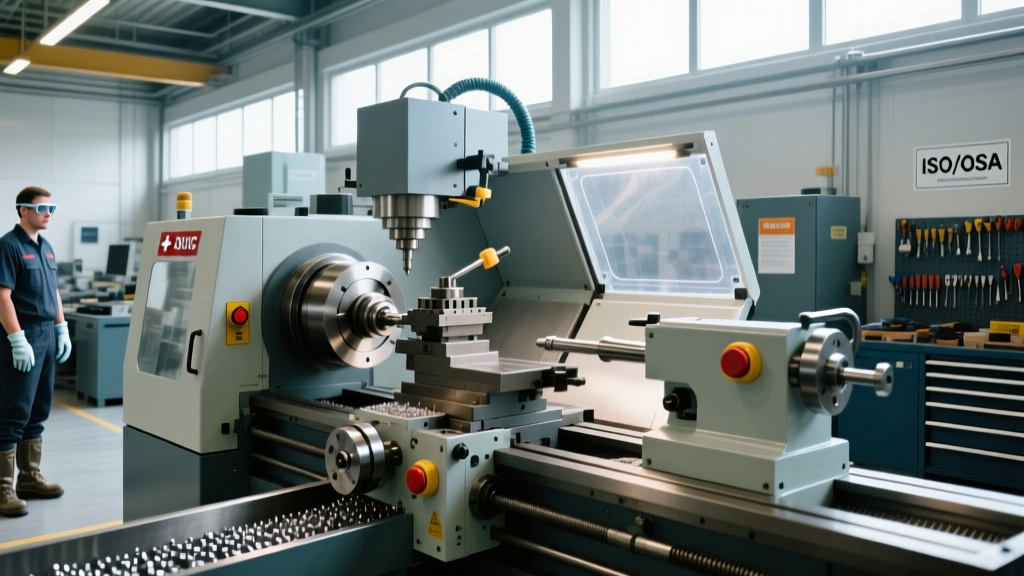
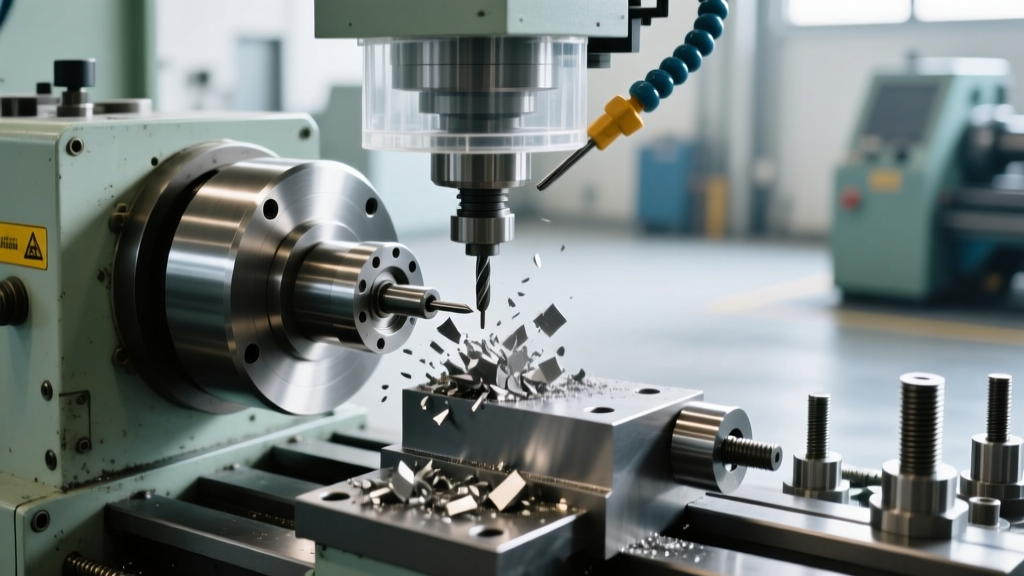
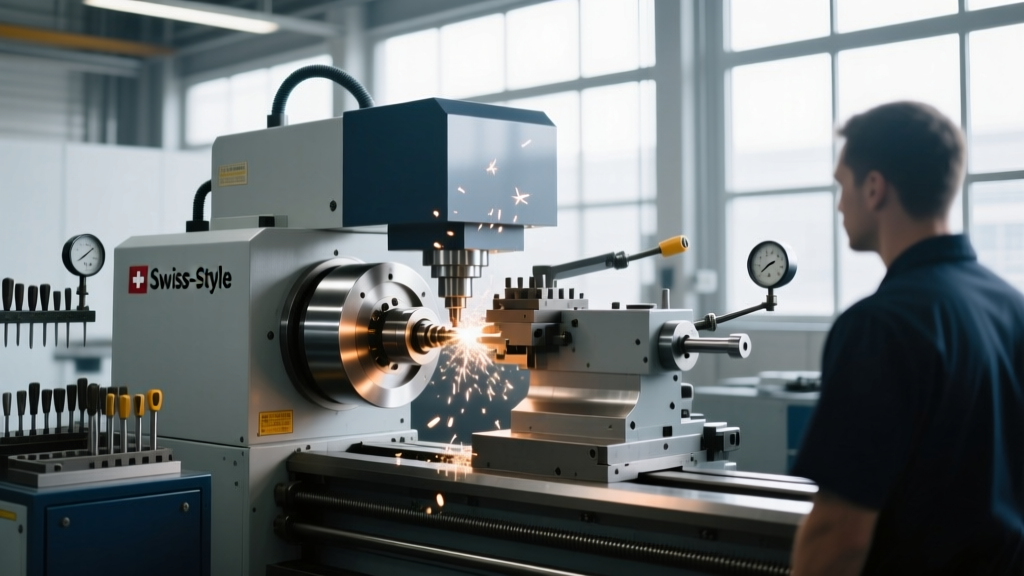
Selecting the right architecture for small-diameter, high-complexity turning operations hinges entirely on part geometry and the Length-to-Diameter (L/D) ratio. Standard CNC lathes rely on a chuck and tailstock, which introduces deflection when machining slender parts. Swiss-type machines (sliding headstock lathes) solve this by moving the material axially through a guide bushing, keeping the cutting action within 2mm of the support point.
According to manufacturing technology market data tracked by AMT (The Association For Manufacturing Technology), demand for Swiss-type architectures continues to outpace standard lathes in the medical and aerospace micro-machining sectors due to the necessity of single-setup completions.
| Feature | Standard CNC Lathe | Swiss CNC Lathe (Sliding Headstock) |
|---|---|---|
| Material Support | Chuck / Tailstock | Guide Bushing (within 2mm of tool) |
| Max L/D Ratio | 3:1 to 4:1 (without tailstock) | 10:1 to 20:1 (no deflection) |
| Z-Axis Movement | Tool moves, part is stationary | Headstock (part) moves, tool is stationary |
| Bar Stock Requirement | Standard peeled or hot-rolled | Precision ground (h9 or h10 tolerance) |
| Setup Complexity | Low to Moderate | High (bushing clearance, guide tube alignment) |
2026 Pricing Tiers & Total Cost of Ownership (TCO)
When budgeting for a Swiss CNC machine, the base machine price is only 65% to 75% of the actual capital expenditure required to begin production. The ecosystem of mandatory peripherals drastically alters the financial model.
⚠️ Warning: The Hidden Peripheral CostsDo not quote a job based solely on the base machine cost. A $450,000 mid-tier Swiss lathe will require a hydrodynamic bar feeder ($35,000), a high-pressure coolant system ($18,000), and specialized extraction/conveyors ($12,000). Always calculate TCO with a minimum 35% buffer over the base machine MSRP for turnkey deployment.
Capital Expenditure Breakdown (2026 Estimates)
- Entry-Level (1-Subspindle, Basic Live Tooling): $180,000 – $260,000. Suitable for basic brass or aluminum fittings, simple medical pins. (e.g., Hanwha, basic Tsugami models).
- Mid-Tier (B-Axis, Y-Axis, 8+ Axes): $380,000 – $620,000. The industry standard for titanium bone screws, complex aerospace hydraulic fittings. Features overlapping gang slides and independent C-axis control. (e.g., Star Micronics, Citizen, advanced Tsugami).
- High-End Multitasking (Laser Integration, 12+ Axes): $750,000 – $1.2M+. Capable of micro-machining stents, watch components, and parts requiring on-machine laser welding or extreme thermal management. (e.g., Willemin-Macodel, Tornos MultiSwiss).
Critical Specifications to Audit Before Purchase
Guide Bushing Clearance & Thermal Growth
The guide bushing is the heart of a Swiss machine. Standard clearance is typically 0.02mm to 0.05mm per side. If you are machining materials with high thermal expansion coefficients (like PEEK or certain aluminum alloys), you must specify a machine with thermally compensated bushing housings or active cooling channels in the headstock. Failure to account for thermal growth will result in the bar stock seizing inside the bushing during prolonged cycle times.
Axis Configuration & Live Tooling Overlap
Modern Swiss machines utilize overlapping gang slides to allow simultaneous roughing and finishing. When evaluating a model, audit the tool interference envelope. A machine may boast 40 tool stations, but if the Y-axis travel on the back-working tool post is limited to 150mm, you will not be able to mill deep cross-features on the subspindle without re-fixturing. Always request a virtual kinematic simulation (using software like ESPRIT or Mastercam) of your specific part family before signing the PO.
💡 Data Highlight: Spindle SynchronizationSubspindle pick-off times dictate cycle efficiency. Top-tier 2026 models feature direct-drive spindles with synchronization times under 0.15 seconds, compared to the 0.8 seconds typical of belt-driven entry-level machines. Over a 100,000-part run, this saves nearly 18 hours of pure spindle time.
Top Contending Brands & Model Lines for 2026
Based on current market performance, service network reliability, and control architecture, these are the benchmark models dominating the mid-tier Swiss market:
1. Tsugami BO385 Series
Tsugami remains the benchmark for rigidity in the 38mm capacity class. The BO385 features a B-axis contouring tool post and a highly modular tool layout. Its primary advantage is the thermal displacement compensation built into the cast iron bed, which holds tolerances under 3 microns over a 24-hour unmanned shift.
2. Star Micronics SR-20RIV
Star's 20mm platform is renowned for its STAR Control system, which simplifies complex overlapping slide programming. The SR-20RIV excels in high-volume automotive and electronics connector manufacturing, offering exceptional chip evacuation geometry in the main cutting zone.
3. Citizen Cincom L20-XII
Citizen's proprietary Low Frequency Vibration (LFV) technology is a game-changer for machining stringy materials like Inconel, 316L Stainless, and pure copper. LFV oscillates the tool path at the micron level to break chips without sacrificing surface finish, virtually eliminating bird-nesting in the guide bushing.
Tooling & Accessory Ecosystem Requirements
Purchasing the machine is only the first step. The peripheral ecosystem must be matched to the machine's throughput capabilities.
- Bar Feeders: Hydrostatic bar feeders (e.g., Iemca Boss 800, LNS Hydrobar) are mandatory for Swiss machines. They use pressurized oil to float the bar stock, reducing vibration at high RPMs. Budget $30,000 - $45,000.
- High-Pressure Coolant (HPC): Standard 300 PSI flood coolant is insufficient for Swiss turning. You need a minimum of 1,000 PSI (preferably 2,000 PSI) directed through the tool to break chips in the confined space of the guide bushing. Budget $15,000 for a dedicated multi-zone HPC pump.
- Precision Ground Bar Stock: As noted in industry guidelines from the Society of Manufacturing Engineers (SME), Swiss machining requires strict material preparation. You must source h9 or h10 tolerance ground bar stock. Using standard peeled stock will destroy your guide bushing within 500 hours and cause catastrophic part deflection.
Pre-Purchase Checklist & Site Preparation
Swiss machines have a much larger physical footprint than standard lathes due to the integrated bar feeder. Execute this facility audit before finalizing your equipment order:
- Footprint Verification: A standard 20mm Swiss machine with a 12-foot bar feeder requires a minimum clear floor space of 18 feet in length and 8 feet in depth to allow for door clearance and operator movement.
- Electrical Supply: Ensure your facility can deliver stable 480V 3-phase power with a minimum of 60A dedicated drop per machine. The simultaneous startup of the main spindle, subspindle, and HPC pump can cause severe voltage sags if on a shared bus.
- Coolant Volume & Chillers: Swiss machines run high volumes of coolant through tight tolerances. Plan for a 60 to 80-gallon coolant sump per machine, and install an inline coolant chiller to maintain the fluid at exactly 68°F (20°C) to prevent thermal growth in the workpiece.
- Chip Conveyor Clearance: Swiss turning generates fine, abrasive chips (especially from titanium and stainless). Standard hinge-belt conveyors will jam. Specify a scraper-type or auger-style conveyor designed for micro-chips, and ensure the discharge height clears your facility's scrap bins.
'The biggest mistake shops make when transitioning to Swiss-type machining is treating it like a standard lathe. The guide bushing is a precision bearing, not a chuck. If your bar stock tolerance varies by even 0.05mm, you will experience vibration, poor surface finishes, and premature bushing failure. Invest in ground stock and hydrostatic feeding from day one.' — Senior Manufacturing Engineer, Precision Medical Components Division