CNC Swiss Lathe Machining Services Cincinnati: Tech Specs & Mechanics
Explore the technical specifications, guide bushing mechanics, and live tooling capabilities driving CNC Swiss lathe machining services in Cincinnati.
The Core Mechanics: Sliding Headstock and Guide Bushing
When evaluating CNC Swiss lathe machining services in Cincinnati, understanding the fundamental kinematic differences between Swiss-type lathes and conventional turning centers is critical. In a standard CNC lathe, the workpiece is clamped in a chuck and rotates while the cutting tool moves along the X and Z axes. As the tool cuts further from the chuck, the unsupported workpiece deflects under cutting forces, limiting the length-to-diameter ratio to roughly 4:1.
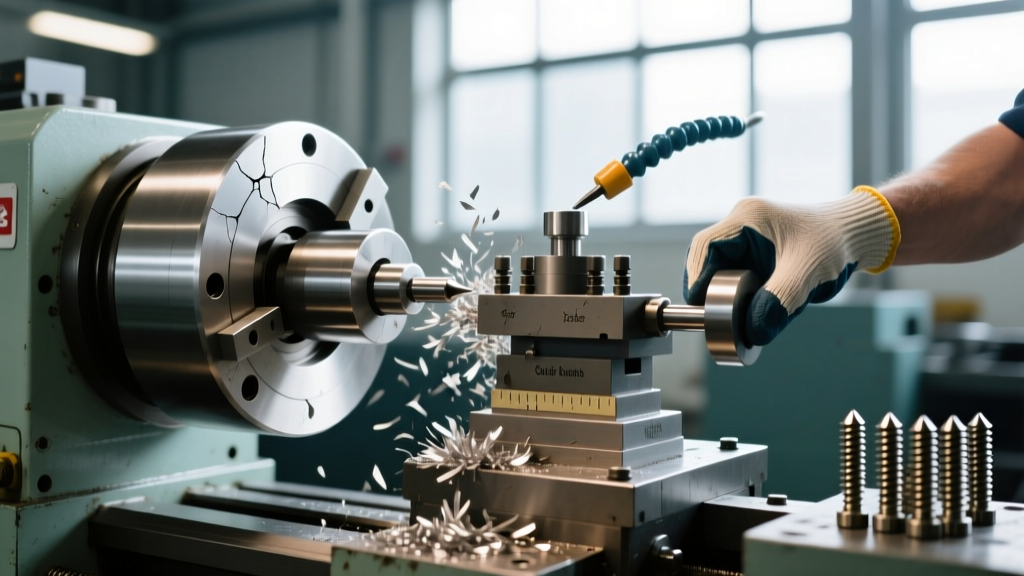
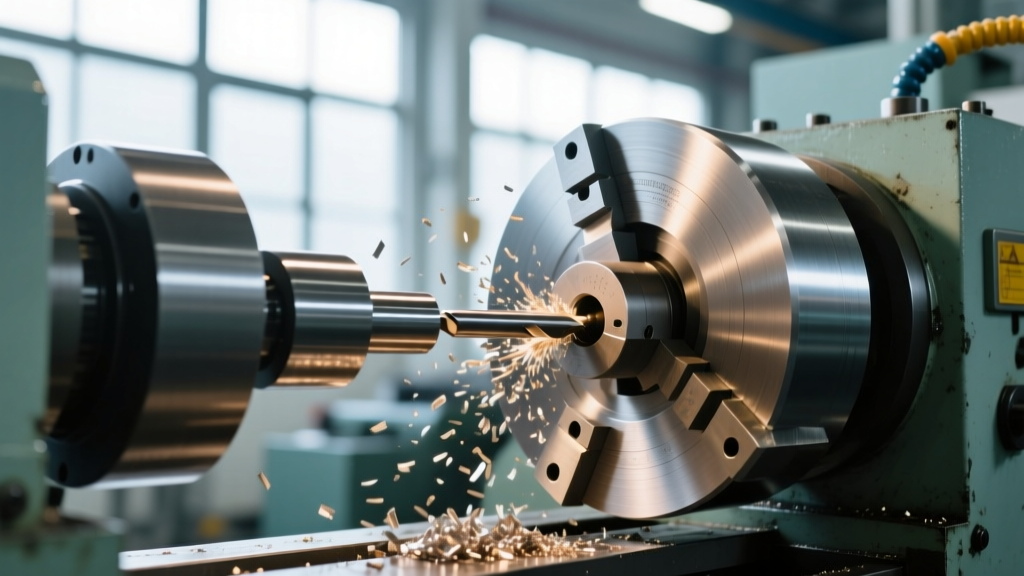
Swiss-type lathes eliminate this deflection through a sliding headstock and a guide bushing. The headstock slides the rotating bar stock longitudinally (Z-axis) through a fixed guide bushing, while the cutting tools remain stationary in the Z-axis and only move radially (X-axis). This configuration ensures that the cutting action always occurs within 1 to 2 millimeters of the bushing support. According to technical documentation from Citizen Machinery, this immediate support allows Swiss lathes to machine complex, high-aspect-ratio components—such as orthopedic bone screws and aerospace hydraulic fittings—with length-to-diameter ratios exceeding 20:1 without chatter or deflection.
Technical Callout: Guide Bushing ClearanceThe clearance between the bar stock and the guide bushing is typically set between 0.0002-inch and 0.0004-inch (5 to 10 µm). Because of this tight tolerance, Swiss machining strictly requires centerless ground bar stock with an h6 diameter tolerance. Using standard cold-drawn or peeled bar stock will cause rapid bushing wear, vibration, and catastrophic surface finish degradation.
Technical Specifications of Industry-Standard Swiss Lathes
Cincinnati precision machining shops serving the medical and aerospace sectors typically invest in high-end Swiss platforms capable of multi-axis simultaneous interpolation. Below is a technical comparison of three dominant models found in top-tier Midwestern machine shops.
| Parameter | Citizen L32XII | Tsugami BS20C-V | Star Micronics SV-32 |
|---|---|---|---|
| Max Turning Diameter | 32 mm | 20 mm | 32 mm |
| Main Spindle Speed | 10,000 RPM | 10,000 RPM | 8,000 RPM |
| Maximum Axis Count | 10 Axes | 9 Axes | 10 Axes |
| Guide Bushing Type | Fixed / Rotary | Fixed / Rotary | Fixed / Rotary |
| Rapid Traverse Rate | 32 m/min | 32 m/min | 24 m/min |
Advanced Kinematics: Y-Axis, B-Axis, and Back-Working
Modern CNC Swiss lathe machining services in Cincinnati rely heavily on Y-axis and B-axis capabilities to complete complex geometries in a single setup. The Y-axis provides vertical movement perpendicular to the X and Z axes, typically offering a travel range of ±40mm. This allows the machine to mill off-center flats, drill eccentric holes, and machine complex contours without requiring the part to be transferred to a secondary milling center.
Synchronization and C-Axis Milling
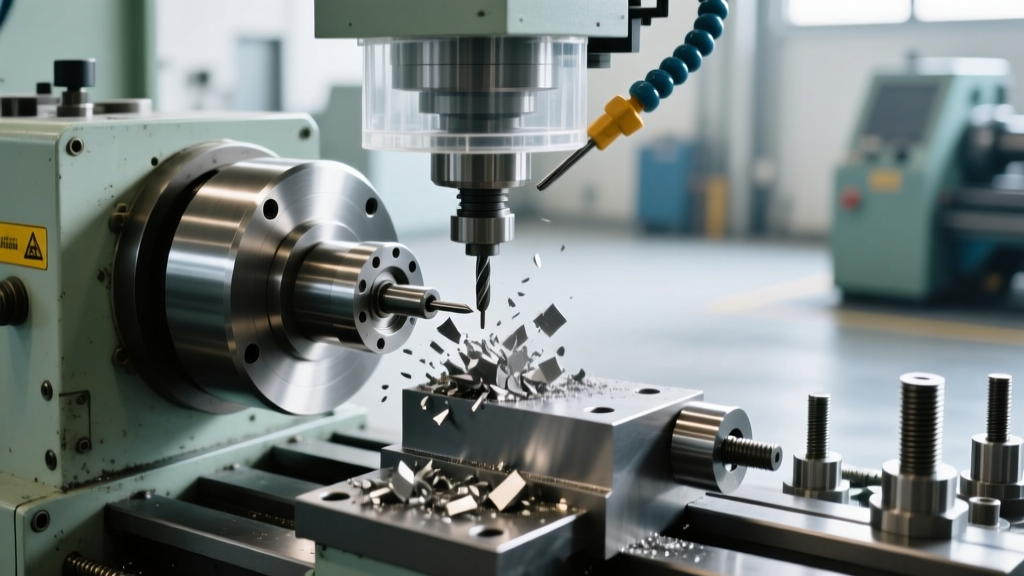
C-axis control enables the spindle to stop at precise angular increments and act as a rotary table. When combined with live tooling, the C-axis allows for precise cross-drilling, tapping, and keyway milling. For components like fuel injection nozzles or medical implants, main and sub-spindle synchronization is mandatory. The sub-spindle matches the rotational speed and phase angle of the main spindle to seamlessly pick off the partially machined part, allowing back-working operations (drilling and tapping the back face of the part) to occur simultaneously with main-spindle cutting. This overlapping cycle time reduces overall part cycle times by up to 40%.
High-Pressure Coolant and Chip Evacuation Dynamics
One of the most critical, yet frequently overlooked, technical requirements for Swiss turning is high-pressure coolant (HPC). Because the cutting zone is buried deep within the guide bushing and tool gang, standard flood coolant cannot penetrate the shear zone. Top-tier Cincinnati shops utilize coolant systems operating between 1,000 and 2,000 PSI, delivered directly through the cutting tool.
- Chip Breaking: High-pressure jets physically fracture long, stringy chips common in ductile materials like 316L stainless steel and titanium, preventing bird-nesting around the guide bushing.
- Thermal Management: Direct penetration into the shear zone reduces cutting temperatures by up to 30%, drastically extending carbide insert life when machining Inconel or cobalt-chromium alloys.
- Surface Finish: Efficient chip evacuation prevents re-cutting of chips, maintaining surface finishes down to 16 Ra (0.4 µm) directly off the machine.
For deeper insights into cutting tool geometries and coolant dynamics in turning operations, the Sandvik Coromant turning knowledge base provides extensive metallurgical data on chip formation and tool wear patterns.
Sourcing CNC Swiss Lathe Machining Services in Cincinnati
Cincinnati possesses a dense concentration of precision manufacturing, heavily skewed toward medical devices (orthopedics, surgical robotics) and aerospace hydraulics. When vetting local Swiss machining partners, buyers must look beyond basic ISO 9001 certifications and evaluate specific technical infrastructure.
Vendor Evaluation Checklist- Bar Feeder Integration: Verify the use of hydrodynamic bar feeders (e.g., Iemca or LNS) equipped with vibration-dampening reduction tubes. This is non-negotiable for maintaining h6 bar stock integrity at 10,000 RPM.
- Metrology Capabilities: Swiss parts require sub-micron inspection. Ensure the shop utilizes multi-sensor coordinate measuring machines (CMM) like the Zeiss Contura or optical comparators like the Keyence IM series for rapid, non-contact dimensional verification.
- Quality Standards: For medical components, the shop must hold ISO 13485:2016 certification and maintain strict Device History Records (DHR). For aerospace, AS9100D with First Article Inspection (FAI) compliance per AS9102 is mandatory.
- Deburring Infrastructure: Swiss parts often have intersecting micro-holes that cannot be manually deburred. Ask if the shop utilizes thermal energy deburring (TEM) or abrasive flow machining (AFM) to clear internal cross-holes.
Frequently Asked Technical Questions
Why does Swiss turning require centerless ground bar stock?
The guide bushing relies on a precise clearance (usually 0.0002-inch to 0.0004-inch) to support the bar stock while allowing it to slide and rotate. Standard cold-drawn bar stock has diameter variations that exceed this clearance, which will either jam the bushing or cause excessive vibration. Centerless grinding ensures the bar stock meets the strict h6 tolerance required for stable Swiss machining.
Can Swiss lathes operate without a guide bushing?
Yes. Many modern Swiss platforms offer a 'guide bushing-less' mode. In this configuration, the sliding headstock acts like a conventional lathe chuck, moving the part past stationary tools. This is highly advantageous when machining short, stubby parts from expensive materials, as it eliminates the 150mm to 200mm of bar stock remnant typically trapped inside the guide bushing and feeder assembly.
What is the practical limit for simultaneous tooling on a Swiss lathe?
While machines boast 30 or 40 tool stations, the practical limit for simultaneous cutting is usually three to four tools. The CNC controller must manage complex interpolation and collision avoidance between the main gang, cross-drilling units, and sub-spindle tooling. Programming these simultaneous operations requires advanced CAM software, such as GibbsCAM or Mastercam, specifically configured for multi-channel Swiss post-processing.