OEM vs Aftermarket CNC Turning Machine Parts: Sourcing Guide
Compare OEM, aftermarket, and remanufactured CNC turning machine parts. Analyze costs, tolerances, and lead times for spindles, ball screws, and turrets.
The Economics of Unplanned Downtime in Precision Turning
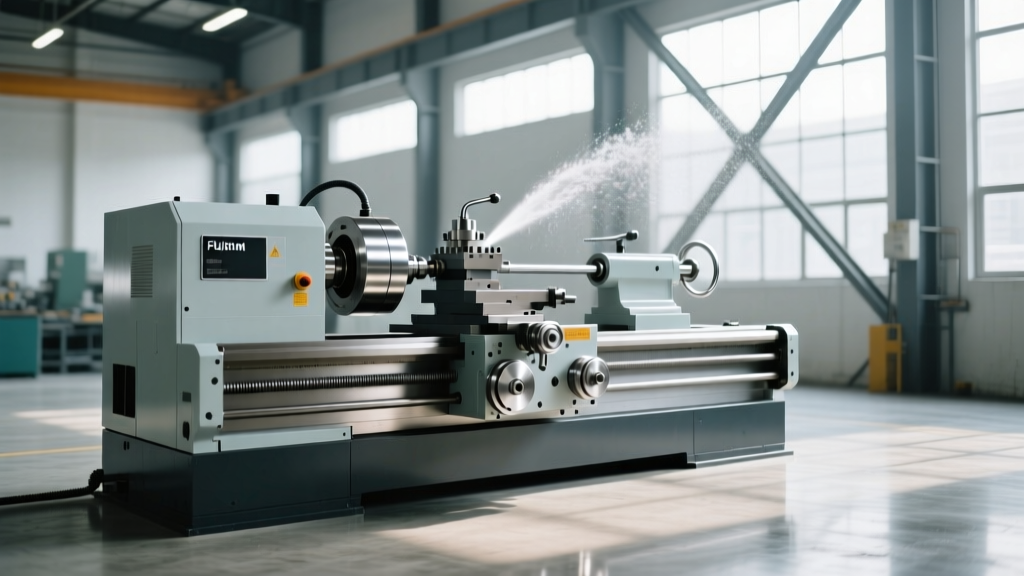
When a CNC lathe goes down, the financial bleed extends far beyond the cost of the replacement component. In 2026, with aerospace and medical job shops operating at near-capacity utilization, unplanned downtime on a multi-axis turning center averages $25,000 to $40,000 per hour in lost throughput and delayed deliveries. Consequently, the procurement strategy for CNC turning machine parts—specifically high-wear components like spindle cartridges, ball screws, and tool turrets—requires a rigorous comparison between Original Equipment Manufacturer (OEM), certified aftermarket, and remanufactured alternatives.
Selecting the wrong sourcing tier can result in catastrophic runout errors in tight-tolerance turning, while over-specifying OEM parts for non-critical axes unnecessarily ties up working capital. This analysis breaks down the exact cost structures, precision tolerances, and lead times across the three primary sourcing channels.
Sourcing Matrix: OEM vs. Aftermarket vs. Remanufactured
The decision between sourcing tiers hinges on the intersection of machine age, required accuracy class, and supply chain lead times. The following matrix outlines the baseline expectations for each category in the current market.
| Sourcing Tier | Cost Relative to OEM | Avg. Lead Time | Warranty Standard | Best Application Scenario |
|---|---|---|---|---|
| OEM (Factory Direct) | 100% (Baseline) | 4–14 Weeks | 12–24 Months | Machine under warranty; ultra-high-speed spindles (>15k RPM); proprietary turrets. |
| Certified Aftermarket | 55%–80% | 1–4 Weeks | 12 Months | Out-of-warranty lathes; linear guides; standard ball screws; servo motors. |
| Remanufactured / Rebuilt | 35%–60% | 1–3 Weeks (Exchange) | 6–12 Months | Spindle cartridges; heavy-duty tailstocks; legacy machine tool turrets. |
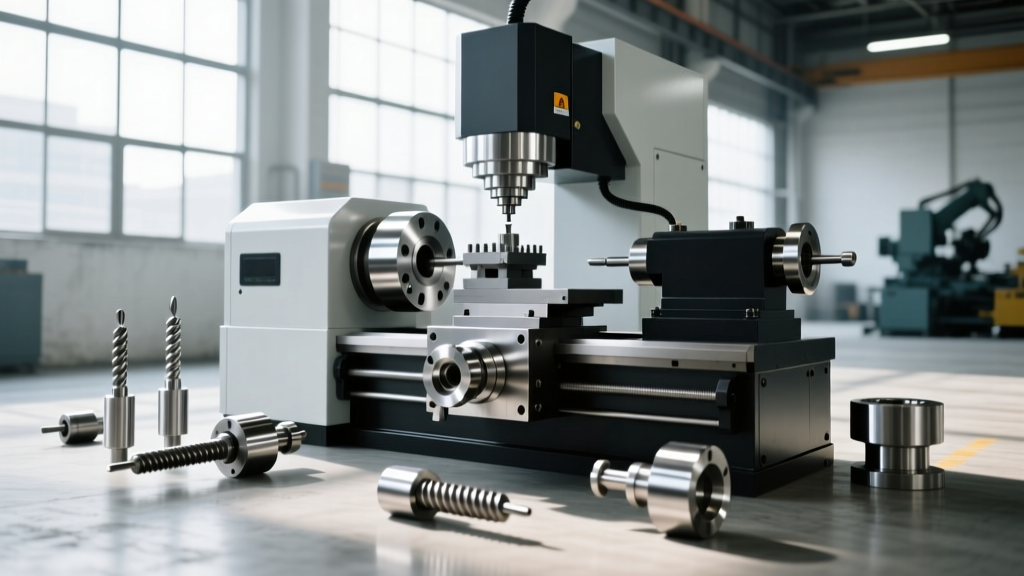
Component Analysis: Spindles, Ball Screws, and Turrets
1. Spindle Cartridges and Super-Precision Bearings
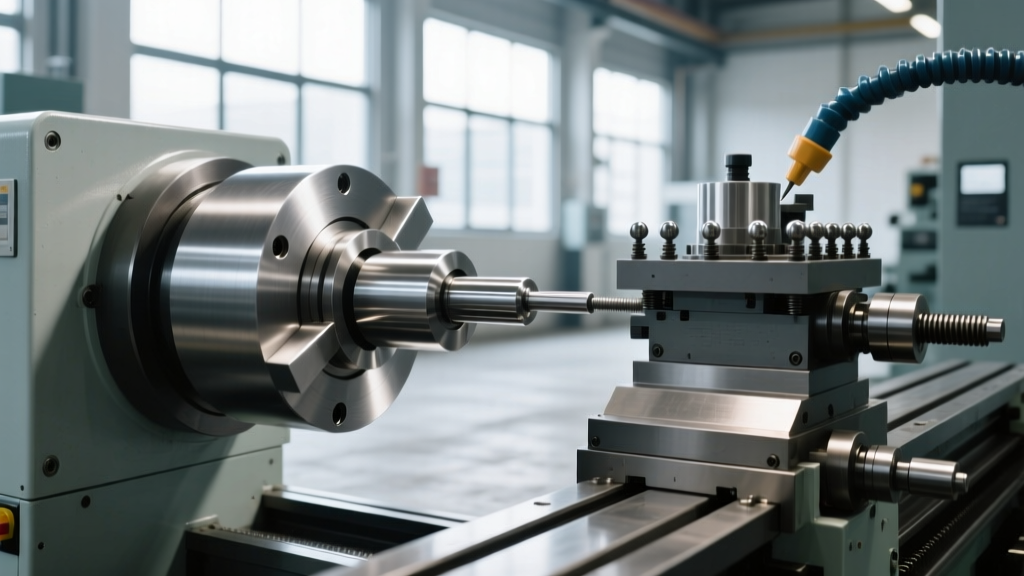
The spindle is the heart of any turning center. For a standard 40-taper or A2-6 spindle nose common on mid-size CNC lathes, OEM cartridge replacements typically range from $4,800 to $7,500. However, the actual failure point is rarely the cartridge housing itself; it is the super-precision angular contact bearing set.
The Aftermarket Alternative: Facilities can source direct replacements from Tier-1 bearing manufacturers. According to the SKF Super-Precision Bearings technical catalog, ABEC-7 (ISO Class 4) and ABEC-9 (ISO Class 2) bearings are the standard for CNC spindles. A matched set of hybrid ceramic bearings (silicon nitride Si3N4 balls with steel races) sourced directly from SKF or GMN will cost between $1,800 and $3,200. When installed by a certified technician in an ISO Class 5 cleanroom environment, the resulting spindle will match OEM runout specifications of < 2µm at the tool nose.
The Remanufactured Route: Spindle rebuild facilities utilize oversized ceramic balls to compensate for minor raceway wear on the original cartridge. A professional rebuild costs $2,200 to $3,500 and typically includes a vibration analysis certificate proving velocity levels remain below 2.0 mm/s RMS at maximum RPM.
2. Linear Motion: Ball Screws and Guide Rails
Axis positioning accuracy in CNC turning relies heavily on ball screw preload and linear guide rigidity. OEM replacements for X and Z-axis ball screws on machines like the Mazak QT series or DMG Mori NLX series often carry a 30% brand premium and lead times stretching past eight weeks.
Interchangeability and Accuracy Classes: The THK Ball Screw technical documentation defines accuracy classes C3 and C5 for machine tool applications. C3 guarantees a lead accuracy of 0.008mm per 300mm, which is mandatory for precision threading and tight-diameter turning. Aftermarket manufacturers like Hiwin and PMI offer C3-equivalent rolled and ground ball screws at 40% to 50% less than OEM pricing.
Procurement Insight: When replacing an aftermarket ball screw, do not reuse the original OEM support bearings. The screw journal diameters can vary by up to 0.0005 inches between manufacturers. Always procure a matched set of BK/BF support bearings and angular contact thrust bearings pre-loaded to the specific screw manufacturer's torque specification.
3. Tool Turrets and Rotary Encoders
Sauter and Duplomatic tool turrets are ubiquitous in the turning industry. When a turret faults out or loses its indexing position, OEM service departments frequently recommend replacing the entire turret assembly—a $12,000 to $18,000 expenditure. In 85% of these cases, the mechanical locking mechanism (such as the Hirth coupling) is perfectly intact. The failure lies in the rotary encoder or the servo motor coupling.
By sourcing an aftermarket Heidenhain or Fanuc absolute encoder (typically $650 to $1,100) and utilizing a specialized alignment tool to recalibrate the turret disc, maintenance teams can resolve the fault for less than 10% of the OEM assembly replacement cost.
The Counterfeit Threat in Secondary Markets
Critical Alert: Counterfeit Bearings
The secondary market for CNC turning machine parts is currently flooded with counterfeit angular contact bearings. These parts are often manufactured from inferior 52100 steel that lacks proper vacuum degassing, leading to catastrophic spalling under the high axial loads of CNC turning.
- Visual Inspection: Authentic super-precision bearings feature laser-etched nomenclature on the outer ring. Counterfeits frequently use mechanical stamping or poorly aligned acid etching.
- Packaging: Genuine ABEC-7/ABEC-9 bearings are sealed in specialized VCI (Volatile Corrosion Inhibitor) paper and vacuum-foiled. If the packaging is standard cardboard or lacks a scannable traceability QR code linked to the manufacturer's database, reject the shipment.
Procurement Decision Framework
Use the following logic tree to determine the optimal sourcing strategy for your specific machine failure:
- Is the machine under the OEM's primary warranty?
- Yes: Purchase OEM. Third-party parts will void the warranty on the entire assembly.
- No: Proceed to Step 2.
- Does the operation require ultra-high-speed turning (Spindle RPM > 12,000) or sub-micron finishing?
- Yes: Source Tier-1 Aftermarket (GMN, SKF, NSK) or OEM. Do not use remanufactured cartridges for high-frequency harmonic stability.
- No: Proceed to Step 3.
- Is the required OEM lead time greater than 3 weeks, and is the machine currently a bottleneck?
- Yes: Utilize a Remanufactured Exchange Program. Ship your broken core to a certified rebuilder and receive a pre-tested cartridge within 5 business days.
- No: Source high-quality C3-ground aftermarket ball screws and linear guides to optimize capital expenditure.
"The most expensive CNC turning machine part isn't the one with the highest price tag; it's the one that forces a secondary teardown because of improper preload tolerances or undocumented metallurgical defects." — Manufacturing Engineering Consensus, Society of Manufacturing Engineers (SME)
Verifying Supplier Capabilities
When vetting an aftermarket or remanufactured supplier for lathe components, demand documentation before issuing a purchase order. A reputable supplier will readily provide:
- Dynamic Balancing Certificates: For spindles, proving ISO 1940 G1.0 or G0.4 balance grades at operational RPM.
- Preload Verification Data: For ball screws, documenting the exact torque required to turn the screw shaft (usually measured in inch-ounces), confirming the factory preload has not been lost during shipping.
- Material Traceability: Mill certificates for critical structural parts like tailstock quills or heavy-duty steady rest jaws.
By shifting away from a default OEM-only procurement strategy and leveraging certified aftermarket and remanufactured alternatives, machine shops can reduce maintenance expenditures by 35% to 50% while maintaining the geometric accuracies required for modern precision turning applications.