Anatomy of a Turning CNC Machine: Core Specs and Kinematics
Explore the technical specifications, axis kinematics, and spindle dynamics of a modern turning CNC machine to optimize precision and throughput.
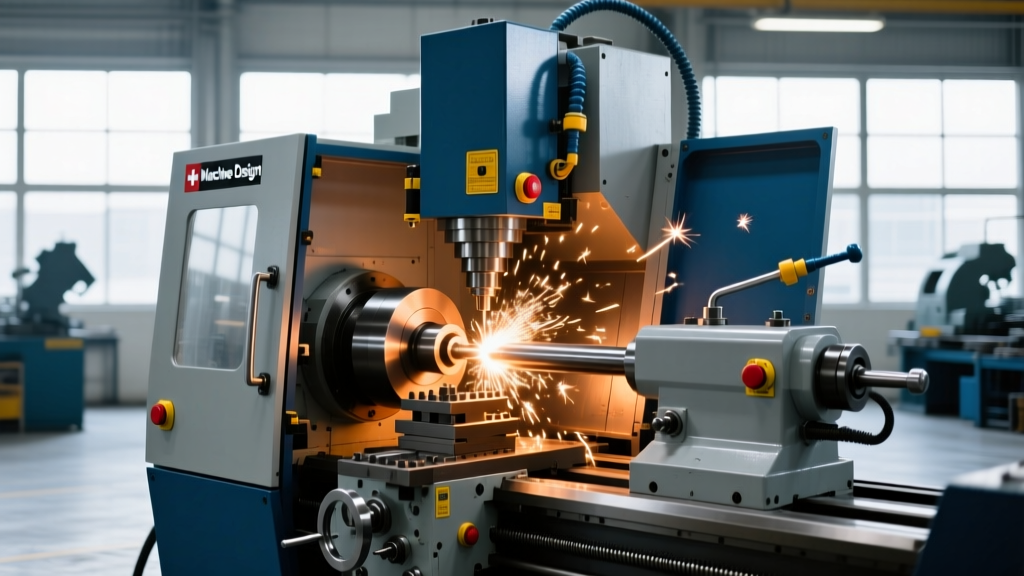
The modern turning CNC machine is a complex electromechanical system where thermal stability, servo dynamics, and structural rigidity dictate the boundaries of precision manufacturing. Moving beyond basic G-code execution, understanding the underlying kinematics and component specifications is critical for manufacturing engineers evaluating capital equipment or optimizing existing production cells.
Benchmark Machine Class: Mid-Size Universal Turning Center
Reference Models: Haas ST-20Y / DMG MORI NLX 2500
Max Turning Diameter: 318 mm (12.5 in) to 360 mm (14.1 in)
Main Spindle Power: 22 kW to 30 kW (Continuous)
Axis Configuration: X, Z, and optional Y (±50 mm travel)
Typical Capital Cost: $145,000 – $285,000 (depending on BMT turret, Y-axis, and high-pressure coolant options)
Spindle Architecture and Torque Delivery Curves
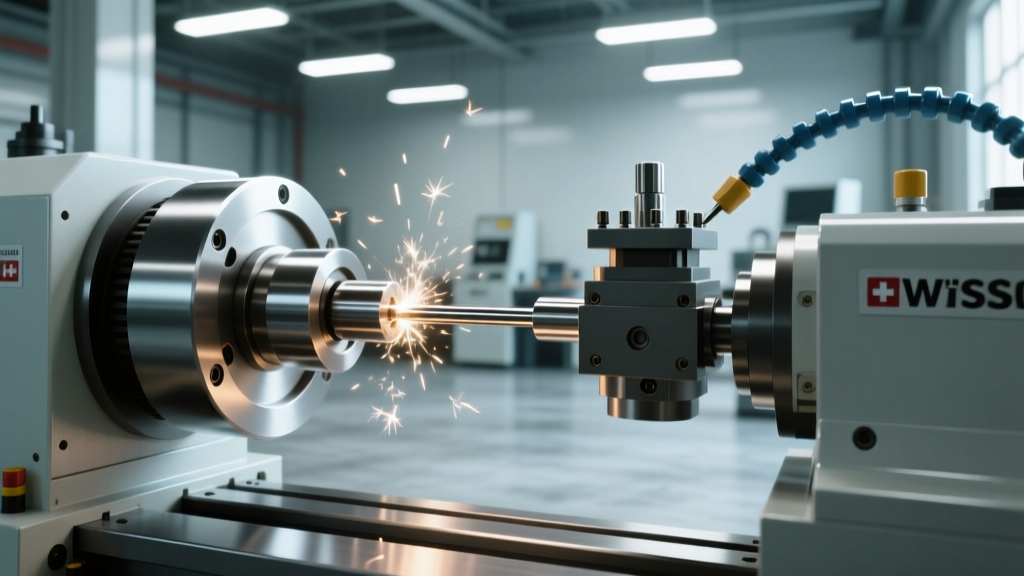
The spindle is the primary dynamic component of any turning CNC machine. Modern configurations generally fall into two categories: belt-driven and integral motor (built-in) spindles. While integral motor spindles dominate high-speed sub-spindle applications (reaching 6,000 to 10,000 RPM with minimal vibration), main spindles handling 10-inch (254 mm) chucks often utilize heavy-duty belt drives or direct-drive geared systems to maximize low-end torque for roughing operations.
When evaluating a machine, the torque curve is more critical than peak horsepower. A standard 22 kW main spindle might deliver peak torque of 400 Nm at a base speed of 1,200 RPM, maintaining that torque until the base speed limit, after which it transitions to constant power mode up to its maximum RPM (typically 3,000 to 4,000 RPM). Attempting heavy interrupted cuts in the constant power zone will result in spindle stalling or excessive tool wear.
Thermal Displacement and Bearing Cooling
Spindle bearings generate immense frictional heat. In high-precision turning, thermal growth at the spindle nose is a primary failure mode for holding tight geometric tolerances. A temperature fluctuation of just 2°C in the spindle cooling oil can cause a 300mm spindle casting to expand by 10 to 15 micrometers (µm) in the Z-axis. Advanced turning centers utilize active spindle cooling jackets and chillers that maintain coolant temperature within ±0.1°C of ambient room temperature, effectively locking the spindle nose in a predictable thermal envelope.
Axis Dynamics: Linear Guides vs. Box Ways
The choice of guideway technology fundamentally alters the machine's harmonic dampening and rapid traverse capabilities. The industry has largely shifted toward linear roller guides for standard production, but box ways remain relevant for specific heavy-cutting applications.
| Feature | Linear Roller Guides | Sliding Box Ways |
|---|---|---|
| Rapid Traverse Rates | High (24 to 30 m/min) | Moderate (15 to 20 m/min) |
| Vibration Dampening | Low to Moderate (relies on mass) | Excellent (large surface contact area) |
| Stick-Slip Friction | Negligible (ideal for micro-finishes) | Present (requires turcite liners and way oil) |
| Best Application | High-volume production, aluminum, finishing | Heavy interrupted cuts, Inconel, titanium |
Turret Rigidity: VDI vs. BMT Tooling Interfaces
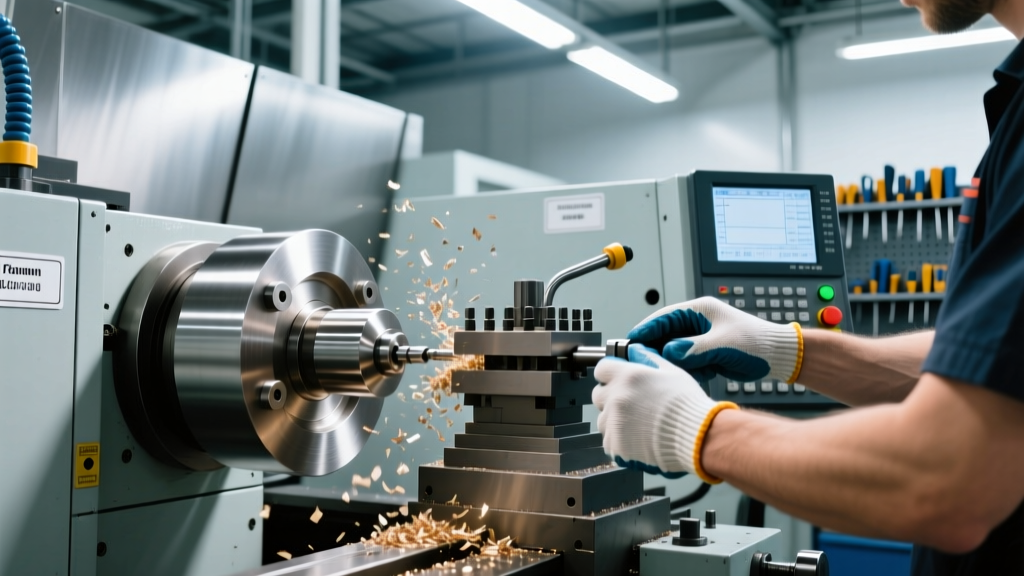
As turning CNC machines increasingly integrate live tooling and Y-axis capabilities to complete complex parts in a single setup, turret rigidity has become a critical specification. The two dominant standards are VDI (DIN 69880) and BMT (Bolt-on Motor Tool).
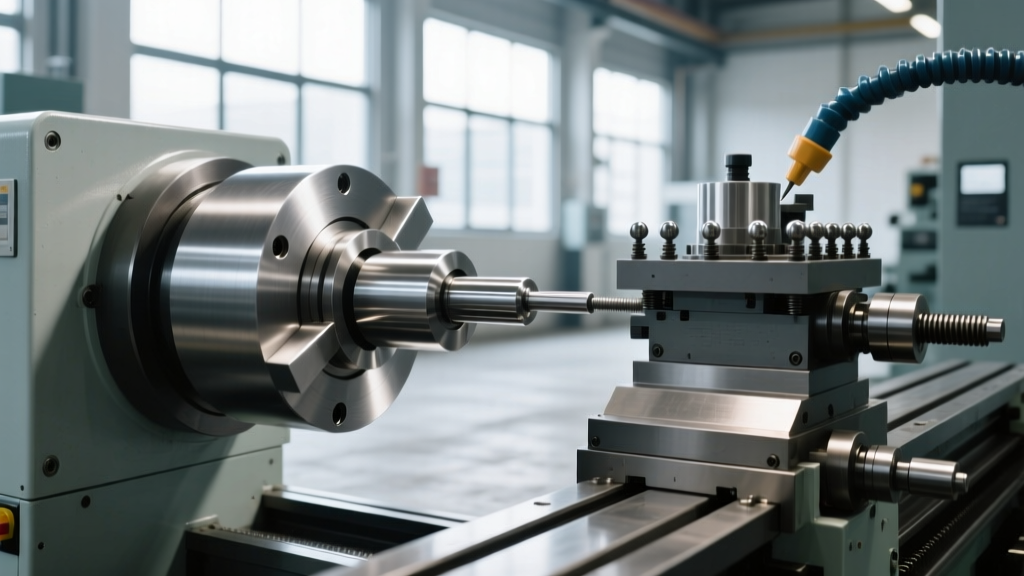
VDI40 tooling relies on a single central clamping bolt and a locating pin. While quick to change, the single-point clamping mechanism allows for micro-deflection under heavy radial milling loads. BMT55, conversely, secures the toolholder to the turret face using four high-tensile bolts and a large curvic coupling. According to Sandvik Coromant's metal cutting guidelines, this multi-point bolted interface increases radial rigidity by up to 30% compared to equivalent VDI setups. For shops performing heavy keyway milling or drilling off-center via the Y-axis, specifying a BMT turret is non-negotiable to prevent chatter and tool breakage.
⚠️ Warning: Curvic Coupling AlignmentWhen utilizing live tooling, the turret's curvic coupling (typically a 50-tooth design allowing 1-degree indexing) must engage perfectly. If the turret clamping pressure drops due to hydraulic leaks or contaminated way oil, the coupling will partially engage. This results in a 0.05mm to 0.10mm Z-axis shift during tool changes, instantly scrapping high-tolerance parts. Monitor turret clamping pressure sensors via the machine's macro variables daily.
Control Systems and Look-Ahead Processing
The CNC controller dictates how smoothly the machine executes complex contouring, particularly when utilizing C-axis and Y-axis interpolation for milling operations. Standard turning operations (facing, OD turning) require minimal computational overhead. However, 3D contouring via live tooling demands advanced look-ahead processing.
- Standard Controls (e.g., Fanuc 0i-TF): Typically offer 200-block look-ahead. Sufficient for 2-axis turning and simple C-axis hole patterns, but will exhibit feed-rate hesitation and dwell marks on complex 3D milled surfaces.
- Advanced Controls (e.g., Fanuc 31i-B, Siemens Sinumerik ONE): Feature up to 2,000-block look-ahead with nano-interpolation. These systems calculate velocity vectors thousands of blocks in advance, maintaining constant toolpath velocity and producing mirror-finish milled surfaces on the turned part.
For a deeper understanding of control integration and multi-axis kinematics, the Society of Manufacturing Engineers (SME) provides extensive technical papers on CNC servo tuning and interpolation algorithms.
High-Pressure Coolant (HPC) Integration
Standard flood coolant operates at roughly 30 to 50 PSI (2 to 3.5 bar), which is adequate for clearing chips in aluminum or mild steel. However, when machining stringy materials like 304 stainless steel or high-temperature alloys (Inconel 718), standard flood coolant fails to penetrate the cutting zone, leading to built-up edge (BUE) and catastrophic insert failure.
Modern turning CNC machines equipped with integrated 1,000 PSI (70 bar) or 2,000 PSI (140 bar) high-pressure coolant pumps direct a focused stream exactly at the shear zone. This hydrodynamic wedge forces the chip to curl tightly and break, while simultaneously cooling the insert rake face. When spec'ing a machine for aerospace or medical turning, ensuring the base casting has internal high-pressure plumbing (rather than relying on external retrofit hoses) is vital for reliability. Machines like the Haas ST-Series offer factory-integrated high-pressure options that route fluid directly through the turret and toolholders, eliminating the whip-hose failures common in aftermarket setups.
Capital Allocation: Spec-to-Part Matching Framework
Over-specifying a turning CNC machine destroys ROI, while under-specifying leads to secondary operations and bottlenecks. Use the following decision matrix to align machine specifications with your production requirements.
| Production Scenario | Required Specifications | Estimated Price Premium |
|---|---|---|
| High-volume, simple shafts (e.g., automotive axles) | Standard 2-axis, linear guides, VDI turret, 300 PSI coolant, bar feeder interface. | Base Price ($85k - $120k) |
| Complex fluid power fittings (requires off-center drilling) | Y-axis (±50mm), BMT live turret, C-axis braking, 1000 PSI HPC. | + $45,000 to $65,000 |
| "Done-in-one" aerospace valve bodies (backworking required) | Twin-spindle (sub-spindle), twin-turret, parts catcher, advanced 2000-block control. | + $150,000 to $220,000 |
| Heavy interrupted cuts (e.g., splined couplings, forgings) | Box way construction, heavy-duty geared spindle, high-torque servo motors. | + $30,000 to $50,000 |
By dissecting the mechanical and digital architecture of the equipment, manufacturing teams can move beyond marketing brochures and select a turning CNC machine that precisely matches the physical demands of their part geometry and material science requirements.