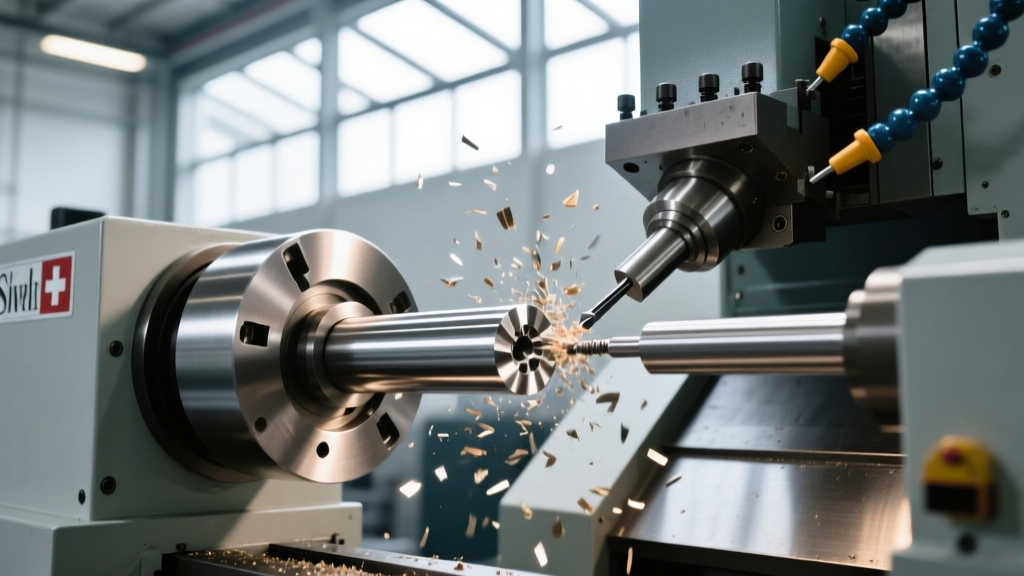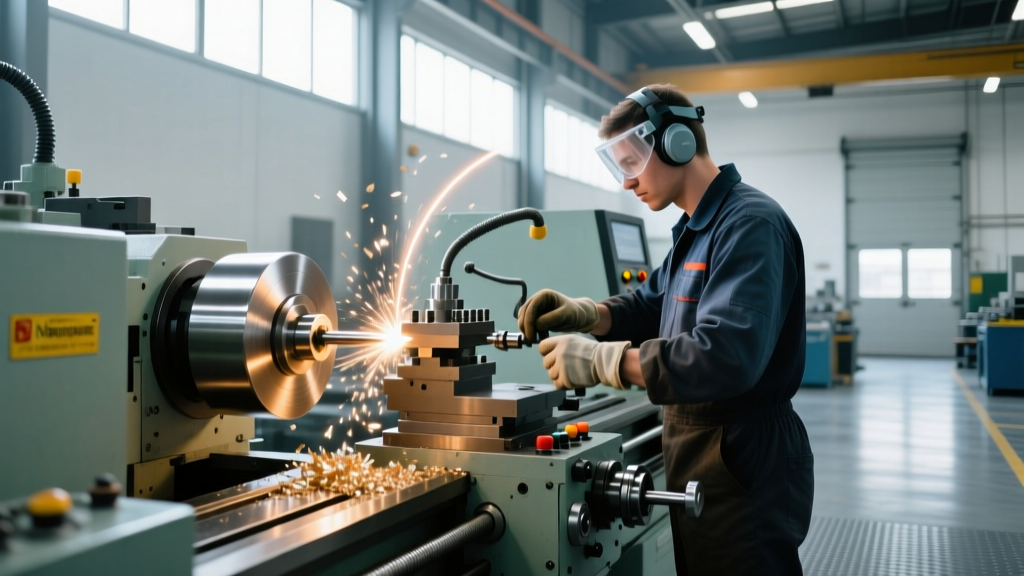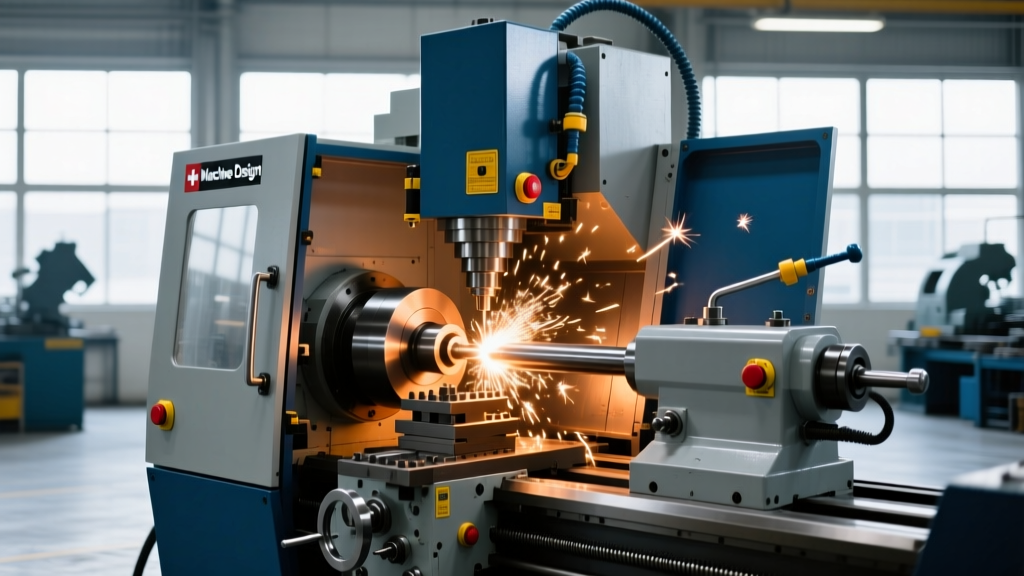
Safety Compliance Checklist for a Swiss Type CNC Lathe Machine
Ensure OSHA and ISO 23125 compliance on your shop floor. This guide details safety interlocks, bar feed guards, and fire suppression for Swiss lathes.
The Unique Hazard Profile of Swiss-Type Turning
Swiss-type lathes (sliding headstock turning centers) present a fundamentally different kinetic and fluid hazard profile compared to standard chucker lathes. Because the cutting action occurs millimeters from the guide bushing while the main spindle translates along the Z-axis, operators are in close proximity to high-speed rotating stock. When machining on advanced platforms like the Citizen Cincom M32-VII or Tsugami BS20, main and sub-spindles routinely operate at 10,000 to 12,000 RPM, while high-pressure coolant systems push fluid at up to 150 bar (2,175 PSI).
Compliance is not merely a matter of installing basic sheet metal guards. It requires a systemic approach to containment, control reliability, and atmospheric management. Failure to adhere to OSHA Machine Safeguarding guidelines and ISO 23125 standards exposes facilities to catastrophic equipment failure, severe operator injury, and willful violation penalties exceeding $165,000 per incident.
⚠️ CRITICAL HAZARD WARNING: High-Pressure Coolant InjectionSwiss machines utilize high-pressure coolant (often 70–150 bar) to evacuate chips from deep, small-diameter cross-drilled holes. A pinhole leak in a degraded 150-bar coolant line can inject fluid directly through skin and tissue, causing compartment syndrome or systemic infection. Never use bare hands to check for coolant leaks; always use a piece of corrugated cardboard or specialized thermal imaging to trace pressurized lines.
Regulatory Baseline: ISO 23125 vs. OSHA 1910.212
While OSHA 1910.212 provides the general legal mandate for machine guarding in the United States, ISO 23125 (Safety of machine tools — Turning machines) provides the specific technical framework for compliance. Understanding the intersection of these standards is critical for facility managers and safety engineers.
| Safety Domain | OSHA 1910.212 Requirement | ISO 23125 Technical Specification |
|---|---|---|
| Enclosure Integrity | Guards must prevent operator contact with rotating parts. | Polycarbonate windows must withstand specific impact energies (e.g., 12mm minimum thickness for high-mass chucks/bar stock). |
| Interlock Logic | Machine must stop when guard is opened. | Requires Category 3 / PLd control reliability with monitored solenoid guard locking if spindle stop time exceeds 10 seconds. |
| Chip & Coolant Containment | Must protect operators from flying chips and splashing liquids. | Sealed enclosures required for high-pressure coolant (>50 bar) with interlocked maintenance access panels. |
Bar Feeder Containment and Ejection Prevention
The bar feeder is the most frequently cited component in Swiss lathe safety violations. Hydrodynamic bar loaders (such as the LNS Super Hydrobar or Iemca Boss 542) use pressurized oil to center and support the bar stock. However, when machining thin materials (e.g., 3mm brass or 4mm 303 stainless), centrifugal force can cause 'bar whip' if the RPM exceeds the critical speed of the unsupported bar length.
Preventing Bar Whip and Enclosure Shattering
If a 4mm bar whips inside the feeder tube, it can shatter the polyurethane channel, breach the sheet metal enclosure, and eject shrapnel into the shop aisle. To maintain compliance and physical safety:
- Reduction Tubes: Always use properly sized polyurethane or nylon reduction tubes. The internal clearance between the bar and the tube must not exceed 1.5mm for bars under 10mm in diameter.
- RPM Limiting Parameters: Program maximum RPM limits directly into the CNC control's parameter settings based on bar diameter. For example, a 6mm 12L14 steel bar should generally not exceed 3,500 RPM in a standard hydrodynamic feeder without specialized support.
- End-of-Bar Ejection: Ensure the bar pusher retraction mechanism is calibrated. If the remnant (stub end) is not properly caught by the sub-spindle or the catcher mechanism, it can be ejected from the guide bushing at lethal velocities.
Atmospheric Management and Fire Suppression
Swiss machines operate with continuous, high-volume flood coolant. According to NIOSH Metalworking Fluids exposure limits, aerosolized mist must be aggressively managed to prevent respiratory illness and maintain visibility. Furthermore, the enclosed nature of modern Swiss lathes creates a severe deflagration risk when machining reactive metals like titanium or magnesium alloys.
"When machining Grade 5 Titanium on a Star Micronics SR-20R, the fine, dry chips generated during finishing passes can auto-ignite if they accumulate near the heat zone. An enclosed machine without inert gas suppression will experience a flash fire within 4 to 8 seconds of ignition."
Mandatory Fire Suppression Retrofits
For shops machining reactive alloys, standard water-based coolant systems are insufficient to prevent catastrophic fires. Facilities must integrate automated fire suppression systems, such as Firetrace ILP (Inert Liquid Propellant) or high-pressure CO2 flood systems.
Cost & Installation Data: Retrofitting a standard 20mm Swiss lathe with an integrated Firetrace system, including optical flame sensors and nozzle routing through the tooling plate, typically costs between $4,500 and $6,500 per machine. This requires a dedicated 24VDC safety relay circuit independent of the main CNC PLC.
Control Reliability and Door Interlocks
A common, severe OSHA violation involves operators defeating door interlocks using zip ties, taped-down limit switches, or unauthorized 'key blanks' to reduce cycle times during short-run production. Modern safety architectures rely on Pilz machine tool safety architectures and RFID-coded switches to prevent defeat.
Spindle Braking and Guard Locking Logic
Standard limit switches are inadequate for Swiss lathes. A 12,000 RPM main spindle on a Citizen or Tsugami machine may require 1.5 to 3.0 seconds to brake to a complete stop. If an operator opens the door using a standard switch, they can access the cutting zone while the spindle is still rotating at lethal speeds.
- Solenoid Guard Locking: You must use interlocks with integrated solenoid locking (e.g., Euchner STA or Schmersal AZM40). The door physically cannot be opened until the CNC control confirms zero-speed via a safe motion monitor.
- Safe Torque Off (STO): Ensure the spindle drives utilize STO over standard contactors. STO removes rotational power at the drive level, achieving a safe state in < 50ms without mechanical brake wear.
The Swiss Lathe Safety Audit Matrix
Use this actionable matrix to audit your Swiss-type turning centers. Document findings and assign remediation timelines based on the risk severity.
| Audit Checkpoint | Target Specification | Verification Method |
|---|---|---|
| Polycarbonate Window Thickness | Minimum 12mm (0.47") for main cutting zone | Ultrasonic thickness gauge or caliper measurement at edges |
| Mist Collector Airflow | 800 - 1,200 CFM with HEPA filtration | Anemometer reading at the enclosure exhaust port |
| E-Stop Circuit Response Time | < 50ms to STO activation | Oscilloscope measurement across drive STO terminals |
| High-Pressure Hose Routing | Burst rating > 4x max operating pressure (600 bar) | Visual inspection of hose jacket stamping and bend radius |
| Interlock Defeat Check | RFID coded actuators, zero mechanical bypass possible | Attempt bypass using steel blanks, magnets, and duplicate keys |
Maintenance and Continuous Compliance
Safety systems on Swiss-type machines degrade due to the harsh environment. Way oil, fine metallic swarf, and acidic coolant breakdown products corrode switch housings and degrade polycarbonate windows. Implement a mandatory 90-day preventive maintenance schedule specifically targeting safety components. Replace polycarbonate viewing panels every 3 to 5 years, as UV exposure from shop lighting and chemical exposure from mist causes micro-crazing, reducing impact resistance by up to 60%. By treating safety compliance as a dynamic engineering parameter rather than a static installation, facilities protect both their operators and their bottom line.