Swiss Type CNC Machining Case Studies: Medical & Aerospace Parts
Explore real-world case studies of Swiss type CNC machining in medical and aerospace sectors, detailing tolerances, cycle times, and cost-saving strategies.
The Kinematic Advantage: Guide Bushing Deflection Control
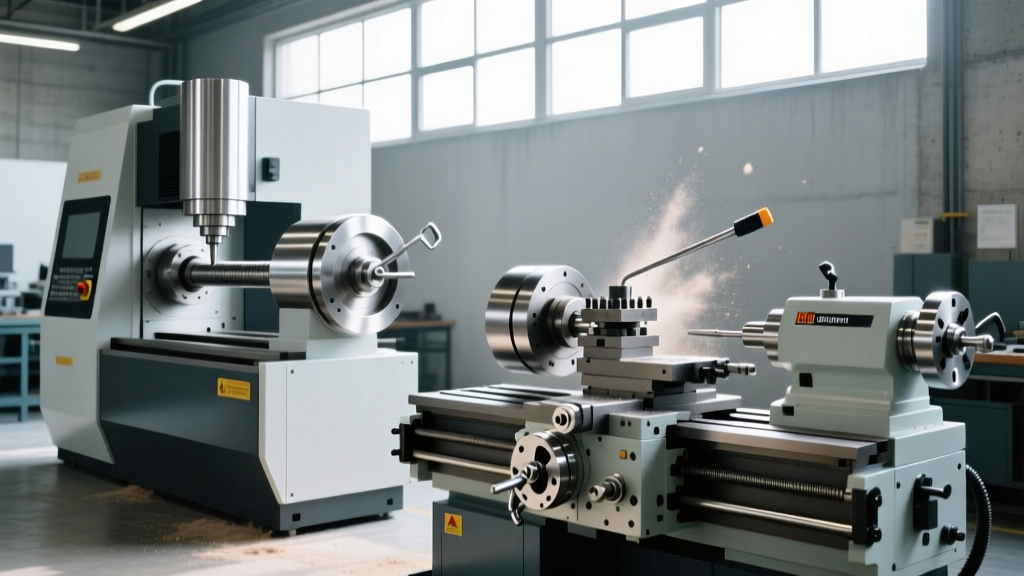
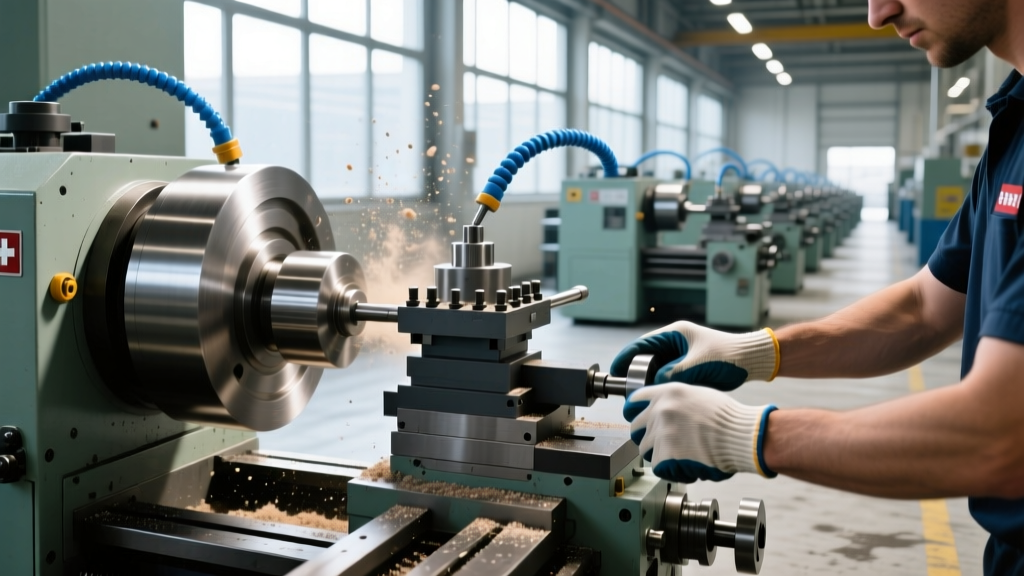
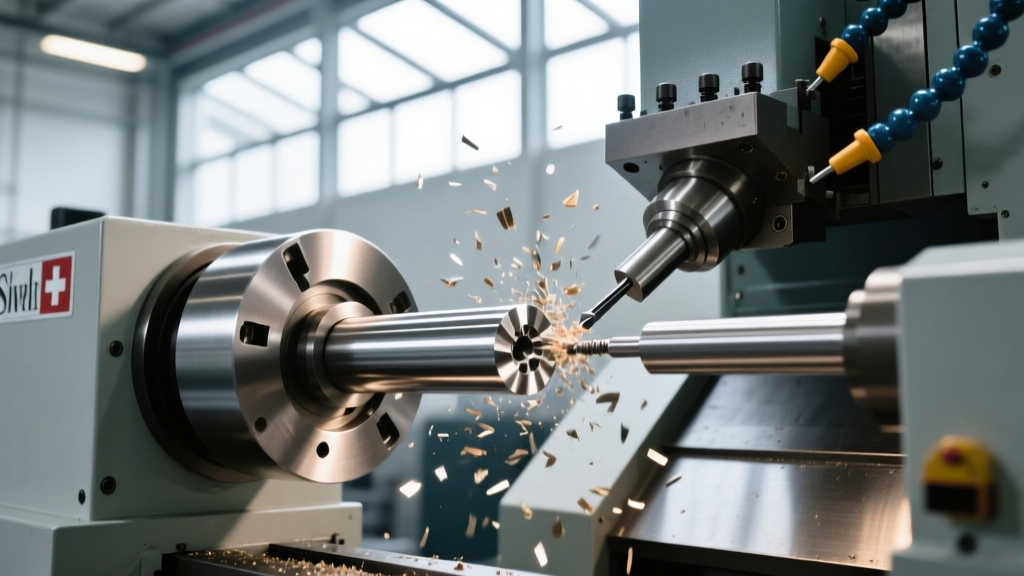
Swiss type CNC machining operates on a fundamentally different kinematic principle than conventional chucker lathes. Instead of moving the cutting tool along the Z-axis while the headstock remains stationary, the Swiss sliding headstock feeds the bar stock through a stationary guide bushing. The cutting tools operate precisely at the point of support, typically within 0.050 inches (1.27 mm) of the bushing face. This configuration virtually eliminates Z-axis deflection, allowing for aggressive radial cuts on long, slender parts without the need for secondary support like tailstocks or steady rests.
Engineering Insight: For parts with an L:D (length-to-diameter) ratio exceeding 4:1, the guide bushing reduces tool deflection by up to 85% compared to a standard 2-axis lathe. This enables single-setup completion of complex features while holding ISO 230-1 volumetric accuracy standards.While the mechanical advantages are well-documented, the true value of Swiss-type turning is best understood through production data. Below are two detailed case studies analyzing the application of this technology in high-stakes manufacturing environments.
Case Study 1: Orthopedic Bone Screws (Medical Sector)
Manufacturing orthopedic implants requires extreme adherence to FDA manufacturing requirements for material traceability, surface finish, and dimensional consistency. A Tier-1 medical contract manufacturer was tasked with producing a 4.5mm cortical bone screw, 45mm in length, featuring a complex self-tapping thread profile and a hexalobular (Torx) drive recess.
Material and Machine Configuration
The material specified was Ti-6Al-4V ELI (Extra Low Interstitial), known for its biocompatibility but notorious for poor thermal conductivity and high chemical reactivity with cutting tool coatings. The production was moved from a 3-axis mill-turn center to a Citizen L200XII Swiss-type lathe equipped with a B-axis and high-frequency live tooling.
- Spindle Speed: 4,500 RPM (main spindle), 8,000 RPM (live tooling)
- Tooling: Uncoated micro-grain carbide inserts with sharp, honed edges to prevent built-up edge (BUE) common in titanium machining.
- Coolant: 1,000 psi through-tool high-pressure coolant directed precisely at the shear zone to break stringy titanium chips.
Production Data and Cost Analysis
| Metric | 3-Axis Mill-Turn Center | Swiss-Type (Citizen L200XII) |
|---|---|---|
| Setup / Changeover Time | 4.5 hours | 1.5 hours (with pre-set tooling) |
| Cycle Time per Part | 142 seconds | 48 seconds (using sub-spindle back-working) |
| Secondary Operations | Deburring required (manual) | None (achieved in-cycle) |
| Cost per Part (10k run) | $4.20 | $1.85 |
The 56% reduction in per-part cost was driven primarily by the elimination of secondary deburring and the ability to machine the hexalobular drive and the thread profile simultaneously using the main and sub-spindles. The guide bushing ensured the 4.5mm OD remained within ±0.0002 inches (5 µm) over the entire 45mm length, a tolerance the mill-turn struggled to maintain due to Z-axis overhang.
Case Study 2: Aerospace Fuel Metering Valves
In the aerospace sector, fuel metering valves dictate the precise flow of jet fuel to the combustion chamber. A specific valve body measuring 12mm in OD and 65mm in length required three intersecting internal ports, each angled at 37 degrees, with a surface finish requirement of Ra 0.4 µm to prevent fuel cavitation.
The Inconel 718 Challenge
Machining Inconel 718 on a Swiss-type lathe introduces severe work-hardening challenges. If the cutting tool dwells or rubs against the material, the surface hardens rapidly, destroying subsequent tooling. The engineering team utilized a Tornos EvoDeco 10 Swiss-type machine, leveraging its 1,500 mm/s rapid traverse rates to minimize non-cutting time and reduce heat soak in the part.
"When machining precipitation-hardening superalloys on a Swiss-type, your chip load must never drop below the material's minimum shear threshold. We calculated a strict minimum chip thickness of 0.04mm for the Inconel 718 ports and programmed variable feed rates to ensure the insert never rubbed." — Lead Manufacturing Engineer, Tier-1 Aerospace Supplier
Intersecting Port Strategy
To achieve the 37-degree intersecting ports without breaking through the outer diameter wall, the team used a custom ground 0.8mm micro-drill followed by a single-flute carbide reamer. The critical success factor was the implementation of a programmable high-pressure coolant unit operating at 2,000 psi. This pressure was necessary to flush the Inconel chips out of the blind intersecting holes; without it, chip packing would cause immediate tool fracture and scrap the $85 raw material blank.
Decision Framework: Swiss vs. Multi-Axis Mill-Turn
Choosing between a Swiss-type lathe and a multi-axis mill-turn center (like a Mazak Integrex or DMG MORI NTX) requires analyzing the part geometry and production volume. Use the following framework to dictate your capital equipment allocation:
- Analyze the L:D Ratio: If the length-to-diameter ratio is less than 3:1, a standard chucker lathe or mill-turn is more efficient. If it exceeds 3:1, Swiss-type machining becomes mandatory to prevent deflection.
- Evaluate the Maximum Diameter: Swiss-type machines are generally optimized for diameters under 1.25 inches (32mm). While 38mm and 42mm Swiss machines exist, the cost of the required bar stock and the mass of the sliding headstock reduce the ROI compared to a compact mill-turn.
- Calculate Annual Volume: The setup complexity of a Swiss machine (aligning the guide bushing, setting the pick-off collet, synchronizing the sub-spindle) takes longer than a standard lathe. Swiss machining is economically unviable for prototype runs of 10-50 parts but dominates in production runs exceeding 5,000 units.
Hidden Costs and Failure Modes in Swiss Production
Transitioning to Swiss type CNC machining introduces specific operational costs and edge cases that novice shops frequently overlook, leading to catastrophic machine downtime or scrapped batches.
Bar Stock Preparation and Tolerances
A conventional lathe can easily accommodate standard turned or hot-rolled bar stock with wide diameter tolerances. A Swiss machine cannot. The guide bushing requires the bar stock to be centerless ground to an h6 tolerance (typically 0 to -0.0003 inches). If the bar stock is oversized, it will bind inside the bushing, stalling the feed mechanism and potentially breaking the main spindle drive belt. If it is undersized, the bushing cannot support the material, resulting in chatter marks and out-of-tolerance parts. Shops must factor in the premium cost of precision ground bar stock or invest in an in-house centerless grinder.
Remnant Length and Material Scrap
The pusher collet in a standard bar feeder requires a certain amount of material to grip the bar and push it through the guide bushing. This results in a "remnant length"—a piece of scrap material left in the feeder at the end of every bar. On a 12-foot bar, a remnant of 120mm to 150mm is standard. When machining high-value materials like medical-grade titanium or aerospace Inconel, this 5% to 8% material scrap rate must be explicitly calculated into the per-part cost model. Advanced shops utilize remnant-collection sub-spindle routines to safely eject the leftover material into a scrap bin without damaging the machine's internal sheet metal or chip conveyor.
Chip Evacuation in the Guide Bushing Area
Because the cutting action occurs millimeters away from the guide bushing, chips can easily become trapped between the bushing and the part. This is especially prevalent when machining stringy materials like 316L stainless steel or copper alloys. Trapped chips will score the outer diameter of the part and rapidly wear out the carbide-lined guide bushing. Implementing air-blast chip clearing cycles or utilizing specialized geometric chip-breaker inserts (such as N-type or R-type geometries designed specifically for Swiss turning) is non-negotiable for unattended lights-out production.