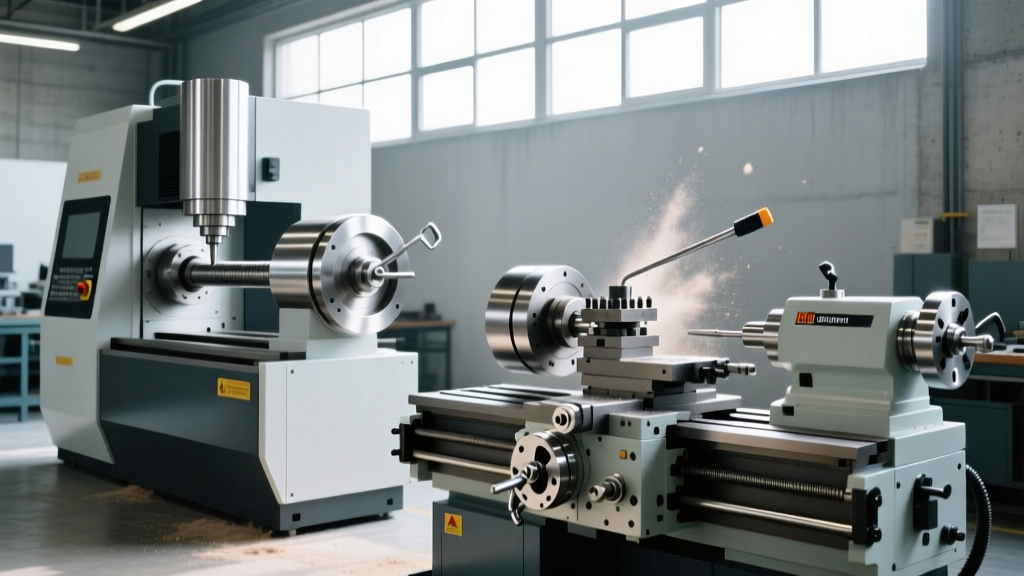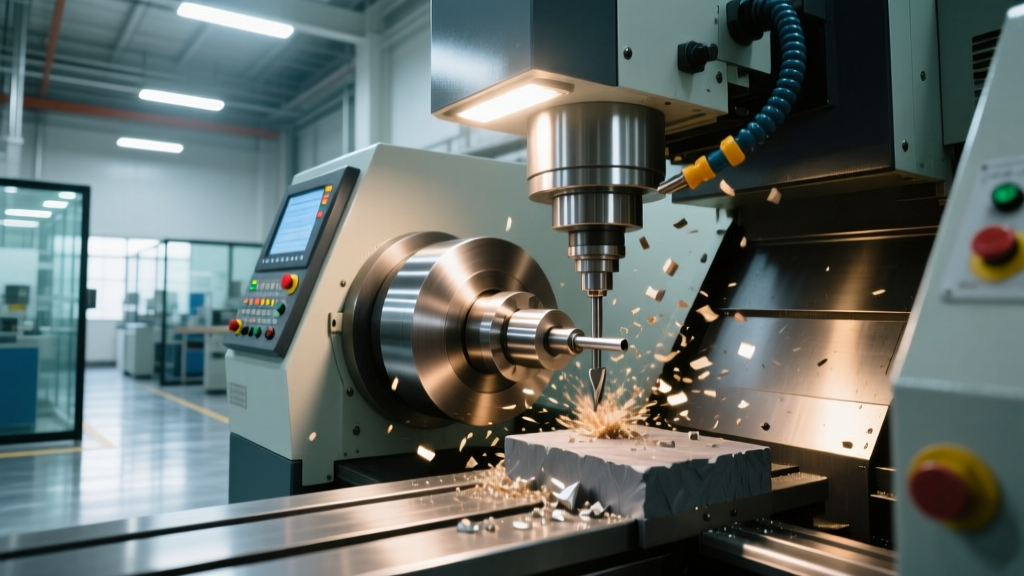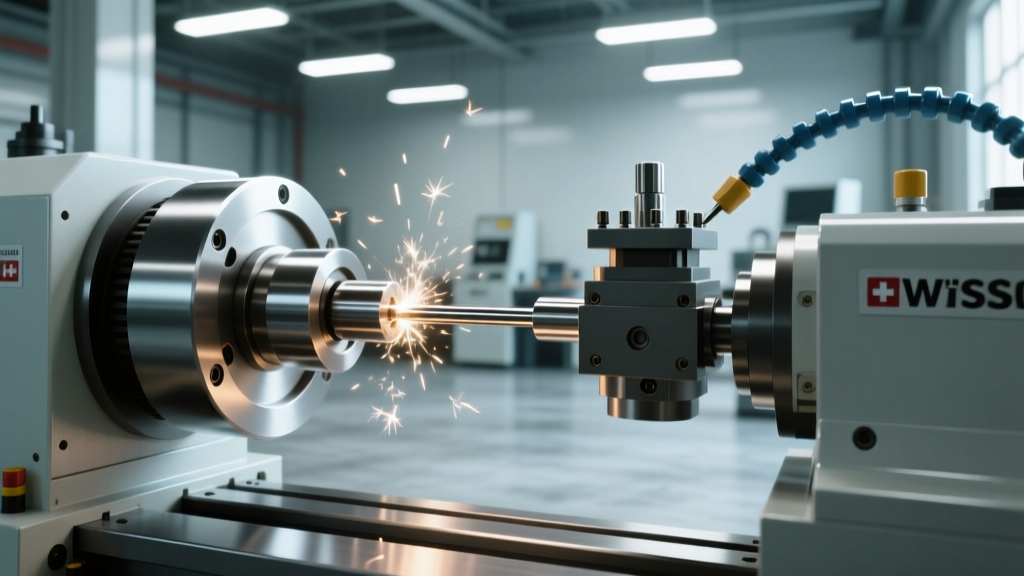
CNC Swiss Precision Machining: Optimal Maintenance Schedules
Master CNC Swiss precision machining maintenance schedules. Learn daily, weekly, and annual PM intervals for guide bushings, spindles, and coolant systems.
Unplanned downtime on a fully loaded Swiss-type lathe—such as a Star SR-20RIV or Citizen L20XII—can cost a precision manufacturing shop $150 to $250 per hour in lost spindle time and scrapped micro-tolerance components. When managing a facility focused on CNC Swiss precision machining, standard CNC lathe maintenance protocols fall dangerously short. The unique kinematics of a sliding headstock, the extreme friction of the guide bushing, and the demands of 2,000 PSI high-pressure coolant systems require a highly specialized preventive maintenance (PM) framework.
The Sliding Headstock and Guide Bushing Paradigm
Unlike a standard fixed-headstock CNC lathe where the tool moves to the material, Swiss-type machines feed the bar stock through a guide bushing while the sliding headstock moves along the Z-axis. This design provides exceptional rigidity for long, slender parts but introduces severe maintenance vulnerabilities. The Z-axis way covers (bellows) are constantly exposed to stringy chips—especially when machining 303 or 316 stainless steel. If these chips breach the way covers, they contaminate the linear guideways and ball screws, leading to catastrophic positioning errors and servo motor overload.
Furthermore, the guide bushing operates with clearances as tight as 0.003mm to 0.005mm. Inadequate lubrication or contaminated oil will score the bushing liners and the material surface, resulting in part rejection and necessitating a complete bushing replacement, which typically costs between $800 and $1,500 per set, excluding labor.
Daily Operator PM Checklist (Shift Start & End)
Operator-level maintenance is the first line of defense in CNC Swiss precision machining. These tasks must be completed and logged every shift.
- Guide Bushing Lubrication: Verify the dedicated guide bushing oil reservoir level. Swiss machines require a specific high-speed spindle oil (typically ISO VG 10 or ISO VG 15, such as Mobil Velocite Oil No. 6). Do not substitute with standard way lube.
- Chip Conveyor & Auger Clearance: Swiss machining generates long, bird-nesting chips. Clear the chip conveyor hinges and verify the auger motor amperage is within the normal baseline to prevent burnout.
- Sub-Spindle Synchronization Check: Run a dry-cycle pick-off operation. Listen for abnormal servo whine during the C-axis synchronization and Z-axis hand-off, which indicates early transmission or belt wear.
- Coolant Skimming: Remove tramp oil from the coolant tank surface. Tramp oil degrades the emulsifiers in semi-synthetic coolants, leading to guide bushing corrosion and poor surface finishes.
Weekly and Monthly Preventive Maintenance Matrix
Structured intervals prevent the gradual degradation of machine geometry. The following matrix outlines critical service schedules for mid-tier to high-end Swiss lathes.
| Interval | System / Component | Maintenance Action | Target Specification / Tooling |
|---|---|---|---|
| Weekly | Z-Axis Way Covers | Inspect sliding headstock bellows and wipers. Clean chip accumulation. | No chip ingress; apply ISO VG 68 way lube to wiper felts. |
| Weekly | Tooling Blocks | Remove gang tool blocks and clean mounting surfaces. | Zero debris; verify locating pins are not galled. |
| Monthly | High-Pressure Coolant | Replace 25-micron high-pressure filter bags and check pump accumulator pressure. | Maintain 1,500 - 2,000 PSI at the nozzle; accumulator pre-charge at 500 PSI. |
| Monthly | Main & Sub Spindles | Check spindle runout using a precision test bar. | < 2.0 microns TIR (Total Indicator Runout) at 50mm extension. |
| Quarterly | Guide Bushing Assembly | Remove, disassemble, and clean segmented liners and collet pads. | Replace liners if clearance exceeds 0.005mm or scoring is visible. |
| Bi-Annually | Hydraulic Power Unit | Drain and replace hydraulic fluid; replace 10-micron return line filters. | Use AW32 or AW46 anti-wear hydraulic oil; verify relief valve at 7 MPa. |
Annual Calibration: Ballbar and Laser Interferometry
Because CNC Swiss precision machining relies on the sliding headstock to position the part along the Z-axis, any pitch, yaw, or backlash in the Z-axis ball screw directly translates to part length errors. Annual geometric calibration is non-negotiable for shops holding tolerances below ±0.005mm.
Calibration Standard: Utilize a telescoping ballbar to perform circular tests on the X-Z and Y-Z planes in accordance with the ISO 230-4 standard for circular tests. This test isolates servo mismatch, backlash, and stick-slip friction on the linear guideways. If the ballbar plot shows a distinct 'figure-eight' or spike at axis reversal, the servo loop gains must be re-tuned or the ball screw thrust bearings must be pre-loaded.For the Z-axis specifically, laser interferometry should be used to map positioning accuracy and backlash compensation across the entire 200mm+ travel of the sliding headstock. Environmental compensation (accounting for shop floor temperature and humidity) must be active during laser calibration to ensure the machine controller receives accurate thermal offset data.
High-Pressure Coolant System Management
Swiss-type lathes utilize high-pressure coolant (HPC) not just for cooling, but for chip breaking and lubricating the guide bushing interface. Operating at pressures up to 2,000 PSI, these systems are prone to cavitation and seal failure if fluid chemistry is ignored.
"Maintaining proper metalworking fluid concentration is critical to preventing respiratory issues and dermatitis, but in Swiss machining, it also prevents the microscopic pitting of the guide bushing and collet pads."
According to OSHA guidelines on metalworking fluid management, fluid degradation can lead to severe operational and health hazards. For Swiss applications, maintain a coolant concentration of 8% to 10%. Concentrations below 6% will cause flash rusting inside the guide bushing housing, while concentrations above 12% can cause the fluid to foam excessively under high pressure, leading to pump cavitation and inconsistent chip evacuation.
Real-World Troubleshooting: Swiss-Specific Failures
Failure Mode 1: Guide Bushing Chatter on Slender Shafts
Symptom: Harmonic chatter marks appear on the OD of 304 stainless steel shafts, despite using sharp tooling and correct surface speeds.
Root Cause: The guide bushing collet pressure is insufficient, or the segmented liners are worn unevenly, allowing the bar stock to vibrate microscopically under cutting forces.
Actionable Fix: Check the pneumatic pressure on the guide bushing opening/closing cylinder (typically requires 0.5 to 0.7 MPa). If pressure is nominal, replace the tungsten carbide segmented liners. Never attempt to hone or sand worn Swiss bushing liners; their geometric precision is manufactured to sub-micron levels.
Failure Mode 2: High-Pressure Pump Cavitation and Seal Blowout
Symptom: The HPC pump emits a high-pitched grinding noise, pressure fluctuates at the nozzle, and mechanical seals begin leaking coolant into the pump housing.
Root Cause: Tramp oil or fine particulate matter (under 25 microns) has bypassed the filtration system, damaging the pump plungers. Alternatively, the coolant viscosity has increased due to water evaporation, starving the pump inlet.
Actionable Fix: Install a 10-micron pre-filter before the main HPC pump inlet. Verify the coolant refractometer reading and add deionized water to bring the concentration back to 9%. Replace the HPC pump mechanical seals and ceramic plungers, which typically cost $400 to $600 for a rebuild kit.
Optimizing Spare Parts Inventory
To minimize mean-time-to-repair (MTTR), shops performing CNC Swiss precision machining must maintain a targeted on-site spare parts inventory. Waiting for OEM parts from Japan or Switzerland can result in weeks of downtime. Essential stock items include:
- Way Wipers and Bellows: Keep at least two complete sets of Z-axis way cover wipers. These are high-wear items that cost less than $50 but can save a $10,000 ball screw.
- Collet Pads and Draw Tubes: Stock standard 16mm, 20mm, and 25mm ER collet pads, as well as spare draw tube O-rings.
- High-Pressure Nozzles: Tungsten carbide HPC nozzles (0.8mm and 1.0mm orifices) degrade from abrasive chip impact. Keep a minimum of 10 nozzles on hand.
- Proximity Sensors: Inductive sensors used for part catchers and bar feeder synchronization are prone to failure from coolant ingress. Stock 4mm and 8mm barrel sensors.
Implementing this rigorous, multi-tiered maintenance schedule transforms CNC Swiss precision machining from a high-risk, high-maintenance endeavor into a predictable, highly profitable manufacturing process. By respecting the unique mechanical demands of the sliding headstock and guide bushing, shops can consistently achieve Cpk values greater than 1.33 while extending the operational lifespan of their capital equipment well beyond the 15-year mark.