Medical Device CNC Machining Standards for Auto Aftermarket
Discover how shops apply medical device CNC machining tolerances and ISO 13485 quality systems to high-performance automotive aftermarket parts in 2026.
The Convergence of Medtech Precision and Motorsport Demands
The high-performance automotive aftermarket in 2026 is undergoing a radical precision shift. As electric vehicle (EV) powertrains and active aerodynamics replace traditional internal combustion setups, the tolerance requirements for aftermarket components have plummeted from standard automotive specs (±0.001 inches) to aerospace and medical tiers (±0.0002 inches). To meet these demands, elite machine shops are adopting medical device CNC machining protocols—specifically ISO 13485 quality management systems and ultra-precision metrology—to manufacture critical automotive aftermarket parts like EV inverter housings, titanium active-suspension uprights, and hybrid turbocharger shafts.
Applying surgical-grade manufacturing standards to the automotive sector is not merely a marketing gimmick; it is an engineering necessity. When an aftermarket EV motor shaft operates at 20,000 RPM, a runout deviation of 0.0005 inches causes catastrophic bearing failure. By leveraging the stringent documentation, tool-life management, and environmental controls native to medical manufacturing, contract machine shops are solving the most persistent failure modes in high-end automotive aftermarket production.
Tolerance Crossovers: ISO 13485 Meets the Aftermarket
The ISO 13485:2016 Medical devices standard mandates exhaustive traceability, tool-wear compensation, and environmental temperature control. While traditional automotive aftermarket shops rely on IATF 16949, which focuses on high-volume defect prevention, ISO 13485 focuses on absolute process validation and risk management for low-volume, high-criticality parts.
Key Insight: Shops applying medical device CNC machining frameworks to automotive parts implement 24-hour thermal stabilization for their CNC equipment. By holding the shop floor at exactly 68°F (20°C) ±1°, they eliminate the thermal expansion variables that cause standard aftermarket aluminum parts to fail coordinate measuring machine (CMM) inspections.Material Science: From Surgical Implants to Motorsport Alloys
Medical device machining heavily utilizes Titanium Ti-6Al-4V ELI (Extra Low Interstitial) and MP35N cobalt-nickel alloys. The automotive aftermarket has adopted these exact material grades for specific high-stress applications:
- Ti-6Al-4V ELI: Used in aftermarket Formula Drift and Time Attack suspension uprights. Its high fatigue strength and low unsprung weight are critical, but it requires the high-pressure coolant delivery (1,000+ PSI) standard in medical implant machining to prevent work hardening and tool edge buildup.
- Inconel 718: Originally machined for surgical cautery tools and autoclave components, this superalloy is now the standard for aftermarket exhaust turbine housings and wastegate valves, requiring specialized ceramic end mills and rigid tapping cycles.
- 17-4 PH Stainless Steel: Common in surgical forceps, this precipitation-hardening steel is now heavily used for aftermarket steering rack pinions and active-aero actuator shafts due to its post-machining heat treatment stability.
Comparative Matrix: Standard Auto vs. Medical-Grade Aftermarket
Understanding the operational differences between a traditional performance auto shop and one utilizing medical device CNC machining protocols reveals why the latter commands a premium but delivers vastly superior component longevity.
| Manufacturing Parameter | Standard Auto Aftermarket Shop | Medical-Grade Aftermarket Shop |
|---|---|---|
| Standard Tolerances | ±0.001" to ±0.0005" | ±0.0002" to ±0.00005" |
| Surface Finish (Ra) | 32 - 64 µin | 4 - 16 µin (often polished to 2 µin) |
| Spindle Runout | < 3 microns | < 1 micron (ceramic hybrid bearings) |
| Coolant Delivery | Flood coolant (300 PSI) | Through-tool high-pressure (1,000 - 2,000 PSI) |
| Metrology / Inspection | Manual micrometers, basic calipers | Zeiss CONTURA CMM, Keyence optical scanning |
| Average Hourly Rate | $95 - $135 / hour | $185 - $260 / hour |
Machine Tool & Metrology Requirements for Dual-Shop Operations
To successfully machine automotive aftermarket parts using medical standards, capital equipment must bridge the gap between heavy milling and micro-finishing. The NIST Advanced Manufacturing Portal frequently highlights the necessity of closed-loop feedback systems in modern precision machining. In practice, this means equipping 5-axis machines like the Haas UMC-750SS or DMG MORI NTX 2000 with Renishaw OMP60 touch probes and NC4 non-contact tool setting systems.
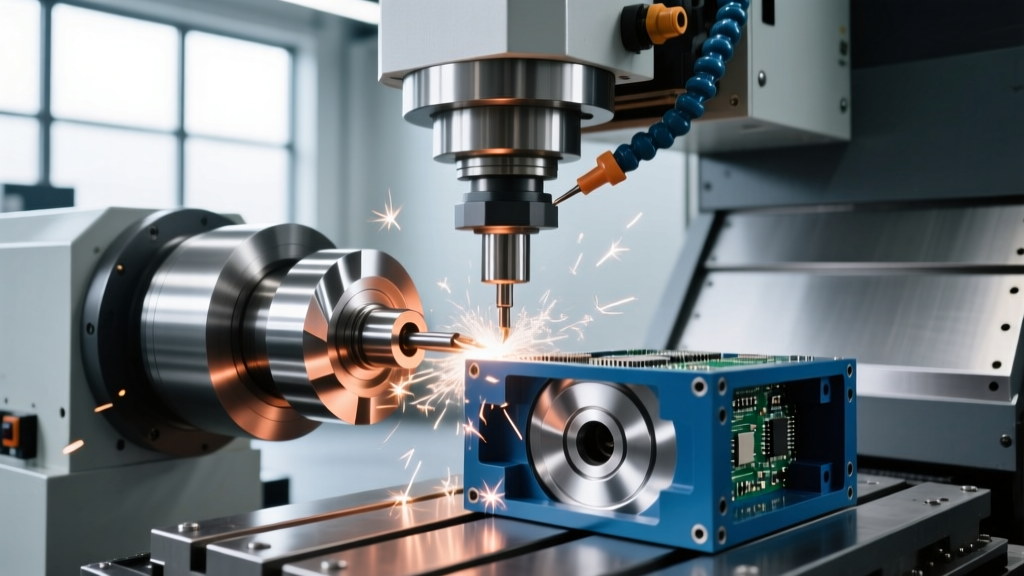
Chip Evacuation Warning: When machining deep-bore EV inverter housings from 6061-T6 aluminum using medical-grade micro-step finishing passes, stringy chips can scratch the internal sealing surfaces. Shops must use specialized high-shear geometry end mills (such as Harvey Tool's aluminum-specific series) paired with targeted air-blast or minimum quantity lubrication (MQL) to guarantee a mirror finish on O-ring sealing grooves.Integrating Advanced Metrology
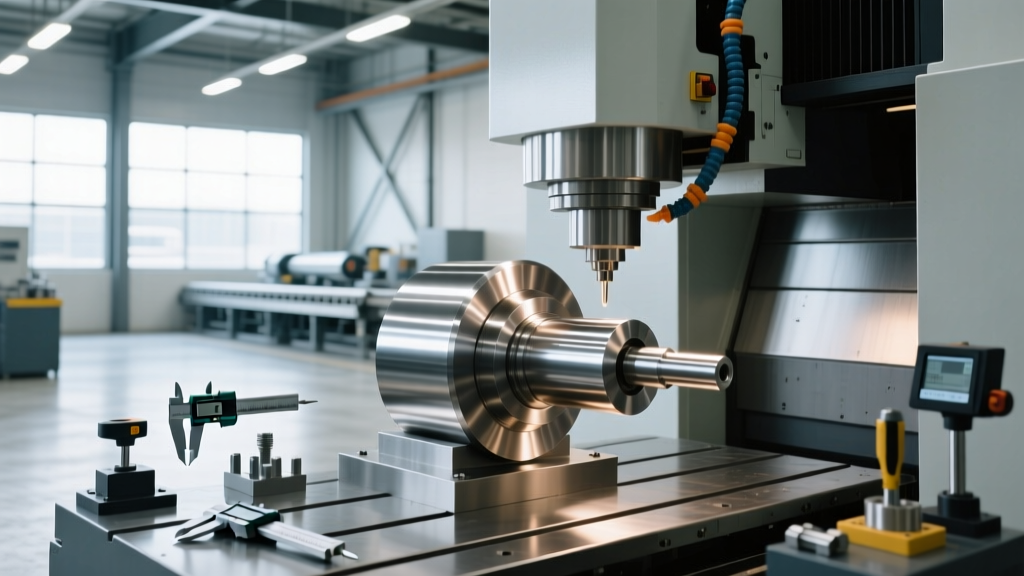
In medical device CNC machining, a part is not considered finished until its metrology data is logged and statistically verified. For high-end automotive aftermarket buyers, this means receiving a full First Article Inspection (FAI) report compliant with AS9102 standards. According to insights from the Quality Magazine CMM Metrology Section, modern shops are integrating in-machine probing with external CMMs to create a closed-loop manufacturing cell. If a titanium aftermarket camshaft journal measures 0.0001 inches over tolerance on the CMM, the data is fed back to the CNC controller to automatically update the tool wear offset for the next part in the queue.
Case Study: Machining EV Inverter Housings with Medtech Protocols
A prominent 2026 case study involves a contract manufacturer producing aftermarket liquid-cooled inverter housings for swapped EV track cars. The housing features complex internal coolant channels and requires a perfectly flat mating surface to prevent high-voltage arcing and coolant leaks under 3G cornering loads.
The Challenge: Standard face-milling left micro-scratches that compromised the thermal interface material (TIM) application, leading to localized hot spots in the IGBT power modules.
The Medical-Grade Solution: The shop applied a finishing technique typically reserved for MRI machine components and surgical trays. They utilized a PCD (Polycrystalline Diamond) fly cutter with a 0.008-inch corner radius, running at 12,000 RPM with a feed rate of 180 IPM. This achieved a 4 µin Ra surface finish. Furthermore, they implemented a strict 48-hour stress-relief cycle between the roughing and finishing operations to eliminate internal material stresses, ensuring the housing would not warp when subjected to the thermal cycling of track use.
Supplier Selection Framework for High-End Aftermarket Buyers
If you are sourcing critical automotive aftermarket components—such as billet aluminum steering racks, titanium valve springs, or hybrid turbo shafts—vetting your machine shop for medical-grade capabilities requires looking beyond standard ISO 9001 certifications. Use this decision framework:
- Audit the Tool Life Management System: Medical shops change inserts based on documented cycle counts, not when the tool breaks. Ask the shop to show you their tool-life tracking software (e.g., ToolConnect or Machining Cloud). If they rely on operator intuition, reject them for high-RPM rotating components.
- Verify Environmental Controls: Inspect the CMM room. It must be isolated, climate-controlled to 68°F ±1°, and feature positive air pressure to keep dust away from optical and touch sensors.
- Demand Material Certifications: Medical machining requires full lot traceability. Ensure the shop provides DFARS-compliant material certs for every batch of 7075 aluminum or Ti-6Al-4V they machine for your aftermarket line.
- Evaluate Coolant Maintenance: Medical shops test coolant concentration and tramp oil levels daily to prevent bacterial growth and corrosion on delicate surgical instruments. This same rigor prevents micro-pitting on precision automotive bearing journals.
The Future of Precision Aftermarket Manufacturing
The boundary between medical device CNC machining and elite automotive aftermarket production has permanently dissolved. As consumer expectations for aftermarket EV and motorsport components align with aerospace reliability standards, the shops that survive will be those that treat a billet titanium suspension upright with the same uncompromising, data-driven rigor as a titanium spinal implant. For buyers and engineers, specifying medical-grade tolerances and ISO 13485 workflows in your RFQs is no longer overkill—it is the baseline for performance safety in 2026 and beyond.