Houston CNC Machining: From Railroad Seals to Defense Tech (2026)
Explore how Houston CNC machining facilities adapt railroad seal manufacturing precision to meet stringent 2026 defense and military application requirements.
The Dual-Use Pivot: Heavy Transport to Tactical Mobility
Houston’s industrial manufacturing sector, historically anchored by petrochemical and heavy civil transport supply chains, is undergoing a radical precision pivot in 2026. When procurement officers and supply chain analysts search for railroads seals CNC machining Houston, they are increasingly uncovering a sophisticated tier of manufacturers that have successfully adapted heavy-duty, high-torque machining capabilities for stringent defense and military applications. The engineering bridge between these two seemingly disparate sectors lies in advanced fluid power systems, pneumatic actuation, and extreme-environment sealing technologies.
Freight rail networks rely on massive draft gear assemblies and pneumatic braking systems that require durable, metal-encased elastomer seals machined to withstand high-impact shock loads. Similarly, modern military ground vehicles (such as the JLTV and AbramsX platform) and naval vessels utilize complex hydraulic actuation and suspension systems that demand CNC-machined sealing housings capable of surviving ballistic shock, saltwater corrosion, and extreme temperature fluctuations. The transition from civilian rail to tactical defense, however, requires a fundamental overhaul in material science, metrology, and cybersecurity compliance.
The Engineering Delta: Civil Rail vs. Defense Specifications
The leap from manufacturing Class I railroad components to MIL-SPEC defense hardware is defined by exponential tightening in tolerances, surface finish requirements, and material traceability. Below is a technical comparison of the machining parameters required for heavy rail sealing housings versus next-generation defense hydraulic actuators.
| Parameter | Heavy Rail Pneumatic Seals | Defense Tactical Hydraulic Housings |
|---|---|---|
| Dimensional Tolerance | ±0.005" to ±0.010" | ±0.0002" to ±0.0005" |
| Surface Finish (Sealing Bore) | Ra 63 µin - 125 µin | Ra 8 µin - 16 µin |
| Material Traceability | Standard Mill Certs | DFARS 252.225-7009 (Melted in USA) |
| Operating Pressure Rating | 150 - 300 PSI | 3,000 - 5,000+ PSI |
| NDT (Non-Destructive Testing) | Rare / Visual Only | Magnetic Particle / Ultrasonic (100%) |
Source: Internal benchmarking data derived from DoD Office of Small Business Programs manufacturing transition guidelines.
Metallurgy Upgrades: Beyond Standard Stainless
Civilian railroad seals frequently utilize 304 or 316 stainless steel, or carbon steel with zinc-nickel plating. Defense applications operating in littoral (coastal) or submerged environments require advanced superalloys to prevent catastrophic failure modes like hydrogen embrittlement and galvanic corrosion.
Critical Defense Alloys in 2026
- 17-4 PH Stainless Steel (Condition H1150): While standard H1025 provides higher yield strength, defense hydraulic actuators mandate the double-aged H1150 condition to eliminate stress corrosion cracking (SCC) under sustained high-pressure loads.
- Monel K-500: A nickel-copper alloy with added aluminum and titanium. Houston machine shops are increasingly turning Monel K-500 for naval submarine valve stems and seawater pump seals due to its exceptional resistance to chloride pitting and biofouling.
- Inconel 718: Required for aerospace and missile defense pneumatic seals that experience rapid thermal cycling from -65°F to 1,200°F. Machining Inconel requires rigid setups and specialized ceramic or PVD-coated carbide tooling to manage rapid work-hardening.
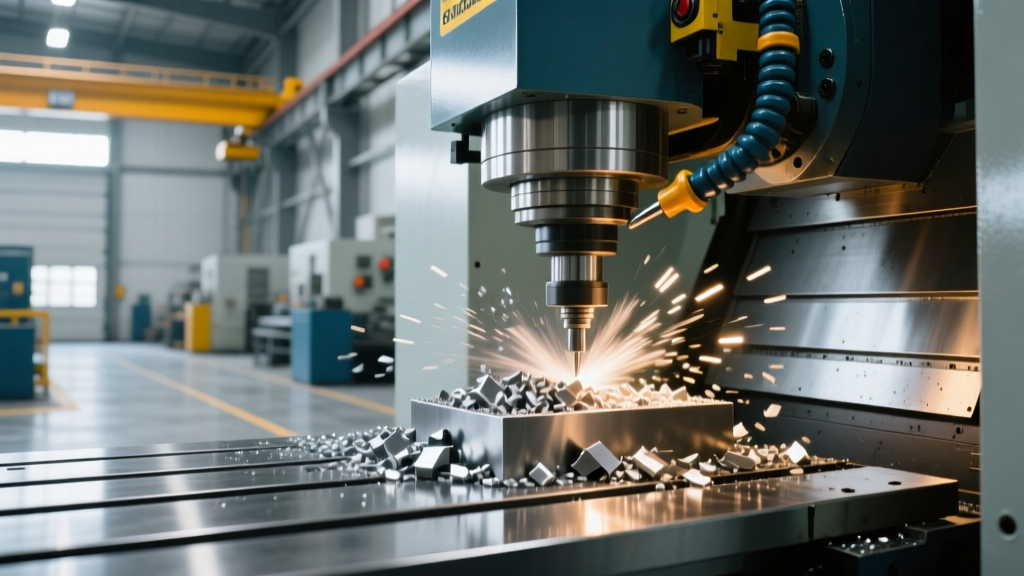
When transitioning to Inconel 718 or Monel K-500, standard CNMG inserts will fail within minutes due to notch wear at the depth-of-cut line. Shops must invest in Sandvik Coromant CoroTurn 111 or Kennametal HARVI III solid carbide end mills, utilizing high-pressure coolant (minimum 1,000 PSI) directed precisely at the cutting edge to evacuate stringy chips and prevent recutting.
Machine Tool and Metrology Investments
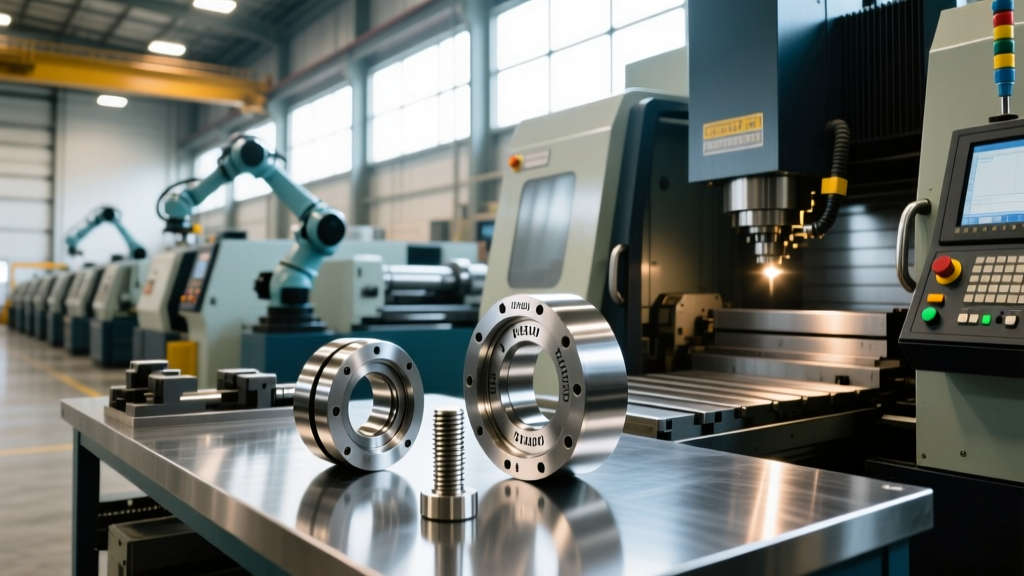
To achieve the Ra 8 µin surface finishes required for military O-ring and PTFE seal glands, Houston machine shops are retiring legacy 2-axis lathes in favor of advanced multi-axis turn-mill centers. The Mazak INTEGREX i-200S and DMG MORI NLX 2500 SY (capital investments ranging from $550,000 to $850,000 per unit) allow for complete part processing in a single setup. This eliminates stack-up tolerances that occur when moving a part from a lathe to a vertical machining center, a critical factor when machining concentric sealing bores for missile guidance actuators.
On the metrology side, hand tools and basic CMMs are insufficient for defense contracts. Leading Houston facilities have integrated Zeiss CONTURA coordinate measuring machines equipped with VAST XXT scanning heads, alongside non-contact laser profilometers to verify the microscopic cross-hatch patterns on hydraulic cylinder bores that retain lubrication films.
ITAR, CMMC 2.0, and the Cybersecurity Moat
Technical capability is only half the battle; regulatory compliance is the ultimate barrier to entry. The Directorate of Defense Trade Controls (DDTC) strictly enforces ITAR (22 CFR Parts 120-130) regulations. A machine shop producing seals for military rail logistics or armored vehicles must ensure that no foreign nationals have access to the CAM programming files or the shop floor where the parts are machined.
"In 2026, ITAR compliance is inextricably linked to digital security. Under the DoD's Cybersecurity Maturity Model Certification (CMMC) 2.0, machine shops must achieve Level 2 certification to handle Controlled Unclassified Information (CUI). This requires air-gapped CAD/CAM workstations, encrypted toolpath transfers to CNC controllers, and strict access logging."
— Reference: NIST Manufacturing Extension Partnership (MEP) Defense Supply Chain Guidelines.
Actionable Procurement Framework for Defense Buyers
For defense primes and Tier 1 suppliers looking to leverage Houston’s heavy-machining infrastructure for tactical sealing components, utilize this 4-point qualification matrix to vet potential CNC partners:
- Verify DFARS Melt Compliance: Request raw material DFARS 252.225-7009 certificates upfront. Ensure the shop's ERP system automatically flags non-compliant material lots before they reach the CNC loading dock.
- Audit High-Pressure Coolant Systems: Inspect the CNC lathes for integrated high-pressure coolant pumps (1,000+ PSI). This is a non-negotiable requirement for maintaining tool life and surface integrity when turning defense-grade precipitation-hardening stainless steels.
- Evaluate Single-Setup Capabilities: Review the shop's CAM toolpaths. If a sealing housing requires three separate setups (turning, milling, boring), reject the vendor. Multi-axis turn-mill single-setup processing is mandatory to guarantee concentricity within 0.0002".
- Demand First Article Inspection (FAI) per AS9102: Do not accept standard shop travelers. Require a full AS9102 Rev C First Article Inspection Report, including ballooned drawings and complete CMM data correlation, before authorizing production runs.
By targeting Houston machine shops that have successfully bridged the gap between heavy civil transport and military precision, defense procurement teams can secure robust, high-volume manufacturing partners capable of delivering mission-critical sealing technologies under the stringent demands of 2026 defense contracts.