Railroad CNC Machine Shop Maintenance: Prototyping vs. Production
Optimize your railroad CNC machine shop with tailored maintenance schedules for rapid prototyping versus high-volume production machining of rail components.
Operating a dedicated railroad CNC machine shop requires navigating a severe operational dichotomy: balancing the agile, low-volume demands of rapid prototyping against the relentless, high-torque requirements of production machining. Rail components—ranging from prototype switchgear layouts and custom derailment recovery tooling to mass-produced AAR Grade E couplers and Hadfield manganese steel frogs—subject CNC equipment to vastly different mechanical and thermal stresses. Consequently, a static preventive maintenance (PM) schedule is a liability. To maintain the tight tolerances required by the Federal Railroad Administration (FRA) Track Safety Standards, shop managers must dynamically align machine service intervals with the specific wear profiles of prototyping versus production workflows.
The Kinematic Wear Profile of Railroad Rapid Prototyping
In a railroad CNC machine shop, rapid prototyping typically involves machining one-off custom rail braces, testing new alloy switch points, or fabricating specialized maintenance-of-way (MOW) tooling. The G-code for these operations is characterized by frequent tool changes, complex 5-axis simultaneous movements, and a high ratio of rapid traverse (G00) to cutting feed (G01).
ATC and Linear Guideway Stress
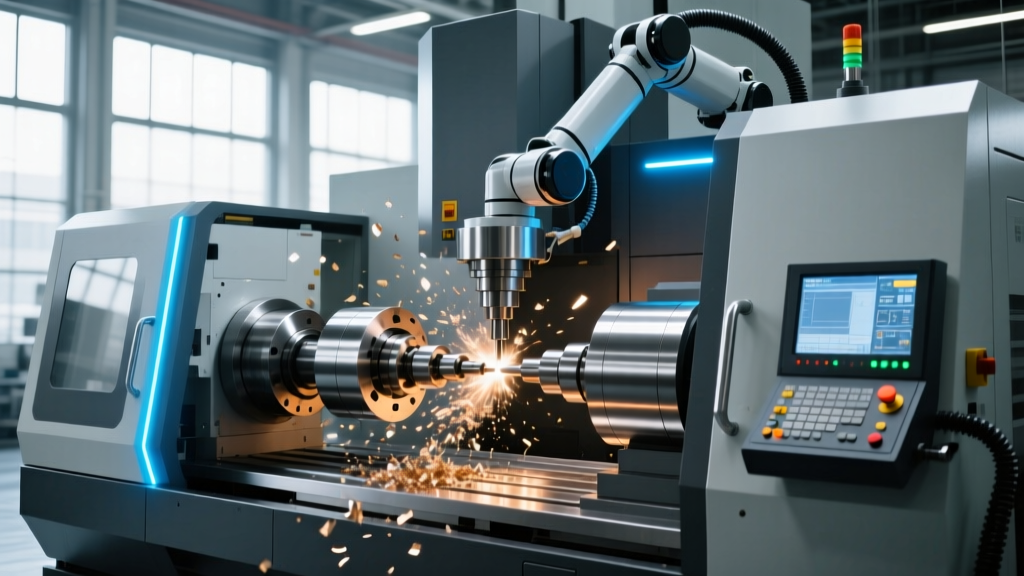
Unlike production runs where a single tool might remain engaged for hours, prototyping on a machine like the Mazak INTEGREX i-400 mill-turn center can trigger hundreds of Automatic Tool Changer (ATC) cycles per shift. This accelerates wear on the ATC cam box, carousel bearings, and tool retention knobs. Furthermore, the constant acceleration and deceleration of rapid traverses place asymmetric loads on the X and Y-axis ball screws.
Prototyping Maintenance Imperative: Shift PM focus from spindle bearings to kinematic components. Inspect ATC arm alignment and tool retention force (measured in kN) every 200 hours of prototyping runtime. Check ball screw preload and linear guideway block play using dial indicators at 500-hour intervals, as the jerky motion of prototype dry-runs and short-run G-code degrades the lubrication film on the ways.Thermal Asymmetry and Z-Axis Drift
Prototyping rarely generates the continuous thermal load required to bring a massive CNC casting to a stable thermal equilibrium. Spindle heat builds unevenly, leading to Z-axis thermal displacement. If a shop is prototyping precision rail bearing adapters, this drift can scrap a $4,000 forging. Maintenance teams must recalibrate the machine’s thermal compensation sensors and verify spindle cooling jacket flow rates bi-weekly during heavy prototyping phases to ensure Z-axis drift remains under 8 microns.
Production Machining: Combating Abrasive and Thermal Degradation
When the shop transitions to production machining—such as turning out thousands of rail anchors or milling high-manganese steel switch frogs—the wear profile shifts entirely. The machine enters a state of continuous cutting load, generating immense heat and producing highly abrasive, work-hardened chips.
The Hadfield Manganese Steel Factor
Hadfield manganese steel (containing 11-14% manganese) is notorious in the rail industry for its unique work-hardening properties. While it sits at roughly 200 BHN in its annealed state, the impact and shear forces of CNC milling can harden the surface layer and the resulting chips to over 500 BHN. When these abrasive chips are recut or dragged across the machine bed, they act like lapping compound, rapidly destroying way covers and contaminating the way lubrication system.
Spindle and Coolant System Overhaul
On heavy-duty horizontal machining centers like the Okuma MAC-500, production runs demand maximum spindle torque. The continuous load generates thermal expansion in the spindle bearings, requiring meticulous monitoring of the spindle chiller unit. More critically, the coolant system takes a beating. The fine, abrasive manganese dust mixes with the coolant, forming a sludge that clogs filtration systems and degrades the chemical stability of the fluid.
| Maintenance Component | Rapid Prototyping Schedule | Production Machining Schedule |
|---|---|---|
| ATC Cam Box & Carousel | Every 200 Hours | Every 1,000 Hours |
| Way Lube System (ISO 68) | Flow Check Every 50 Hours | Filter & Fluid Swap Every 300 Hours |
| Coolant Concentration | Weekly (5-7% Target) | Daily (8-10% Target + Tramp Oil Skim) |
| Spindle Thermal Calibration | Bi-Weekly (Asymmetric Heat) | Monthly (Steady-State Drift) |
| Chip Conveyor Torque Limiter | Inspect Annually | Test & Adjust Every 150 Hours |
Strategic Scheduling and AREMA Compliance
Machining rail components is not standard job-shop work; it is heavily regulated. The American Railway Engineering and Maintenance-of-Way Association (AREMA) sets rigorous dimensional and material standards for track components. If a CNC machine’s ball screw backlash exceeds 0.0005 inches due to neglected production-mode maintenance, the resulting switch frogs may fail ultrasonic testing or cause dangerous wheel-flange impact on the mainline.
To ensure compliance, leading railroad CNC machine shops integrate their PM schedules directly with their quality management systems (QMS). Before transitioning a machine from a production run of rail anchors to a rapid prototyping run of a new derail guard, a mandatory 'Mode-Switch Calibration' must occur.
The Mode-Switch Protocol
- Deep Clean and Way Flush: Purge the way lube system with a flushing oil to remove embedded manganese micro-chips from the production run. Refill with fresh ISO 68 way lubricant.
- Spindle Run-In: Execute a 45-minute automated spindle warm-up cycle to stabilize bearing temperatures, resetting the thermal growth baseline required for tight-tolerance prototyping.
- Renishaw Ballbar Test: Run a quick 15-minute circular interpolation test to verify servo tuning and backlash compensation, ensuring the machine is ready for the complex, multi-axis contours typical of prototype rail parts.
Coolant Management: The Hidden Variable
Coolant management bridges the gap between prototyping and production. In prototyping, machines sit idle more often, allowing tramp oil from hydraulic leaks to pool on the coolant surface, fostering anaerobic bacteria. Maintenance teams must deploy portable tramp oil skimmers and maintain a lower concentration (5-7%) to prevent skin irritation during the frequent manual interventions and setups required for prototypes.
Conversely, production machining of AAR Grade E steel generates massive heat. Coolant concentration must be pushed to 8-10% to provide adequate boundary lubrication and prevent tool welding. The Society of Manufacturing Engineers (SME) consistently highlights that improper coolant concentration in heavy-duty machining accelerates insert wear by up to 40%. Therefore, the maintenance schedule must include daily refractometer checks and automated tramp oil separation during production shifts.
'Treating a railroad CNC machine shop like a generic job shop is a fast track to scrapped forgings and failed FRA audits. The tribology of machining rail steel demands that your maintenance schedule is as dynamic as your production schedule.' — Senior Manufacturing Engineer, Class I Railroad MOW Division.
Decision Framework: Allocating Machine Assets
Shop managers should not flip a single machine back and forth between prototyping and production daily. The setup and maintenance overhead destroys Overall Equipment Effectiveness (OEE). Instead, allocate specific assets based on their mechanical strengths:
- Dedicate 5-Axis VMCs to Prototyping: Machines with high rapid traverse rates and large tool magazines excel at the stop-start nature of prototype switchgear and custom MOW tooling. Schedule kinematic PMs heavily here.
- Dedicate HMCs and Mill-Turns to Production: Horizontal Machining Centers with tombstone setups and heavy-duty chip conveyors should run production volumes of couplers and frogs. Schedule spindle bearing, coolant, and way-lube PMs aggressively on these assets.
By aligning maintenance schedules with the distinct mechanical realities of rapid prototyping and production machining, railroad CNC machine shops can extend spindle life by thousands of hours, guarantee AREMA dimensional compliance, and eliminate the hidden costs of cross-contaminated wear profiles.