Energy CNC Precision Machining: High-Volume Guide
Discover high-volume equipment strategies for energy CNC precision machining. Compare multi-spindle and multi-tasking machines for production.
The Economics of High-Volume Energy CNC Precision Machining
Scaling production for the energy sector—whether manufacturing solar tracker gears, hydraulic fracking valve bodies, or wind turbine pitch control components—requires a fundamental shift in equipment strategy. High-volume energy CNC precision machining demands throughput exceeding 100,000 units annually while maintaining tight tolerances (often ±0.0005 inches) on difficult-to-machine alloys like 17-4 PH stainless, Duplex 2205, and Inconel 718. Standard 3-axis vertical machining centers (VMCs) or basic 2-axis lathes cannot sustain the cycle times or tool life required for these volumes without destroying unit economics.
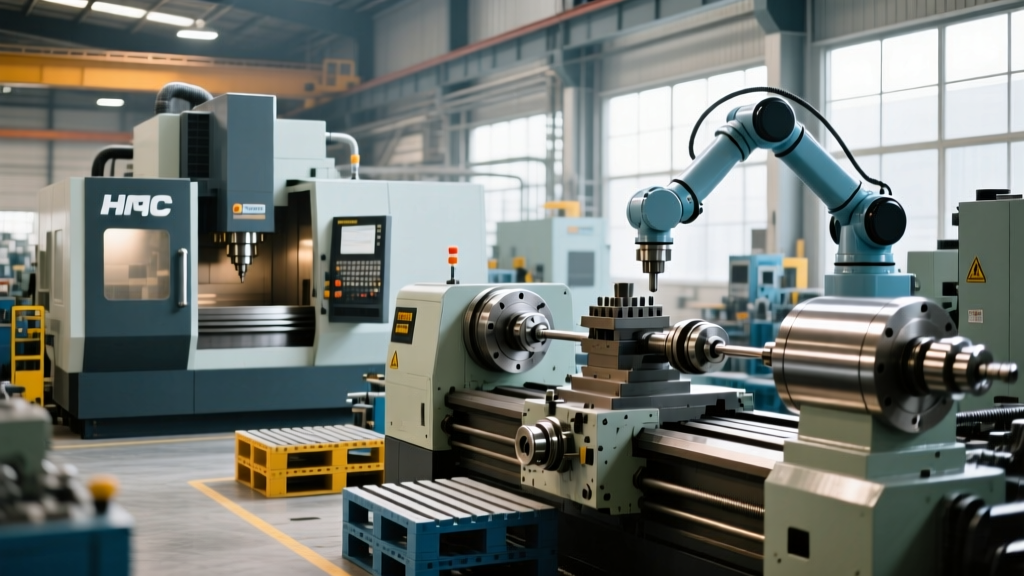
Procurement managers and shop owners must evaluate capital equipment based on cost-per-part at scale, spindle utilization rates, and automated material handling compatibility. The transition from low-volume/high-mix prototyping to dedicated high-volume production hinges on selecting the right machine architecture: multi-spindle automatic lathes, twin-turret turning centers, or 5-axis multi-tasking machines (MTMs).
Volume Threshold Decision Matrix
Use this framework to determine the optimal machine architecture based on your annual part volume and geometric complexity:
- Under 50,000 parts/year (Complex Geometry): 5-Axis Multi-Tasking Machine (e.g., Mazak INTEGREX). Best for large, complex energy valve bodies requiring 5-sided machining in a single setup.
- 50,000 to 150,000 parts/year (Moderate Complexity): Twin-Spindle / Twin-Turret CNC Lathe (e.g., Nakamura-Tome NTJ-100). Ideal for overlapping machining operations on symmetrical energy fittings.
- Over 150,000 parts/year (Rotational Parts): Multi-Spindle Automatic Lathe (e.g., INDEX MS40-8). Mandatory for high-speed, continuous production of small-to-medium energy fasteners and hydraulic connectors.
Equipment Selection: Multi-Spindle vs. Multi-Tasking
When specifying equipment for energy CNC precision machining, the initial capital expenditure (CapEx) must be weighed against the operational expenditure (OpEx) savings generated by reduced cycle times and lower labor costs. Below is a direct comparison of three high-volume machine architectures dominating the 2026 energy manufacturing landscape.
| Machine Model | Architecture | Approx. CapEx (Fully Tooled) | Max Spindle Speed | Best Energy Application |
|---|---|---|---|---|
| INDEX MS40-8 | 8-Spindle Auto Lathe | $950,000 - $1,300,000 | 10,000 RPM (Main) | Hydraulic fittings, high-volume solar pins |
| Mazak INTEGREX i-250 | 5-Axis Multi-Tasking | $450,000 - $650,000 | 5,000 RPM (Turning) | Complex manifold blocks, turbine valves |
| Nakamura-Tome NTJ-100 | Twin-Spindle/Twin-Turret | $380,000 - $480,000 | 6,000 RPM | Oil & gas flanges, EV motor housings |
Deep Dive: The INDEX MS40-8 for High-Volume Rotational Parts
For shops producing over 250,000 brass or stainless steel hydraulic connectors annually, the INDEX MS40-8 8-spindle machine is the undisputed benchmark. By distributing machining operations across eight independent spindles, the cycle time is dictated only by the single longest operation. For a typical 17-4 PH stainless energy fitting, a twin-turret lathe might yield a cycle time of 85 seconds. The MS40-8 reduces this to roughly 12 seconds per part, yielding over 6,500 parts per shift. The high CapEx is typically recovered within 14 to 18 months in high-volume energy contracts.
Tooling and High-Pressure Coolant Integration
High-volume energy machining frequently involves gummy, work-hardening superalloys. Standard flood coolant fails to penetrate the cutting zone at high speeds, leading to rapid insert wear and unplanned downtime. When procuring CNC equipment, buyers must specify high-pressure coolant (HPC) systems as a baseline requirement.
Procurement Warning: Do not accept standard 300 PSI coolant pumps for energy sector Inconel or Titanium machining. Specify minimum 1,000 PSI (70 bar) through-spindle and through-turret coolant capabilities. Ensure the machine's chip conveyor is rated for high-torque stringy chip extraction, as standard hinge-belt conveyors will jam under the volume of chips produced by an 8-spindle lathe running 24/7.Pairing HPC with specialized tooling interfaces is critical. Look for machines equipped with Sandvik Coromant Capto C6 or HSK-T63 toolholding interfaces. These provide the rigidity and repeatability required for quick tool changes in automated environments, reducing non-cutting time by up to 40% compared to traditional CAT/BT V-flange holders.
Automation and Lights-Out Manufacturing Strategies
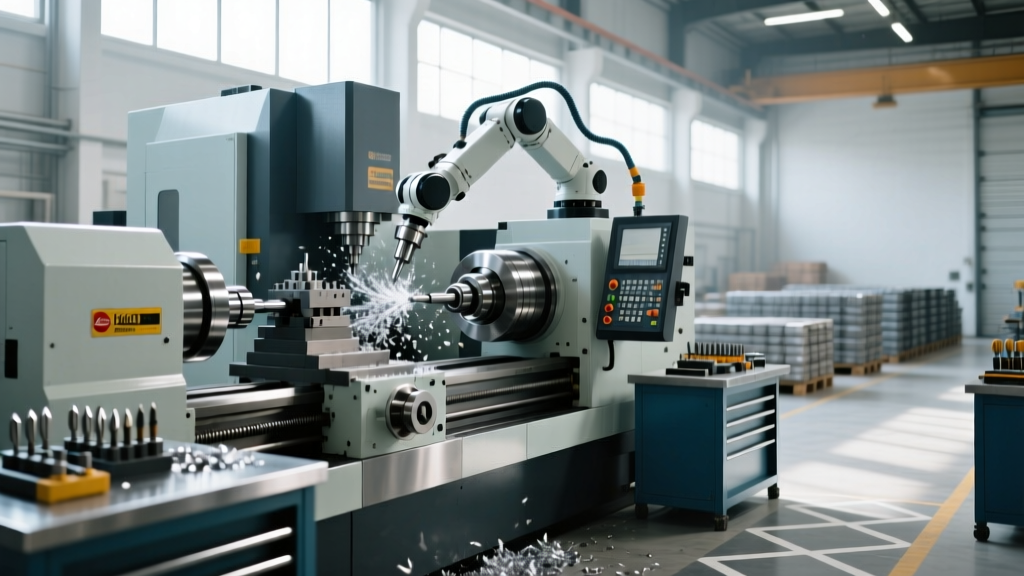
High-volume production is only viable if material handling keeps pace with spindle speeds. For multi-spindle machines, automated bar feeders (such as the Iemca Boss 542) are mandatory. These systems can hold multiple 12-foot bars, allowing for hours of uninterrupted cutting. However, for multi-tasking machines handling pre-cast energy valve bodies, articulated robotics are required.
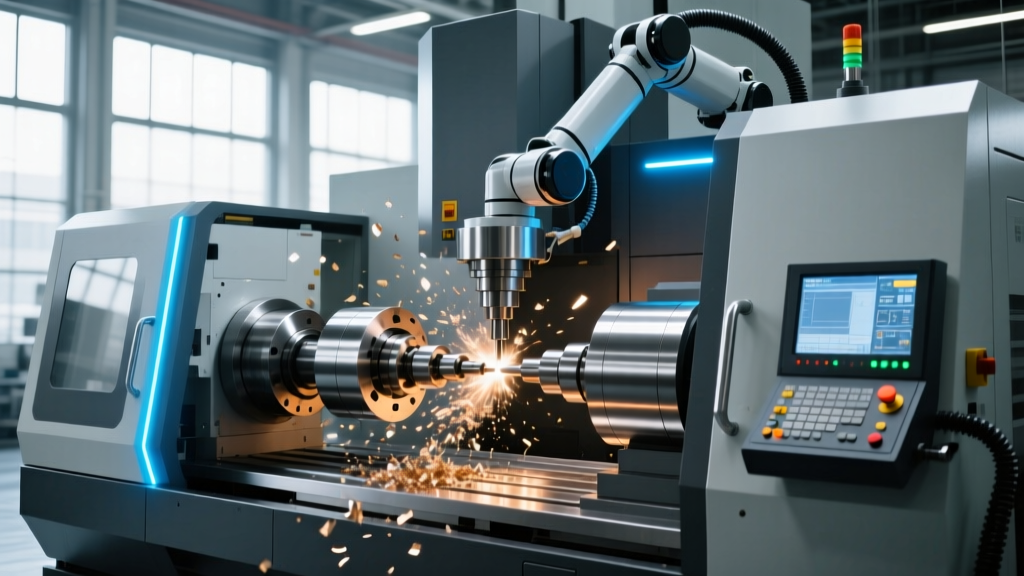
Integrating a FANUC M-20iD/25 or Yaskawa Motoman HC10SDT robot with a vision-guided pick-and-place system typically adds $90,000 to $140,000 to the cell cost. To justify this, the cell must be capable of 'lights-out' (unattended) machining for at least 8 hours overnight. This requires the integration of in-machine probing (e.g., Renishaw Equator) for automated tool wear compensation and part rejection without human intervention.
Energy Efficiency and Sustainability Metrics
The term 'energy CNC precision machining' also encompasses the energy consumption of the manufacturing process itself. As the energy sector faces stricter ESG (Environmental, Social, and Governance) mandates, contract machinists are being required to report the carbon footprint and kWh consumption per manufactured part.
'Modern multi-spindle and multi-tasking machines utilize regenerative spindle drives and hydraulic-free clamping systems that can reduce overall machine energy consumption by up to 30% compared to legacy equipment, directly impacting the per-part sustainability metrics required by tier-one energy contractors.'
— NIST Manufacturing Extension Partnership (MEP) Sustainable Manufacturing Guidelines
When evaluating equipment, request the machine tool builder's specific energy consumption (SEC) data. Look for features like:
- Regenerative Braking Modules: Captures kinetic energy during spindle deceleration and feeds it back into the plant grid.
- Smart Standby Modes: Automatically powers down coolant pumps, chip conveyors, and hydraulic units during idle loading cycles.
- Electric Turret Clamping: Eliminates the need for continuous hydraulic pump operation, saving an average of 4-6 kWh per hour of operation.
For deeper insights into optimizing plant-wide energy usage, the U.S. Department of Energy Advanced Manufacturing Office provides extensive frameworks for auditing CNC machine energy baselines and implementing low-cost efficiency upgrades.
The 2026 Buyer's Checklist for Energy Sector Procurement
Before signing a purchase order for high-volume CNC equipment, ensure the following specifications are explicitly detailed in the contract:
- Thermal Stability Guarantees: The machine must include spindle thermal displacement compensation or active cooling jackets, guaranteeing less than 5 microns of Z-axis growth over a 12-hour continuous run.
- High-Pressure Coolant Plumbing: Minimum 1,000 PSI at the spindle nose, with dual filtration systems (50-micron and 25-micron) to prevent nozzle clogging when machining cast energy components with high inclusion rates.
- Control System Memory and Processing: Minimum 4GB RAM and look-ahead capacity of 600+ blocks (e.g., FANUC 31i-B5 or Siemens SINUMERIK ONE) to prevent dwell marks during complex 5-axis contouring of turbine blades.
- Chip Management: Dual-hinge belt or scraper-type conveyors with automatic oil skimmers and high-capacity coolant tanks (minimum 150 gallons for multi-spindle) to maintain thermal stability.
Frequently Asked Questions
What is the ROI timeline for an 8-spindle lathe in energy manufacturing?
For a shop securing a 3-year contract producing 500,000+ stainless steel hydraulic fittings annually, the ROI on a $1.1M INDEX MS40-8 is typically 14 to 18 months. The massive reduction in cycle time and the ability to run unattended on second and third shifts offset the high initial capital cost rapidly.
Can standard VMCs handle high-volume energy CNC precision machining?
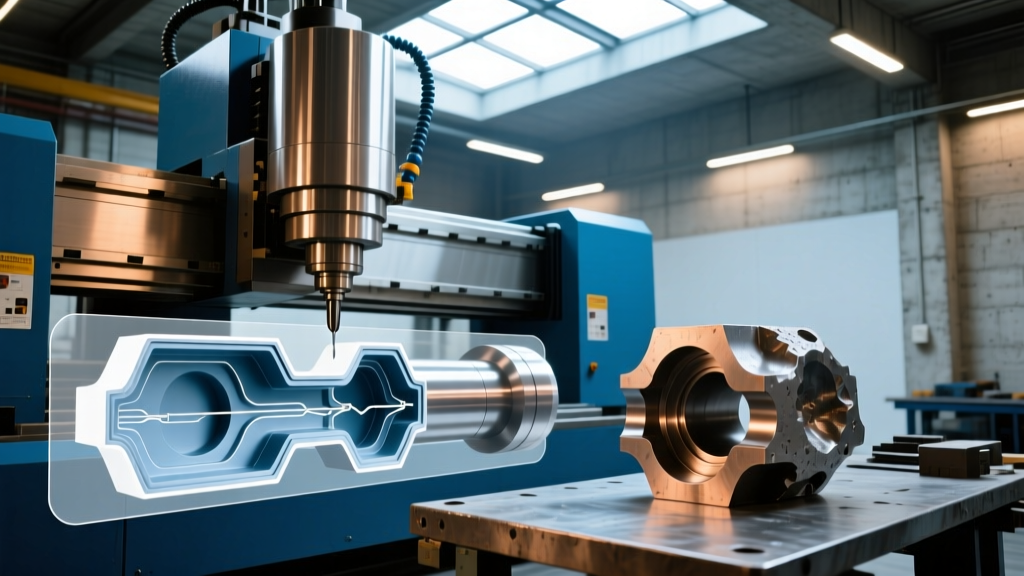
Standard 3-axis VMCs are generally unsuitable for high-volume rotational energy parts due to the multiple setups required, which introduce tolerance stacking and increase cycle times. However, for high-volume prismatic parts like solar inverter housings or wind turbine gearbox plates, pallet-changing horizontal machining centers (HMCs) like the Makino a61nx are preferred over standard VMCs to maintain throughput.
How do I validate a machine's energy efficiency before purchasing?
Request the machine's ISO 23125 (Safety of machine tools - Turning centres) and specific energy consumption (SEC) test reports. Alternatively, mandate a clause in the purchase agreement allowing a third-party energy audit using a power analyzer during a standardized test cut. If the machine exceeds the builder's stated kWh/part baseline by more than 10%, the builder must supply upgraded regenerative drives at no additional cost.