Lean Computerized Numerical Control CNC Machining Shop Workflows
Discover how lean manufacturing principles optimize computerized numerical control CNC machining workflows, reducing cycle times and eliminating shop floor waste.
The Economics of Modern Machine Shop Operations
In the highly competitive contract machining sector, net profit margins typically hover between 8% and 12%. Surviving and scaling requires more than just purchasing multi-axis mills; it demands the rigorous application of lean manufacturing to computerized numerical control CNC machining workflows. Lean is not merely a philosophy for assembly lines; it is a highly technical framework for minimizing non-value-added time between the raw material drop and the final CMM inspection.
2026 OEE Benchmark Data: According to current industry analytics, world-class CNC machine shops achieve an Overall Equipment Effectiveness (OEE) of 82-85%. The industry average remains stagnant at 58-62%, primarily due to unoptimized setup times and micro-stoppages during tool changes.Integrating lean principles into computerized numerical control CNC machining requires shifting from traditional batch-and-queue processing to continuous single-piece flow, supported by automated material handling and offline programming architectures.
Translating TIMWOODS to the CNC Shop Floor
The foundational lean concept of the '8 Wastes' (TIMWOODS) must be mapped to specific CNC failure modes and operational bottlenecks. Identifying these wastes allows shop managers to deploy targeted technical countermeasures.
1. Transport and Motion
The Waste: Operators walking 40 feet to a central tool crib or manually pushing heavy carts of raw bar stock to the saw.
Technical Countermeasure: Decentralize inventory using automated vending systems (e.g., AutoCrib or Seco Point) placed directly inside the machining cell. For material transport, deploy Autonomous Mobile Robots (AMRs) programmed to deliver specific DIN-standard vises and raw stock to the machine operator exactly when the MES (Manufacturing Execution System) signals a job change.
2. Waiting and Inventory
The Waste: Spindles sitting idle during first-article CMM inspection, or massive piles of Work-In-Progress (WIP) waiting for secondary deburring operations.
Technical Countermeasure: Implement in-cycle probing using Renishaw or Blum touch probes. By verifying critical dimensions (e.g., bore diameters and true position) while the part is still fixtured on the trunnion table, you eliminate the transport and waiting time associated with offline CMM validation. Strict WIP limits enforced via digital Kanban boards prevent overproduction.
3. Overprocessing and Defects
The Waste: Holding tolerances of +/- 0.0001 in. on non-critical features, or scrapping parts due to thermal growth during long, unattended shifts.
Technical Countermeasure: Utilize macro-level G-code programming to integrate thermal compensation routines. Modern controls, such as the DMG MORI CELOS or Haas NGC, feature built-in thermal stability algorithms that adjust Z-axis offsets based on real-time spindle temperature telemetry, drastically reducing scrap rates during lights-out machining.
SMED: Single-Minute Exchange of Die in CNC
Setup reduction is the most critical technical lever in lean computerized numerical control CNC machining. The SMED methodology categorizes setup tasks into 'Internal' (must be done while the machine is stopped) and 'External' (can be done while the machine is running). The goal is to convert internal tasks to external tasks.
Warning: Do not attempt to implement automated pallet changers without first standardizing your tooling. A Fastems FMS or Erowa Robot system will only amplify chaos if your tool life management and offline presetting are not fully optimized.The External Setup Protocol
- Offline Tool Presetting: Use a Zoller VENTURION presetter to measure tool length and radius offsets outside the machine. Data is transferred directly to the CNC control via RFID chips embedded in the tool holders (e.g., Balluff RFID systems) or networked DNC.
- Standardized Workholding: Utilize zero-point clamping systems (like System 3R MacroMagnum). The operator builds the next fixture on a secondary bench while the current part is being cut.
- Pre-Staged Materials: Raw stock is cut to near-net shape on a dedicated bandsaw and staged on a gravity-feed rack adjacent to the machine load station.
The Internal Setup Execution
When the cycle ends, the machine pallet automatically swaps. The operator simply locks the pre-built zero-point fixture into the receiver, initiates the standardized macro program, and the machine begins the first-article run. This process routinely drops internal setup times from 45 minutes down to under 8 minutes.
Workflow Comparison: Traditional Batch vs. Lean Single-Piece
Understanding the mathematical difference between batch processing and lean single-piece flow is essential for capacity planning.
| Metric | Traditional Batch (Qty 100) | Lean Single-Piece Flow |
|---|---|---|
| Setup Time per Part | 0.45 mins (45 min total / 100) | 8.0 mins (per changeover) |
| Cycle Time | 4.0 mins | 4.0 mins |
| WIP Queue Time | 6.5 hours (waiting for batch) | 0 hours (continuous flow) |
| First Good Part Yield | 400+ minutes | 12 minutes |
| Floor Space Required | High (WIP staging areas) | Low (point-of-use only) |
While the traditional batch method amortizes setup time across 100 parts, it creates massive WIP queues and delays the discovery of defects. If a tool breaks on part number 3, the entire batch of 100 may be scrapped or require rework. Lean single-piece flow ensures that a defect is caught immediately, limiting scrap to a single unit and preserving cash flow.
Hardware Specifications for Lean CNC Cells
To execute lean workflows reliably, the physical hardware must be specified for rapid changeovers and uninterrupted chip evacuation. When procuring equipment for a lean cell in 2026, mandate the following technical specifications:
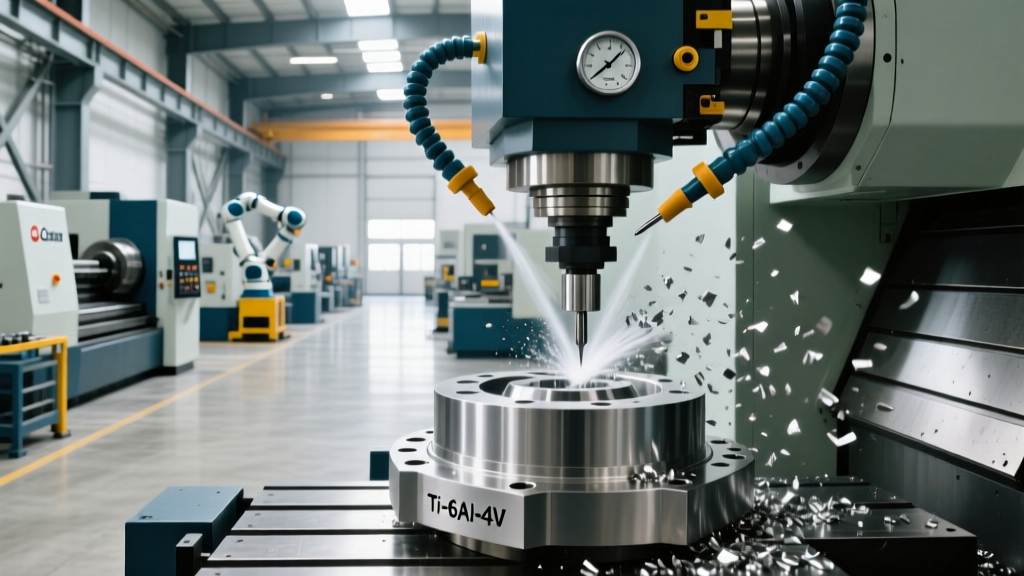
- High-Pressure Coolant (HPC): Minimum 70 bar (1000 PSI) through-spindle coolant. This is non-negotiable for machining aerospace alloys like Ti-6Al-4V or Inconel 718, as it prevents built-up edge (BUE) and extends tool life by up to 30%, reducing unplanned tool-change stoppages.
- Automated Chip Conveyors: Hinge-belt conveyors with integrated coolant filtration (down to 25 microns). Stringy chips from aluminum or stainless steel can wrap around augers, causing conveyor jams that halt the entire lean cell.
- Tool Magazine Capacity: Minimum 60-tool side-mount magazines. This allows the machine to hold 'sister tools' (duplicate tooling) for high-wear operations. When Tool 1 reaches its programmed life limit, the control automatically swaps to Tool 2 without operator intervention.
"Lean manufacturing in CNC is not about making the spindle cut faster; it is about ensuring the spindle never stops cutting due to logistical friction." - Advanced Machining Systems Engineering Principle
Calculating the Financial Impact of Lean Integration
To justify the capital expenditure of lean automation (such as a $150,000 robotic tending cell), shops must calculate the exact OEE improvement. The standard OEE formula is:
OEE = Availability x Performance x Quality
Consider a 5-axis machining center running a $120/hour shop rate:
- Pre-Lean Availability: 65% (frequent setups and tool searching).
- Post-Lean Availability: 88% (SMED and RFID tooling implemented).
- Net Gain: 23% increase in available spindle hours.
On a machine scheduled for 2,500 hours annually, a 23% availability gain yields 575 additional billable spindle hours. At $120/hour, this generates $69,000 in additional annual revenue per machine, without purchasing a new asset or adding floor space. For deeper methodologies on calculating manufacturing efficiency, the NIST Manufacturing Extension Partnership (MEP) provides comprehensive frameworks for small-to-mid-sized machine shops. Furthermore, the Lean Enterprise Institute offers foundational glossaries and value-stream mapping templates specifically adapted for discrete manufacturing environments.
Strategic Implementation Roadmap
Do not attempt to overhaul an entire shop floor simultaneously. Follow a phased technical rollout:
- Phase 1 (Days 1-30): Map the value stream for your top 20% of revenue-generating parts. Identify the top 3 bottlenecks (usually setup, inspection, or material staging).
- Phase 2 (Days 31-90): Implement 5S at the machine level and install offline tool presetters. Standardize workholding across the cell.
- Phase 3 (Days 91-180): Integrate zero-point clamping and in-cycle probing. Begin transitioning high-runner parts to single-piece flow.
- Phase 4 (Days 181+): Introduce automated material handling (pallet pools or robotic tenders) only after the manual lean processes are stable and documented.
By treating computerized numerical control CNC machining as a holistic system rather than isolated cutting operations, shops can unlock hidden capacity, reduce lead times, and secure higher-margin contracts in an increasingly automated landscape.