Railroads Skylights CNC Machining Houston: Hi-Rail Safety Standards
Explore FRA and FMVSS safety standards for hi-rail truck aftermarket skylight frames, including 5-axis CNC machining specs and material selection.
The Regulatory Matrix: FMVSS vs. FRA Standards for Hi-Rail Vehicles
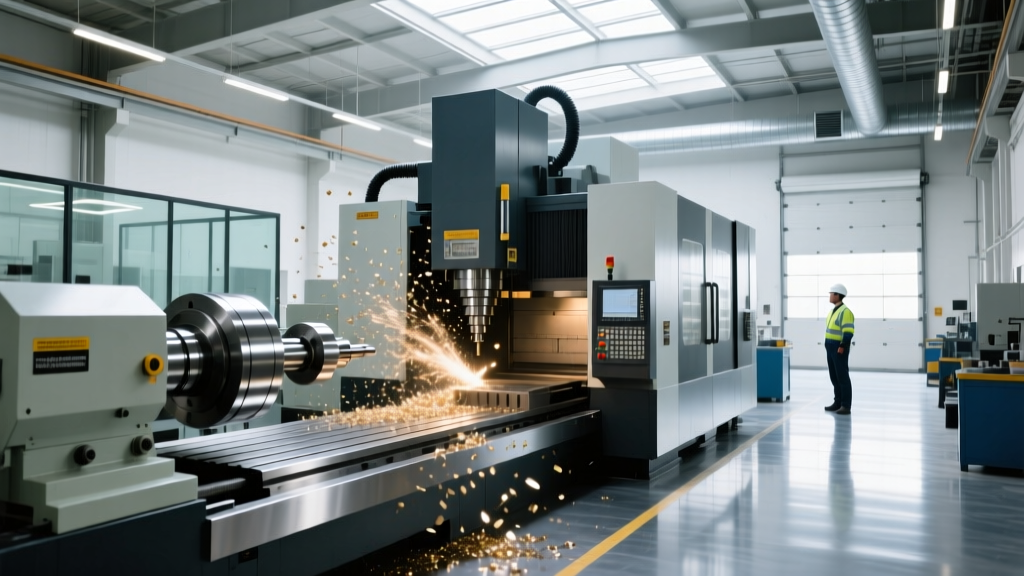
Hi-rail trucks—road-rail vehicles used for track maintenance and inspection—occupy a complex regulatory gray area. Because they operate on public highways and active rail corridors, their automotive aftermarket parts must satisfy both the National Highway Traffic Safety Administration (NHTSA) and the Federal Railroad Administration (FRA). For fleet managers and defense contractors sourcing custom transit components, the highly specific search cluster for railroads skylights CNC machining Houston represents a critical intersection of automotive aftermarket fabrication and heavy rail compliance.
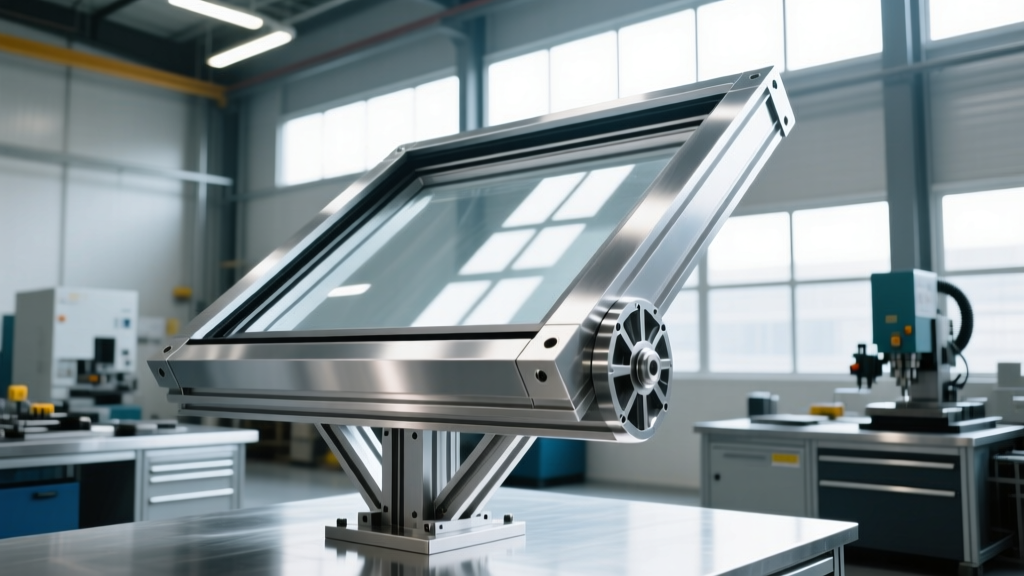
Roof-mounted inspection domes and skylights allow track inspectors to monitor the right-of-way and overhead catenary systems. However, cutting into a Class 8 or heavy-duty pickup cab roof (such as a Ford F-550 or Ram 5500 hi-rail conversion) compromises the vehicle's structural integrity. Machine shops must engineer replacement frames that restore or exceed original equipment manufacturer (OEM) crush resistance while surviving the high-impact debris environment of active rail yards.
| Regulatory Body | Standard | Application to Aftermarket Skylight Frames |
|---|---|---|
| NHTSA | FMVSS 216a (Roof Crush) | Frame must distribute dynamic loads to the cab pillars without buckling the aluminum extrusion. |
| FRA | 49 CFR Part 214 (Roadway Worker) | Glazing and frame mounts must withstand track ballast kick-up and maintain seal integrity at 79 MPH. |
| SAE | SAE J2522 (Roof Strength) | Ensures the aftermarket CNC-machined flange does not induce stress fractures in the steel cab roof. |
Material Selection: Why 6061-T6 Fails in Gulf Coast Rail Yards
The default aluminum alloy for automotive aftermarket CNC machining is 6061-T6. While adequate for standard truck accessories, it is fundamentally unsuited for railroad skylight frames deployed in Houston's Gulf Coast environment. Rail yards expose vehicles to high humidity, salt air, and aggressive chemical solvents used for degreasing locomotives and track machinery.
Warning: Galvanic Corrosion in Hi-Rail AssembliesMating an aluminum skylight frame directly to a steel truck cab using standard stainless steel fasteners creates a galvanic cell. In high-humidity environments, this leads to rapid oxidation and catastrophic flange failure. Always specify G10 Garolite isolating washers and A4-80 (316-grade) stainless steel fasteners coated with PTFE to break the electrical path.
The 5083-H116 Advantage
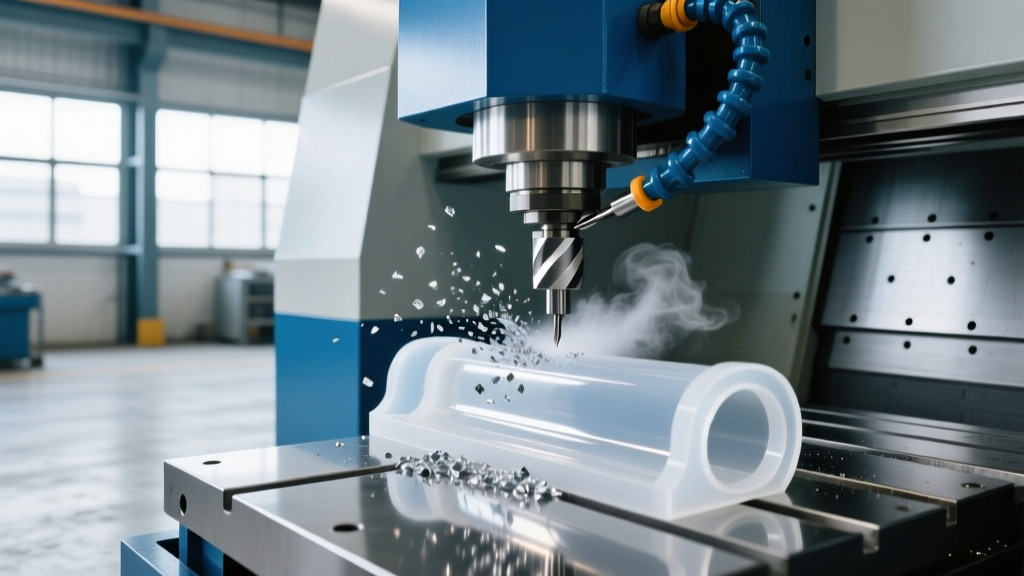
For mission-critical rail transit components, 5083-H116 marine-grade aluminum is the 2026 industry standard. It offers superior corrosion resistance and maintains a yield strength of 31 ksi (214 MPa) without requiring post-weld heat treatment. When CNC milling 5083, shops must adjust their feeds and speeds to account for its higher magnesium content, which can cause built-up edge (BUE) on standard carbide tooling. Using uncoated, high-polish carbide end mills with flood coolant is mandatory to achieve a 32 µin Ra surface finish on the sealing flanges.
5-Axis CNC Milling & Tolerance Stacking on Compound Curves
Modern hi-rail truck cabs feature complex, aerodynamic compound curves. A skylight frame cannot simply be a flat plate; the mating flange must perfectly mirror the 3D contour of the OEM roof. If the flange deviates by more than 0.010 inches, the structural adhesive (typically a polyurethane-based Betalink or Dow Corning 795 equivalent) will experience uneven shear stress, leading to water ingress and eventual cab rot.
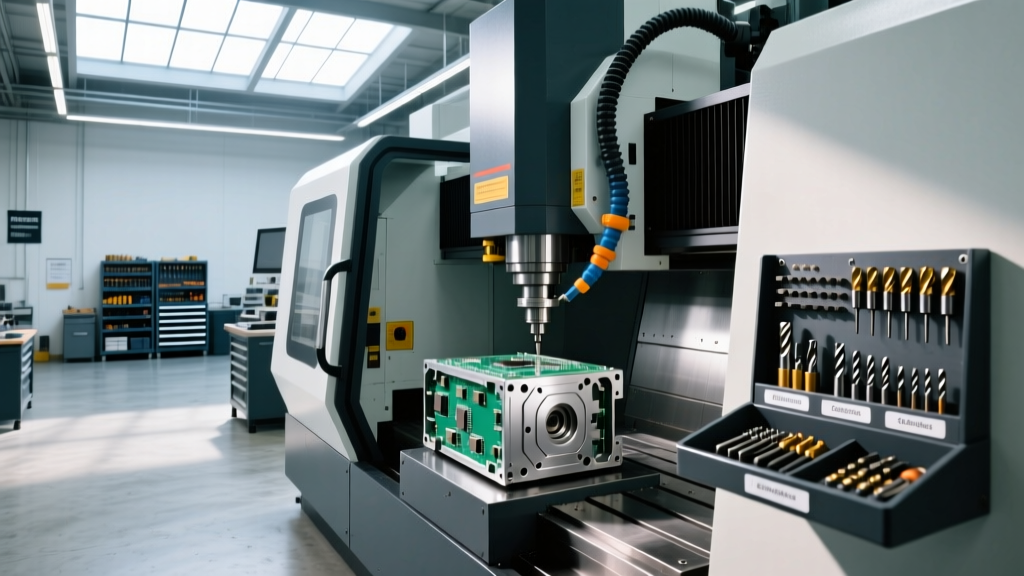
- Machine Requirement: Full 5-axis simultaneous machining (e.g., Mazak Variaxis i-600 or Haas UMC-750SS) to maintain the tool perpendicular to the contoured flange surface.
- In-Machine Probing: Utilizing a Renishaw OMP600 spindle probe to map the raw billet and verify the 3D surface profile before final finishing passes.
- Tolerance Specs: Flange flatness must be held to ±0.002 inches over a 36-inch span. Profile tolerances on the glass retention pockets are strictly ±0.0005 inches to ensure uniform compression of the EPDM rubber gaskets.
As of 2026, the shift toward autonomous track geometry measurement systems (ATGMS) requires larger, more complex roof-mounted sensor arrays. Machine shops are now integrating waveguide channels and LiDAR mounting hardpoints directly into the skylight frame billet, reducing the need for secondary welded brackets that introduce heat-affected zones (HAZ) and structural weak points.
Surface Finishing Protocols for Heavy Transit
Raw machined aluminum will oxidize within weeks in a coastal rail environment. The finishing process is as critical as the machining itself. For hi-rail skylight frames, the specification requires MIL-A-8625 Type III (Hard Anodize) Class 2 (PTFE impregnated).
Hard anodizing builds a ceramic-like aluminum oxide layer typically 0.002 inches thick. Because this process is additive, the CNC machine shop must intentionally undersize the critical glass-retention pockets and fastener bores by exactly 0.002 inches during the final machining pass. Failure to account for the anodize buildup will result in parts that fail go/no-go gauge inspection, requiring expensive and time-consuming mechanical lapping to correct.
2026 Sourcing Benchmarks: Cost and Lead Time Matrix
Procurement officers evaluating contract machinists for low-volume, high-compliance automotive aftermarket rail parts must account for the premium associated with 5-axis contouring and aerospace-grade finishing. Below are the current market benchmarks for a complete hi-rail inspection dome frame (approx. 48" x 36" footprint, milled from 2.5" thick 5083 billet).
| Cost / Time Factor | 2026 Market Benchmark | Variables & Edge Cases |
|---|---|---|
| 5-Axis Setup & Programming | $850 – $1,400 | Includes CAD/CAM surfacing, toolpath simulation, and custom soft-jaw milling. |
| Per-Part Machining Cost | $1,600 – $2,300 | Depends on billet sourcing; 5083 carries a 15-20% premium over 6061. |
| Type III Hard Anodize | $350 – $500 / part | Requires specialized racking to prevent burn marks on thin fin sections. |
| CMM Inspection Report | $250 / setup | Mandatory for FRA compliance documentation; includes full 3D point-cloud mapping. |
| Total Lead Time | 4 – 6 Weeks | Bottleneck is typically the Type III anodizing queue and CMM scheduling. |
Auditing Your Houston Machine Shop
When vetting a shop for this specific application, ISO 9001:2015 certification is the bare minimum. Because these parts interface with both highway and rail safety systems, prioritize shops holding AS9100D (aerospace) or IATF 16949 (automotive) certifications. These standards enforce strict traceability from the original aluminum mill certificate through final anodizing, ensuring that if a skylight frame fails in the field, the exact chemical composition of the billet and the specific CNC tooling used can be audited.
Request a sample First Article Inspection (FAI) report compliant with AS9102. If the shop cannot provide a comprehensive balloon drawing with matched CMM data points for the 3D roof flange, they lack the metrology infrastructure required for compliant hi-rail aftermarket manufacturing.