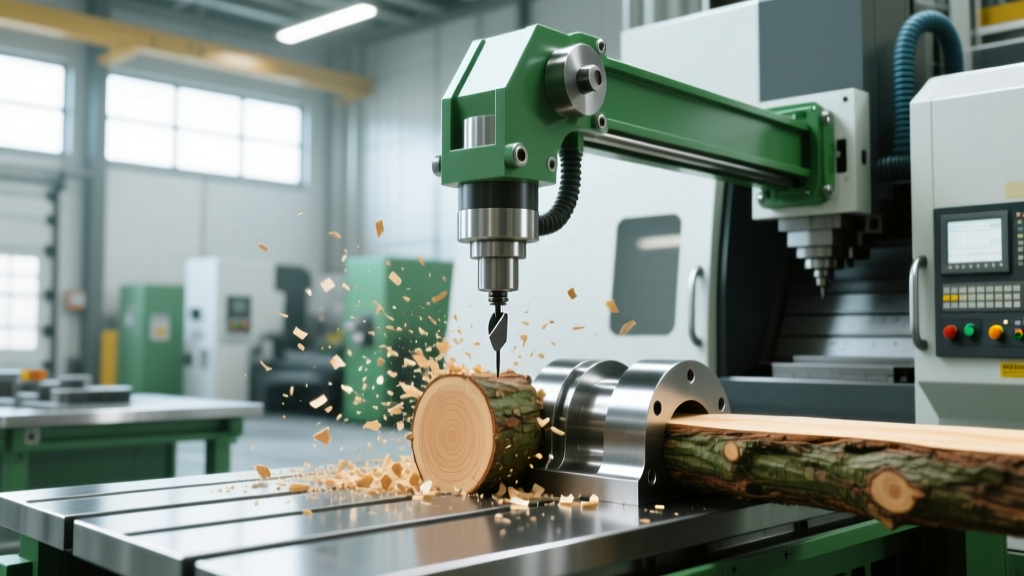
Forestry CNC Machining Green Bay, WI: Finish Troubleshooting
Expert guide to forestry CNC machining in Green Bay, WI. Solve timber tear-out, tool wear, and finish defects with our 2026 troubleshooting framework.
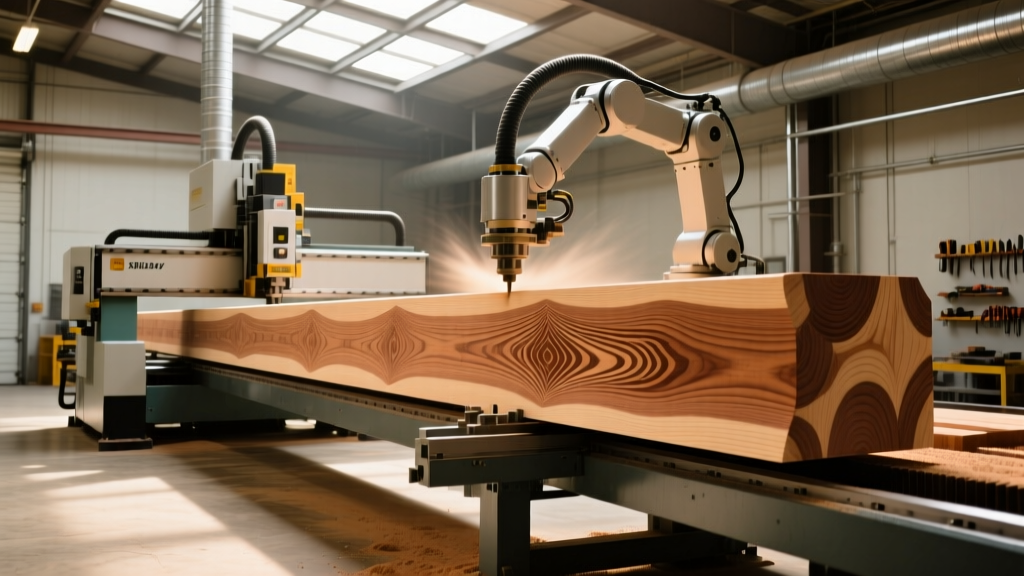
When sourcing precision timber components and heavy-duty architectural woodwork, forestry CNC machining Green Bay, WI has become a cornerstone of the regional manufacturing ecosystem. Nestled near the vast timber resources of the Nicolet National Forest and supported by the Fox Valley's robust industrial supply chain, Green Bay facilities process everything from raw logging equipment parts to massive engineered Laminated Veneer Lumber (LVL) beams. However, machining dense northern hardwoods and resin-heavy softwoods at high speeds introduces severe surface finish challenges. If your facility is struggling with tear-out, burn marks, or premature tool degradation, this 2026 troubleshooting framework will help you optimize your timber milling operations.
The Unique Challenges of Forestry CNC Machining Green Bay, WI
The intersection of traditional forestry and advanced 5-axis CNC routing requires a deep understanding of material science and localized environmental factors. Unlike standard cabinet-grade MDF or plywood, forestry products—such as rough-sawn Northern Red Oak, White Pine, and structural LVL—present wild variations in density, moisture content (MC), and grain direction.
In the Green Bay area, seasonal humidity shifts off Lake Michigan drastically affect timber moisture equilibrium. According to the USDA Forest Products Laboratory, machining wood with an MC above 12% often leads to compressed, fuzzy surface finishes rather than clean sheared fibers. Conversely, over-dried timber (below 6% MC) becomes brittle, leading to catastrophic micro-chipping along the end-grain. Furthermore, modern engineered forestry products like LVL and Cross-Laminated Timber (CLT) utilize phenolic and polyurethane adhesives that are highly abrasive, rapidly destroying standard carbide end mills and demanding specialized tooling strategies.
Common Finish Defects in Heavy Timber & Forestry Components
Achieving a glue-ready or architectural-grade finish directly off the CNC bed is the primary goal for high-volume timber fabricators. Here is how to diagnose and eliminate the most frequent defects encountered in heavy wood machining.
Troubleshooting Tear-Out and Grain Splintering
Tear-out occurs when the cutting tool lifts the wood fibers ahead of the shear plane, leaving a ragged, splintered edge. This is especially prevalent when routing Wisconsin White Oak or machining across alternating grain patterns in CLT panels.
- The Fix: Compression Tooling. Switch from standard up-cut or down-cut spiral bits to specialized compression routers. These bits feature an up-shear geometry at the tip and a down-shear geometry at the base, effectively compressing the top and bottom laminates toward the center of the cut.
- Climb vs. Conventional Milling. Always utilize climb milling (tool rotation matching the feed direction) for the final finishing pass on hardwoods. This ensures the chip thickness starts at its maximum and tapers to zero, shearing the fiber cleanly against the uncut stock rather than lifting it.
- Depth of Cut Adjustments. If tear-out persists on the top surface, ensure your down-shear zone is fully engaged. Adjust your Z-axis depth of cut so the transition point between the up-shear and down-shear flutes sits exactly in the center of the material thickness.
Eliminating Resin Burn and Glaze on Softwoods
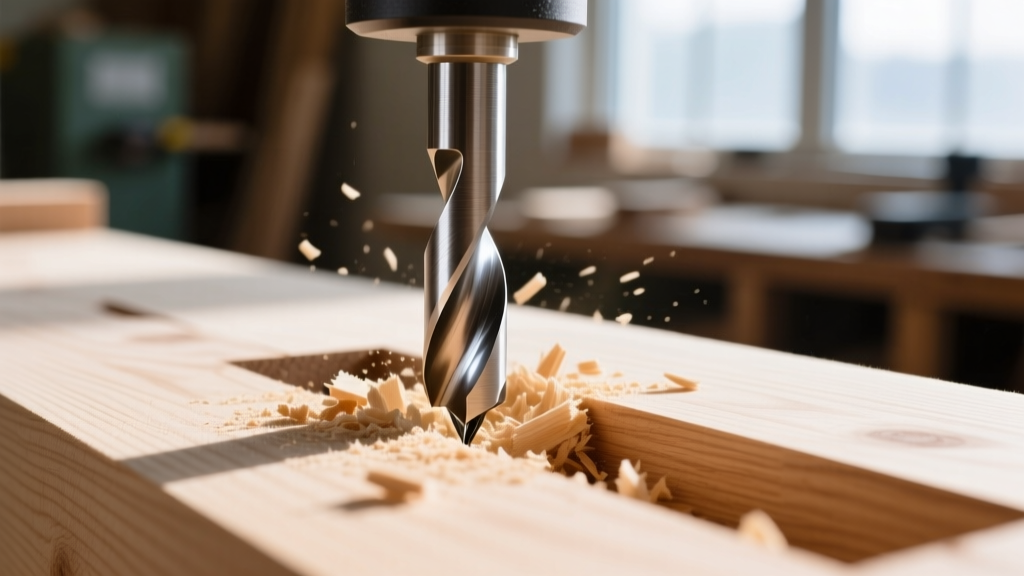
When processing high-resin softwoods like Douglas Fir or Southern Yellow Pine for logging equipment skids and outdoor structural components, friction heat can melt pitch onto the cutting edges. This creates a glazed, burnt finish and rapidly increases spindle load.
- Chip Evacuation is Critical. Burn marks are rarely caused by the spindle speed alone; they are caused by re-cutting chips. Use high-flute-volume tooling and ensure your CNC's dust collection shroud is pulling a minimum of 1,200 CFM directly at the cut zone.
- Anti-Stick Coatings. Specify tools with PTFE (Teflon) or specialized non-stick nano-coatings. These prevent pitch buildup, maintaining the tool's original rake angle and reducing cutting temperatures by up to 30%.
Tooling & Parameters for Forestry CNC Machining Green Bay, WI
To maintain tight tolerances in structural timber framing and forestry equipment components, operators must move beyond generic woodworking parameters. The shift toward Polycrystalline Diamond (PCD) tooling in 2026 has revolutionized how local shops handle abrasive engineered woods. Industry leaders tracking CNC tooling advancements note that PCD bits can outlast solid carbide by 50 to 100 times when milling LVL, provided the chip load is calculated correctly.
A common mistake in heavy timber routing is feeding too slowly. A light feed rate allows the tool to rub rather than cut, generating immense heat. Use the standard chip load formula: Feed Rate (IPM) = RPM × Number of Flutes × Chip Load.
| Material Type | Recommended Tooling | Spindle RPM | Feed Rate (IPM) | Target Chip Load |
|---|---|---|---|---|
| Northern Red Oak (Solid) | Solid Carbide 2-Flute Up-Shear | 12,000 - 14,000 | 300 - 450 | 0.012" - 0.016" |
| Structural LVL Beam | PCD Tipped Compression Bit | 15,000 - 18,000 | 500 - 700 | 0.018" - 0.022" |
| Douglas Fir (High Resin) | Carbide w/ Non-Stick Coating | 10,000 - 12,000 | 250 - 350 | 0.010" - 0.014" |
| Cross-Laminated Timber (CLT) | 3-Flute PCD Compression | 14,000 - 16,000 | 450 - 600 | 0.015" - 0.018" |
Machine Calibration and Workholding for Heavy Logs
Standard vacuum pods are insufficient for the warped, uneven surfaces typical of raw forestry products and heavy timber framing. When performing forestry CNC machining Green Bay, WI facilities are increasingly adopting hybrid workholding systems. Mechanical toggle clamps combined with custom-milled MDF sacrificial spoil boards provide the rigid clamping force necessary to prevent harmonic chatter during deep mortising operations.
Furthermore, harmonic chatter—visible as rhythmic washboard marks on the milled surface—often points to spindle bearing wear or inadequate gantry mass. Heavy timber routing exerts massive lateral forces on the Z-axis. If your finish shows periodic chatter marks spaced exactly 1/8th of an inch apart, inspect your Z-axis ball screws and linear guideways for deflection. Re-calibrating the gantry squareness and pre-loading the linear bearings can instantly restore mirror-like finishes on hardwood panels.

Frequently Asked Questions
What makes forestry CNC machining in Green Bay, WI different from standard woodworking?
Standard woodworking typically deals with flat, kiln-dried, uniform sheet goods. Forestry CNC machining in Green Bay, WI involves processing massive, irregularly shaped solid timbers, high-resin softwoods, and highly abrasive engineered structural beams (LVL/CLT). This requires heavy-duty 5-axis machines with extended Z-axis travel, specialized PCD tooling, and robust mechanical workholding to handle the immense cutting forces and material inconsistencies.
How do I prevent tool wear when milling engineered LVL beams?
LVL beams are bound by phenolic resins that act like sandpaper on standard carbide bits. To prevent rapid flank wear and edge degradation, switch to Polycrystalline Diamond (PCD) tipped compression bits. Additionally, increase your feed rate to ensure you are cutting and evacuating chips rather than rubbing the abrasive resin, and utilize high-pressure air blasts at the cut zone to keep the flutes clear.
Why am I getting fuzzy finishes on my timber components during winter months?
Green Bay's harsh winters cause indoor heating systems to plummet the relative humidity in manufacturing facilities, dropping timber moisture content below 6%. Over-dried wood fibers become brittle and crush under the cutter rather than shearing cleanly. To fix this, introduce localized humidification in the CNC staging area to bring the wood's MC back to the optimal 8-10% range before machining.
Where can I source replacement spindle bearings and tooling locally?
The Fox Valley manufacturing corridor offers excellent industrial support. Local distributors affiliated with major brands like Leitz and Onsrud maintain regional inventories of heavy-duty timber router bits. For spindle rebuilds and bearing replacements, several specialized electromechanical repair shops in the greater Green Bay and Appleton area service high-frequency HSD and Colombo spindles used in 5-axis timber framers.
Optimizing Your Production Line
Achieving flawless surface finishes in heavy timber and forestry products requires a synthesis of material science, precise toolpath programming, and rigorous machine maintenance. By addressing moisture content variations, upgrading to application-specific PCD tooling, and optimizing chip evacuation, shops specializing in forestry CNC machining Green Bay, WI can drastically reduce secondary sanding operations, extend tool life, and deliver superior structural components to the architectural and logging industries.