CNC Machining Railroad Seals in Texas: PTC Enclosures
Master tight-tolerance CNC machining for railroad electronics enclosures. Learn how Texas shops achieve IP69K compliance for PTC seal glands and NEMA 4X.
The Compliance Stakes of Wayside PTC Enclosures
Positive Train Control (PTC) and wayside signaling systems form the critical nervous system of modern Class I railroads. The electronics governing these systems—GPS receivers, radio transceivers, and track-circuit interfaces—must operate flawlessly in punishing environments. In regions like the Texas panhandle and Gulf Coast, enclosures face 130°F internal thermal loads, relentless UV exposure, and high-pressure washdowns. When procurement teams evaluate partners for CNC machining for railroad seals in Texas, the primary differentiator is not just cycle time, but the ability to hold microscopic tolerances on O-ring glands and mating flanges to guarantee NEMA 4X and IP69K compliance.
⚠️ Critical Failure Warning: A deviation of just 0.003" in an O-ring gland depth can cause a silicone gasket to over-compress. In the extreme thermal cycling of a Texas summer, this over-compression accelerates 'compression set,' causing the seal to take a permanent deformation and fail IP69K water ingress testing within six months of deployment.NEMA 250 and IP69K: The Mathematics of Seal Compression
Under the current 2026 NEMA 250 standard for electrical enclosures, a NEMA 4X rating demands resistance to hose-directed water and external ice formation. For railroad applications, engineers frequently push beyond 4X to IP69K, which requires the enclosure to withstand high-pressure (up to 1,450 psi), high-temperature (176°F) steam cleaning. Achieving this requires precise face-seal or radial-seal geometries machined directly into the aluminum or stainless steel enclosure body.
AS568 Gland Design Parameters
The Parker O-Ring Handbook outlines strict gland dimensions for static face seals. For a standard AS568-222 O-ring (1.5" ID, 1/8" cross-section) commonly used in medium-sized PTC junction boxes, the CNC toolpath must account for the following:
- Gland Depth: 0.089" ±0.001" (Targeting 20% compression)
- Gland Width: 0.115" ±0.002" (Allowing for volumetric expansion)
- Surface Finish: 16 to 32 Ra µin on the sealing surface to prevent O-ring abrasion during thermal expansion.
- Corner Radii: Minimum 0.010" at the gland base to prevent stress concentrations and O-ring cutting.
Texas Supply Chain Advantages for Railroad Machining
The geographic concentration of Class I rail hubs (BNSF in Fort Worth, Union Pacific in Houston) has created a localized micro-economy for heavy-duty transit components. Machine shops specializing in railroad seals CNC machining in Texas possess distinct logistical and metallurgical advantages. Proximity to major anodizing and passivation facilities in the Dallas-Fort Worth metroplex allows for rapid turnaround on MIL-A-8625 Type III Hardcoat Anodizing, which is mandatory for aluminum enclosures exposed to track-side abrasion and ballast dust.
"When machining 6061-T6 for NEMA 4X enclosures, you must subtract exactly 0.001" per side from your final toolpath to account for the buildup of Type III hardcoat anodize. If you machine to nominal print dimensions and then anodize, the O-ring gland will be 0.002" too shallow, instantly causing a compression set failure."
— Lead Manufacturing Engineer, DFW Transit Components Division
Step-by-Step: 5-Axis Machining of Sealed Flanges
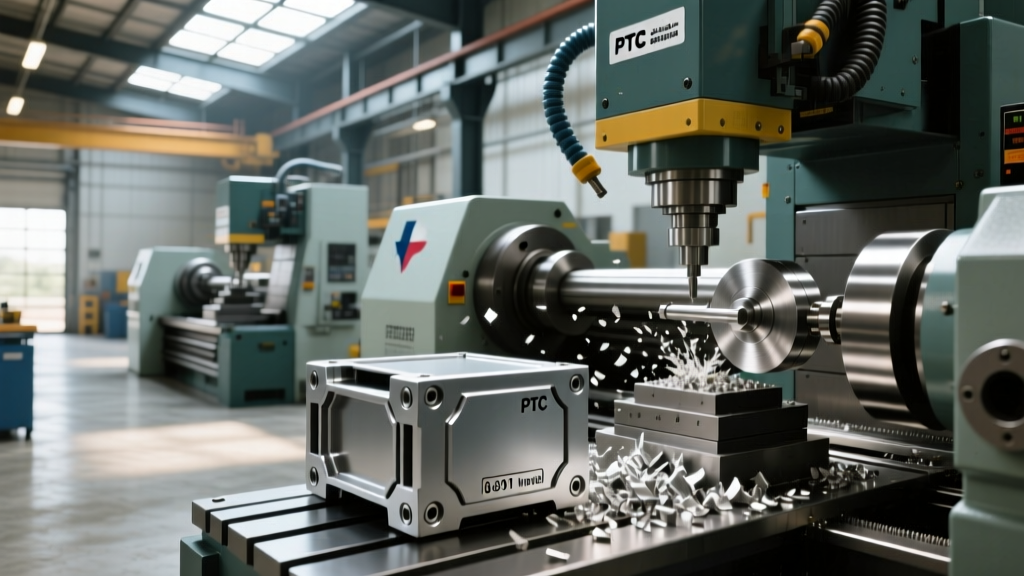
Producing a monolithic PTC enclosure base with integrated seal glands and angled cable glands requires simultaneous 5-axis CNC milling to maintain geometric dimensioning and tolerancing (GD&T) true position callouts. Here is the verified process flow for high-volume production (500+ units/month):
- Op 10 (3-Axis Roughing): Use a Haas VF-4SS with a Sandvik Coromant CoroMill 316 indexable end mill to pocket out the main electronics cavity. Leave 0.020" stock on all walls and the mating flange.
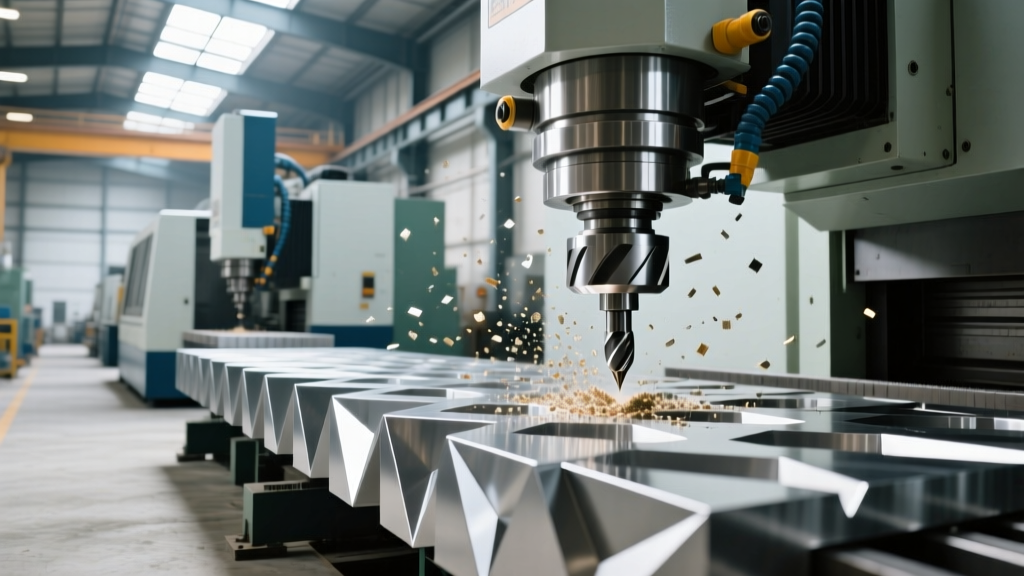
- Op 20 (5-Axis Finishing): Transfer to a DMG MORI UMC-500. Utilize a 1/4" solid carbide ball end mill to finish the 3D contoured O-ring gland. Maintain a constant step-over of 0.002" to achieve the required 32 Ra µin surface finish directly off the machine, eliminating secondary polishing.
- Op 30 (Thread Milling): Machine the M6 stainless steel helicoil inserts for the lid fasteners. Thread milling is mandatory here; tapping creates micro-fractures in the aluminum that propagate under the vibrational load of a passing 15,000-ton freight train.
- Deburring & Edge Breaking: Break all external edges with a 0.030" chamfer to prevent coating buildup and ensure safe handling by track-side technicians.
Material Selection: Thermal Expansion vs. Tolerance Holding
The choice of substrate dictates both the machining strategy and the long-term viability of the environmental seal. Below is a comparison of the three primary alloys used in 2026 for wayside railroad enclosures:
| Material | CTE (µm/m-°C) | Machinability | Best Application | Approx. Unit Cost (Vol) |
|---|---|---|---|---|
| 6061-T6 Aluminum | 23.6 | Excellent | Standard PTC Junction Boxes (Anodized) | $450 - $600 |
| A356-T6 Cast + CNC | 21.4 | Good (Abrasive) | Complex, high-volume geometries with deep pockets | $380 - $520 |
| 316L Stainless Steel | 16.0 | Poor (Work Hardens) | High-corrosion coastal or chemical transit routes | $1,100 - $1,450 |
Managing Galvanic Corrosion in Multi-Material Assemblies
A frequent failure mode in wayside enclosures is galvanic corrosion occurring between the 6061 aluminum enclosure body and the 304/316 stainless steel fasteners used to compress the lid. In high-humidity Texas Gulf environments, this creates aluminum oxide powder that compromises the seal. To mitigate this, CNC machine shops must specify a chromate conversion coating (MIL-DTL-5541 Type II) beneath the primary anodize layer, and assembly protocols must mandate the application of a dielectric anti-seize compound to all fastener threads.
Inspection and First Article Validation
Compliance with Federal Railroad Administration (FRA) safety mandates requires exhaustive documentation of enclosure integrity. Standard go/no-go gauges are insufficient for verifying PTC enclosure seal glands. Shops must utilize a Coordinate Measuring Machine (CMM), such as the Zeiss CONTURA, equipped with a non-contact laser scanner to map the entire O-ring gland perimeter.
💡 Pro-Tip for FAI Documentation: When submitting AS9102 First Article Inspection reports for railroad contractors, include a localized flatness map of the mating flange. A global flatness callout of 0.005" might pass, but a localized dip of 0.002" over a 2-inch span directly over a mounting boss will cause a water leak. Document the localized deviation to prove seal compression uniformity.Common Edge Cases and Troubleshooting
- Symptom: O-ring pinches during lid assembly. Fix: Machine a 15-degree lead-in chamfer at the top of the gland and apply Dow Corning Molykote 111 silicone grease to the O-ring prior to mating.
- Symptom: Enclosure passes static IP69K but fails under track vibration. Fix: The lid fasteners are spacing out due to thermal expansion mismatches. Switch to captive shoulder screws with integrated Belleville (conical) spring washers to maintain constant clamp load during thermal cycling.
- Symptom: Hardcoat anodize flakes off the sealing surface. Fix: The surface finish was too smooth (below 16 Ra). Anodize requires microscopic mechanical interlocking. Adjust the CNC feed rate to leave a 24-32 Ra µin finish specifically on the gland surfaces.
Manufacturing sealed electronics enclosures for the railroad industry leaves zero margin for error. By mastering the intersection of AS568 gland mathematics, 5-axis toolpath generation, and regional supply chain logistics, machine shops can deliver PTC housings that survive the harshest transit environments on earth.