CNC Machining Medical vs. Architectural Facades: Precision Compared
Compare CNC machining medical device manufacturing with architectural facades. Analyze tolerances, 5-axis setups, materials, and cost differences.
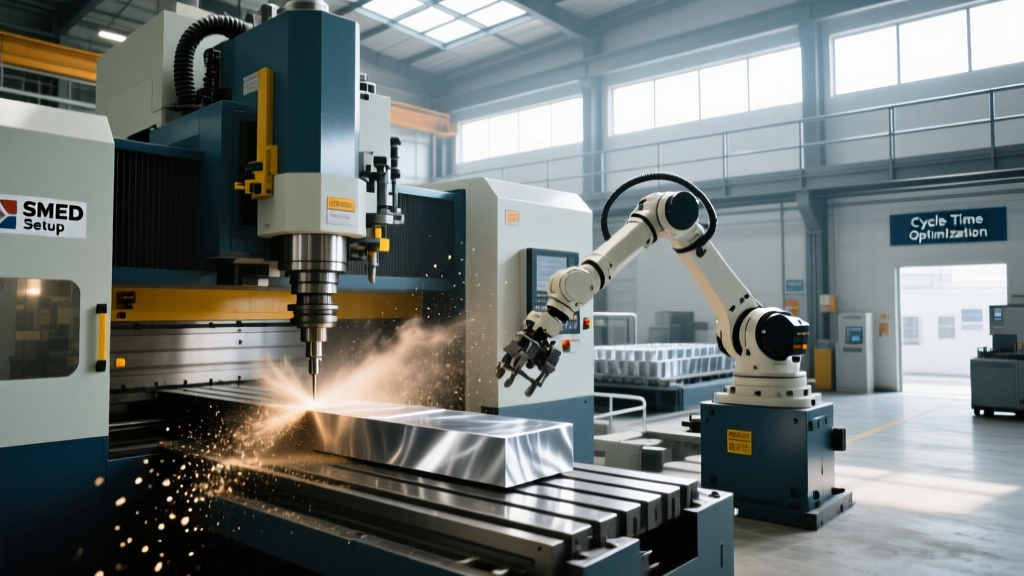
Contract machine shops often face a strategic pivot: specializing in the hyper-regulated realm of cnc machining medical devices, or scaling up for large-format architectural metalwork and facades. While both rely on subtractive manufacturing, the operational realities, capital expenditures, and quality management systems (QMS) diverge drastically. In 2026, as parametric architecture and kinetic building envelopes become mainstream, the line between these two disciplines is occasionally blurred, requiring shop owners to understand the exact mechanical and economic boundaries of each sector.
The Tolerance Divide: Microns vs. Millimeters
When a shop transitions from milling titanium orthopedic implants to routing aluminum facade panels, the most immediate shock is the tolerance stack-up. Medical device manufacturing operates under strict regulatory oversight, requiring adherence to the ISO 13485:2016 standard for medical device manufacturing and tolerances routinely held to ±0.0002 in. (5 µm). Architectural metalwork, governed by guidelines from the American Architectural Manufacturers Association (AAMA), typically permits tolerances of ±0.030 in. (0.75 mm) over a 10-foot span.
Metrology Equipment Mismatch
A medical CNC shop relies on climate-controlled CMMs (Coordinate Measuring Machines) like the Zeiss CONTURA, capable of sub-micron repeatability. An architectural shop measuring a 12-foot curtain wall mullion cannot fit the part on a CMM. Instead, they utilize laser trackers like the FARO Vantage or portable measuring arms, which sacrifice micron-level accuracy for volumetric range. Attempting to use a medical CMM for architectural parts is a capital waste, while using a laser tracker for surgical instruments will result in immediate FDA audit failures.
Material Matrix: Biocompatibility vs. Environmental Resilience
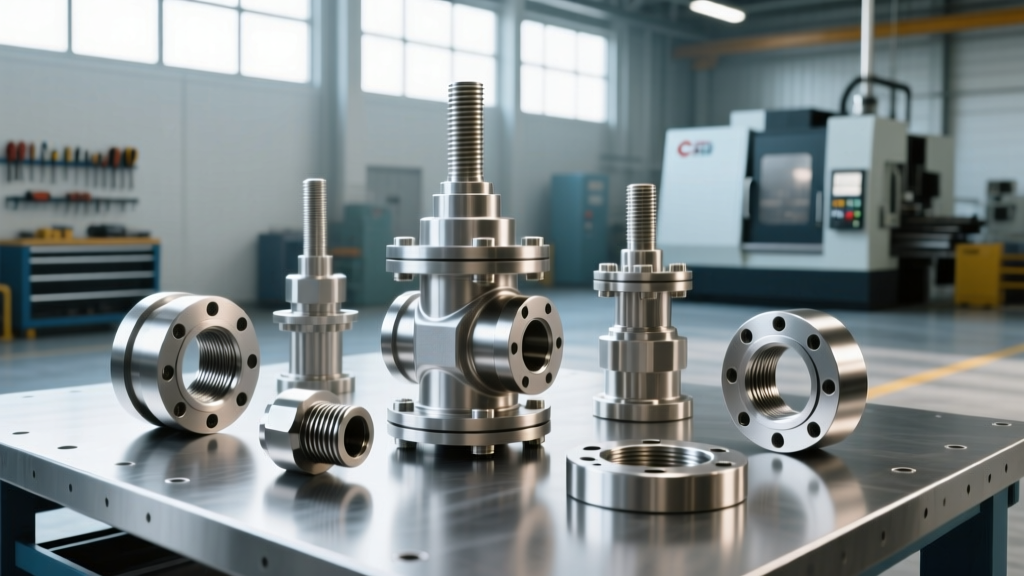
The material science driving these two sectors dictates entirely different tooling strategies. Medical machining prioritizes biocompatibility and fatigue resistance, while architectural machining prioritizes atmospheric corrosion resistance, structural yield strength, and aesthetic finish.
| Parameter | Medical CNC (Implants/Surgical) | Architectural CNC (Facades/Panels) |
|---|---|---|
| Primary Alloys | Ti-6Al-4V ELI, 316L SS, PEEK, CoCr | 6061-T6 Al, 304/316 SS, Corten, Copper |
| Tooling Requirement | PVD-coated micro-grain carbide, high-pressure coolant | Polycrystalline diamond (PCD), compression spirals |
| Machinability Rating | Poor (High tool wear, work hardening) | Excellent to Good (High MRR capability) |
| Raw Material Cost | $40 - $150+ per lb (Certified mill runs) | $3 - $12 per lb (Standard extrusions/plate) |
| Surface Finish Goal | Ra 8 µin or better (Mirror polish for tissue contact) | Ra 32-64 µin (Prep for anodizing or fluorocarbon paint) |
Machine Tool Architecture: Trunnion vs. Gantry
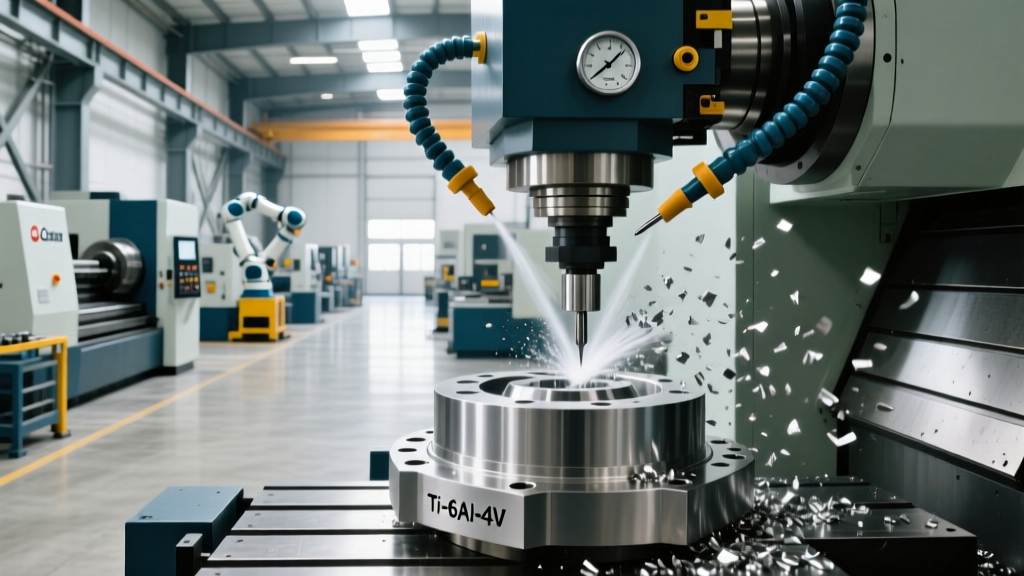
The physical footprint and kinematics of the machine tools represent the largest capital divergence. Medical CNC machining heavily utilizes compact, high-rigidity 5-axis trunnion table machines or mill-turn centers. Models like the DMG MORI NTX 1000 or Haas UMC-750SS dominate this space. These machines feature 12,000 to 20,000 RPM spindles, 1,000 PSI through-spindle coolant to break chips in deep cavity milling, and enclosed work envelopes designed to contain hazardous fine particulates.
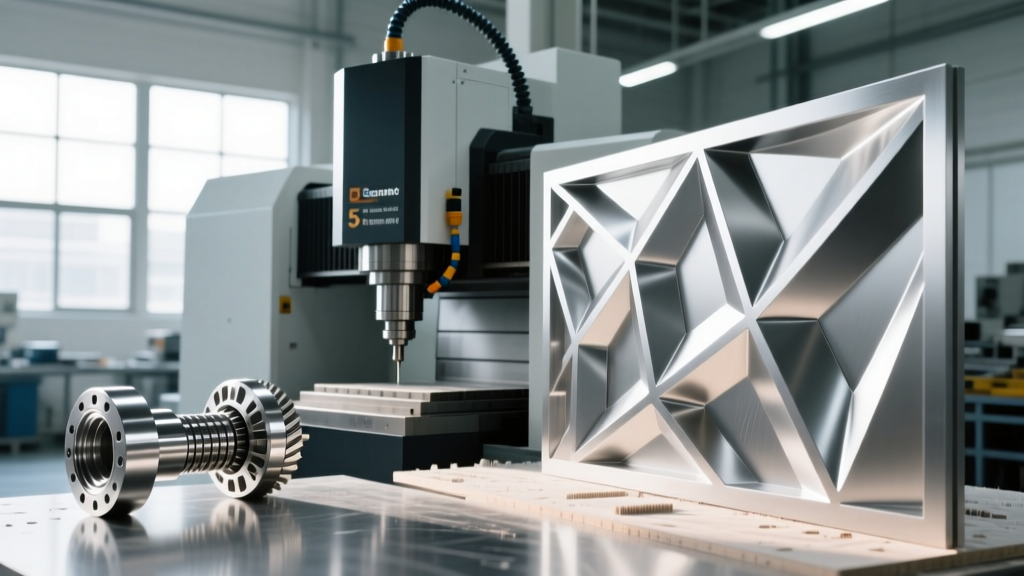
Conversely, architectural facade machining requires massive work volumes. A standard architectural panel might measure 4 feet by 12 feet. Shops utilize 5-axis gantry routers from manufacturers like Onsrud or Biesse. These machines feature a moving bridge over a stationary table equipped with a 24-inch by 48-inch vacuum pod hold-down system. While the spindles (often HSK-F63) can reach 18,000 RPM, they lack the low-end torque and extreme rigidity of a medical trunnion mill. The Z-axis travel on a gantry router is typically 12 to 24 inches, optimized for clearing tall architectural extrusions, whereas a medical 5-axis mill prioritizes complex rotational clearance over Z-height.
The Crossover: Kinetic Facades and Parametric Joints
Where do these two worlds collide? In modern parametric architecture, specifically kinetic facades and dynamic shading systems. When an architectural envelope features moving louvers driven by linear actuators, the pivot joints and bearing housings must be machined to medical-grade tolerances to prevent binding under severe wind loads and thermal expansion.
Decision Framework: Applying Medical Protocols to Facades
Shop managers should apply cnc machining medical-grade QMS and tight-tolerance milling to architectural projects only when specific mechanical criteria are met:
- Kinematic Joints: Moving shading louvers with integrated bronze bushings require ±0.001 in. clearance fits (H7/g6 standard) to ensure smooth actuation without excessive play.
- Thermal Break Assemblies: Interlocking polyamide and aluminum thermal barriers in high-performance curtain walls require exact profile tolerances to maintain structural integrity during extreme temperature differentials.
- Seismic Slip Joints: Facade connections designed to absorb seismic shear must be milled with exact slot widths to ensure predictable deflection limits, referencing ASTM International material standards for structural steel and aluminum.
Cost Analysis and QMS Overhead
The economics of running these two types of shops are fundamentally incompatible without distinct business units. A medical CNC machine shop in 2026 charges between $140 and $220 per spindle hour. This premium covers the immense overhead of ISO 13485 compliance, lot traceability, first-article inspection (FAI) documentation, and the slow material removal rates (MRR) of titanium and cobalt-chrome.
Architectural metalwork shops operate on volume and speed, charging $85 to $120 per spindle hour. The profit margin relies on high MRR, nesting multiple facade panels on a single vacuum table, and utilizing automated tool changers with 30+ stations to run untended overnight shifts. Applying medical-level documentation and inspection to a standard architectural curtain wall mullion will instantly destroy the project's profitability, adding 30% to 40% in unbillable quality assurance labor.
Post-Processing Alternatives
Post-processing represents the final major divergence. Medical parts require passivation (nitric or citric acid baths for stainless steel), electropolishing, or specialized PVD coatings to ensure biocompatibility and sterilization resistance. Architectural parts require entirely different surface treatments: chromic or sulfuric acid anodizing (Class I or II), PVDF (Kynar) fluorocarbon paint prep, or media blasting to achieve uniform aesthetic light diffusion. A shop attempting to service both markets must maintain physically segregated finishing areas to prevent cross-contamination of chemical baths, particularly ensuring that architectural aluminum dust never enters a medical passivation line.