Sourcing CNC Machining Precision Parts for Oil & Gas Valves
Sourcing CNC machining precision parts for oil and gas? Learn API 6A tolerances, NACE material specs, and how to select the right machine shop.
The Extreme Demands of Oil & Gas Component Manufacturing
Downhole and surface equipment in the oil and gas sector operates under punishing conditions: extreme pressures exceeding 15,000 psi, highly corrosive hydrogen sulfide (H2S) environments, and abrasive drilling muds. When procuring CNC machining precision parts for wellheads, Christmas trees, and blowout preventers (BOPs), standard commercial tolerances are insufficient. A single microscopic flaw in a valve body sealing surface can lead to catastrophic blowouts, environmental disasters, and severe regulatory penalties from agencies like the Bureau of Safety and Environmental Enforcement (BSEE).
For procurement engineers and supply chain managers, selecting the right manufacturing partner requires looking beyond basic ISO 9001 certifications. You must verify a shop's ability to machine exotic superalloys, maintain thermal stability during 40-hour continuous cuts, and strictly adhere to American Petroleum Institute (API) specifications.
⚠️ Critical Compliance Warning: Sour Gas EnvironmentsFor applications involving sour gas (H2S), all CNC machined precision parts must strictly comply with NACE MR0175/ISO 15156 standards, now managed by the Association for Materials Protection and Performance (AMPP). Standard 316L stainless steel will suffer sulfide stress cracking (SSC) and fail. Always specify exact heat treatment protocols, maximum hardness limits (e.g., max 22 HRC for carbon steels), and require certified material test reports (CMTRs) for every production run.
Material Selection Matrix for Downhole and Surface Equipment
The choice of material dictates both the component's lifespan and the machining cost. Exotic alloys offer superior corrosion resistance and tensile strength but dramatically increase tool wear and cycle times. Below is a decision matrix for common oilfield alloys.
| Material Grade | Typical Application | Hardness / Yield | Machining Cost Multiplier |
|---|---|---|---|
| Inconel 718 | Downhole safety valves, BOP rams | 35-45 HRC / 160 ksi | 3.5x - 4.5x (vs 304 SS) |
| Super Duplex 2507 | Subsea manifolds, choke valves | 28-32 HRC / 80 ksi | 2.0x - 2.5x |
| AISI 4140 (Q&T) | Wellhead flanges, tool joints | 28-32 HRC / 100 ksi | 1.2x - 1.5x |
| Titanium Grade 5 | Offshore riser tensioners, fasteners | 33-36 HRC / 120 ksi | 3.0x - 3.8x |
Evaluating Machine Shop Capabilities: The Hardware Checklist
When auditing a potential supplier for CNC machining precision parts, inspect their shop floor for equipment specifically designed to handle high-torque, high-rigidity cuts. Standard 3-axis vertical machining centers (VMCs) lack the structural damping required for heavy Inconel milling.
5-Axis Mills for Complex Valve Bodies
Complex valve bodies with intersecting flow paths require simultaneous 5-axis machining to maintain continuous tool engagement and avoid secondary setups. Look for shops utilizing heavy-duty 5-axis platforms like the Okuma MU-8000V or Mazak Variaxis i-800. These machines feature cast-iron beds with high mass-to-damping ratios, which absorb the harmonic vibrations generated when roughing out deep cavities in hardened superalloys. Furthermore, verify that the machines are equipped with Thermal Growth Compensation software; a 40-hour roughing cycle on a large valve body will generate massive ambient heat, and without real-time spindle and ball-screw thermal compensation, your final bore concentricity will drift out of API tolerance.
Multi-Tasking Lathes for High-Volume Fittings
For high-pressure fittings, swivels, and mandrels, multi-tasking CNC lathes with live tooling and Y-axis capabilities (such as the Doosan Puma 2600SY or Mazak INTEGREX i-400) are mandatory. These machines allow for complete "done-in-one" machining, including off-center cross-drilling for hydraulic actuation ports, eliminating the accumulated tolerance stack-up that occurs when moving a part from a lathe to a mill.
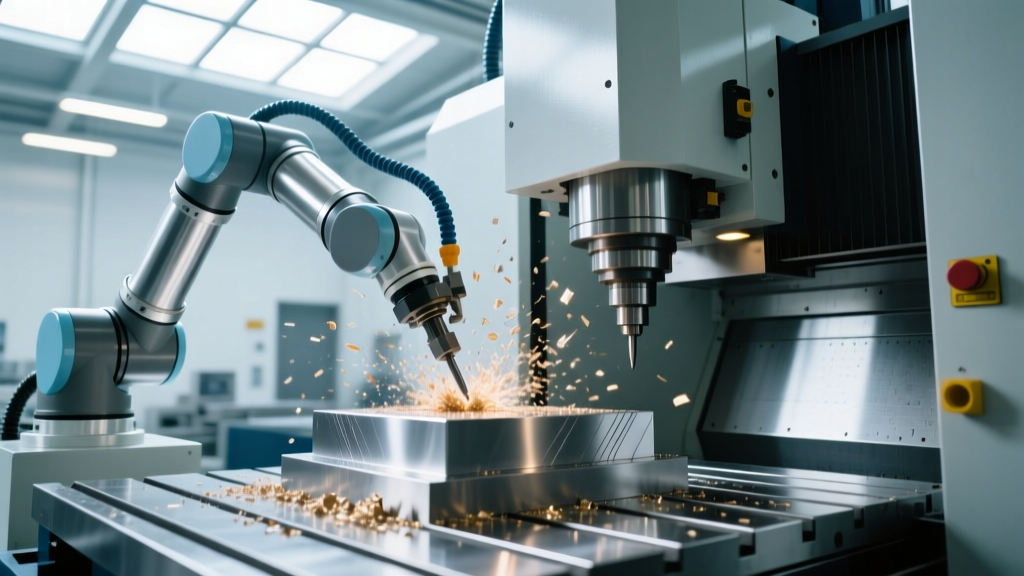
💡 Tooling & Coolant Insight:Machining Inconel 718 requires high-pressure through-spindle coolant (TSC) systems capable of delivering at least 1,000 psi. Standard 300 psi flood coolant will fail to penetrate the cutting zone, leading to rapid work-hardening of the chip and catastrophic insert failure. Ensure the shop uses specialized PVD-coated carbide or ceramic whisker inserts designed specifically for nickel-based superalloys.
Tolerancing and Surface Finish Standards (API 6A & API 16A)
The most critical interfaces on oil and gas valves are the ring grooves (RX and BX types) that mate with metallic ring gaskets. According to API 6A specifications, the sealing faces of BX grooves demand extreme precision.
- Surface Finish: The 23-degree angular sealing faces must achieve a surface roughness of Ra 0.4 µm (16 µin) or better. Any tool marks or chatter will compromise the metal-to-metal seal under 10,000+ psi.
- Dimensional Tolerances: Groove width and depth tolerances are typically held to ±0.002 inches (0.05 mm), while the angular tolerance on the sealing face is restricted to ±0.5 degrees.
- Concentricity: The ring groove must be concentric to the centerline of the bore within 0.005 inches to ensure even gasket compression during flange make-up.
2026 Cost Drivers and Quoting Realities
Procurement teams must understand the economics of oilfield machining to evaluate quotes accurately. In 2026, the raw material cost for certified Inconel 718 bar stock hovers between $45 and $65 per pound. However, material is only a fraction of the total cost.
A typical 12-inch Inconel valve body requires a 14" x 14" x 10" forged block. The roughing cycle alone can take 25 hours, consuming upwards of $600 in specialized cutting tools due to the abrasive nature of the carbide precipitates in the alloy. Expect 5-axis machine rates for oil & gas certified shops to range from $160 to $240 per hour. Consequently, a fully machined, NACE-compliant Inconel valve body in low volumes (1-5 units) will realistically cost between $4,500 and $8,500 per part. If a vendor quotes significantly below this threshold, they are likely using substandard tooling, skipping intermediate stress-relief heat treatments, or lacking the necessary CMM (Coordinate Measuring Machine) verification.
"In the oil and gas sector, the cheapest machined part is often the most expensive. A $2,000 savings on a BOP ram block is instantly erased if the part fails NACE hardness testing or requires a secondary manual polishing operation to meet API ring groove finish requirements."
Vendor Audit Checklist for Oilfield Procurement
Before issuing a purchase order for critical CNC machining precision parts, verify the following operational benchmarks at the machine shop:
- API Q1 Certification: ISO 9001 is a baseline, but API Q1 is specifically designed for the petroleum industry's quality management systems, including strict traceability and non-conformance reporting.
- On-Metallurgy Capabilities: The shop must have in-house PMI (Positive Material Identification) XRF analyzers to verify alloy chemistry upon material receipt and before final shipment.
- Advanced Metrology: Verify the presence of multi-axis CMMs (like Zeiss CONTURA or Hexagon Global) equipped with scanning probes, not just touch-trigger probes, to accurately map the complex contours of API ring grooves.
- Heat Treatment Partnerships: If they outsource heat treating, ensure they use NADCAP-accredited facilities and require full thermocouple chart recordings for every batch to prove exact time-temperature curves were met.
Frequently Asked Questions
Can standard 304 or 316 stainless steel be used for downhole valves?
No. Standard austenitic stainless steels are highly susceptible to chloride stress corrosion cracking and sulfide stress cracking in sour gas environments. You must specify NACE-compliant materials like Super Duplex 2507 or nickel-based superalloys (Inconel 718/625) for downhole and subsea applications.
Why do machine shops charge a premium for API 6A parts compared to standard industrial valves?
API 6A parts require rigorous documentation (CMTRs, dimensional inspection reports, heat treat charts), specialized high-pressure coolant machinery, and significantly longer cycle times to achieve the Ra 0.4 µm surface finishes required on metal-to-metal sealing surfaces. The overhead of quality assurance and traceability alone adds 20-30% to the base machining cost.
What is the lead time for custom CNC machined Inconel wellhead components?
As of 2026, lead times for certified Inconel forgings and bar stock range from 8 to 14 weeks due to global supply chain constraints on nickel and cobalt. Add 3 to 5 weeks for complex 5-axis machining, NDT (Non-Destructive Testing), and API documentation, bringing total procurement lead times to 12 to 20 weeks for new part numbers.