Aerospace vs. Oil and Gas CNC Machining Services Maintenance Schedules
Compare maintenance schedules for aerospace CNC precision machining and oil and gas CNC machining services. Master spindle, coolant, and way care.
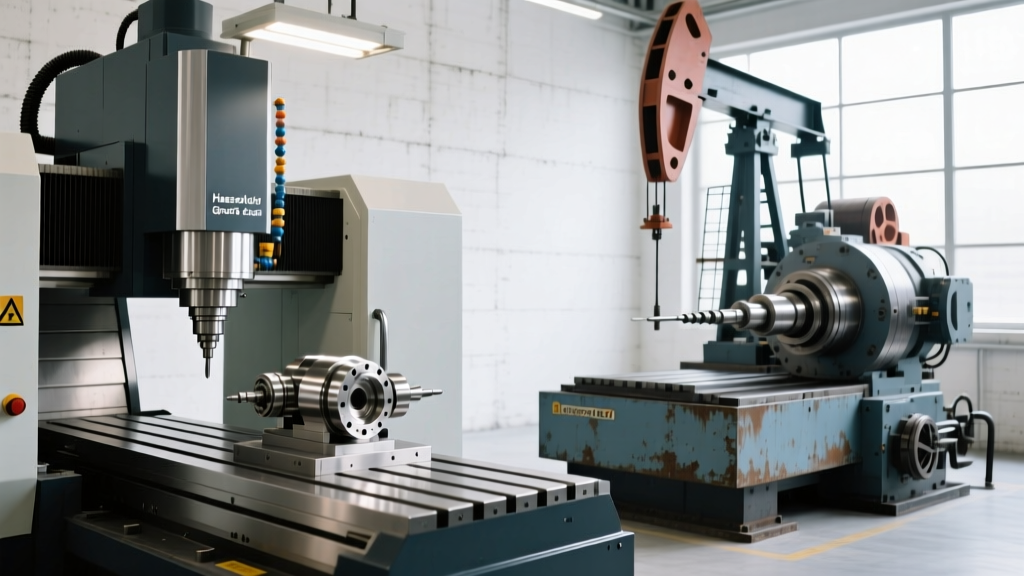
When evaluating the operational overlap between high-tier manufacturing sectors, the dichotomy between CNC precision machining for aerospace components and heavy-duty oil and gas CNC machining services reveals fundamentally different mechanical stressors. Aerospace machining demands extreme high-RPM spindle speeds, tight thermal stability, and micron-level geometric accuracy. Conversely, oil and gas machining subjects equipment to massive low-frequency torque, severe interrupted cuts, and highly abrasive exotic alloys like Super Duplex stainless steels.
Despite these divergent physical demands, the maintenance architectures required to support both sectors share a critical DNA: zero-tolerance for unplanned downtime. By cross-pollinating the maintenance schedules of these two extremes, shop managers can build a hybrid predictive framework that maximizes machine lifespan and protects high-value workpieces.
The Core Divergence: Tolerance vs. Torque
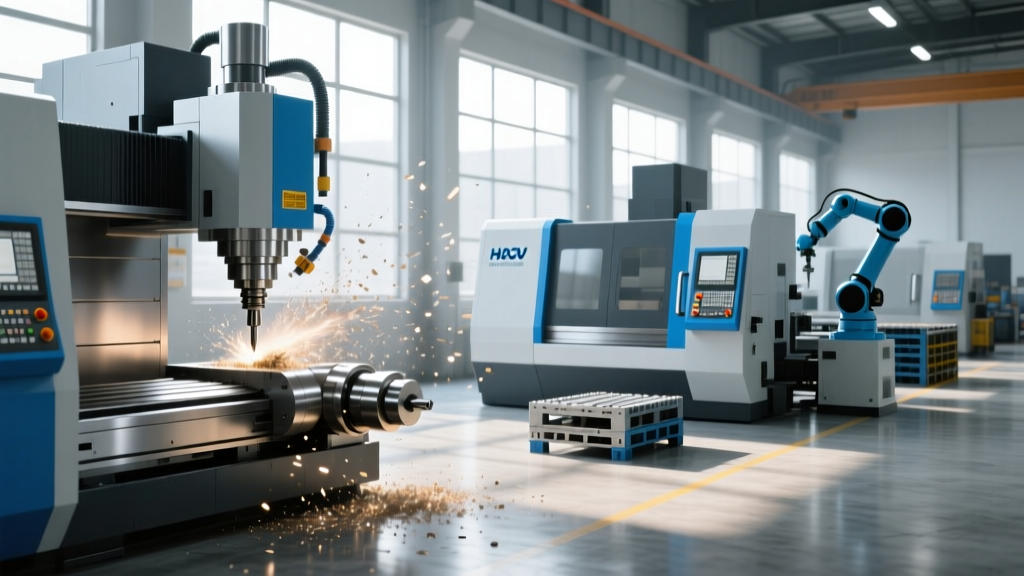
The primary driver of CNC wear in aerospace manufacturing is thermal growth and high-frequency vibration. Machines like the Mazak VARIAXIS i-800, frequently used for titanium structural components, operate at 12,000 to 20,000 RPM. At these speeds, spindle bearing degradation and thermal expansion of the ball screws are the primary failure modes. Maintenance must focus on high-frequency vibration analysis and strict ambient temperature control.
In contrast, oil and gas CNC machining services utilize heavy-duty turn-mill centers like the Okuma MacTurn 550 to process API flanges and wellhead components. These operations involve low RPMs (often under 1,500 RPM) but require immense torque. The mechanical stressor here is shock loading and way-cover abrasion from the heavy, stringy, and often abrasive swarf generated by hardened steels and scale-covered forgings.
Spindle Health & Vibration Analysis Schedules
Spindle rebuilds for high-performance 5-axis machines routinely cost between $25,000 and $42,000, making spindle health the most critical vector in any service schedule. The monitoring frequency and acceptable thresholds vary wildly between the two sectors.
| Maintenance Vector | Aerospace Precision (e.g., Blisks, Ribs) | Oil & Gas Services (e.g., API Flanges, Valves) |
|---|---|---|
| Spindle Runout Limit | < 2.0 µm (Critical for surface finish on airfoils) | < 5.0 µm (Acceptable for heavy roughing) |
| Vibration Analysis | Weekly (High-RPM / High-Frequency focus) | Monthly (High-Torque / Low-Frequency focus) |
| Drawbar Retention Force | Checked quarterly (Target: > 18 kN) | Checked bi-annually (Target: > 25 kN for heavy holders) |
| Air Purge System Check | Daily (Prevents fine titanium dust ingress) | Weekly (Prevents heavy coolant mist ingress) |
"According to guidelines published by the Society of Manufacturing Engineers (SME), transitioning from time-based preventative maintenance to condition-based predictive maintenance can reduce unplanned CNC downtime by up to 45%, a metric that directly impacts the tight delivery windows inherent in energy sector supply chains."
Coolant Management & Way Cover Preservation
Coolant degradation and way-cover failure represent the highest volume of recurring maintenance tickets in both sectors, but the root causes are entirely different.
Aerospace: Fine Dust and Biological Control
When machining titanium (Ti-6Al-4V) or aluminum-lithium alloys for aerospace components, the swarf is often fine and highly reactive. This fine particulate bypasses standard 50-micron coolant filters, accumulating in the machine sump and acting as a lapping compound on way covers. Furthermore, aerospace shops running low-volume, high-mix production often experience coolant stagnation, leading to biological growth.
- Concentration & pH: Maintain strictly at 8.5% - 10% concentration with a pH of 9.0 - 9.4. Use a refractometer daily; never rely on visual estimates.
- Filtration: Upgrade to 20-micron drum filters or centrifugal separators to capture fine titanium dust.
- Tramp Oil Skimming: Continuous belt skimming required to prevent anaerobic bacteria proliferation.
Oil & Gas: Abrasive Scale and Heavy Sulfur
Oil and gas CNC machining services frequently process forgings with heavy mill scale, or materials like 13Cr and Super 13Cr stainless steel. The swarf is sharp, heavy, and abrasive. It physically tears standard polyurethane way wipers and jams telescopic steel covers. Additionally, sulfur-based extreme pressure (EP) additives in the coolant can degrade machine seals over time.
- Way Wiper Replacement: Replace standard wipers with heavy-duty, multi-lip cast iron or brass wipers every 6 months (compared to 18 months in aerospace).
- Way Lube Verification: Check way lube flow meters weekly. The heavy cutting forces in O&G machining will starve way bearings of lubrication if the metering valves become clogged with coarse swarf.
Metrology and Calibration Schedules
Geometric accuracy is non-negotiable in aerospace, but positional repeatability is the true king in oil and gas. According to the NIST Manufacturing Extension Partnership (MEP), maintaining traceable calibration schedules is essential for shops holding AS9100 or API Q1 certifications.
Aerospace Calibration
Tool: Renishaw OMP40-2 Optical Probe
Schedule: Ballbar testing (ISO 230-4) every 90 days. Volumetric compensation mapping annually. Thermal growth checks every shift change.
Oil & Gas Calibration
Tool: Heidenhain TS 460 Touch Probe
Schedule: Ballbar testing every 180 days. Axis squareness and backlash checks bi-annually. Focus heavily on Z-axis sag compensation for heavy part setups.
Implementing a Hybrid Predictive Maintenance Framework
For machine shops running mixed fleets that service both aerospace and energy contracts, implementing a unified, condition-based maintenance protocol is essential. Follow this 4-phase calibration protocol to align your service schedules with industry best practices.
- Phase 1: Baseline Telemetry (Week 1)
Install wireless vibration and temperature sensors on the spindle housings and axis motors of all primary 5-axis and turn-mill machines. Record 72 hours of baseline data during typical roughing and finishing cycles to establish normal operating thresholds. - Phase 2: Threshold Programming (Week 2)
Program the machine PLCs to trigger automated alerts when vibration exceeds 2.5 mm/s RMS (ISO 10816 standards) for aerospace spindles, or when spindle motor current spikes by 15% above baseline during O&G interrupted cuts, indicating tool wear or bearing friction. - Phase 3: Fluid & Filtration Overhaul (Week 3)
Standardize coolant across the shop to a premium semi-synthetic fluid capable of handling both titanium and hardened steels (e.g., TRIM MicroSol 685XT). Install automatic proportioners tied to real-time refractometers to eliminate manual mixing errors. - Phase 4: The 'Pit Crew' Weekend Protocol (Ongoing)
Consolidate all non-critical maintenance (way cover inspections, chip conveyor chain tensioning, coolant skimming) into a strict 4-hour Saturday morning window. Assign dedicated technicians with standardized checklists to prevent Monday morning startup failures.
By treating maintenance not as a secondary chore, but as a primary manufacturing process, shops can seamlessly bridge the gap between the microscopic tolerances required for aerospace components and the brute-force reliability demanded by oil and gas CNC machining services. The result is a predictable, highly profitable production environment where machine capability is never left to chance.