2026 Equipment Guide for High-Volume CNC Machining in China
Discover equipment selection strategies for high-volume CNC machining in China. Compare HMCs, 5-axis mills, automation, and tooling for 2026 production.
The Reality of High-Volume Production Scaling
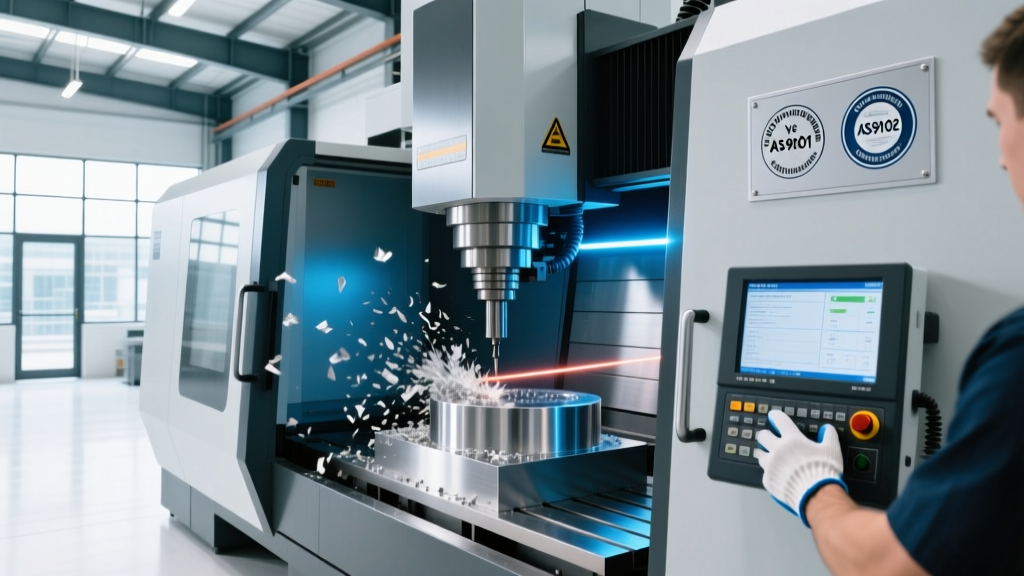
Scaling high-volume production runs requires a fundamental shift from standalone machine procurement to systematic manufacturing cell design. When evaluating equipment for high-volume CNC machining in China, facility managers must navigate a market that has rapidly transitioned from labor-intensive manual loading to fully integrated, lights-out Flexible Manufacturing Systems (FMS). As of 2026, the competitive advantage in Asian manufacturing hubs no longer stems from low-cost manual operation, but from the strategic deployment of high-speed kinematics, automated pallet pools, and intelligent tool life management.
This equipment buying guide dissects the exact machine architectures, automation layers, and workholding standards required to sustain 72-hour unattended production cycles while maintaining sub-10-micron tolerances across tens of thousands of parts.
Market Shift Data Point: According to the Association for Manufacturing Technology (AMT), global adoption of integrated pallet-pool systems in high-volume machining cells grew by 34% between 2024 and 2026, driven primarily by EV component and aerospace tier-2 suppliers demanding uninterrupted weekend production.Machine Architecture: High-Speed VMCs vs. Horizontal Machining Centers
Selecting the primary cutting engine dictates your entire cell layout. For high-volume prismatic parts (e.g., EV battery housings, telecom heat sinks, hydraulic manifolds), the choice narrows to ultra-fast BT30 vertical machining centers (VMCs) or rigid BT40 horizontal machining centers (HMCs).
Category 1: Ultra-Fast BT30 VMCs (The Aluminum Specialists)
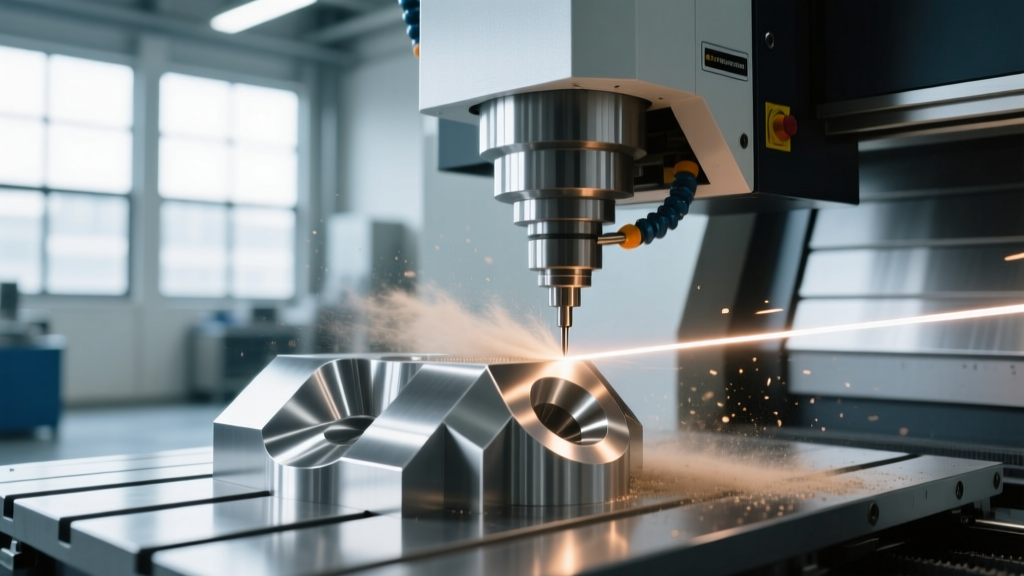
For high-volume aluminum milling where cycle time is the primary cost driver, the Brother Speedio S1000X2 remains the industry benchmark. Its 10,000 RPM spindle and synchronous tap/spindle reversal capabilities yield chip-to-chip times of just 1.2 seconds. In high-volume telecom enclosure production, a cell of four Speedios will routinely out-produce two larger BT40 VMCs due to the drastic reduction in non-cutting time.
- Best For: Aluminum 6061/7075, brass, and engineering plastics.
- Limitation: Lacks the mass and damping required for heavy interrupted cuts in steel or titanium.
- Estimated 2026 Price: $185,000 - $210,000 (base configuration).
Category 2: Production BT40 HMCs (The Workhorses)
When machining cast iron, stainless steel, or parts requiring deep cavity access, horizontal spindle orientation is mandatory for natural chip evacuation. The Makino a61nx features a 14,000 RPM spindle and highly rigid linear guideways. Its 2.8-second tool change and 5G axis acceleration allow it to maintain aggressive feed rates without sacrificing surface finish on steel components.
- Best For: Steel, cast iron, and complex multi-sided prismatic parts.
- Limitation: Higher initial capital expenditure and larger footprint.
- Estimated 2026 Price: $340,000 - $380,000.
Automation Integration: Moving Beyond the Robot Arm
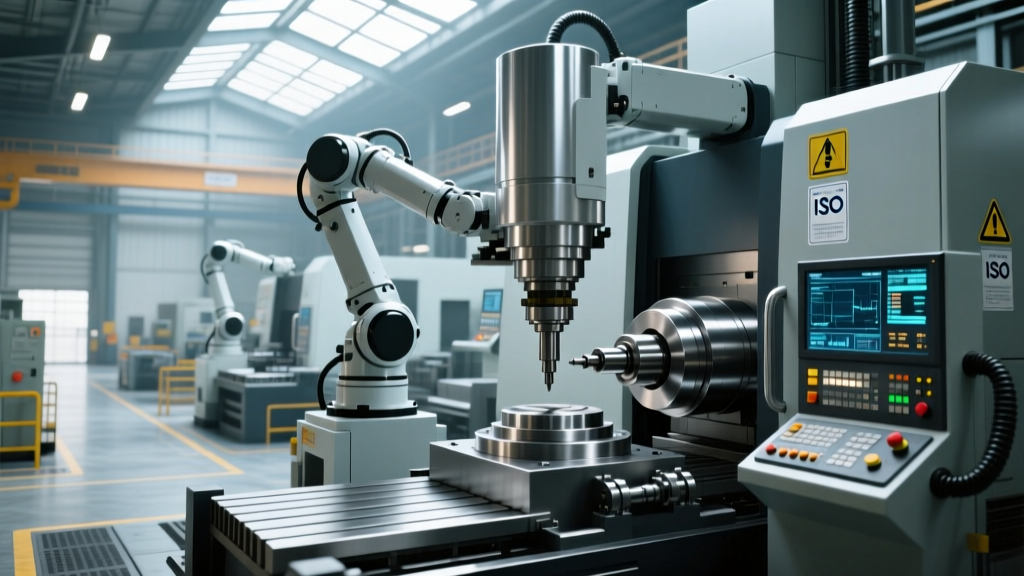
Standalone articulated robots (e.g., FANUC M-20) are increasingly viewed as insufficient for true high-volume, high-mix environments due to the time lost in gripper changeovers and lack of integrated workholding. The 2026 standard for high-volume CNC machining in China relies on standardized pallet pools and zero-point clamping.
| Automation Type | Best Application | Avg. Pallet Swap Time | Capital Cost (per machine) |
|---|---|---|---|
| Articulated Robot (Gantry/Floor) | High-volume, single-part family (e.g., shafts) | 15 - 25 seconds | $80,000 - $120,000 |
| Integrated 2-Pallet APC | Medium volume, dedicated long-cycle parts | 8 - 12 seconds | $45,000 - $60,000 |
| Linear FMS Pallet Pool (e.g., Fastems) | High-mix, high-volume unattended shifts | 10 - 15 seconds | $250,000+ |
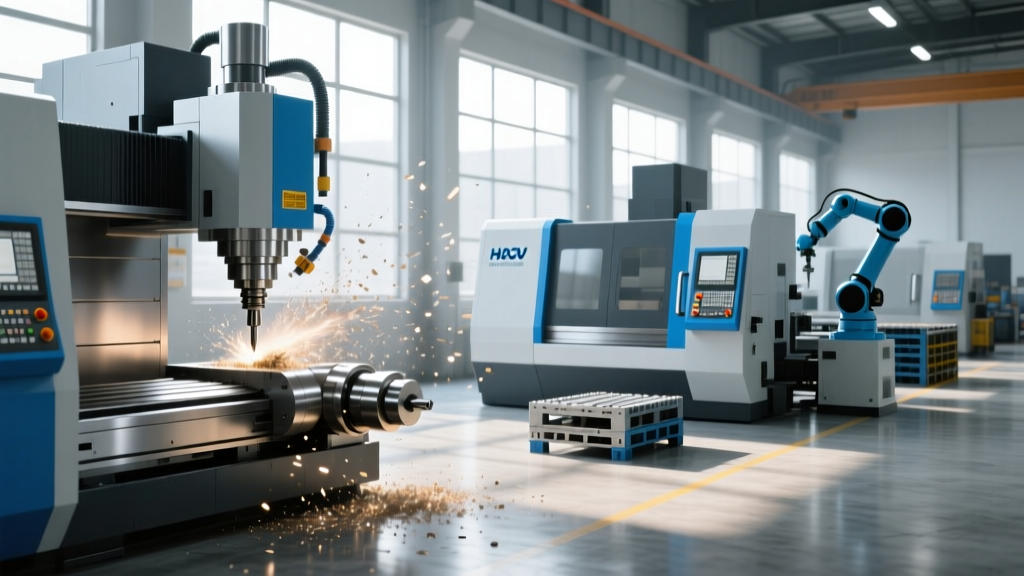
For facilities targeting 72-hour unattended weekend runs, integrating a Fastems MSL (Multi-Level System) with standardized Schunk Vero-S zero-point clamping plates allows the FMS software to dynamically route different raw materials and fixture plates to the same Makino or Mazak HMC without manual intervention.
Tooling and Workholding: The Unattended Shift Prerequisites
Machine tool selection is irrelevant if the cutting tools fail at hour 14 of a 48-hour unattended run. High-volume production mandates strict tool life management and high-pressure coolant delivery.
RFID Tool Tracking and Sister Tooling
Modern CNC controls (Fanuc 31i-B5, Siemens Sinumerik ONE) support RFID chips embedded in the tool holder taper. As noted by Sandvik Coromant's machining knowledge base, integrating RFID allows the machine to track exact cutting minutes per tool. When a roughing end mill reaches 90% of its programmed life, the control automatically calls up the pre-loaded 'sister tool' from the magazine, preventing catastrophic workpiece scrap due to worn inserts.
High-Pressure Coolant (HPC) Standards
Standard 20-bar flood coolant is inadequate for high-volume deep-hole drilling or titanium milling. Specify machines with factory-integrated 70-bar (1000 PSI) through-spindle coolant (TSC) pumps. This pressure is required to break chips at the shear zone when using specialized chip-breaker geometries, preventing bird-nesting that triggers machine alarms and halts unattended production.
'The difference between a profitable high-volume contract and a scrap-generating nightmare in lights-out manufacturing is almost always chip evacuation. If your machine doesn't have 70-bar TSC and a high-capacity hinge-belt conveyor, you aren't ready for unattended shifts.' — Senior Manufacturing Engineer, Tier 1 Automotive Supplier.
Sourcing Strategy: Domestic Chinese Brands vs. Localized Imports
When establishing or upgrading a facility for CNC machining in China, buyers must weigh the cost benefits of domestic machine tools against localized production from Japanese and European OEMs.
Domestic Brands (e.g., Haitian Precision, Jo'burg)
Pros: 30-40% lower initial capital cost; rapid local service response in provinces like Guangdong and Jiangsu; excellent for heavy roughing and non-critical tolerance work.
Cons: Thermal growth on the spindle and ball screws during 12-hour continuous runs can drift tolerances beyond ±15 microns; lower resale value.
Localized Imports (e.g., DMG MORI Shanghai, Mazak Dalian)
Pros: Exceptional thermal stability features (e.g., Mazak's Thermo Shield, DMG's cooling jackets); superior servo tuning for complex 5-axis simultaneous contouring; global parts availability.
Cons: Premium pricing; longer lead times for specialized replacement spindle cartridges.
Part-to-Machine Decision Matrix
Use this framework to assign part geometries to the correct high-volume machine architecture before requesting quotes from OEMs.
- Rotational / Symmetric Parts (Valves, Shafts): Bypass VMCs entirely. Specify a Multi-Tasking Turn-Mill Center like the Mazak INTEGREX i-400S. The ability to turn, mill, and drill in a single chucking eliminates secondary operation bottlenecks.
- Prismatic / Box Parts (Pumps, Gearboxes): BT40 HMC with a minimum 60-station tool magazine and integrated 2-pallet APC. The horizontal spindle ensures chips fall away from the part, eliminating the need for mid-cycle air-blasts.
- Thin-Walled / High-Fin Parts (Heat Sinks, EV Trays): BT30 High-Speed VMC. The lower cutting forces of BT30 tooling prevent part deflection, while the rapid traverse rates (up to 50 m/min) minimize cycle times on large footprint parts.
Final Procurement Checklist for 2026
Before signing a purchase order for a high-volume production cell, verify the following specifications in the OEM contract:
- Thermal Compensation: Spindle and axis thermal growth compensation software must be active and calibrated.
- Chip Conveyor Type: Hinge-belt with automatic reverse-jam detection (scraper conveyors will fail under high-volume stringy aluminum chips).
- Memory Capacity: Minimum 2GB CNC memory or high-speed Ethernet/DNC capability for complex 3D surfacing programs.
- Probe Integration: Renishaw OMP60 or Blum TC50 spindle probe included for automated workpiece datum setting and in-cycle gauging.