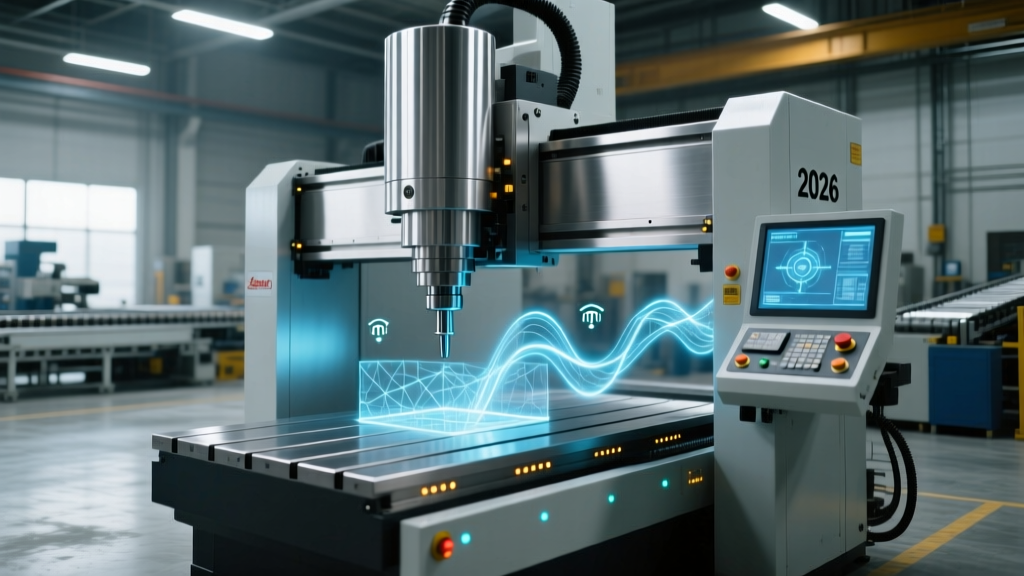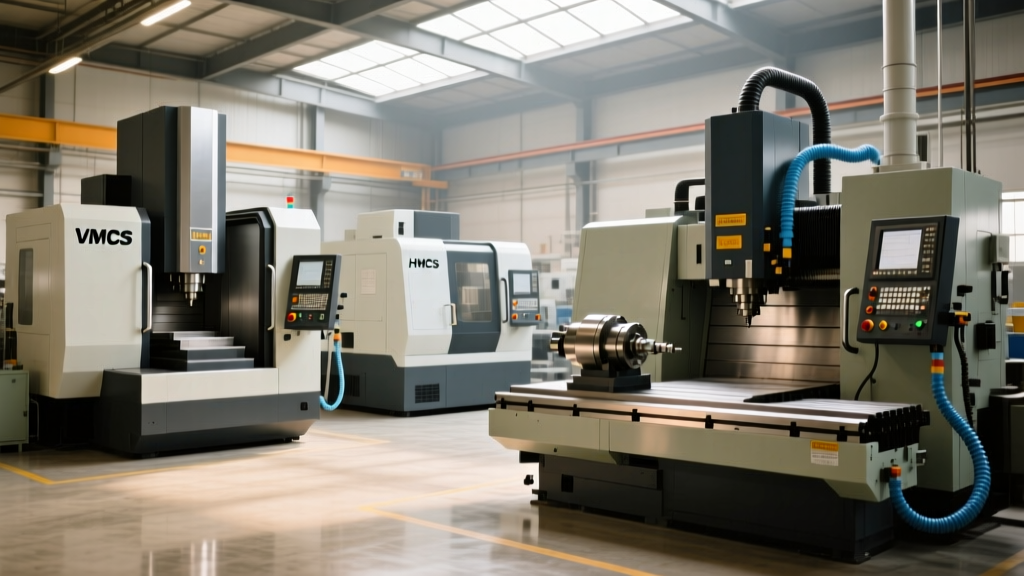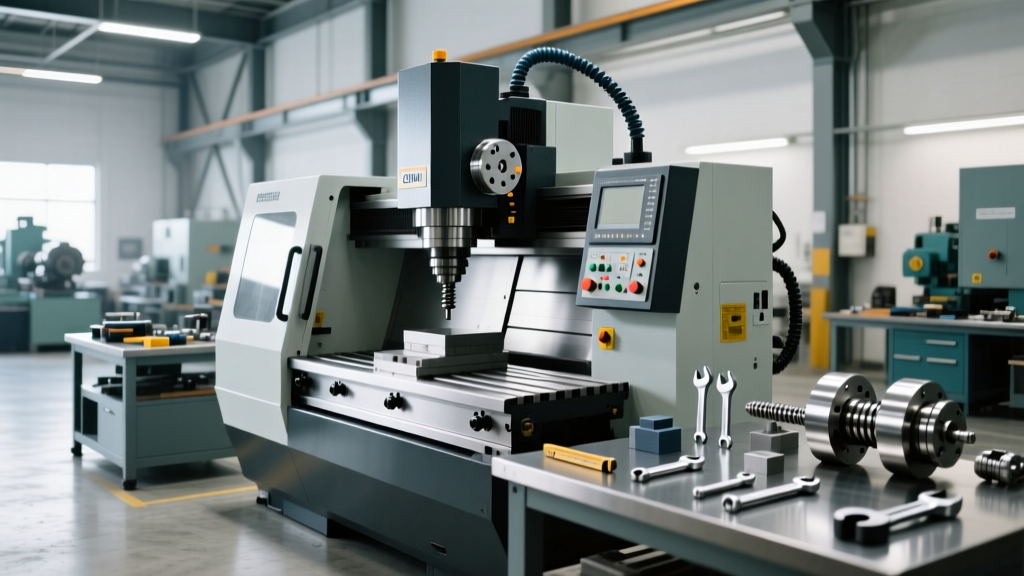
Comparing OEM vs Aftermarket Parts of a CNC Milling Machine
Compare OEM and aftermarket parts of a CNC milling machine. Discover cost differences, lifespan metrics, and upgrade paths for spindles and ballscrews.
When a 10,000 RPM spindle seizes on a Mazak VCN-530C or a Y-axis ballscrew develops excessive backlash on a Haas VF-2, production halts immediately. Shop managers and maintenance engineers face a critical procurement decision regarding the replacement parts of a CNC milling machine: source Original Equipment Manufacturer (OEM) components or pivot to aftermarket alternatives and retrofits. This decision extends far beyond initial capital expenditure; it dictates machine uptime, geometric accuracy, thermal stability, and long-term asset depreciation.
Historically, the default choice was OEM. However, supply chain shifts and the maturation of high-precision aftermarket manufacturing have made third-party components a viable, and sometimes superior, alternative for specific applications. Below is a technical and economic comparison of sourcing strategies for the most critical mechanical assemblies in vertical and horizontal CNC mills.
Component Cost and Lead Time Matrix (2026 Benchmarks)
The following matrix contrasts OEM and aftermarket pricing and availability for standard 40-taper vertical machining center components. Data reflects average North American market conditions for Q1 2026.
| Component Assembly | OEM Cost Range | Aftermarket / Rebuild Cost | OEM Lead Time | Precision Tolerance (TIR) |
|---|---|---|---|---|
| 40-Taper Spindle Cartridge | $6,800 - $9,200 | $2,900 - $4,500 | 2 - 6 Weeks | OEM: < 2.5 µm / AM: 3 - 6 µm |
| X-Axis Ballscrew (40mm dia) | $3,100 - $4,200 | $1,200 - $1,800 | 1 - 3 Weeks | OEM: C3 Class / AM: C5 Class |
| Telescopic Way Covers | $1,400 - $2,200 | $600 - $950 | 3 - 8 Weeks | N/A (Sealing efficacy varies) |
| Servo Drive Amplifier | $2,500 - $3,800 | $1,100 - $1,600 (Reman) | 1 - 2 Weeks | Exact OEM spec matching required |
Spindle Assemblies: The Heart of the Mill
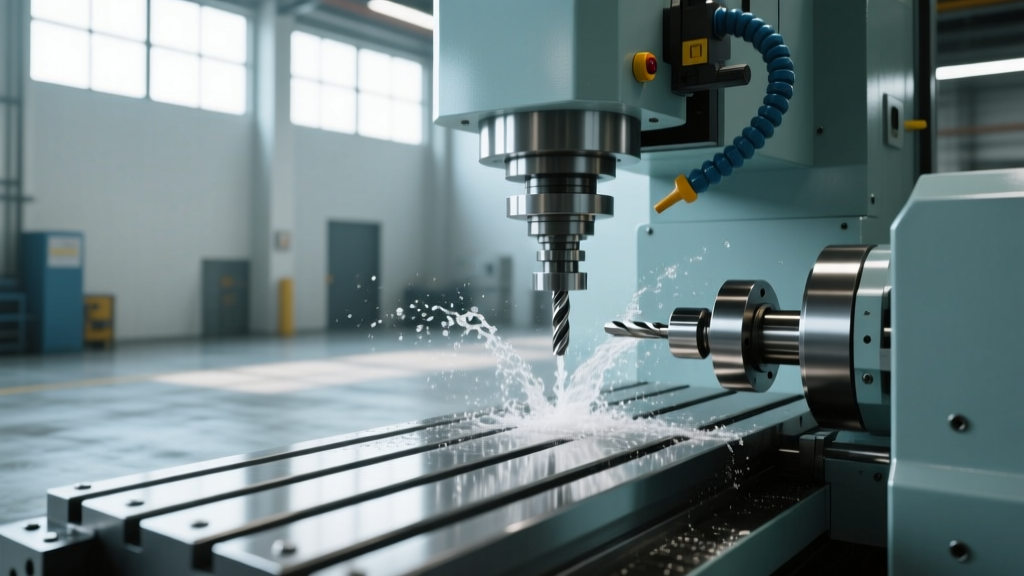
The spindle is the most expensive and sensitive mechanical part of a CNC milling machine. OEMs like Haas, DMG MORI, and Okuma typically source cartridge spindles from tier-one suppliers such as Kessler, GMN, or IBAG, then apply proprietary bearing preloads and run-in protocols.
The OEM Advantage: Thermal Stability and Runout
An OEM 40-taper spindle assembly guarantees strict Total Indicator Runout (TIR) specifications, typically holding less than 2.5 µm at the gauge line. More importantly, OEM spindles are engineered for specific thermal growth profiles. The labyrinth seals, air purge systems, and grease-packed angular contact bearings (usually 15° or 25° contact angles) are matched to the machine's casting and thermal compensation software. Installing an OEM drop-in cartridge requires minimal parameter adjustment and ensures the machine maintains its original volumetric accuracy.
Aftermarket Rebuilds and Third-Party Cartridges
Aftermarket options generally fall into two categories: precision rebuilds of the existing cartridge or complete third-party replacement units. Specialized rebuilders disassemble the spindle, grind the taper, replace bearings with matched sets (often SKF or FAG), and dynamically balance the assembly to ISO 1940 G0.4 standards.
Warning: Preload Degradation in RebuildsWhile aftermarket rebuilds save 40-60% upfront, they often lack the proprietary thermal run-in data of the OEM. If a rebuilder applies a static 600 lb preload using standard spacers, but the OEM utilized a dynamic hydraulic preload system that adjusts based on RPM, the rebuilt spindle will experience excessive heat generation above 8,000 RPM, leading to premature bearing seizure.
Ballscrews and Linear Motion: C3 vs. C5 Precision
Linear motion components dictate the positioning accuracy and repeatability of the mill. OEMs almost exclusively specify C3-class ground ballscrews (e.g., THK, NSK, Rexroth). A C3 ballscrew guarantees an accuracy of 8 µm over a 300 mm travel distance and 18 µm over the full travel length.
Aftermarket alternatives frequently utilize C5-class ballscrews (18 µm over 300 mm) or lower-tier ground C3 equivalents from manufacturers like Hiwin or PMI. For roughing operations, structural steel fabrication, or general-purpose 3-axis milling where tolerances are held to ±0.001", a C5 aftermarket ballscrew is entirely sufficient and costs roughly 60% less than the OEM C3 equivalent.
However, for aerospace structural components, medical implant machining, or mold-making requiring blended surface finishes, the backlash and reversal error inherent in C5 ballscrews will result in scrapped parts. In these scenarios, the premium for OEM or top-tier aftermarket C3 ground screws (such as those from Steinmeyer) is mandatory.
Control System and Drive Alternatives: The Retrofit Route
When proprietary PCBs, servo drives, or the main CNC controller fail on an older machine (e.g., a 2012 Fadal or early Bridgeport VMC), sourcing OEM replacement parts of a CNC milling machine becomes economically unviable. The OEM may quote $14,000 for a legacy drive stack with a 12-week lead time.
The alternative is a complete control retrofit. Companies like Centroid CNC offer all-in-one retrofit kits (approximately $6,500 - $9,000 installed) that replace the proprietary OEM brain with an open-architecture PC-based controller. This not only restores the machine to operation but upgrades the processing speed, look-ahead capabilities, and conversational programming interfaces far beyond the original 2012 specifications. According to workforce development data from the NIST Manufacturing Extension Partnership, retrofitting legacy equipment with modern controls yields a 30-40% improvement in setup times for job shops.
Strategic Decision Framework: Which Path to Choose?
Maintenance managers should apply the following diagnostic flowchart before issuing a purchase order for replacement components:
- Is the machine under active warranty or a lease agreement?
Action: Source strictly OEM. Installing aftermarket mechanical parts will void the OEM's liability for subsequent geometric failures or software integration errors. - Does the application require tolerances tighter than ±0.0004" (10 µm)?
Action: Source OEM or certified C3-premium aftermarket. Standard aftermarket rebuilds cannot reliably hold sub-4-micron volumetric tolerances without extensive on-site laser interferometry calibration. - Is the machine dedicated to heavy roughing or secondary operations?
Action: Source aftermarket. A rebuilt spindle or C5 ballscrew will easily withstand the high radial forces of roughing titanium or steel, and the cost savings can be reallocated to cutting tool inventory. - Is the OEM quoting a lead time exceeding 6 weeks?
Action: Evaluate local precision rebuilders. A local spindle rebuilder can often tear down, regrind, and reassemble a cartridge in 5 to 7 days, mitigating hundreds of hours of lost spindle time compared to waiting for international OEM freight.
Supply Chain and Total Cost of Ownership (TCO)
The true cost of replacement parts of a CNC milling machine includes the integration downtime. An OEM spindle cartridge is engineered as a drop-in replacement. The mounting flange, drive dog, and air purge fittings align perfectly. Installation takes a qualified technician roughly 4 to 6 hours.
Conversely, adapting a third-party spindle or non-standard ballscrew often requires custom machining of adapter plates, modifying the motor coupling, and rewriting the PLC ladder logic to accommodate different thermal sensors or clamping mechanisms. This integration can add 12 to 20 hours of skilled labor. When calculating TCO, shops must multiply the integration hours by their fully burdened labor rate (typically $85 - $125/hr in 2026) and add it to the component cost. Industry benchmarking by the Society of Manufacturing Engineers consistently shows that while aftermarket parts reduce direct material costs by up to 55%, the hidden integration labor can erode 15-20% of those savings if not planned correctly.
Ultimately, the choice between OEM and aftermarket is not a binary preference but a calculated risk assessment based on the machine's role in the production cell, the required part tolerances, and the shop's internal electromechanical integration capabilities.