Maintenance Schedules for Different Types of CNC Milling Machines
Discover exact maintenance schedules, fluid specs, and calibration intervals for VMCs, HMCs, and 5-axis CNC milling machines to prevent costly downtime.
Unplanned downtime on a CNC milling machine costs between $500 and $1,500 per hour in lost production, scrap, and expedited shipping. However, applying a blanket preventive maintenance (PM) schedule across a mixed-machine shop floor is a critical error. The mechanical architecture, thermal dynamics, and failure modes vary drastically depending on the specific equipment. Understanding the distinct maintenance requirements across the primary types of CNC milling machines is essential for maximizing spindle life, preserving geometric accuracy, and protecting your capital investment.
⚠️ Safety Warning: Before executing any internal maintenance involving way covers, electrical cabinets, or fluid reservoirs, always perform a full lockout/tagout (LOTO) procedure in strict accordance with OSHA machine guarding and energy control standards. Never bypass interlock switches on way covers or tool changer doors.Vertical Machining Centers (VMCs): The Workhorse Schedule
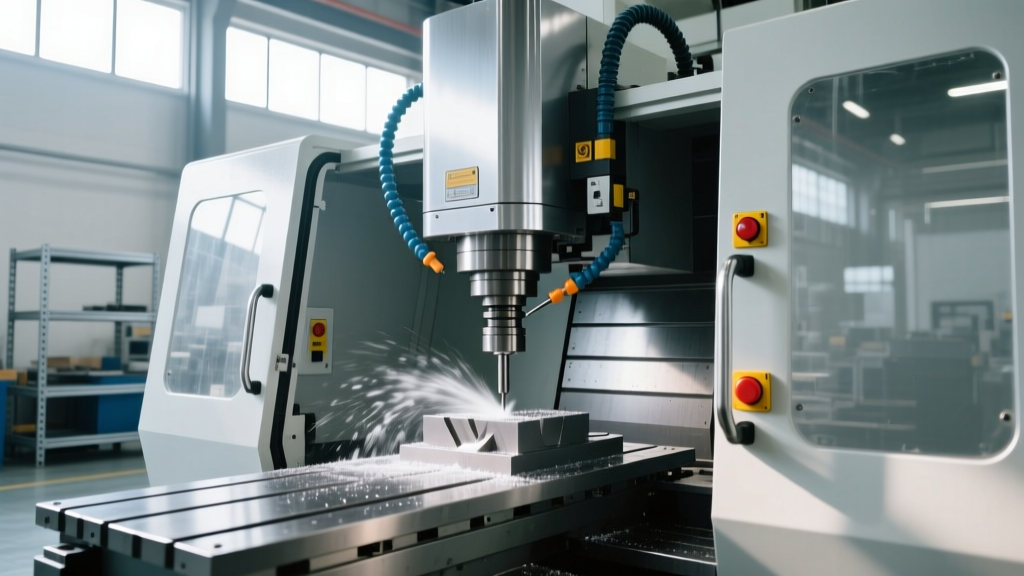
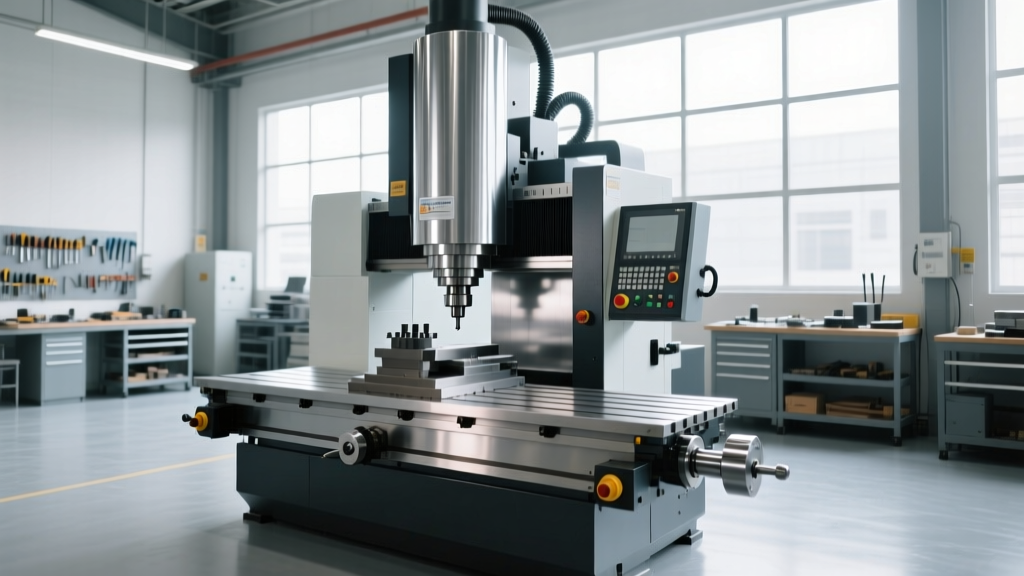
Vertical Machining Centers, such as the Haas VF-2SS or Fadal VMC 15, are the most common machines in job shops. Their vertical spindle orientation and C-frame construction make them highly susceptible to way wear and tool changer misalignment if neglected.
Spindle and Tool Changer Care
The spindle is the most expensive component to replace on a VMC, with rebuilds ranging from $6,000 to $14,000 depending on the taper (40 vs. 50) and RPM rating. To protect the spindle bearings, the spindle chiller must be serviced quarterly. The chiller fluid temperature should be set to a fixed 20°C (68°F) or tracked to ambient room temperature within a ±1°C delta. If the chiller's return line temperature exceeds the setpoint by more than 2°C, the spindle is running too hot, accelerating bearing grease degradation.
For the automatic tool changer (ATC), inspect the Geneva wheel or cambox mechanism annually. On machines utilizing a swing-arm ATC, check the tool retention force using a drawbar force gauge. A standard 40-taper spindle should exhibit between 1,800 and 2,200 lbs of retention force. A drop below 1,500 lbs indicates belleville washer fatigue, which will cause tool pullout during heavy roughing passes.
Way Lubrication and Metering Units
VMCs rely on automatic way lube systems to prevent stick-slip and premature linear guide wear. Use an ISO 68 way oil (such as Mobil Vactra No. 2). Do not substitute with standard hydraulic oil, as way oil contains tackifiers designed to adhere to vertical surfaces. Inspect the Bijur or容积式 (volumetric) metering units every six months. When the pump cycles, the pressure gauge should spike to 25-30 psi and hold for at least 5 seconds before bleeding down. An immediate pressure drop indicates a leak in the distribution lines or a failed metering unit piston.
Horizontal Machining Centers (HMCs): Chip Evacuation and Pallet Pools
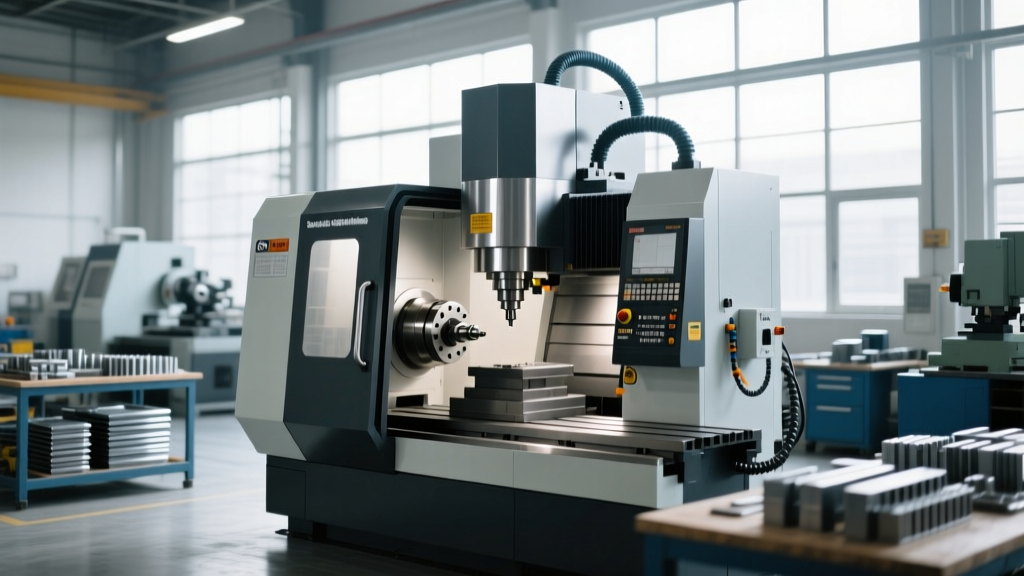
Horizontal Machining Centers like the Makino a61nx or Okuma MA-500HB are designed for high-volume, untended production. The horizontal spindle allows chips to fall away from the part, but this shifts the maintenance burden heavily toward chip management and complex hydraulic pallet systems.
The Chip Conveyor: The HMC Bottleneck
The number one cause of unplanned downtime on an HMC is chip conveyor failure. HMCs generate massive volumes of stringy or abrasive chips that can jam hinge-belt conveyors.
- Daily: Verify the coolant flow over the conveyor apron to prevent chip welding.
- Monthly: Check the conveyor drive chain tension. A loose chain will skip sprocket teeth, causing the shear pin to snap or the torque limiter to disengage.
- Annually: Drain the conveyor gearbox and replace the oil with a high-quality EP (Extreme Pressure) gear lubricant, typically ISO 220.
Pallet Changer Hydraulics and B-Axis Rotary Tables
HMCs utilize hydraulic or pneumatic pallet changers to swap workpieces in seconds. The hydraulic power unit (HPU) relies on nitrogen-charged accumulators to maintain pressure during the swap cycle. Every 12 months, check the nitrogen pre-charge on the accumulators; a loss of charge will cause slow pallet swaps and trigger hydraulic timeout alarms.
Furthermore, the B-axis rotary table utilizes a complex clamping mechanism (often a multi-tooth Hirth coupling or hydraulic brake) to lock the table during heavy cuts. If the machine alarms out on 'B-Axis Unclamp' or exhibits chatter during heavy side-milling, the clamping brake pads or belleville springs require replacement—a service that typically costs between $2,500 and $4,000 in parts and labor.
Comparative Maintenance Matrix by Machine Type
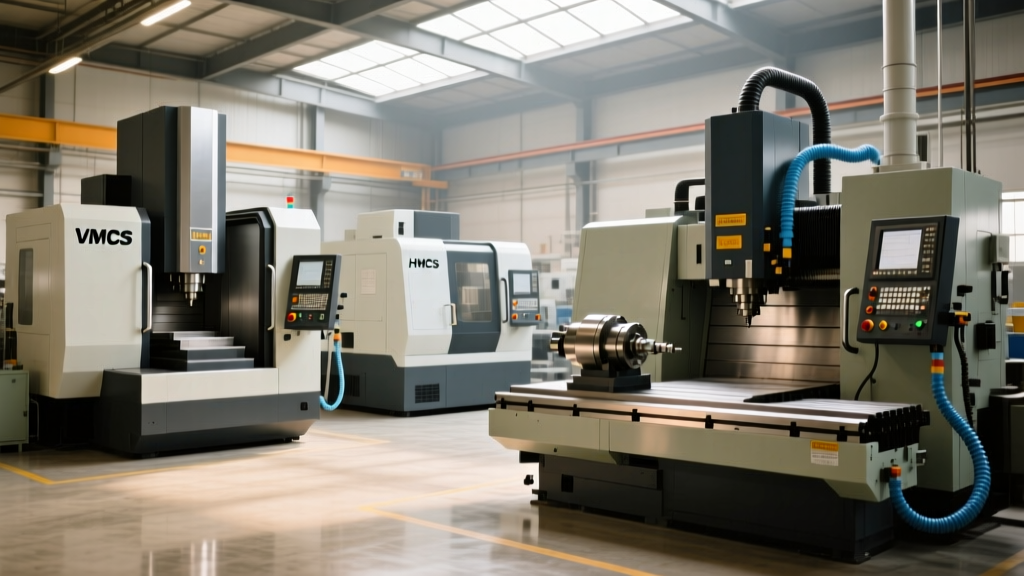
The following matrix highlights the critical divergence in maintenance focus across different machine architectures.
| Machine Type | Critical Component | PM Interval | Estimated Failure Cost |
|---|---|---|---|
| 3-Axis VMC | Spindle Chiller / Bearings | Quarterly (Fluid) / 10k Hrs (Bearings) | $6,000 - $14,000 |
| 4-Axis HMC | B-Axis Clamping Brake | Annually (Inspection) | $2,500 - $4,000 |
| 5-Axis Trunnion | Rotary Axis Torque Motor Cooling | Bi-Annually (Flow Test) | $15,000 - $25,000 |
| CNC Knee Mill | Z-Axis Ballscrew / Gibs | Bi-Annually (Backlash Test) | $1,200 - $3,000 |
5-Axis Mills: Thermal Management and Kinematic Calibration
Full 5-axis machines, such as the DMG MORI DMU 50 3rd Generation or Hermle C 42, represent the pinnacle of milling complexity. They utilize direct-drive torque motors on the rotary axes (A and C, or B and C) to eliminate backlash. However, these motors generate immense heat.
Cooling Circuit Flow Rates
Direct-drive motors require dedicated liquid cooling jackets integrated into the machine's chiller system. If the cooling circuit restricts due to algae buildup or a failing pump, the torque motors will thermally expand, altering the machine's center of rotation and ruining part tolerances. Maintenance teams must verify the flow rate of the rotary axis cooling circuit every six months. Most manufacturers specify a minimum flow rate of 4 to 6 liters per minute. Use a specialized ultrasonic flow meter on the external hoses to verify this without breaking the plumbing seals.
Kinematic Calibration Intervals
Unlike 3-axis machines where geometric errors are largely static, 5-axis machines suffer from dynamic volumetric errors caused by thermal growth and minor mechanical shifts. According to best practices supported by Sandvik Coromant's machining fundamentals, maintaining tight tolerances on complex aerospace or medical parts requires regular kinematic verification.
Perform a full kinematic calibration using a system like the Renishaw AxiSet Check or Heidenhain KinematicsOpt every six months, or immediately following any machine crash that results in more than $500 of tooling or spindle damage. This macro updates the machine's rotary axis pivot point parameters (e.g., Fanuc parameter 19600 series or Siemens $TC_CARR data), ensuring the tool tip remains perfectly synchronized with the part surface during simultaneous 5-axis contouring.
"The transition from reactive to predictive maintenance in multi-axis milling is no longer optional for shops competing in aerospace and medical sectors. Tracking spindle load data and thermal drift via the CNC control's internal PLC is the most cost-effective way to predict component failure before it impacts part geometry."
— Advanced Manufacturing Strategy Report, 2025
Fluid Management: The Universal Lifeline
Regardless of whether you operate a bed mill, a VMC, or a 5-axis trunnion machine, cutting fluid and way oil management dictate the lifespan of your consumables and machine surfaces.
Coolant Concentration and pH
Do not rely on visual inspection for coolant health. Measure the concentration daily using an optical refractometer.
- Synthetic Fluids: Maintain 6.0% - 8.0% Brix. Dropping below 5% invites bacterial growth and flash rusting on cast iron machine beds.
- Semi-Synthetic Fluids: Maintain 8.0% - 10.0% Brix. Exceeding 11% can cause foaming issues and leave sticky residues that foul way covers and limit switches.
- pH Levels: Check weekly. A healthy coolant pH is between 8.8 and 9.2. If pH drops below 8.5, the biocides are failing, and the fluid will sour, requiring a complete $1,000+ system dump and clean.
Frequently Asked Questions (FAQ)
How often should I check the backlash on a CNC milling machine?
For high-precision VMCs and HMCs utilizing linear scales, backlash is electronically compensated and mechanically negligible if the guides are healthy. However, for machines relying on rotary encoders and ballscrews, perform a backlash test using a dial indicator on the X, Y, and Z axes every 3 months. If backlash exceeds 0.0004 inches (0.01 mm), adjust the ballscrew thrust bearing preload or update the backlash compensation parameters in the CNC control.
Can I use standard hydraulic oil in my CNC way lube system?
No. Standard hydraulic oil (like AW 32 or AW 46) lacks the tackiness agents found in dedicated way oils (ISO 68 / Mobil Vactra No. 2). Without tackifiers, the oil will immediately drain off the vertical Y-axis and Z-axis way surfaces, leading to metal-on-metal contact, stick-slip phenomenon during slow contouring feeds, and permanent scoring of the linear guides.
What is the most overlooked maintenance task on a 5-axis machine?
Cleaning the spindle taper and toolholder tapers. On a 5-axis machine, a single micron of debris or a small chip stuck inside the spindle taper will cause the toolholder to seat improperly. Because 5-axis cutting forces are highly directional and often applied far from the spindle nose (due to long tool extensions), a poorly seated toolholder will magnify the runout at the tool tip, destroying surface finish and potentially snapping the tool. Clean tapers with a specialized air-blast taper cleaner every single shift.
For comprehensive, model-specific maintenance intervals and wiring schematics, always refer directly to the official manufacturer service portals or your machine's specific maintenance manual. Tailoring your PM schedule to the exact architecture of your equipment is the most reliable method to ensure decades of profitable, high-accuracy production.