2026 Cost Guide: Building a Do It Yourself CNC Milling Machine
Analyze the true 2026 costs of building a do it yourself CNC milling machine. Detailed budget breakdown for mechanicals, electronics, and tooling.
The Financial Reality of DIY Subtractive Manufacturing
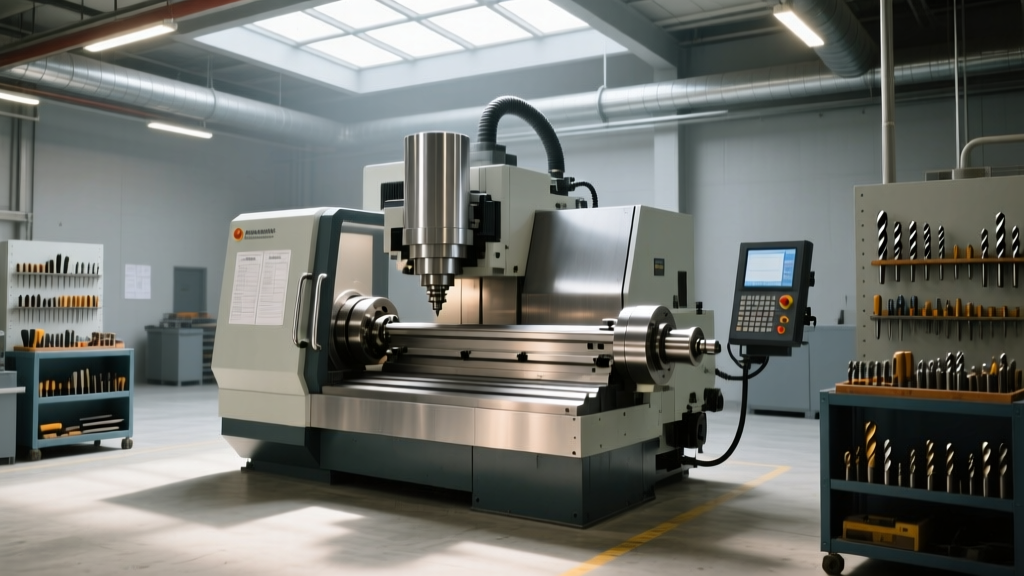
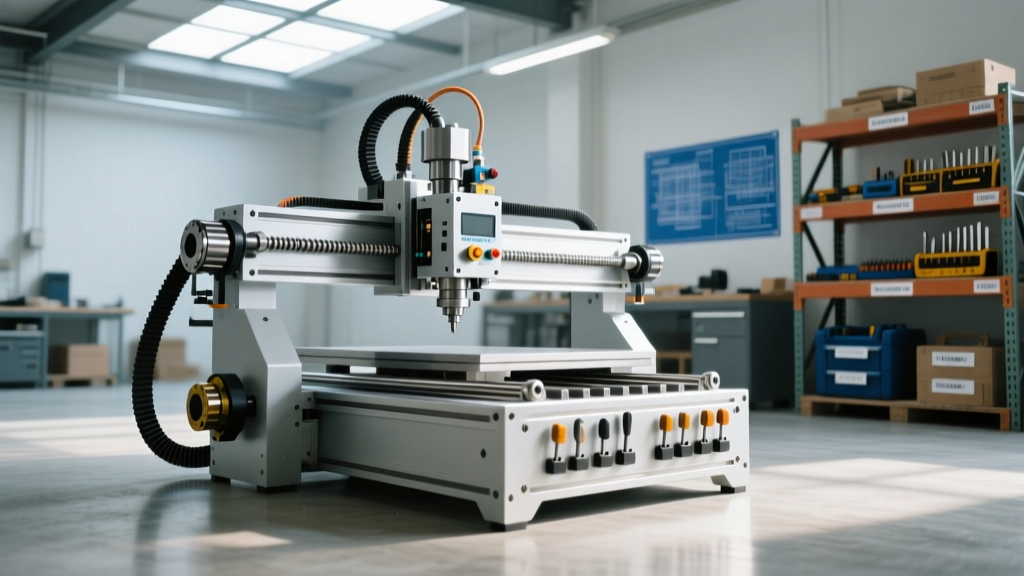
The financial appeal of fabricating your own subtractive manufacturing equipment is obvious on paper. A commercial entry-level mill like the Tormach PCNC 440 starts around $5,500, while industrial benchmarks like the Haas Mini Mill push past $40,000. However, the actual capital required to engineer, source, and assemble a rigid, high-precision machine is frequently underestimated by hobbyists and small shop owners. When scoping out a do it yourself CNC milling machine, the Bill of Materials (BOM) is only the beginning. This 2026 cost analysis breaks down the exact pricing of mechanicals, motion control, spindles, and the often-ignored tooling ecosystem required to actually cut metal.
Budget Trap Warning: Never calculate your build cost based solely on the structural BOM. First-time builders consistently underestimate the cost of workholding, cutting tools, spindle cooling, and software licenses. A $3,000 mechanical build easily becomes a $6,500 project once you purchase a quality vise, ER collet set, VFD, and carbide end mills.Core Mechanical Framework: Rigidity Costs Money
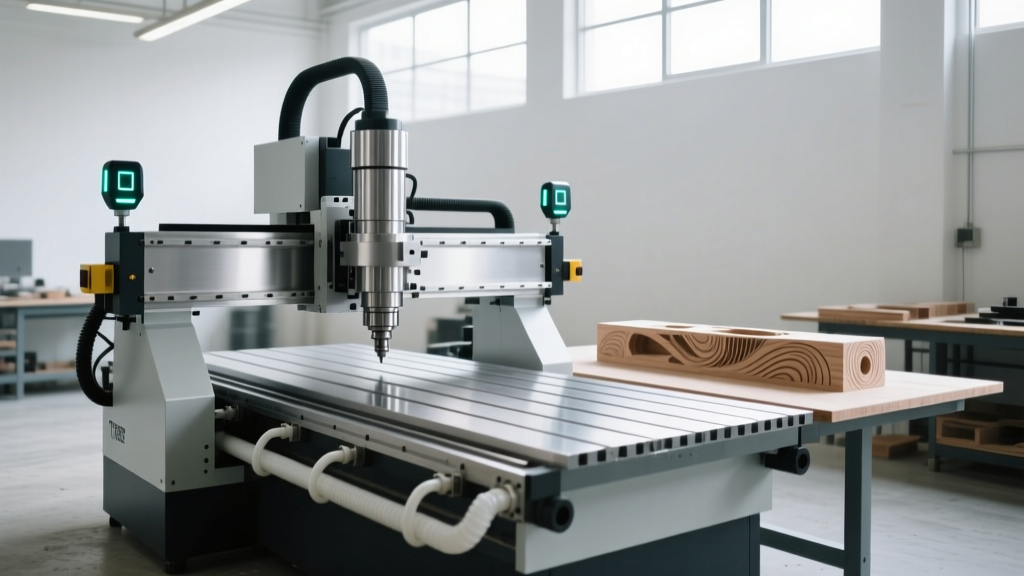
The foundation of any milling machine is its structural rigidity. Unlike CNC routers designed for wood and plastics, a milling machine must withstand the severe cutting forces generated when removing steel or titanium. You cannot use standard 2020 aluminum extrusions for the Z-axis or gantry of a serious mill. According to CNCCookbook's guide on CNC mills vs routers, mass and damping capacity are the primary differentiators between a router and a true mill.
2026 Mechanical Component Pricing
| Component Category | Specification / Brand | Est. Cost (2026) | Engineering Notes |
|---|---|---|---|
| Base & Column | Cast Iron or Epoxy Granite | $800 - $1,500 | Do not use aluminum extrusions for the base. Epoxy granite provides superior vibration damping. |
| Linear Motion | Hiwin HGH20CA / THK HSR20 | $450 - $700 | Requires 12 blocks and 6 rails minimum. Avoid cheap unbranded clones; preload inconsistency will ruin surface finishes. |
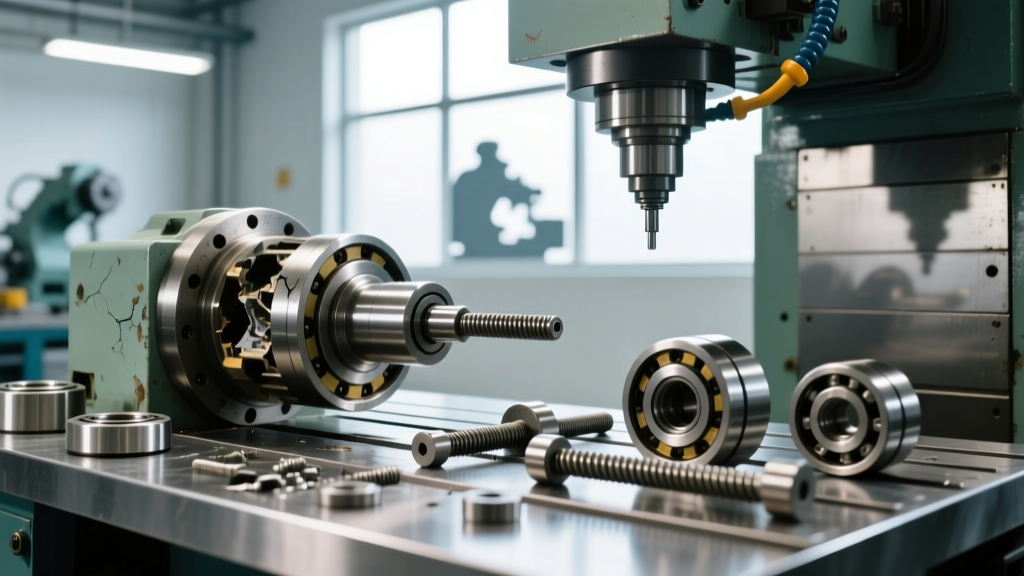
| Drive System | SFU1605 Rolled Ball Screws | $350 - $500 | Includes BK10/BF10 bearing blocks. Ground ball screws (C3/C5) will add $1,200+ to the budget. |
| Z-Axis Structure | Misumi 40x80mm Heavy Extrusion | $120 - $180 | Must be heavily gusseted. Consider a dual-rail Z-axis to prevent spindle deflection under load. |
Motion Control and Electronics Architecture
The brain and nervous system of your do it yourself CNC milling machine dictate its accuracy, speed, and reliability. Stepper motors are the default for budget builds, but closed-loop steppers or AC servos are mandatory if you plan to rigid tap or perform heavy roughing passes where losing steps means scrapping a part.
Drive System Tiers
- Tier 1: Open-Loop NEMA 34 Steppers ($350 - $500)
Using a Gecko G540 breakout board and standard 1200 oz-in NEMA 34 motors. This is adequate for light aluminum and plastics, but if the machine stalls during a heavy cut, the controller will not know, resulting in a crashed tool. - Tier 2: Closed-Loop Steppers ($800 - $1,100)
Systems like the StepperOnline CL86T or Omron closed-loop steppers. These feature onboard encoders that correct positional errors on the fly and trigger an e-stop if the motor cannot overcome the cutting load. - Tier 3: AC Servo Systems ($1,800 - $2,500)
Delta ASDA-B2 or Yaskawa Sigma-7 kits. Essential for high-speed machining, rapid traverses over 400 IPM, and rigid tapping. This tier requires a dedicated 220V circuit and shielded cabling to prevent electromagnetic interference (EMI).
Controller and Software Licensing
Hardware is only half the control equation. If you opt for LinuxCNC, the software is free, but you will need a real-time Ethernet motion card like the Mesa 7i76e ($185) and a dedicated PC. If you prefer a Windows-based environment, Mach4 Hobby licenses cost $200, and you will need an Ethernet smoothstepper ($170). For advanced 4-axis simultaneous machining or integrated probing cycles, a Centroid Acorn board ($400) offers industrial-grade features at a prosumer price point.
Spindle Selection: The Make-or-Break Component
The spindle is the most expensive single component in your build. Your choice must align with the materials you intend to cut. Attempting to mill 6061 aluminum with a trim router spindle will result in chatter, poor tool life, and broken end mills.
Spindle Cost Matrix
| Spindle Type | Power / Interface | 2026 Cost | Best Application |
|---|---|---|---|
| VFD Router Spindle | 2.2kW / ER20 Collet | $350 - $550 | Plastics, wood, light aluminum engraving. Lacks low-end torque. |
| HSD Air-Cooled Milling | 3.0kW / ISO20 or ER32 | $1,200 - $1,800 | General purpose aluminum, brass, and mild steel. Requires compressed air. |
| BT30 Servo Spindle | 2.5HP / BT30 Taper | $2,800 - $4,500 | Production steel milling, high torque, quick tool changes. Requires ATC setup. |
Hidden Spindle Costs: A 2.2kW VFD spindle requires a frequency inverter ($120), a water cooling pump and radiator kit ($85), and an ER32 collet set ($45). Always budget an extra 20% on top of the raw spindle price for the necessary peripherals.
Tooling and Workholding: The Budget Killers
A bare machine cannot cut metal. The tooling ecosystem required to hold the workpiece and the cutter is where DIY budgets frequently collapse. Commercial shops amortize these costs over thousands of parts; a DIY builder must absorb them upfront.
Essential Starter Tooling BOM
- 6-Inch CNC Vise: Avoid standard drill press vises. You need a precision ground CNC vise with hard jaws. An import clone (like a Glacern or Shars) costs $150-$250. A genuine Kurt DX6 costs $950+.
- ER32 Collet Chuck & Set: $85 for a quality Techniks or Parlec set. Cheap Amazon collets have runout exceeding 0.0015', which will snap small diameter end mills instantly.
- Carbide End Mills: Budget $150 for an initial set of 1/4', 3/8', and 1/2' 3-flute AlTiN coated end mills for aluminum, and 4-flute carbide for steel. Expect to spend $25-$40 per premium cutter (Harvey Tool, Destiny, YG-1).
- Edge Finder and Probe: A Haimer 3D sensor costs $450, but a budget electronic edge finder ($45) and a DIY Renishaw-style touch probe ($120) will suffice for setting work coordinates (WCS).
Build vs. Buy: 2026 Decision Matrix
Is building a do it yourself CNC milling machine actually cheaper than buying a prosumer machine? The table below compares a high-end DIY build against market alternatives.
| Category | High-End DIY Build | Prosumer (e.g., Tormach 440) | Industrial (e.g., Haas Mini) |
|---|---|---|---|
| Upfront Capital | $4,500 - $6,500 | $5,500 - $7,500 | $42,000 - $55,000 |
| Build/Setup Time | 200 - 400 Hours | 15 - 30 Hours | Rigging & Power Setup |
| Support & Warranty | None (Self-reliant) | 1-Year Limited / Tech Support | Comprehensive Field Service |
| Rigidity & Mass | Variable (Design dependent) | Moderate (Cast iron base) | Extreme (Heavy cast iron) |
| Resale Value | Very Low (Scrap + parts) | High (Holds value well) | Depreciates like vehicle |
Frequently Asked Questions
Can I use a DIY CNC mill to cut steel effectively?
Yes, but only if you prioritize rigidity over travel speed. You must use ball screws (not belts), linear guides (not V-wheels), and a spindle with high low-end torque, such as a geared BT30 or a high-torque brushless DC spindle. Attempting to cut steel with a belt-driven router spindle will result in severe chatter and tool breakage.
How much does it cost to run 3-phase power for a DIY mill?
Most residential workshops only have single-phase 220V. If your chosen spindle or AC servo drives require 3-phase power, you will need a rotary phase converter ($600-$1,200) or a Variable Frequency Drive (VFD) configured for single-phase input and 3-phase output ($150-$300). Factor this into your electrical budget.
What is the most common failure point in DIY milling machines?
Z-axis deflection and ball screw backlash. Builders often use a single linear rail for the Z-axis to save money, which causes the spindle to tilt backward under cutting loads. Always use dual linear rails on the Z-axis and pre-load your ball screw bearing blocks to eliminate axial play.