Troubleshooting Failing Parts of CNC Milling Machine Systems
Learn to diagnose and repair failing parts of CNC milling machine systems, including spindle bearings, ball screws, and ATC mechanisms.
Unplanned downtime on a standard vertical machining center (VMC) like the Haas VF-2SS or DMG Mori CMX 600V costs modern job shops between $150 and $300 per hour in lost throughput and delayed deliveries. When critical components degrade, the resulting scrap rates and geometric inaccuracies compound these losses. Understanding the specific failure modes, diagnostic thresholds, and repair protocols for the core parts of CNC milling machine systems is the difference between a $200 preventative seal replacement and a $15,000 catastrophic spindle rebuild.
Spindle Assembly and Bearing Degradation
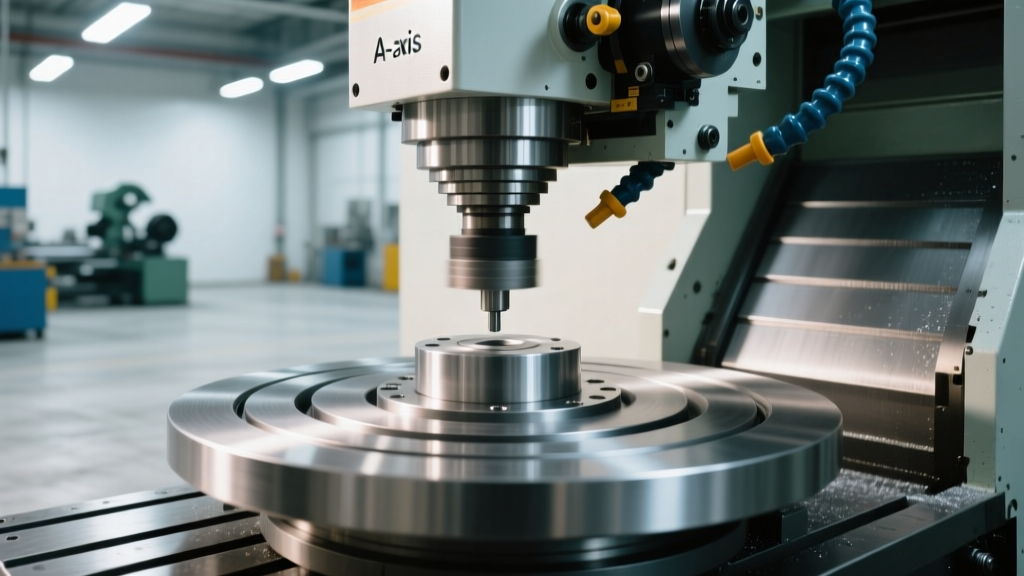
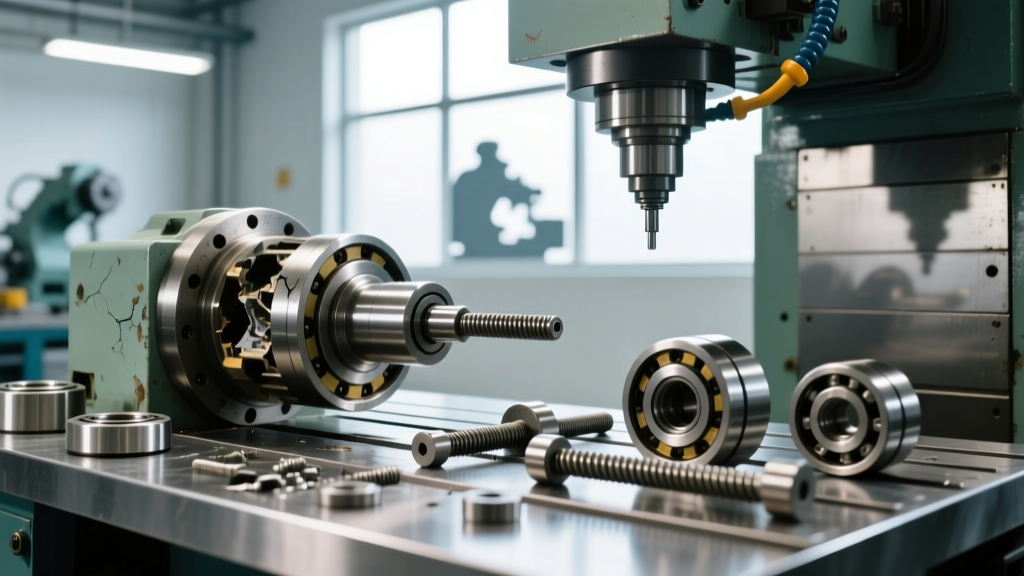
The spindle is the most expensive and sensitive component on any mill. Modern high-speed spindles (12,000 to 15,000 RPM) rely on ABEC-9 precision angular contact bearings, often utilizing silicon nitride (Si3N4) ceramic balls to reduce centrifugal loading and thermal expansion.
Symptoms of Bearing Failure
- High-Frequency Vibration: Measured via accelerometer, a spike in vibration velocity above 2.5 mm/s RMS (Root Mean Square) indicates raceway spalling or ball degradation.
- Thermal Growth: A spindle housing that exceeds 45°C (113°F) at the front nose during a standard warm-up cycle suggests lubrication breakdown or excessive preload.
- Surface Finish Artifacts: Chatter marks or 'witness lines' on milled aluminum or steel surfaces, particularly during light finishing passes.
Diagnostic and Repair Protocol
Before authorizing a teardown, run a vibration analysis using a tool like the SKF Microlog series. According to SKF Machine Tool Spindle Guidelines, tracking the envelope acceleration (gE) allows maintenance teams to detect sub-surface bearing fatigue months before catastrophic seizure. If the spindle requires rebuilding, expect to replace the entire bearing stack and dynamic sealing labyrinth. A factory-certified cartridge replacement for a 12,000 RPM CAT40 spindle typically ranges from $6,500 to $14,000 in 2026, depending on OEM versus third-party repair services.
Ball Screws and Linear Positioning Systems
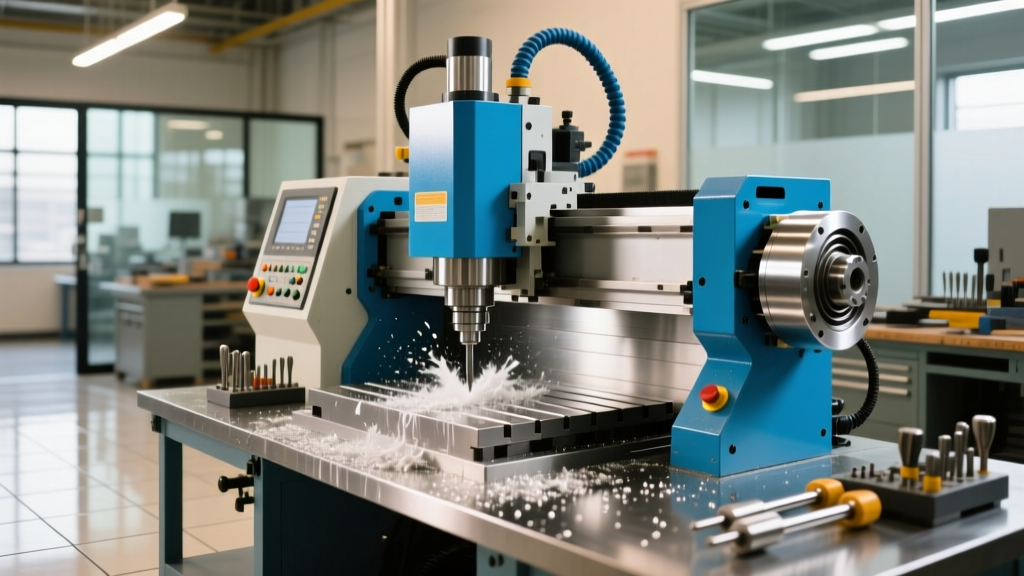
Axis positioning is governed by precision ground ball screws and linear guideways. A standard C3-accuracy ball screw allows a maximum lead error of 0.008 mm per 300 mm of travel. When these parts of CNC milling machine assemblies wear, the machine loses its ability to hold tight positional tolerances.
Identifying Backlash and Windup
Backlash is the mechanical play between the ball screw nut and the screw shaft, while windup refers to the torsional twisting of the screw under heavy cutting loads. Both manifest as flats or reversals in circular interpolation.
- Perform a Ballbar Test: Mount a wireless telescoping ballbar, such as the Renishaw QC20-W, between the table and the spindle nose.
- Run a Circular Interpolation: Program a 150 mm radius circle at 1000 mm/min feed rate.
- Analyze the Data: A reversal spike at the 0°, 90°, 180°, or 270° axis transitions indicates backlash. If the spike exceeds 0.005 mm (5 microns), the ball screw nut preload has degraded.
Restoring Axis Preload
Most VMC ball screw nuts utilize a double-nut, spacer-preloaded design. Over time, the spacer compresses or the recirculation tubes wear. Repair involves removing the nut assembly, measuring the existing spacer with a micrometer, and grinding a new spacer to restore the 3% to 5% dynamic preload ratio. If the ball screw shaft shows visible brinelling (indentations) from crash damage or chip ingress, complete shaft replacement is mandatory, costing between $2,200 and $4,800 per axis.
Automatic Tool Changer (ATC) Mechanics
The ATC is a high-cycle electromechanical assembly. A machine executing 50,000 tool swaps annually subjects the cam box, Geneva mechanism, and pneumatic drawbar to immense mechanical shock.
Symptom: Tool Drops or Slow Swaps
If the machine alarms out with a 'Tool Unclamp' fault, or if the tool physically drops during a rapid traverse, the issue usually lies in the spindle drawbar retention system, not the carousel itself.
- Belleville Washer Fatigue: The drawbar relies on a stack of Belleville (conical) spring washers to generate clamping force. Over millions of cycles, these washers experience hysteresis and lose their spring rate. A CAT40 taper requires a minimum retention force of 2,500 lbs to 3,000 lbs. Use a digital drawbar force gauge to measure this annually.
- Pneumatic Seal Degradation: The unclamp cylinder uses high-pressure air (typically 85-100 PSI) to compress the spring stack. If the internal polyurethane seals dry out or score the cylinder wall, the cylinder cannot generate the 4,000 lbs of thrust required to overcome the Belleville stack.
Way Covers and Sealing Components
Often ignored until failure, way covers protect the precision ball screws and linear rails from abrasive cast iron dust, aluminum stringers, and tramp oil.
Telescopic Steel vs. Bellows
Heavy-duty machines utilize telescopic steel way covers, while high-speed machines often use Kevlar-reinforced bellows to reduce moving mass. The primary failure point is the nitrile rubber wiper blade at the leading edge of each cover segment.
💡 Pro Tip: When replacing way cover wipers, upgrade to polyurethane or UHMW-PE (Ultra-High-Molecular-Weight Polyethylene) scraper blades. These materials resist chemical degradation from synthetic semi-synthetic coolants far better than standard rubber, extending service life from 18 months to over 4 years.The Cost of Chip Ingress
If a wiper fails, abrasive chips are dragged directly into the linear guide blocks. This destroys the recirculating ball bearings inside the carriage block, leading to axis stiction and servo following errors. Replacing a single linear guide carriage block requires dropping the entire machine table or saddle, a labor-intensive process that can exceed 40 hours of downtime.
Diagnostic Matrix: Component Failure Thresholds
Use the following matrix to standardize your maintenance department's response to degrading parts of CNC milling machine hardware.
| Component | Primary Failure Mode | Diagnostic Tool | Action Threshold (2026) | Est. Repair Cost |
|---|---|---|---|---|
| Spindle Cartridge | Bearing raceway spalling | Vibration Analyzer (gE) | > 2.5 mm/s RMS velocity | $6,500 - $14,000 |
| Ball Screw Nut | Preload loss / Backlash | Wireless Ballbar | > 0.005 mm reversal spike | $800 - $1,500 (Repack) |
| Drawbar Assembly | Belleville washer fatigue | Digital Force Gauge | < 2,500 lbs retention (CAT40) | $400 - $900 |
| ATC Cam Box | Geneva mechanism wear | Visual / Cycle Time | Swap time > 1.8 seconds | $1,500 - $3,200 |
| Linear Guide Block | Recirculator cap fracture | Servo Load Meter | Axis load > 15% at idle | $600 - $1,200 per block |
Establishing a Predictive Baseline
Troubleshooting is reactive; condition monitoring is proactive. To maximize the lifespan of these critical components, machine shops must establish a baseline vibration and ballbar signature within the first 30 days of commissioning a new mill. By overlaying quarterly diagnostic readings against this baseline, maintenance teams can predict the remaining useful life (RUL) of spindle bearings and ball screws, scheduling replacements during planned holiday shutdowns rather than reacting to mid-shift crashes.