Cheapest CNC Milling Machine ROI: 2026 Industry Case Studies
Analyze real-world ROI of the cheapest CNC milling machine options in 2026. Case studies on micro-shops and retrofits reveal hidden costs and profits.
The Budget CNC Paradox in Modern Manufacturing
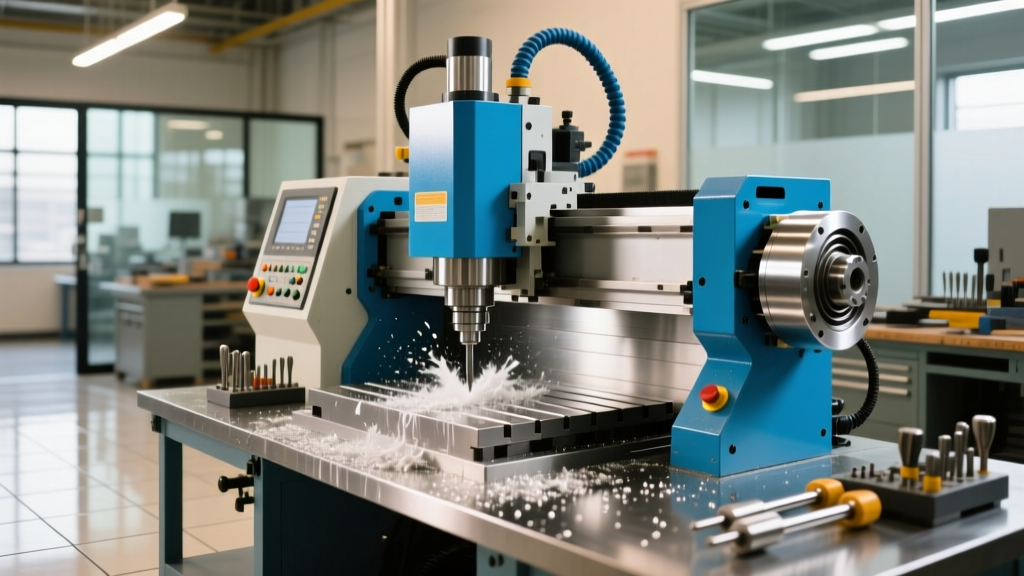
The pursuit of the cheapest CNC milling machine often leads buyers into a trap of compromised rigidity, dropped steps, and scrapped parts. However, the landscape of entry-level and budget CNC mills—defined here as machines under $20,000—has shifted dramatically. With the integration of closed-loop stepper motors, pre-tensioned C3-grade ballscrews on sub-$15,000 machines, and advanced CAM toolpaths that drastically reduce radial cutting forces, micro-machine shops and R&D labs are turning a profit on hardware that veteran machinists would have dismissed a decade ago.
This analysis examines three distinct 2026 industry case studies where budget mills succeed, where they fail, and the exact financial metrics that dictate their viability for modern job shops and prototyping facilities.
Case Study 1: High-Mix Aluminum Prototyping (Syil X7 vs. Traditional VMC)
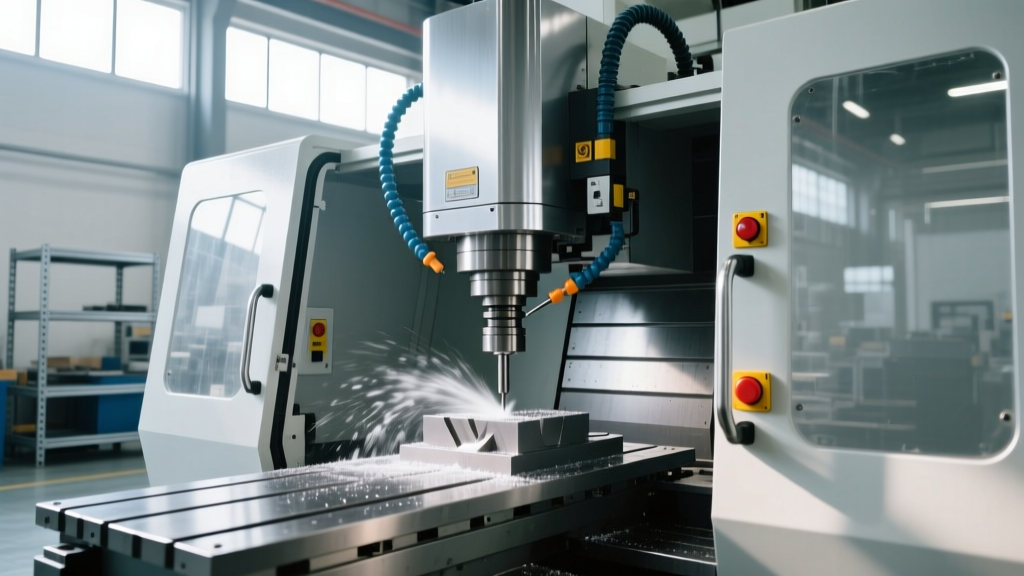
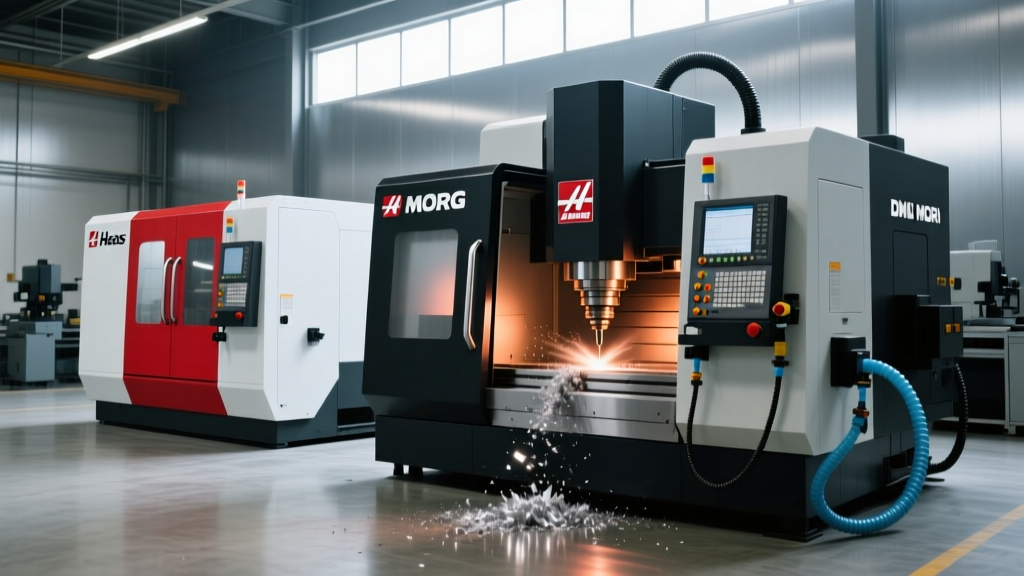
For job shops specializing in low-volume, high-mix aluminum parts, the Syil X7 CNC mill (retailing around $14,500) has emerged as a disruptive alternative to traditional entry-level vertical machining centers (VMCs) like the Haas Mini Mill, which now starts north of $52,000 with basic 4th-axis and probing options.
The Technical Reality
The Syil X7 utilizes linear guideways and a 10,000 RPM BT30 spindle. While it lacks the 12,000 RPM spindle and massive 40-taper rigidity of a full VMC, modern CAM strategies bridge the gap. By utilizing adaptive clearing (trochoidal milling) with a radial engagement of just 5% to 8% and an axial depth of cut (DOC) at 1.5x the tool diameter, shops can maintain high material removal rates (MRR) without overloading the X7's 7.5 kW spindle or inducing chatter.
ROI Analysis: 500-Part Batch of 6061-T6 Drone Enclosures
| Metric | Syil X7 (Budget Mill) | Haas Mini Mill (Standard VMC) |
|---|---|---|
| Capital Equipment Cost | $14,500 | $52,000 |
| Tooling & Workholding | $2,100 (Kurt vise, ER32) | $4,500 (Pneumatic vise, BT30 tooling) |
| Cycle Time (Per Part) | 14.5 minutes | 9.2 minutes |
| Labor Rate (Operator) | $35/hr | $45/hr (VMC specialist) |
| Break-Even Point | ~350 parts | ~1,400 parts |
Verdict: If your shop primarily runs batches under 500 pieces, the cheapest CNC milling machine in this tier yields a faster ROI. The VMC only justifies its footprint and capital cost when running high-volume production or requiring high-pressure through-spindle coolant for deep cavity milling.
Case Study 2: 5-Axis R&D on a Shoestring (Pocket NC V2-50)
University labs and medical device startups rarely have the $150,000 budget required for a DMG Mori or Haas UMC-500. Enter the Pocket NC V2-50, a desktop 5-axis mill priced at approximately $5,200. While it is arguably the cheapest CNC milling machine capable of true simultaneous 5-axis machining, its application is strictly bound by physics and work envelope.
Where the Pocket NC Excels
- Micro-Machining: With a work envelope of roughly 4.5 x 4.5 x 4.5 inches, it is ideal for dental abutments, micro-fluidics, and aerospace sensor housings.
- Material Versatility: Capable of machining PEEK, Delrin, and Titanium Grade 5 (Ti-6Al-4V) using micro-endmills (1/16" and smaller) where cutting forces remain under 50 lbs.
- Facility Requirements: Runs on standard 110V power and requires no compressed air or heavy rigging, making it perfect for cleanroom-adjacent R&D spaces.
"Micro-manufacturing research heavily relies on accessible multi-axis platforms. The ability to iterate complex geometries in-house without queuing for time on a full-scale 5-axis VMC accelerates prototyping cycles by weeks." — NIST Advanced Manufacturing programs insights on flexible manufacturing cells.
The Limitation Edge Case
Do not attempt to rough out 2-inch thick aluminum billets on this machine. The harmonic vibration will destroy the trunnion table bearings. The Pocket NC is a finishing and light-roughing machine; buy it for complex geometry, not for MRR.
⚠️ Warning: The Hidden Tax of "Cheap"
When evaluating the cheapest CNC milling machine options, buyers often fixate on spindle RPM and travel limits while ignoring the components that dictate longevity. Watch out for:
- Way Cover Degradation: Budget machines often use cheap PVC accordion covers instead of telescoping steel covers. In abrasive environments (like machining cast iron or fiberglass), these covers fail within 6 months, allowing swarf into the ballscrews.
- Spindle Runout: A $12,000 machine may claim a 10,000 RPM spindle, but if the bearing preload is poor, runout at the tool tip can exceed 0.0005", destroying micro-endmills instantly.
- Chip Evacuation: Many budget mills lack sloped internal sheet metal and high-volume flood coolant. If you are cutting stringy materials like 304 stainless steel, you will spend more time clearing chips with a hook than cutting metal.
Case Study 3: The "Frankenstein" Retrofit (Bridgeport + Centroid Acorn)
For shops doing heavy roughing, low-tolerance fixture making, or large steel plate work, the cheapest CNC milling machine might not be a CNC mill at all—it might be a manual one. The classic Bridgeport Series 1 knee mill remains a staple of American industry due to its massive cast-iron mass and dovetail rigidity.
The Retrofit Economics
In 2026, a used Bridgeport Series 1 in decent mechanical condition can be sourced for $3,000 to $4,500. By pairing it with a Centroid Acorn CNC controller (or similar closed-loop servo kits from manufacturers like Centroid or FlashCut) and adding ball-screw conversions on the X and Y axes, shops can build a highly rigid CNC mill for under $8,000.
The Use Case: Machining 1045 carbon steel fixture plates where tolerances are held to ±0.005". The Bridgeport's 2HP motor and low-end torque (especially with a variable speed head) allow for aggressive facing with a 4-inch indexable cutter. A budget benchtop CNC mill would stall instantly under this load.
The Trade-off: Knee mills suffer from "knee drop" under heavy Z-axis loads, and manual tool changes via the R8 collet system destroy cycle times. This setup is strictly for low-volume, high-torque roughing where cycle time is secondary to machine rigidity.
Decision Framework: When to Buy Budget vs. Lease a VMC
To determine if the cheapest CNC milling machine is a viable asset or a future paperweight, run your shop's requirements through this decision matrix:
- Choose the Budget Mill (Under $20k) If: Your parts fit within a 20" x 12" envelope, you primarily machine aluminum/plastics/brass, your tolerances are ±0.001" or looser, and your batch sizes are under 1,000 pieces.
- Lease a Standard VMC ($50k+) If: You require 24/7 lights-out machining, you need high-pressure through-spindle coolant for deep hole drilling, you are cutting hardened steels or Inconel, or your customers require ISO-certified machine calibration reports that budget mills cannot provide.
Final Verdict for 2026 Job Shops
The stigma surrounding the cheapest CNC milling machine has largely evaporated, provided the machine is applied to the correct use case. A $14,500 Syil X7 or a retrofitted Bridgeport will not replace a $120,000 Makino a61nx on a production floor. However, as a secondary machine for secondary operations, a dedicated prototyping cell, or a micro-shop's primary revenue generator, budget CNC mills offer an ROI timeline that heavy iron simply cannot match. The key to profitability lies not in the price tag of the machine, but in the shop's ability to leverage modern CAM toolpaths to protect the machine's mechanical limitations.