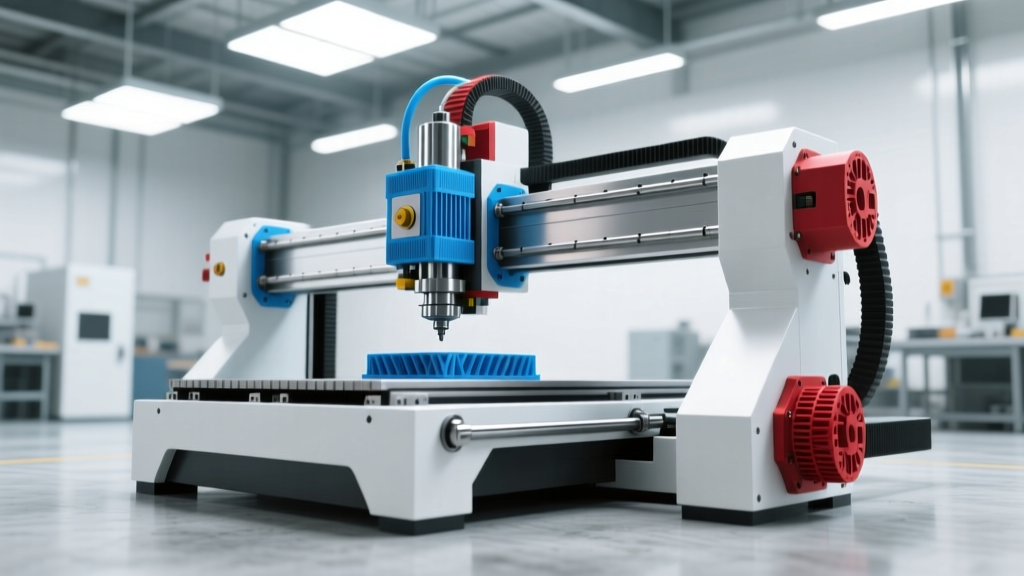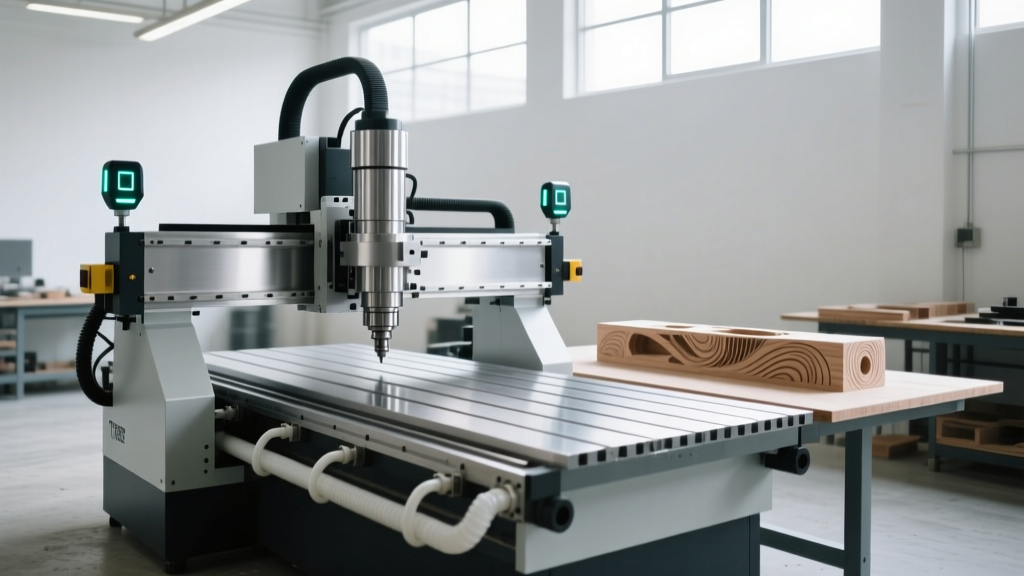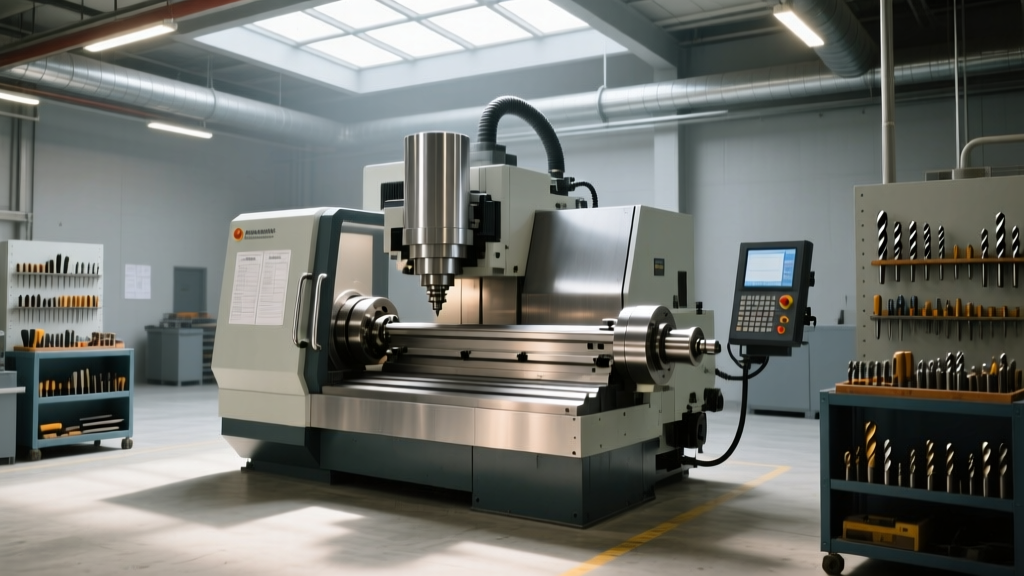
Budgeting for a CNC Machine Milling Machine: 2026 Cost Guide
Discover the true 5-year total cost of ownership for a CNC machine milling machine in 2026, including hidden tooling, power, and maintenance expenses.
Most machine shop owners calculate return on investment based on spindle hours divided by the equipment invoice price. This is a critical financial error. When evaluating a new CNC machine milling machine for your production floor, the sticker price typically represents only 40% to 55% of the actual first-year capital deployment. The remainder is consumed by tooling, workholding, software, facility upgrades, and rigging.
As of early 2026, supply chain stabilization has normalized lead times for most vertical machining centers (VMCs), but inflationary pressures on peripheral equipment and commercial electricity rates require a highly granular approach to budget planning. This guide breaks down the exact capital and operational expenditures required to transition a VMC from a broker's quote to a revenue-generating asset.
Capital Expenditure: 2026 VMC Pricing Tiers
The baseline cost of the machine varies drastically based on spindle speed, axis travel, and controller brand. Below is a realistic look at out-the-door (OTD) pricing for three distinct shop profiles in 2026.
| Machine Tier | Representative Model | Base MSRP | Typical OTD Price (w/ Options) | Target Application |
|---|---|---|---|---|
| Entry-Level / Prototyping | Tormach 15L | $21,900 | $28,500 | Light aluminum, plastics, R&D |
| Mid-Tier Production | Haas VF-2SS | $72,000 | $89,500 | High-volume job shop, steel/aluminum |
| High-End 5-Axis / Aerospace | DMG MORI CMX 600V | $135,000+ | $175,000+ | Tight-tolerance aerospace, medical |
According to equipment data from Haas Automation, popular factory options that inflate the base price include high-pressure coolant systems ($4,500), chip conveyors ($3,200), and wireless intuitive probing systems ($6,800). Skipping a chip conveyor on a mid-tier VMC to save $3,000 upfront will cost you exponentially more in operator labor and way-cover wear over a five-year period.
The 'Hidden' First-Year OpEx Traps
Once the machine is on the floor, the secondary equipment budget begins. Failing to allocate capital for these three categories will stall your first production run.
1. Tooling and Toolholding
A bare VMC spindle is useless without a populated tool carousel. For a standard CAT40 taper machine like the VF-2, you need a minimum of 20 toolholders to maximize efficiency and reduce setup times.
- Economy Toolholding (e.g., Maritool, Techniks): $120 - $180 per holder. A 20-piece starter kit with ER32 collets and endmill holders will cost approximately $3,200.
- Premium Toolholding (e.g., Sandvik Coromant, Kennametal): $350 - $600+ per holder. Required for high-speed machining (HSM) and extended tool life in hardened steels. Budget $9,000+.
- Cutting Tools: A baseline inventory of carbide endmills, indexable face mills, and drills from brands like Harvey Tool or Helical Solutions requires an initial outlay of $2,500 to $4,000.
2. Workholding
Standard machine tables require robust clamping. The industry standard Kurt DX6 6-inch vise costs approximately $1,150. A production cell requires at least two vises ($2,300), plus a grid plate or tombstone for horizontal milling operations, pushing the initial workholding budget to $4,500.
3. CAD/CAM Software
While the machine controller handles G-code, generating that code requires CAM software. Mastercam Mill 3D remains the industry heavyweight, requiring a perpetual license of roughly $7,500 plus $1,500 annually for maintenance. Alternatively, Autodesk Fusion 360 offers a commercial subscription model at approximately $1,800 per year, which is highly attractive for shops prioritizing cloud collaboration and lower upfront CapEx.
Warning: The 'Free' Post-Processor TrapMany shops budget for CAM software but forget to budget for custom post-processors. If your chosen CAM software does not have a verified, factory-tested post for your specific machine's controller (e.g., Haas NGC vs. Fanuc 31i), you will need to hire a post-builder. Custom 4th-axis post development typically costs between $1,500 and $3,000. Always verify post availability before purchasing software licenses.
Facility Infrastructure & Rigging Costs
A CNC machine milling machine cannot simply be plugged into a standard wall outlet. The infrastructure requirements represent a massive, often overlooked line item in budget planning.
Power and Phase Conversion
Most industrial VMCs require 3-phase power (typically 208V or 480V). If your facility only has single-phase power, you must install a phase converter. Digital phase converters (like those from Phase Perfect) cost between $3,500 and $5,500 and provide clean, balanced power that protects sensitive CNC servo drives. Rotary phase converters are cheaper ($2,000) but can cause voltage imbalances that degrade controller lifespan.
Compressed Air
CNC machines rely on clean, dry air for tool changer actuation, spindle air purges, and coolant air-blasts. You need a compressor capable of delivering at least 15 CFM at 120 PSI. A reliable industrial reciprocating or rotary screw compressor (e.g., Kaeser or Ingersoll Rand) plus a refrigerated air dryer and inline filtration will cost between $6,000 and $10,000. Feeding a VMC with wet, unfiltered air will destroy the tool changer pneumatics within 18 months.
Rigging and Installation
A standard VMC weighs between 6,000 and 10,000 lbs. Professional rigging, including a drop-deck trailer, forklifts, and floor skates, averages $2,500 to $4,500 locally. If your facility requires a crane drop through the roof or specialized concrete pad reinforcement, add another $5,000 to the budget.
5-Year Total Cost of Ownership (TCO) Matrix
To understand true profitability, we must project the operational expenses over a standard 60-month depreciation cycle. The following matrix assumes a mid-tier VMC (e.g., Haas VF-2SS) running one 10-hour shift, 250 days a year.
| Cost Category | Year 1 | Years 2-5 (Annual Avg) | 5-Year Total |
|---|---|---|---|
| Machine & Options (CapEx) | $89,500 | $0 | $89,500 |
| Tooling & Workholding | $8,500 | $3,000 (Replacement) | $20,500 |
| Software & Posts | $9,000 | $1,500 (Maintenance) | $15,000 |
| Infrastructure (Power/Air/Rigging) | $12,000 | $0 | $12,000 |
| Electricity (15kW avg @ $0.14/kWh) | $5,250 | $5,250 | $26,250 |
| Consumables (Coolant, Way Lube) | $2,400 | $2,400 | $12,000 |
| Preventative Maintenance | $500 | $1,200 | $5,300 |
| 5-Year TCO | $127,150 | $13,350 / year | $180,550 |
As highlighted by manufacturing optimization resources from the NIST Manufacturing Extension Partnership, tracking these granular operational metrics is essential for accurate job quoting. If a shop only factors in the $89,500 machine cost and raw material, they will consistently underbid jobs and operate at a hidden loss.
Maintenance & Downtime Calculus
Budgeting for maintenance is not just about buying Mobil Vactra #2 way lube or Trim E206 coolant. It is about budgeting for the labor hours required to perform the maintenance, and the financial risk of catastrophic failure.
'The most expensive component on any VMC is the spindle. Running a mid-tier machine at 12,000 RPM with inadequate warm-up cycles or improper toolholder retention force will lead to a spindle crash or bearing failure. A replacement spindle cartridge and factory installation in 2026 costs between $14,000 and $22,000, not including the $1,500 per day cost of machine downtime.' — Industry consensus via Society of Manufacturing Engineers technical forums.
To mitigate this, allocate $1,200 annually for professional ballbar testing (using a Renishaw QC20-W) and laser calibration. Catching axis backlash and servo mismatch early prevents scrapped aerospace components and extends the mechanical life of the ballscrews.
Lease vs. Buy Decision Framework for 2026
With commercial lending rates stabilizing but remaining historically elevated in 2026, the decision to finance or purchase outright requires strict cash-flow analysis.
- Outright Purchase: Best for shops with strong cash reserves looking to leverage Section 179 of the IRS tax code, which allows for the full deduction of the equipment purchase price in the year it is placed into service (subject to annual legislative caps). This drastically reduces first-year tax liability.
- Capital Lease / Equipment Financing: Ideal for high-growth job shops that need to preserve working capital for raw material inventory and operator payroll. Expect interest rates between 7% and 11% for 60-month terms on CNC equipment. A $90,000 machine financed at 9% over 60 months results in a monthly payment of roughly $1,870. If the machine generates $3,500 in gross margin per month, the cash flow remains positive from day one, and the equipment pays for itself while preserving your line of credit.
The Break-Even Spindle Hour
To finalize your budget, calculate your required break-even spindle hour. Divide your total Year 1 deployment cost ($127,150) by your estimated Year 1 billable spindle hours (e.g., 2,000 hours). This yields a baseline machine burden rate of $63.57 per hour. This number must be added to your operator labor rate, overhead, and material costs before applying your profit margin. Quoting a job at $45/hour machine time on a mid-tier VMC in 2026 guarantees negative margins once tooling wear and electricity are factored in.
Accurate budget planning for a CNC machine milling machine requires shifting focus from the initial invoice to the comprehensive lifecycle cost. By capitalizing infrastructure, standardizing tooling inventories, and rigorously tracking the TCO matrix, shops can ensure their next VMC acquisition drives measurable profitability rather than hidden overhead.