CNC Milling Turning Machining Costs: 2026 Budget Analysis
Plan your 2026 shop budget with our deep-dive cost analysis of CNC milling turning machining, covering CapEx, OpEx, tooling, and ROI frameworks.
The Financial Reality of Mill-Turn Integration
Transitioning from discrete CNC lathes and 3-axis machining centers to integrated CNC milling turning machining centers is fundamentally a capital consolidation strategy. By 2026, the premium for mill-turn technology has stabilized, but the total cost of ownership (TCO) extends far beyond the base machine quote. Shops that budget strictly for the machine tool often face 20% to 35% cost overruns when factoring in high-pressure coolant, specialized B-axis tooling, and complex CAM post-processors.
This analysis provides a granular breakdown of the capital and operational expenditures required to deploy CNC milling and turning machining workflows, utilizing current market pricing and industry benchmarks from the Association for Manufacturing Technology (AMT).
2026 ROI Snapshot: Mill-Turn vs. Discrete Machining
- Average Setup Time Reduction: 65% - 82% per complex part family.
- Scrap Rate Decrease: Drops from an average of 4.2% (multi-setup) to 1.1% (single-setup).
- Floor Space Consolidation: 1 mill-turn center replaces 1.8 discrete machines, freeing up 120-150 sq. ft. of shop floor.
- Typical Payback Period: 14 to 22 months for shops running 3+ shifts on complex aerospace or medical components.
Capital Expenditure (CapEx): Machine Pricing Tiers
The entry barrier for CNC milling turning machining varies wildly based on kinematic complexity (e.g., C-axis/Y-axis interpolation vs. full 5-axis B-contouring). Below is the 2026 pricing matrix for base machine configurations, excluding mandatory accessories.
| Tier | Representative Models | Base Price Range (2026) | Kinematic Capability |
|---|---|---|---|
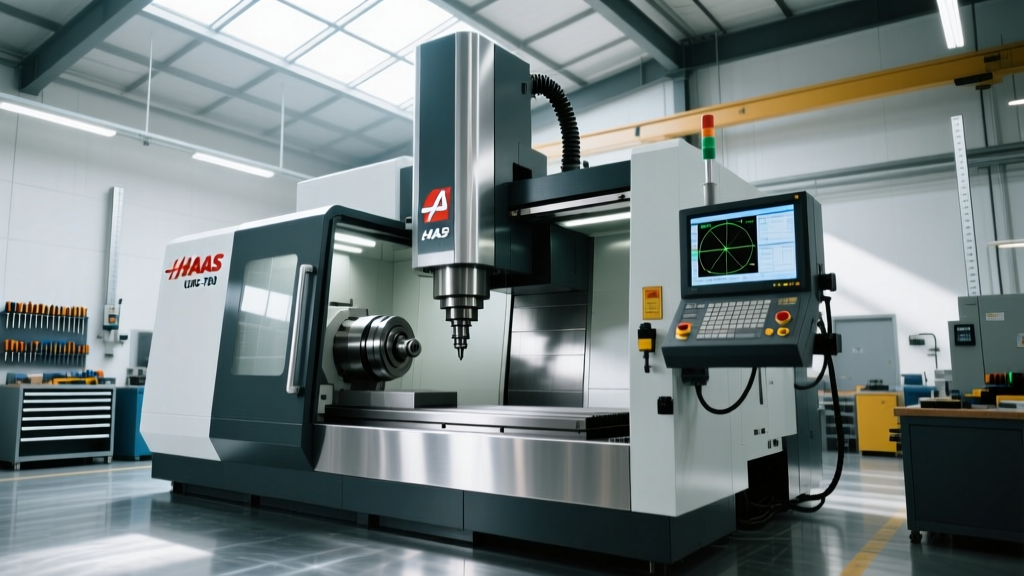
| Entry-Level | Haas DS-30Y, Doosan SMX 2100 | $185,000 – $240,000 | C-axis, Y-axis, basic live tooling, no B-axis contouring. |
| Mid-Tier | Mazak INTEGREX i-200S, Okuma MULTUS U3000 | $480,000 – $620,000 | Full B-axis contouring, lower turret with Y-axis, thermal compensation. |
| High-End | DMG MORI NTX 2000, Index G420 | $850,000 – $1,250,000+ | 5-axis simultaneous milling, dual spindle, integrated automation, AI monitoring. |
Hidden CapEx: The 'Ready-to-Cut' Tax
A base mill-turn machine cannot produce complex parts out of the crate. Budget planners must allocate funds for the following mandatory peripherals:
- High-Pressure Coolant (HPC) Systems: Essential for breaking chips in deep-hole drilling and exotic materials. Factory-integrated 1,000 PSI systems cost between $18,000 and $28,000. Aftermarket retrofits often exceed $35,000 and void spindle warranties.
- Bar Feeders & Automation: Hydrobar or Iemca bar feeders tailored for mill-turn clearance requirements run $35,000 to $55,000. For robotic part loading, expect $80,000+ for integrated gantry systems.
- Chip Conveyors: Mill-turn operations generate massive volumes of stringy and fragmented chips. Heavy-duty hinge-belt conveyors with coolant filtration add $9,000 to $14,000.
Operational Expenditure (OpEx): Workflow Economics
The primary financial argument for CNC milling turning machining is the collapse of the operational workflow. Moving a part from a lathe to a milling center introduces queue time, secondary fixturing, and compounded datum errors.
| Cost Center | Discrete Workflow (Lathe + Mill) | Integrated Mill-Turn Workflow | Financial Impact |
|---|---|---|---|
| Labor Allocation | 2 Operators (or 1 operator managing 2 machines with idle time) | 1 Operator managing single cycle | 30-40% reduction in direct labor cost per part. |
| Fixturing & Tooling | Standard 3-jaw chuck + custom milling vises/soft jaws | Hydraulic chuck + VDI/BMT driven toolholders | Higher initial tooling cost, but zero secondary fixture fabrication. |
| Work-in-Progress (WIP) | High WIP; parts wait in queue between operations | Near-zero WIP; raw material in, finished part out | Significant improvement in cash flow and inventory carrying costs. |
| Quality Assurance | First-article inspection required after each setup | Single in-cycle probing and final inspection | 50% reduction in CMM and QA labor hours. |
Tooling and Workholding Budget Allocation
Live tooling is the hidden ongoing expense in CNC milling and turning machining. The industry has largely shifted from VDI (DIN 69880) turrets to BMT (Base Mount Turret) interfaces due to rigidity requirements for heavy milling cuts.
Warning: The BMT vs. VDI Cost Trap
While BMT toolholders offer superior rigidity and thermal stability, they cost 25% to 40% more than VDI equivalents. A single BMT ER32 driven toolholder costs between $1,200 and $1,800. If your machine features a 12-station turret requiring full live-tooling capability, budget a minimum of $18,000 to $22,000 just to populate the turret with baseline driven holders, static turning tools, and boring bar sleeves.
Furthermore, workholding for the sub-spindle (counter-spindle) requires specialized part catchers and custom-profiled soft jaws to prevent marring finished surfaces during the hand-off. Budget $4,000 to $7,000 annually for sub-spindle jaw machining and replacement.
CAM Software and Post-Processor Licensing
Programming a 5-axis mill-turn center is exponentially more complex than programming a 3-axis mill or a 2-axis lathe. Kinematic variations, turret interference, and synchronized spindle-speed matching require advanced CAM modules.
- Software Seats: Mastercam Mill-Turn or ESPRIT licenses range from $14,000 to $19,000 per seat in 2026.
- Custom Post-Processors: Because mill-turn kinematics are highly specific to the machine's exact build (e.g., Mazak's SmoothG vs. Fanuc 31i-B), off-the-shelf posts often fail. Budget $3,500 to $6,000 to have a certified reseller build and verify a custom post-processor using simulation software like VERICUT.
- Machine Simulation: VERICUT or CGTech licensing adds $10,000+ to the IT budget but prevents catastrophic B-axis collisions that can result in $50,000+ spindle rebuilds.
Decision Framework: Justifying the Mill-Turn Premium
Not every part family justifies the capital outlay of CNC milling turning machining. Use this framework to determine if a mill-turn center belongs in your 2026 capital equipment plan.
- Geometric Complexity: Does the part require features on 3 or more planes, or off-center holes that require Y-axis/B-axis interpolation? If yes, mill-turn is justified.
- Material Characteristics: Are you machining work-hardening exotics (Inconel 718, Titanium Ti-6Al-4V)? If yes, the ability to maintain a single setup and apply continuous high-pressure coolant drastically reduces tool wear and scrap.
- Annual Volume Sweet Spot: Mill-turn centers shine in high-mix, medium-volume environments. If you are running 50 to 5,000 parts per year, the setup time savings will outpace the slower raw cycle times of a mill-turn compared to a dedicated Swiss-type or multi-spindle lathe.
- Floor Space Constraints: If your facility is at maximum capacity and leasing adjacent square footage exceeds $15/sq. ft., consolidating two machines into one provides an immediate real estate ROI.
'The most expensive mistake a shop can make with a mill-turn center is treating it like a lathe that happens to have a milling attachment. To capture the ROI, you must redesign your fixturing and CAM strategies to exploit simultaneous multi-axis material removal.' — Advanced Machining Benchmark Report, Society of Manufacturing Engineers (SME).
Maintenance and Downtime Financial Modeling
Mill-turn centers possess significantly more moving mass and complex bearing arrangements than standard machines. Downtime on a $600,000 asset bleeds revenue rapidly. Budget planners must model the following maintenance realities:
- B-Axis Spindle Rebuilds: The integrated milling spindle inside the B-axis turret is subject to heavy radial loads. Expect a preventative rebuild or bearing replacement every 8,000 to 10,000 cutting hours. Cost: $25,000 to $45,000.
- Curvic Coupling Maintenance: The Hirth or curvic couplings that lock the turret and B-axis into position degrade if subjected to crash impacts or inadequate lubrication. Recutting or replacing couplings requires factory technicians, costing $15,000+ in labor and parts.
- Live Toolholder Bearing Failure: Driven toolholders contain internal micro-bearings that fail if coolant ingress occurs. Rebuilding a single BMT live holder costs $400 to $800. Implement a strict preventative maintenance schedule to inspect O-rings and collet nuts every 500 hours.
Strategic Budgeting for 2026
Successfully integrating CNC milling turning machining requires shifting the budget focus from 'machine cost' to 'system cost.' By allocating 25% of your total CapEx budget toward high-pressure coolant, BMT tooling, custom CAM post-processors, and operator training, you ensure the machine generates revenue from day one rather than sitting idle while waiting for peripheral integration. Consult directly with OEM application engineers to map your specific part families to kinematic requirements before finalizing purchase orders.