2026 Cost Guide: Budgeting for CNC Milling & Machining Services
Analyze 2026 costs for CNC milling & machining services. Discover hourly rates, material markups, tolerance taxes, and budget frameworks for precision parts.
The Economics of Precision: 2026 Manufacturing Budgets
Procuring custom metal parts requires more than just comparing the lowest bid. In 2026, the pricing landscape for CNC milling & machining services has shifted significantly due to localized energy fluctuations, the rising premium on 5-axis programming talent, and supply chain adjustments in raw aerospace-grade alloys. For manufacturing engineers and hardware procurement teams, understanding the granular breakdown of a machine shop quote is the difference between a profitable product launch and a margin-destroying delay.
This guide deconstructs the actual cost drivers of outsourced CNC milling, moving beyond generic online calculators to provide actionable, shop-floor-level budgeting data.
Executive Snapshot: 2026 Baseline Costs
- Standard 3-Axis Milling: $55 – $85 / hour
- Simultaneous 5-Axis Milling: $110 – $165 / hour
- Standard Setup Fee: $150 – $250 per unique operation
- Minimum Order Value (MOV): Typically $250 – $500 for job shops
The Hourly Rate Matrix: Axis Complexity vs. Shop Overhead
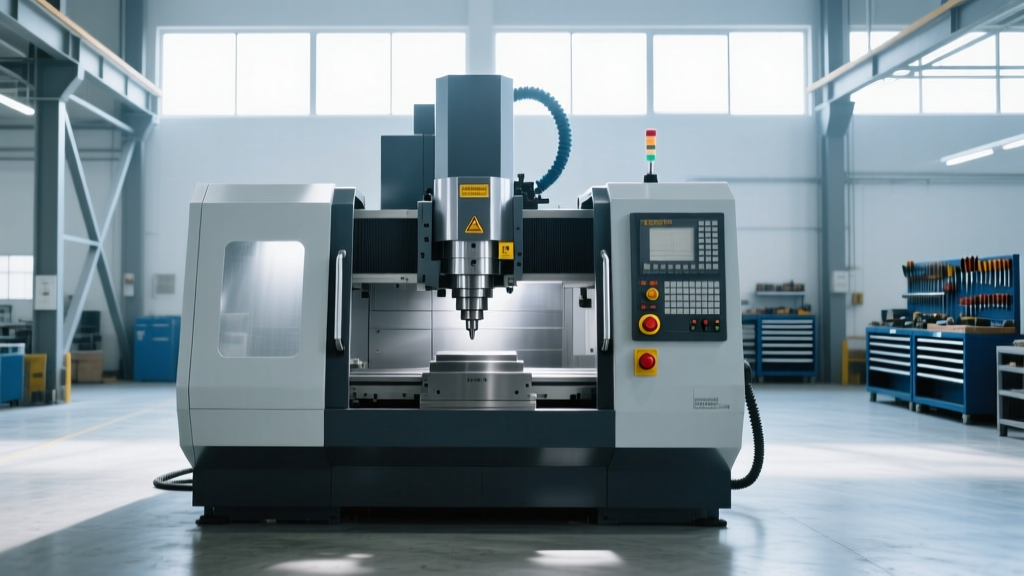
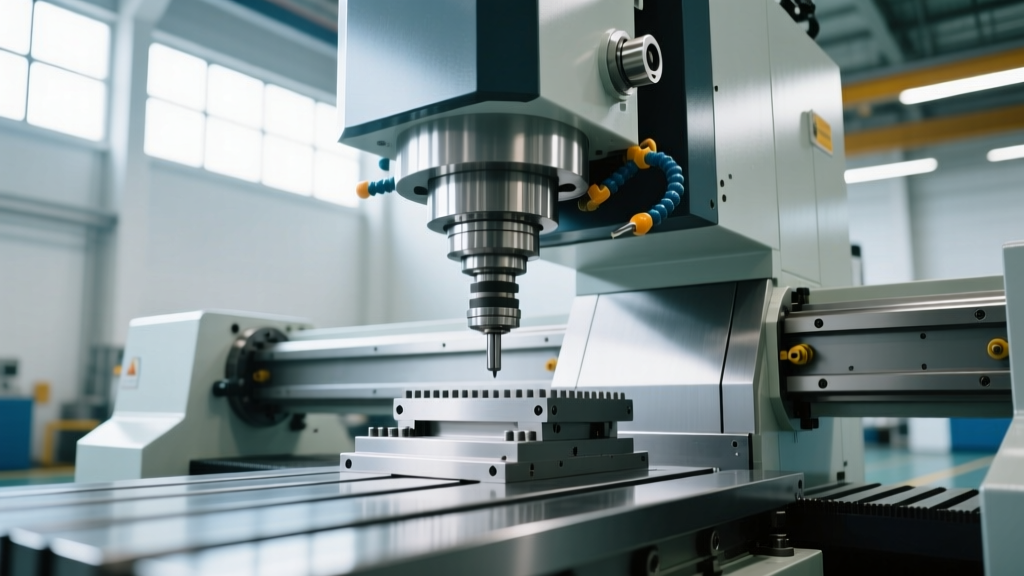
Machine shops do not price 3-axis and 5-axis work on the same spectrum. The hourly rate is a composite of machine depreciation, spindle wear, CAM programming complexity, and the required skill level of the operator. In 2026, shops running advanced pallet-changer systems or automated robotic tending can offer slightly lower per-part costs at high volumes, but the baseline hourly rates remain rigid.
| Machine Type | 2026 Hourly Rate | Setup / Programming Time | Ideal Application |
|---|---|---|---|
| 3-Axis Vertical Mill | $55 - $85 | 30 - 60 mins | Brackets, 2.5D enclosures, simple fixtures |
| 4-Axis (Indexing) | $75 - $105 | 45 - 90 mins | Cam profiles, helical features, multi-face parts |
| 5-Axis (Simultaneous) | $110 - $165 | 2 - 5 hours | Impellers, aerospace structural nodes, medical implants |
| Mill-Turn (Live Tooling) | $120 - $150 | 1.5 - 3 hours | Complex cylindrical parts with off-axis milled features |
Material Markups: The Raw Stock Reality
A common budgeting error is calculating material costs based on commodity market spot prices. Machine shops are not raw material wholesalers; they factor in scrap generation, sawing time, handling, and inventory carrying costs. When budgeting for CNC milling & machining services, you must apply the shop's effective material rate.
2026 Effective Material Rates (Billed to Customer)
- 6061-T6 Aluminum: $8.00 – $11.00 per lb. (Highly available, low cutting forces, standard endmill life).
- 303 Stainless Steel: $14.00 – $18.00 per lb. (Free-machining austenitic steel, but requires flood coolant and rigid setups).
- 17-4 PH Stainless: $22.00 – $28.00 per lb. (Requires specific heat treatment post-machining to achieve H900 or H1150 conditions).
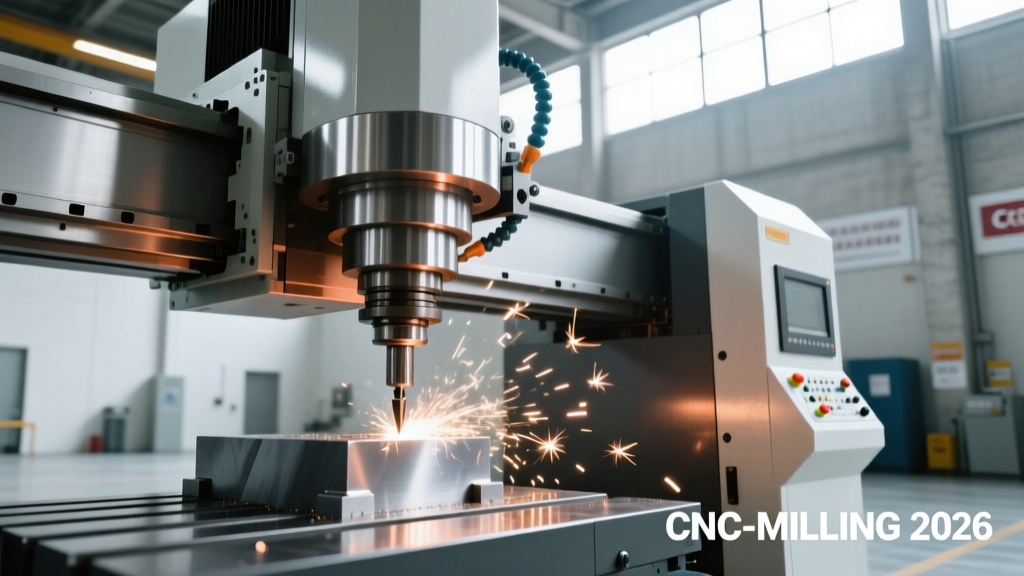
- Ti-6Al-4V (Grade 5 Titanium): $45.00 – $65.00 per lb. (Extreme tool wear; shops factor in carbide endmill replacement costs directly into the material and cycle-time overhead).
Pro-Tip: Design your parts to fit standard catalog billet sizes. If your part requires a 2.1-inch thick plate, the shop must buy 2.5-inch stock and face it down, generating expensive scrap that you pay for. Adjusting your design to 2.0 inches can drop material costs by 18%.
The Tolerance Tax: How GD&T Inflates Your Quote
Tolerancing is the single largest hidden multiplier in CNC milling. The industry standard tolerance for non-critical dimensions is ±0.005" (0.127mm). When engineers blanket a drawing with tighter tolerances without functional necessity, cycle times and inspection costs skyrocket.
"Applying a ±0.0005" tolerance to a non-mating surface forces the operator to switch from standard roughing/finishing passes to single-point fly cutting, implement in-cycle spindle probing, and utilize a temperature-controlled CMM for final QA. This doesn't just add time; it completely alters the machine's utilization economics."
— Lead Manufacturing Engineer, Tier 1 Aerospace Supplier
According to the ASME Y14.5 standard for Geometric Dimensioning and Tolerancing (GD&T), every feature should be toleranced based on its functional requirement. Here is how tightening tolerances impacts your budget:
- ±0.005" (Standard): Baseline cost (1.0x multiplier). Standard CNC milling, basic calipers/micrometers for QA.
- ±0.001" (Precision): 1.15x to 1.25x multiplier. Requires slower finishing feeds, fresh carbide tooling, and dedicated fixture setups.
- ±0.0005" (Ultra-Precision): 1.40x to 1.75x multiplier. Mandates climate-controlled inspection rooms, jig grinding, or secondary EDM operations for internal corners.
Secondary Operations and Finishing Costs
Raw machined parts rarely go directly into assembly. Budgeting for secondary operations requires understanding minimum lot charges and per-square-inch pricing models.
Type II Anodizing (Clear/Color)
Cost: $2.00 - $4.00 / sq in
Min Lot Charge: $65 - $95
Lead Time Adder: 2-4 days
Note: Requires sharp edge breaking (minimum 0.020" radius) to prevent burn-through at current concentrations.
Type III Hardcoat (MIL-A-8625)
Cost: $4.50 - $7.50 / sq in
Min Lot Charge: $120 - $180
Lead Time Adder: 4-7 days
Note: Adds 0.001" - 0.002" of material thickness. Must be accounted for in pre-machining dimensional offsets.
Decision Framework: In-House vs. Outsourced Machining
When planning capital expenditure versus operational expenditure, hardware companies must objectively evaluate when to bring CNC milling in-house versus utilizing external CNC milling & machining services. The breakeven point is rarely just about part volume; it involves IP security, agility, and overhead absorption.
| Evaluation Criteria | In-House CNC Cell | Outsourced Job Shop |
|---|---|---|
| Upfront Capital | $150k - $400k+ (Machine, tooling, CAM licenses, dust collection) | $0 (Pay per part / NRE setup fees) |
| Prototyping Agility | High (Iterate same-day, no RFQ delays) | Medium (24-48 hour quoting, 1-2 week lead times) |
| Complex 5-Axis Access | Low (Prohibitive equipment and programming costs) | High (Shops amortize $500k machines across multiple clients) |
| Quality Liability | Internal (Scrap costs hit your P&L directly) | Vendor (Shops absorb scrap and rework costs for bad batches) |
For hardware startups and mid-sized OEMs in 2026, the most financially sound strategy is a hybrid approach: maintain a 3-axis CNC cell (like a Haas VF-2SS or Bantam Tools PCNC) for rapid prototyping and custom fixturing, while outsourcing complex 5-axis production runs and high-volume batches to specialized machining services. This minimizes idle machine depreciation while maintaining engineering agility.
Optimizing Your RFQ for Better Pricing
To secure the most competitive rates from machine shops, structure your Request for Quote (RFQ) to reduce the shop's administrative and engineering risk:
- Provide Native CAD and STEP Files: Never force a shop to reconstruct geometry from a 2D PDF. Include a clean STEP AP242 file with PMI (Product and Manufacturing Information) embedded.
- Define the Critical Path: Explicitly state which 2 or 3 dimensions are mission-critical. Allow the shop to relax non-critical tolerances to standard ±0.005".
- Batch Secondary Operations: If ordering 50 parts, request that the shop machine all 50 raw, then batch-send them to their anodizing partner in a single lot to avoid multiple $95 minimum lot charges.
For a comprehensive breakdown of how part geometry directly influences cycle times and toolpath strategies, reference the manufacturing guidelines provided by Hubs' CNC Machining Cost Guide, which details the mathematical relationship between corner radii, endmill diameters, and depth-to-diameter ratios.
By treating your machining budget as an engineering parameter rather than an afterthought, you can leverage CNC milling & machining services to scale from prototype to production without margin erosion.