How 2 Axis CNC Milling Machine Specifications Dictate Your True Capital Budget
Learn how 2 axis CNC milling machine specifications dictate true ownership costs. Compare pricing, hidden fees, and ROI for accurate shop budget planning.
When shop owners and manufacturing engineers search for 2 axis CNC milling machine specifications, they are typically referring to 2.5-axis vertical machining centers (VMCs). True 2-axis mills (lacking a programmable Z-axis) are largely obsolete outside of niche PCB routing or simple engraving. In modern job shops, a '2-axis' classification implies XY contouring with Z-axis positioning for depth control. While these machines are often viewed as budget-friendly entry points compared to full 3-axis or 5-axis simultaneous mills, evaluating their specifications purely on base price is a critical financial error.
In 2026, supply chain stabilization has normalized base casting and motor costs, but controller inflation, precision ground ballscrew premiums, and software licensing have driven the 'ready-to-cut' cost up by 18% to 24% over base MSRP. This guide decodes how specific technical parameters translate into hard dollar CapEx and OpEx, ensuring your capital budget survives the first year of production.
⚠️ The Base Price Illusion
A machine listed at $35,000 will rarely leave the factory floor for less than $52,000 once essential 2.5-axis operational requirements—such as chip conveyors, way covers, probing, and tooling—are factored in. Always budget a minimum 35% markup over the base spec sheet price for turnkey deployment.
Work Envelope vs. Casting Mass: The Non-Linear Cost Curve
The most heavily scrutinized specification is the work envelope (X-Y-Z travel). However, the cost to scale up a work envelope is not linear; it is exponential due to the required increase in casting mass, linear guide width, and ballscrew diameter to maintain rigidity.
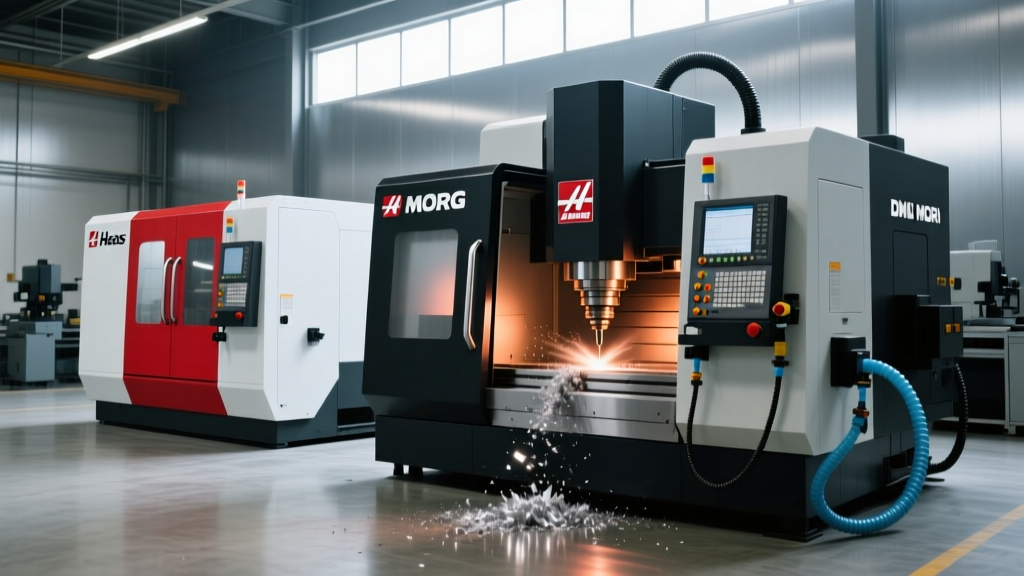
- Compact Envelope (16' x 12' x 10'): Machines like the Haas Mini Mill dominate this space. Base pricing hovers around $37,900. The lighter casting allows for standard 10,000 RPM spindles without excessive vibration, keeping motor and bearing replacement costs low (under $2,500 per rebuild cycle).
- Mid-Size Envelope (24' x 20' x 20'): Stepping up to this envelope requires a massive leap in structural iron. Prices jump from the $30k range to the $65k–$85k range. The hidden cost here is floor space and power requirements; larger machines often require 3-phase 480V drops, which can cost $3,000 to $8,000 to install if your shop currently only runs 208V.
Spindle Taper and RPM: Calculating the Cycle Time ROI
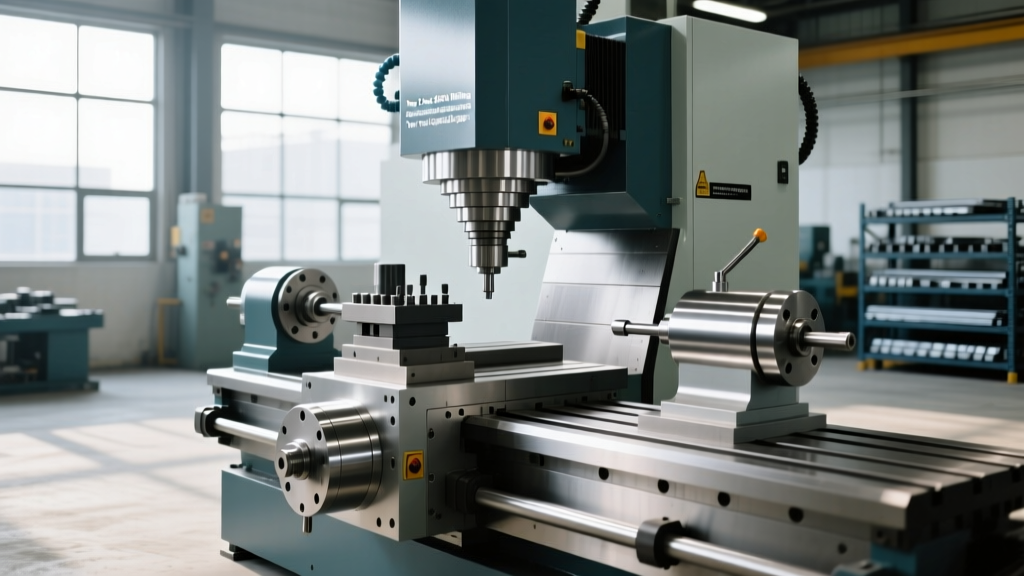
For 2.5-axis profiling and facing operations, the spindle taper (BT30 vs. BT40) and maximum RPM dictate both your upfront tooling budget and your long-term cycle time profitability.
The BT30 Advantage for Aluminum and Plastics
BT30 tooling is roughly 30% cheaper than BT40 equivalents. A high-quality BT30 ER32 collet chuck costs around $85, whereas a BT40 equivalent pushes $140. If your shop primarily machines 6061 aluminum, Delrin, or brass, a 10,000 to 15,000 RPM BT30 spindle is the optimal budget choice. The lighter tooling allows faster rapid traverse rates without taxing the Z-axis servo motor, reducing cycle times on high-volume, shallow-depth parts.
The BT40 Necessity for Steel and Titanium
If your 2-axis operations involve heavy facing of 1045 steel or interrupted cuts in hardened materials, a BT30 spindle will suffer from tool deflection and premature bearing wear. Upgrading to a BT40 taper with an 8,000 RPM spindle adds $4,000 to $7,000 to the initial machine cost. However, the increased rigidity allows for deeper axial depths of cut (DOC). According to data from the National Institute of Standards and Technology (NIST) advanced manufacturing frameworks, optimizing DOC on rigid setups can reduce cycle times by up to 22% in ferrous materials, paying for the spindle upgrade within 14 months on a two-shift schedule.
Way Systems: Linear Guides vs. Box Ways
The choice of way system directly impacts your maintenance OpEx and the machine's usable lifespan before a major rebuild is required.
| Specification | Linear Guide (Profile Rail) | Box Way (Sliding Contact) |
|---|---|---|
| Upfront Cost Impact | Base Price (Standard) | +$8,000 to $15,000 premium |
| Rapid Traverse Rates | High (1,000+ IPM) | Moderate (400 - 700 IPM) |
| Damping & Rigidity | Low (Prone to chatter in heavy cuts) | High (Absorbs harmonic vibration) |
| 5-Year Maintenance OpEx | $1,200 (Block replacement if crashed) | $3,500+ (Way lube system maintenance, stick-slip adjustments) |
Budget Decision: If your 2-axis milling consists of high-speed, light-cutting aerospace aluminum brackets, linear guides maximize ROI through faster non-cutting rapids. If you are hogging out cast iron housings, the box way premium is mandatory; linear guides will suffer catastrophic block failure under sustained heavy radial loads.
Controller and Software: The Hidden OpEx Multiplier
The physical specifications of the mill are useless without the controller to drive them. In 2026, controller licensing and software ecosystems represent a significant ongoing operational expense.
'Buyers often budget for the iron and ignore the brain. A proprietary controller with mandatory annual software subscriptions can add $1,500 to $3,000 a year in OpEx, whereas an open-architecture system like Mach4 or LinuxCNC requires a higher initial integration cost but near-zero ongoing licensing fees.'
For production environments, proprietary controllers (like the Haas NGC or Fanuc 0i-F Plus) offer unparalleled reliability and integrated probing macros. However, for prototyping labs or budget-constrained startups utilizing machines like the Tormach 1100MX (which utilizes the PathPilot controller), the open architecture allows for free CAD/CAM integration updates and eliminates per-seat software licensing fees, saving roughly $4,500 annually in a 3-machine cell.
The 2026 Turnkey Budget Allocation Matrix
To prevent capital shortfalls, use this percentage-based allocation model when planning your total spend for a 2.5-axis VMC deployment. This matrix assumes a mid-tier machine (e.g., $45,000 base price).
💰 Recommended Capital Allocation Framework
- Base Machine & Essential Options (55%): $24,750. Includes base mill, chip conveyor, and programmable coolant nozzle.
- Tooling & Workholding (25%): $11,250. Vises, angle plates, BT toolholders, pull studs, and initial end mill inventory. Never underfund this category; a $50,000 machine cutting with a $400 vise will yield scrapped parts.
- Metrology & Probing (12%): $5,400. Renishaw or Blum tool breakage detection and workpiece probing. Essential for untended 2-axis Z-depth positioning.
- Installation & Power Prep (8%): $3,600. Rigging, forklift fees, 3-phase transformer (if needed), and compressed air line drops.
Final Procurement Strategy
When evaluating 2 axis CNC milling machine specifications, map every technical parameter directly to a financial outcome. Do not pay for 15,000 RPM spindles if your heaviest cut is in mild steel. Do not oversize the work envelope if your largest part is 10 inches long. By aligning the physical specifications of the mill with the exact metallurgical and geometric demands of your production schedule, you transform a speculative equipment purchase into a predictable, high-yield capital investment.