Aerospace Case Study: CNC Milling and Turning Machine ROI
Discover how aerospace manufacturers use a CNC milling and turning machine to reduce cycle times by 40% and boost ROI with 2026 multiaxis case studies.
The Shift to Done-In-One Manufacturing in Aerospace
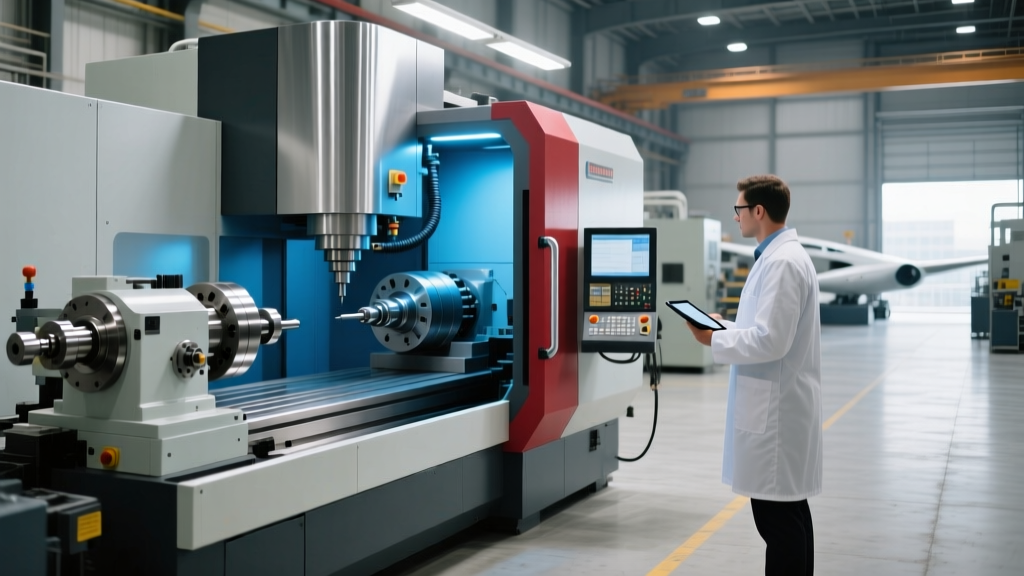
Complex aerospace components, from landing gear actuators to turbine shafts, demand extreme geometric tolerances often held to ±0.0002 inches. Historically, producing these parts required moving blanks between a 2-axis lathe and a 3-axis or 5-axis vertical machining center. Every transfer introduces stack-up errors, requires custom fixturing, and inflates work-in-progress (WIP) inventory. In 2026, the aerospace supply chain's demand for leaner operations has accelerated the adoption of the CNC milling and turning machine, commonly referred to as a mill-turn center. By combining full turning capabilities with a 5-axis B-milling head, these platforms allow manufacturers to complete complex rotational parts in a single clamping.
2026 Executive Summary: Transitioning from discrete lathes and machining centers to a unified CNC milling and turning machine reduces part handling by 85%, cuts cumulative setup time from 6.4 hours to 45 minutes, and decreases scrap rates by an average of 12% for complex rotational aerospace components.Case Study 1: Titanium Landing Gear Actuators (Mazak INTEGREX i-400)
A Tier-2 aerospace supplier in Ohio faced severe bottlenecks machining Ti-6Al-4V landing gear actuators. The part, measuring 18 inches in length with complex off-center hydraulic ports and deep internal bores, previously required four distinct setups across two machines. Total cycle time, including setup and inspection between operations, was 14.5 hours per part.
The Solution: 5-Axis Mill-Turn Integration
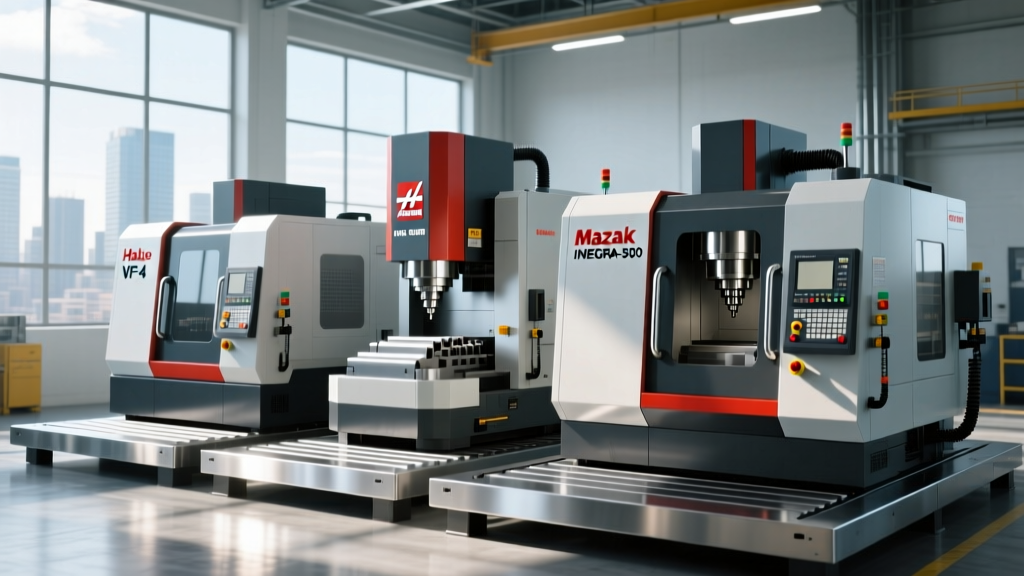
The facility invested in a Mazak INTEGREX i-400, a high-capacity CNC milling and turning machine equipped with a 25,000 RPM B-axis milling spindle and a lower turret. By utilizing the main spindle for turning and the B-axis for 5-axis simultaneous milling of the hydraulic ports, the manufacturer reduced the process to a single setup. The lower turret was deployed to perform internal boring and back-facing operations simultaneously with the main spindle's external turning, drastically overlapping machining time.
Cutting Parameters and Tooling Strategy
Machining titanium on a mill-turn center requires rigid toolholding to prevent chatter during heavy interrupted cuts. The shop standardized on the Sandvik Coromant Capto C6 quick-change interface. For roughing the off-center ports, they utilized a 1-inch solid carbide endmill with a variable helix design, running at 150 SFM and 0.004 IPT (inches per tooth). Turning operations utilized CVD-coated carbide inserts at 120 SFM with a high-pressure coolant (HPC) nozzle delivering 1,000 PSI directly to the cutting edge to break the stringy titanium chips that typically cause spindle wrap-ups.
Case Study 2: Inconel 718 Turbine Shafts (DMG MORI NTX 2000)
Inconel 718 is notorious for work-hardening and generating extreme heat at the cutting zone. A European turbine manufacturer needed to machine 24-inch turbine shafts featuring deep splines, eccentric journal bearings, and precision threads. The primary challenge was maintaining concentricity within 0.0003 inches across the entire shaft length while managing thermal growth.
Thermal Management and Simultaneous Machining
Using the DMG MORI NTX 2000, the engineering team leveraged the machine's integrated cooling systems and direct-drive torque motors. The upper B-axis contouring head milled the eccentric splines, while the lower 12-position turret turned the journal bearings. To combat Inconel's work-hardening tendencies, rough turning was performed using silicon nitride ceramic inserts at an aggressive 800 SFM, which generates enough localized heat to soften the material ahead of the cut. Finishing passes switched to PVD-coated carbide at 60 SFM. The result was a 38% reduction in overall cycle time and the complete elimination of post-machining straightening operations, which were previously required to fix thermal bowing.
Comparative Data: Traditional Workflow vs. Mill-Turn Integration
The following data reflects a 2026 internal audit of a mid-sized aerospace machine shop comparing a traditional 3-machine cell (1 lathe, 1 VMC, 1 CMM) against a single CNC milling and turning machine with an integrated probing cycle.
| Metric | Traditional Cell (Lathe + VMC) | Mill-Turn Center | Net Improvement |
|---|---|---|---|
| Total Setup Time | 4.5 Hours | 45 Minutes | +83% Faster |
| Cycle Time (Cutting) | 9.2 Hours | 6.8 Hours | +26% Faster |
| Floor Space Required | 320 Sq. Ft. | 140 Sq. Ft. | 56% Reduction |
| Scrap Rate (Concentricity) | 8.4% | 1.1% | 86% Reduction |
Financial Breakdown: Calculating True ROI in 2026
Capital expenditure for a production-grade CNC milling and turning machine ranges from $450,000 for entry-level models to over $950,000 for fully automated systems with gantry loaders. To calculate accurate ROI, shops must look beyond the purchase price and evaluate the burdened machine rate.
- Machine Hourly Rate: In 2026, the average burdened rate for a 5-axis mill-turn center is $135 to $165 per hour, factoring in depreciation, floor space, and energy consumption.
- Fixture Elimination: Custom soft jaws and tombstone fixtures for VMCs cost between $2,500 and $8,000 per part number. Mill-turn centers rely primarily on standard hydraulic chucks and collet pads, saving an average of $14,000 annually in tooling.
- Labor Reallocation: One operator can manage two mill-turn centers equipped with bar feeders or robotic part loaders, compared to requiring dedicated operators for each machine in a traditional cell.
For a shop running two shifts (4,000 spindle hours annually), the consolidation of three machines into one mill-turn center typically yields a complete payback period of 14 to 18 months, driven heavily by scrap reduction and WIP inventory liquidation.
Critical Failure Modes and Mitigation Strategies
While highly capable, CNC milling and turning machines introduce unique mechanical complexities that can lead to catastrophic crashes or out-of-tolerance parts if ignored.
Y-Axis Geometric Drift During Heavy Interrupted Cuts
When using the lower turret on the Y-axis to mill flats or keyways, the asymmetric cutting forces can push the turret saddle out of squareness. Over a 10-hour shift, this manifests as tapered keyways. Mitigation: Implement mandatory thermal compensation probing cycles every 50 parts. Utilize machines with roller linear guideways rather than box ways on the Y-axis to resist moment loads, and ensure the machine's foundation is isolated from nearby stamping presses or heavy forklift traffic.
B-Axis Spindle Interference and Tool Length Miscalculation
The most common crash on a mill-turn center occurs when the B-axis milling head swings into the main chuck or tailstock because the tool length offset was measured incorrectly in the presetter. Because the B-axis pivots, the tool center point (TCP) changes dynamically. Mitigation: Always measure tool lengths directly on the machine using a laser tool setting system (e.g., Renishaw NC4) rather than relying on offline presetters. Program safe clearance planes using G-code macro variables that account for the specific chuck jaw extension.
Sourcing and Implementation Framework
Procuring a CNC milling and turning machine requires evaluating the part envelope against the machine's swing and turning diameter. Do not confuse 'maximum turning diameter' with 'maximum milling diameter over the turret.' Many shops make the mistake of purchasing a machine based on the X-axis travel, only to find that the lower turret physically blocks the B-axis head from reaching the back side of a large-diameter flange.
Before finalizing a purchase order, request a virtual kinematic simulation from the OEM using your exact CAD models and selected toolholding assemblies. This digital twin approach will reveal B-axis interference points and optimize tool change positions, ensuring that your transition to done-in-one manufacturing is both profitable and crash-free from day one.