Horizontal CNC Milling Machine Operator Training & Best Practices
Master horizontal CNC milling machine operations with our expert training guide. Learn setup, arbor selection, and safety best practices for operators.
The Horizontal Advantage: Why Training Differs from Vertical Mills
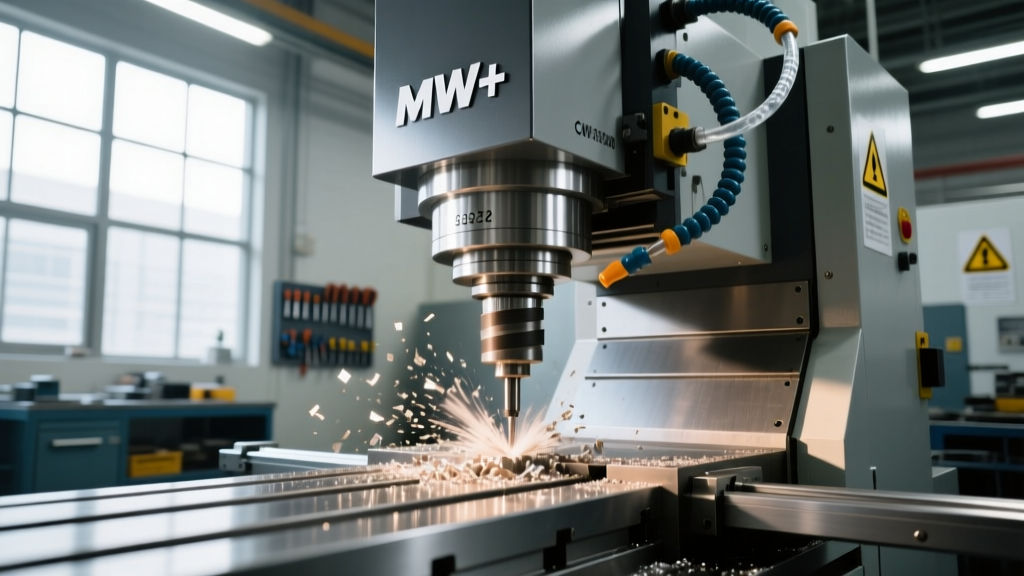
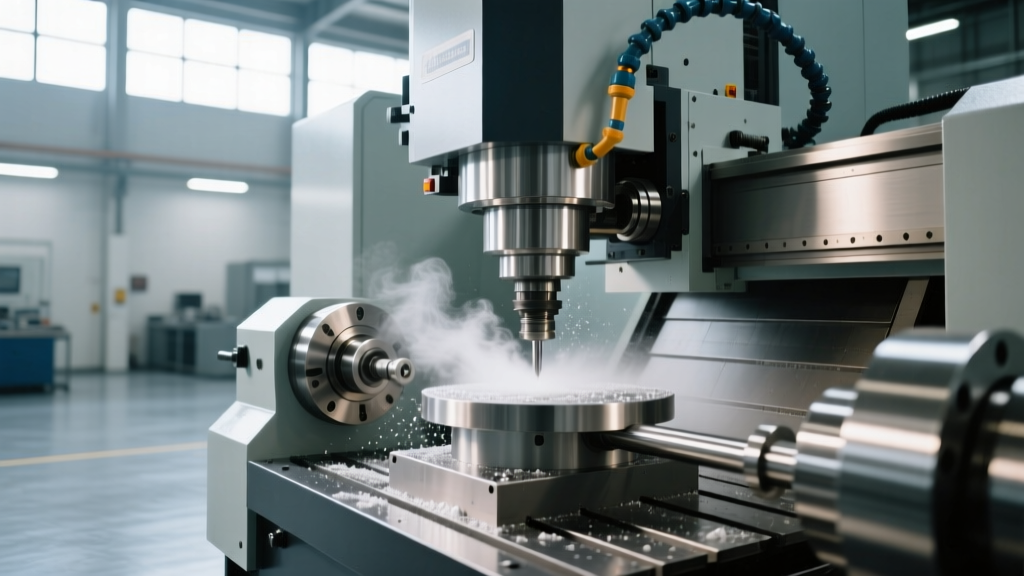
Operating a horizontal CNC milling machine requires a fundamentally different mindset compared to vertical machining centers (VMCs). While VMCs rely on gravity to hold parts and clear chips, horizontal mills utilize gravity to drop chips away from the cutting zone and the workpiece. This natural chip evacuation, combined with rotary pallet changers and multi-face tombstone workholding, allows for uninterrupted, high-volume production. However, this increased complexity demands rigorous operator training. As of 2026, modern horizontal platforms like the Okuma MA-500H or Makino a61nx feature integrated Industry 4.0 spindle monitoring and 1,000 PSI through-spindle coolant (TSC), elevating the baseline knowledge required for safe, efficient operation. This guide details the critical best practices for horizontal mill setup, tooling, and cutting strategies.
Information Gain: The primary cause of premature spindle bearing failure in horizontal mills is not side-loading, but rather contamination from retained chips during tool changes. Because the spindle faces downward or horizontally, chips can easily lodge in the taper if the air-blast purge is obstructed or the shop environment lacks proper chip guarding.Arbor Selection, Taper Seating, and Runout Tolerances
Horizontal mills typically utilize CAT50, BT50, or HSK-100 tapers to handle the heavy radial forces of side-milling and deep slotting. The arbor (toolholder) is the critical link between the spindle and the cutting tool. A poorly seated arbor will cause chatter, reduce tool life, and damage the spindle's internal drawbar mechanism.
Step-by-Step: Cleaning and Seating the Arbor
- Inspect the Pull Stud: Check the retention knob (pull stud) for micro-fractures or stretching. A fatigued pull stud on a CAT50 arbor can fail under the 4,500 lbf retention force of a high-speed horizontal spindle, turning the tool into a lethal projectile. Replace pull studs every 12 months or after 5,000 tool changes.
- Purge and Clean the Spindle Taper: Never use WD-40 or standard shop rags. Use a lint-free cloth and 99% isopropyl alcohol. Micro-fibers left by standard rags can cause a 0.0005-inch runout at the gauge line.
- Clean the Arbor Taper: Wipe the toolholder taper with the same lint-free cloth and alcohol. Ensure the keyway and driving dogs are free of swarf.
- Verify Runout: After the tool is clamped, use a dial indicator or laser tool setter. Acceptable runout for a premium CAT50 hydraulic or shrink-fit holder is less than 0.0002 inches (0.005 mm) at the toolholder nose, and less than 0.0005 inches at a 4-inch projection.
For comprehensive data on toolholder balancing and taper standards, refer to the Sandvik Coromant milling knowledge base, which provides exact tolerance charts for various milling applications.
Tombstone Workholding and Pallet Pool Logistics
The true ROI of a horizontal CNC milling machine is unlocked via the Automatic Pallet Changer (APC) and tombstone fixturing. Operators must understand how to balance cutting forces across multiple faces of a tombstone to prevent harmonic vibration and ensure consistent part geometry.
| Material | Max Hydraulic Clamping Pressure | Workholding Strategy | Risk of Distortion |
|---|---|---|---|
| 6061-T6 Aluminum | 1,500 PSI | Serrated jaws, full perimeter support | High (Requires soft jaws for op 2) |
| 4140 Pre-hardened Steel | 3,000 PSI | Hardened steel step jaws, toe clamps | Low |
| Inconel 718 | 4,500 PSI | Custom machined fixtures, vacuum assist | Moderate (Spring-back concerns) |
When loading a 6-pallet rotary pool, operators must balance the weight distribution on each pallet. An unbalanced tombstone (e.g., heavy cast iron parts on the left face, empty right face) will cause the B-axis rotary table to experience uneven brake wear and positional drift over time. Always use dummy weights or balance the part count across opposing tombstone faces.
Advanced Cutting Strategies for Horizontal Orientations
Cutting strategies on a horizontal mill must account for the spindle orientation and the direction of chip fall. According to Okuma's horizontal machining center specifications, leveraging the B-axis for continuous 5-axis contouring or precise 4-axis indexing requires specific toolpath adaptations.
"In horizontal milling, down-milling (climb milling) is generally preferred not just for surface finish, but because the chip thickness decreases as the tooth exits the cut, directing the cutting forces downward into the table and minimizing part lift."
Chip Thinning and Trochoidal Milling
When slotting on a horizontal mill, chip evacuation is the primary bottleneck. If chips remain in the slot, they will be re-cut, leading to tool breakage. Operators should program trochoidal toolpaths (dynamic milling) for deep slots. This maintains a constant radial engagement angle (typically 5% to 10% of the tool diameter), allowing for higher feed rates and ensuring chips are thrown clear of the cutting zone by centrifugal force and gravity.
Troubleshooting Matrix: Chatter, Deflection, and Chip Rewelding
Horizontal mills are highly rigid, but long arbors used for deep-cavity milling are prone to deflection. Use this matrix to diagnose common operational issues.
| Symptom | Root Cause | Operator Fix |
|---|---|---|
| High-frequency chatter on deep walls | Arbor deflection; overhang exceeds 4x diameter ratio. | Switch to a heavy-metal (tungsten alloy) arbor or use a variable-pitch end mill to break harmonic frequencies. |
| Chip rewelding (BUE) on aluminum parts | Inadequate chip evacuation; chips falling back into horizontal cut. | Activate 1,000 PSI TSC; apply air-blast through the spindle during non-cutting moves; increase table feed rate. |
| B-axis positional drift after pallet swap | Chip interference on the pallet coupling plate (e.g., Kuratome coupling). | Clean the coupling teeth with a brass brush and high-pressure air; verify hydraulic clamping pressure is above 2,500 PSI. |
Safety Protocols: Pallet Changers and High-Pressure Coolant
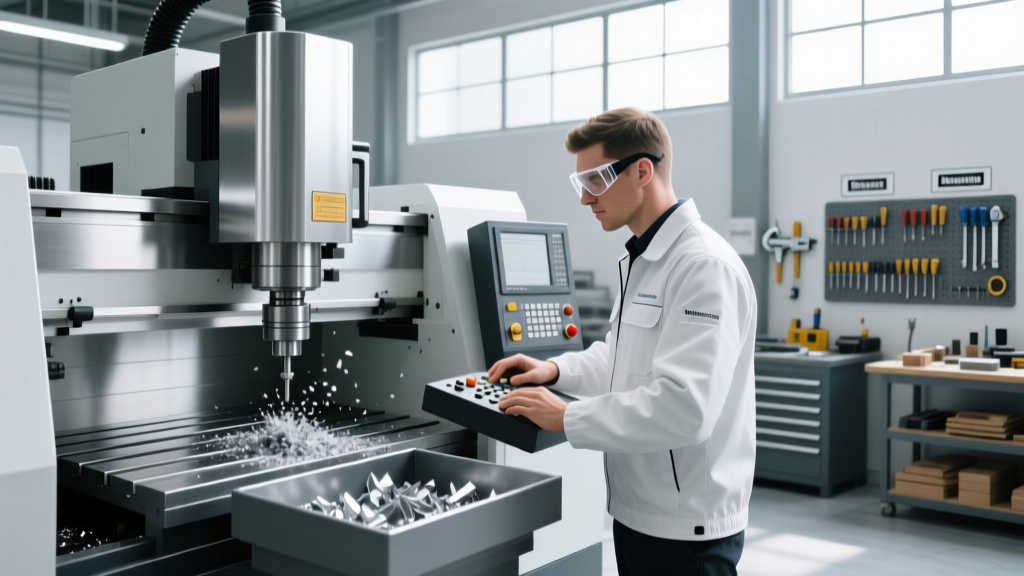
The integration of robotic pallet pools and high-pressure coolant systems introduces severe safety hazards that are absent in standard VMCs. Operators must adhere to strict lockout/tagout (LOTO) and perimeter guarding protocols.
Critical Safety Warning: Never bypass the light curtains or interlocking safety gates on an Automatic Pallet Changer (APC). The rotational torque of a loaded 2,000-lb pallet swapping at 15 RPM can cause fatal crushing injuries. Furthermore, when servicing TSC nozzles rated for 1,000 PSI, operators must bleed the hydraulic and coolant accumulators completely; trapped pressure can inject coolant through the skin, requiring immediate surgical intervention.Proper training on a horizontal CNC milling machine extends beyond pushing cycle start buttons. It requires a deep understanding of kinematics, metallurgy, and fluid dynamics. By mastering arbor seating, tombstone load balancing, and advanced chip-evacuation toolpaths, operators can push horizontal mills to their maximum material removal rates (MRR) while maintaining micron-level tolerances and ensuring a zero-incident safety record.