2026 Innovations Transforming CNC Mill/Turn Machining Services
Discover how 2026 AI toolpathing, B-axis kinematics, and hybrid additive tech are redefining CNC mill/turn machining services for complex parts.
The Evolution Beyond 'Done-in-One'
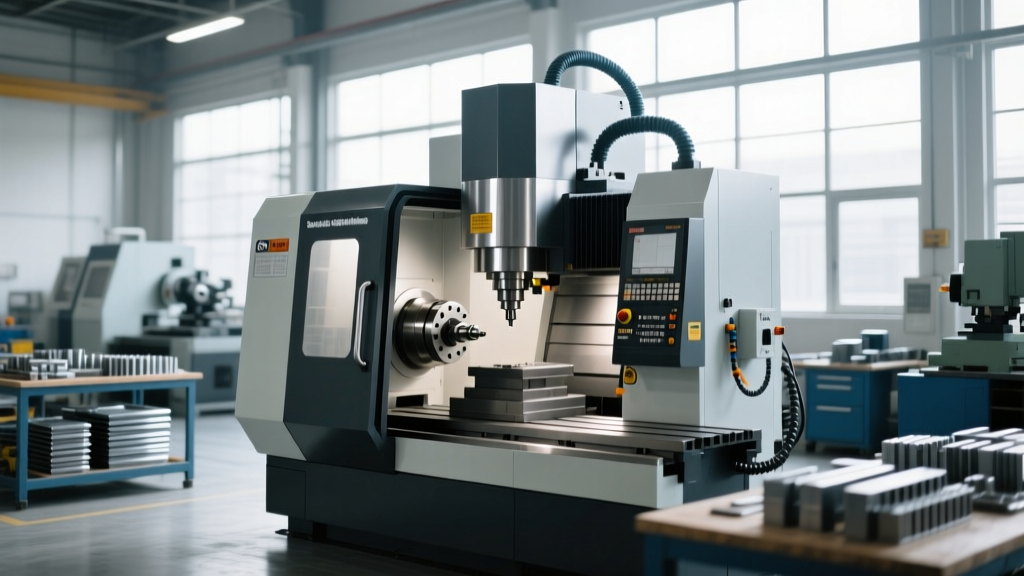
The concept of 'done-in-one' manufacturing has been the baseline promise of multitasking machines for over a decade. However, as we navigate 2026, advanced CNC mill/turn machining services have moved far beyond simply combining a lathe and a milling machine into a single chassis. The modern mill/turn center is now a highly integrated, thermally compensated, and AI-monitored manufacturing cell capable of holding ±0.0002-inch (5 µm) tolerances across complex, multi-plane aerospace and medical components without a single manual reclamping.
For procurement engineers and manufacturing managers, understanding the technological leap in current mill/turn architectures is critical for evaluating service providers and calculating true cost-per-part metrics.
2026 Data Highlight: According to recent industry benchmarks, parts machined on modern B-axis mill/turn centers experience a 28% to 41% reduction in cumulative cycle time compared to sequential 2-axis turning and 3-axis VMC milling, primarily due to the elimination of inter-operation queuing and secondary setup indicatons.B-Axis Kinematics vs. Traditional Polar Interpolation
Historically, mill/turn operations relied on C-axis (spindle orientation) and Y-axis offsets to mill flats, keyways, and off-center holes. While adequate for basic prismatic features, C-axis milling forces the tool to remain perpendicular to the Z-axis, limiting contouring capabilities and requiring complex polar interpolation programming.
The True B-Axis Advantage
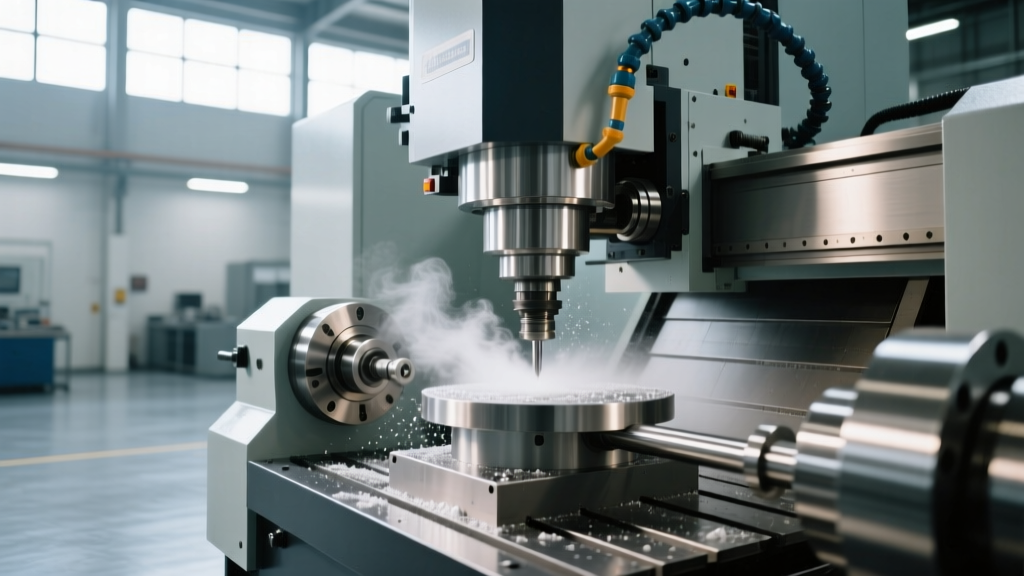
In 2026, premier CNC mill/turn machining services utilize true B-axis contouring spindles. Machines like the Mazak INTEGREX i-800S and DMG MORI NTX 2000 feature a B-axis that tilts up to 240 degrees. This allows the milling spindle to approach the workpiece at any compound angle, enabling 5-axis simultaneous machining on a turned part.
- Undercutting & Complex Contours: The B-axis allows ball-nose end mills to maintain optimal surface contact angles on turbine blisks and impellers, drastically improving surface finish (Ra 0.8 µm or better) without manual polishing.
- Tool Clearance: Tilting the spindle head provides vital clearance for deep-cavity milling on large-diameter flanges, eliminating the need for extra-long, chatter-prone tool extensions.
- Rigidity via Capto Interfaces: Modern B-axis spindles utilize Sandvik Coromant Capto C6 or C8 tooling interfaces. The polygonal coupling provides superior torsional rigidity compared to traditional CAT or BT tapers, which is essential when taking heavy interrupted cuts on Inconel 718 or Ti-6Al-4V workpieces.
AI-Driven Chatter Suppression and Edge Computing
One of the most significant barriers to aggressive mill/turn cycle times is chatter, particularly when milling thin-walled features on long, turned shafts. The Society of Manufacturing Engineers (SME) has extensively documented how regenerative chatter destroys tool life and ruins surface integrity in multitasking environments.
In 2026, advanced CNC mill/turn machining services deploy edge-computing AI modules integrated directly into the machine CNC (such as Siemens Sinumerik ONE with AI edge boxes). These systems utilize acoustic emission sensors and spindle load monitors to detect micro-vibrations milliseconds before audible chatter occurs.
Procurement Warning: When vetting a mill/turn service provider for thin-walled aerospace ducts or medical bone screws, ask specifically about their chatter suppression protocols. Providers relying solely on static CAM toolpaths without real-time adaptive feed control will inevitably yield high scrap rates on deep-cavity mill/turn operations.Comparing Sequential Machining vs. 2026 B-Axis Mill/Turn
To understand the ROI of specifying advanced CNC mill/turn machining services, consider the following comparison for a complex aerospace hydraulic valve body machined from 17-4 PH stainless steel.
| Metric | Sequential (Lathe + 5-Axis VMC) | 2026 B-Axis Mill/Turn Center | Net Impact |
|---|---|---|---|
| Total Setup Time | 3.5 hours (2 machines, 2 fixtures) | 45 minutes (Single chucking) | -80% Setup Labor |
| Tolerance Stacking Error | ±0.0015" (Concentricity drift) | ±0.0003" (True positional) | Eliminates secondary CMM rejection |
| WIP Floor Space | Requires staging between ops | Zero WIP staging | Lean manufacturing optimization |
| Cost Per Part (Batch of 50) | $415.00 | $298.00 | 28.1% Unit Cost Reduction |
Hybrid Additive-Subtractive Mill/Turn Services
The frontier of CNC mill/turn machining services in 2026 is the integration of Laser Metal Deposition (LMD). Hybrid machines, such as the DMG MORI LASERTEC 65 3D hybrid, combine a 5-axis mill/turn architecture with a 2.5 kW diode laser and coaxial powder nozzle.
Real-World Application: Blisk and Impeller Repair
Rather than scrapping a $40,000 forged titanium blisk due to a machining error or in-service wear on a single leading edge, hybrid mill/turn services now execute the following workflow:
- Subtractive Prep: The mill/turn spindle machines away the damaged titanium blade section, creating a clean, chamfered docking surface.
- Additive Build: The laser head deposits Ti-6Al-4V powder layer-by-layer (at feed rates up to 12 g/min) to rebuild the near-net-shape blade profile.
- In-Situ Machining: The machine automatically purges the laser optics, switches back to the Capto C6 milling spindle, and 5-axis finish-mills the rebuilt blade to final aerodynamic tolerances.
This hybrid capability is heavily supported by research from NIST Advanced Manufacturing programs, which continue to validate the metallurgical bond strength and fatigue life of LMD-repaired aerospace components.
Framework for Selecting a Mill/Turn Service Provider
Not every shop with a multitasking machine delivers true 5-axis mill/turn value. Many operate these machines as simple lathes with basic live-tooling due to a lack of advanced CAM programming expertise. Use this technical checklist to audit potential CNC mill/turn machining services:
- Post-Processor Validation: Ask if they use machine-specific, G-code verified post-processors for software like Mastercam 2026 or hyperMILL. Generic post-processors frequently cause axis-limit crashes on B-axis machines during simultaneous 5-axis contouring.
- Thermal Displacement Compensation: Milling generates asymmetric heat compared to turning. Verify the machine utilizes real-time thermal compensation (e.g., Okuma's Thermo-Friendly Concept or Makino's proprietary thermal algorithms) to prevent Z-axis growth during 4-hour continuous cut cycles.
- Automated Probing Routines: High-end services utilize Renishaw OMP600 or Blum Novotest spindle probes to automatically map raw casting forgings and update the CAM work offsets on the fly, ensuring the turned OD and milled pockets remain perfectly concentric.
- High-Pressure Coolant Delivery: When turning and milling superalloys, through-tool coolant at 1,000+ PSI is mandatory to break stringy chips and prevent work-hardening. Confirm the service provider's machine is equipped with high-pressure pump units, not just standard flood coolant.
Strategic Sourcing for Complex Geometries
As component designs in the defense, medical, and energy sectors grow increasingly complex, relying on sequential machining introduces unacceptable risks regarding tolerance stacking, lead times, and work-in-process bottlenecks. By targeting CNC mill/turn machining services that have fully embraced B-axis kinematics, AI-driven process monitoring, and hybrid additive capabilities, engineering teams can secure higher yields, tighter geometric dimensioning and tolerancing (GD&T) compliance, and a significantly lower total cost of ownership for their most critical hardware.