Case Studies: When a 3 Axis Milling Machine CNC Outperforms 5-Axis
Discover how modern job shops leverage a 3 axis milling machine CNC to beat 5-axis cycle times and ROI in aerospace and medical manufacturing.
The Enduring Economics of 3-Axis Machining in 2026
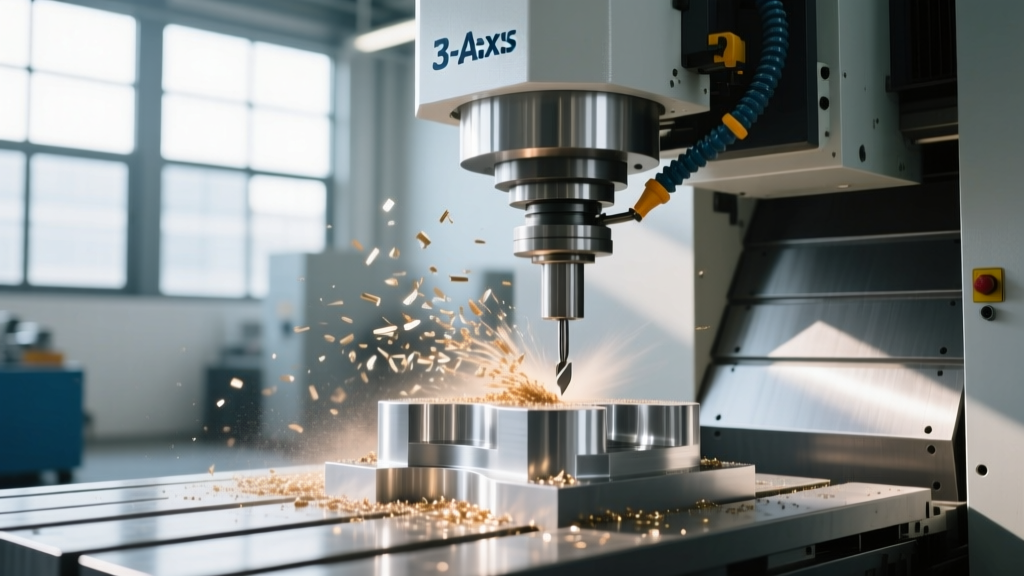
While 5-axis simultaneous machining dominates trade show floors and marketing brochures, the financial backbone of most high-mix, high-volume job shops remains the vertical machining center. When analyzing real-world production data from 2026, a well-tooled 3 axis milling machine cnc frequently outperforms its multi-axis counterparts in overall equipment effectiveness (OEE) and cost-per-part for prismatic components. The secret lies not in the kinematics of the machine, but in advanced CAM toolpaths, aggressive high-speed machining (HSM) parameters, and modular workholding.
Quick ROI Snapshot: According to NIST Manufacturing Extension Partnership benchmarks, upgrading workholding and CAM strategies on an existing 3-axis VMC yields an average 22% reduction in cycle time, compared to a mere 8% gain from upgrading to a 5-axis machine for strictly prismatic parts.Case Study 1: High-Volume Aerospace Aluminum Enclosures
A Tier-2 aerospace supplier in Ohio faced a bottleneck machining 6061-T6 aluminum avionics housings. The parts featured deep pockets, thin walls (0.060 inches), and complex 2.5D contouring. Initially, the shop utilized a 5-axis trunnion table setup to machine the parts in a single operation. However, the trunnion's limited payload capacity restricted them to machining only two parts per cycle, and the 5-axis machine's hourly shop rate of $185 was destroying their profit margins.
The 3-Axis Pivot
The shop transitioned the job to a Brother Speedio S500X2, a high-speed 3 axis milling machine cnc equipped with a 10,000 RPM spindle and 1.5G acceleration axes. Instead of relying on multi-axis kinematics to reach features, they engineered a dual-station hydraulic tombstone fixture mounted to a standard 3-axis table, utilizing a manual flip for Operation 2.
- Tooling: Kennametal HARVI III 4-flute carbide end mills with a ZrN coating.
- CAM Strategy: Mastercam Dynamic Motion roughing to maintain constant tool engagement, allowing a 1/2-inch end mill to run at 14,000 RPM and 210 IPM (inches per minute).
- Coolant: Flood coolant combined with an air-blast nozzle for chip evacuation in deep pockets.
By loading 14 parts per cycle on the custom tombstone and leveraging the Brother's 1.2-second chip-to-chip tool change time, the cycle time per part dropped from 24 minutes on the 5-axis to 11.5 minutes on the 3-axis. The cost-per-part plummeted from $42.00 to $18.60, entirely validating the decision to utilize a dedicated 3-axis platform for high-volume prismatic work.
Case Study 2: Orthopedic Bone Plates (Medical Titanium)
Medical machining presents unique challenges, particularly when working with Ti-6Al-4V titanium. A medical device manufacturer producing spinal fixation plates struggled with tool wear and chatter on their 5-axis universal machining centers. The overhang required to reach deep screw-hole bosses with a 5-axis head caused severe deflection, resulting in scrapped parts and a tool life of barely 40 pieces per end mill.
Rigidity Over Reach
The engineering team moved the process to a DMG MORI CMX 600V, a heavy-duty 3 axis milling machine cnc featuring a 12,000 RPM high-torque spindle and a massively ribbed cast-iron column. The inherent rigidity of a 3-axis vertical column vastly outperforms the extended Z-axis quill or tilting B-axis head of a 5-axis machine when subjected to the extreme radial forces of titanium milling.
To accommodate the 3-axis limitation, they implemented a flip-machining strategy using Mitee-Bite Pitbull clamps. These low-profile clamps gripped the internal pockets machined in Operation 1, allowing the machine to face and drill the top features in Operation 2 without obstructing the spindle head.
Edge Case Warning: When flip-machining titanium on a 3-axis VMC, thermal growth in the Z-axis can alter your Z-zero datum between Operation 1 and Operation 2. Always run a spindle warm-up routine and use a Renishaw OMP60 spindle probe to re-establish the Z-datum off a machined boss before starting the second operation.Cutting Data & Tool Life Improvements
Using a Sandvik Coromant CoroMill 390 for shoulder milling and adaptive milling techniques to reduce radial engagement to 10%, the shop achieved the following results:
| Metric | 5-Axis Universal (Previous) | 3-Axis VMC (Current) |
|---|---|---|
| Spindle Load (Roughing) | 78% (Chatter observed) | 45% (Smooth cutting) |
| Tool Life (1/4" End Mill) | 42 parts | 115 parts |
| Surface Finish (Ra) | 32 μin | 16 μin |
| Scrap Rate | 6.4% | 0.8% |
Overcoming 3-Axis Limitations: Advanced Fixturing Tactics
The primary argument against a 3 axis milling machine cnc is the inability to machine five sides of a part in a single setup. However, modern workholding has largely bridged this gap for batch production. By investing in modular fixturing, shops can reduce Op 2 setup times to under three minutes.
1. In-Situ Machined Soft Jaws
Standard 6-inch Kurt DX6 vises remain the industry standard. For complex geometries, machinists are utilizing 6061 aluminum soft jaws, machined directly on the VMC using a 2D contour toolpath. By incorporating a 'step' in the soft jaw that matches the part's Op 1 profile, the vise provides rigid, repeatable clamping for Op 2 without the need for custom cast fixtures or 5-axis vises.
2. Grid Plate and Zero-Point Systems
For high-mix environments, zero-point clamping systems (like System 3R or Schunk Vero-S) mounted to the 3-axis table allow operators to swap out pre-fixtured tombstones or vise banks in seconds. The machine pauses, the operator swaps the pallet, and the cycle resumes. This keeps the spindle cutting and eliminates the 20-minute indicator-sweeping process traditional to 3-axis setups.
3. Dovetail Workholding
When profiling the outer perimeter of a part on a 3-axis machine, standard vise clamps obstruct the toolpath. By machining a small 45-degree dovetail groove into the bottom of the raw stock during Op 1, operators can use specialized dovetail clamps (such as the 5th Axis brand or Mitee-Bite) to hold the part securely from the inside out during Op 2. This exposes all top and side features to the 3-axis spindle without collision risks.
Decision Matrix: Should You Use a 3 Axis Milling Machine CNC?
Purchasing or programming for a modern vertical milling center requires an objective look at your part geometry and production volume. Use the following framework to determine if a 3-axis approach is mathematically superior to a 5-axis investment.
- Choose 3-Axis If: The part is strictly prismatic (2.5D), production volume exceeds 500 parts per month, and features can be accessed from the top and one flip. The lower hourly shop rate and faster cycle times will maximize gross margin.
- Choose 3-Axis If: You are roughing heavy titanium or Inconel forgings. The massive structural rigidity of a 3-axis C-frame or double-column VMC will prevent the chatter and tool breakage common in 5-axis tilting heads.
- Choose 5-Axis If: The part features complex organic surfaces (impellers, turbine blades), deep undercuts requiring angled tool entry, or if the part is a low-volume prototype where the cost of designing and machining Op 2 soft jaws cannot be amortized.
Ultimately, the capability of a 3 axis milling machine cnc in 2026 is defined less by its physical axes and more by the ingenuity of the CAM programmer and the tooling engineer. By leveraging high-speed toolpaths, rigid workholding, and strategic flip-operations, the 3-axis VMC remains the undisputed champion of profitable, high-volume subtractive manufacturing.